
Video•Feb 10, 2026
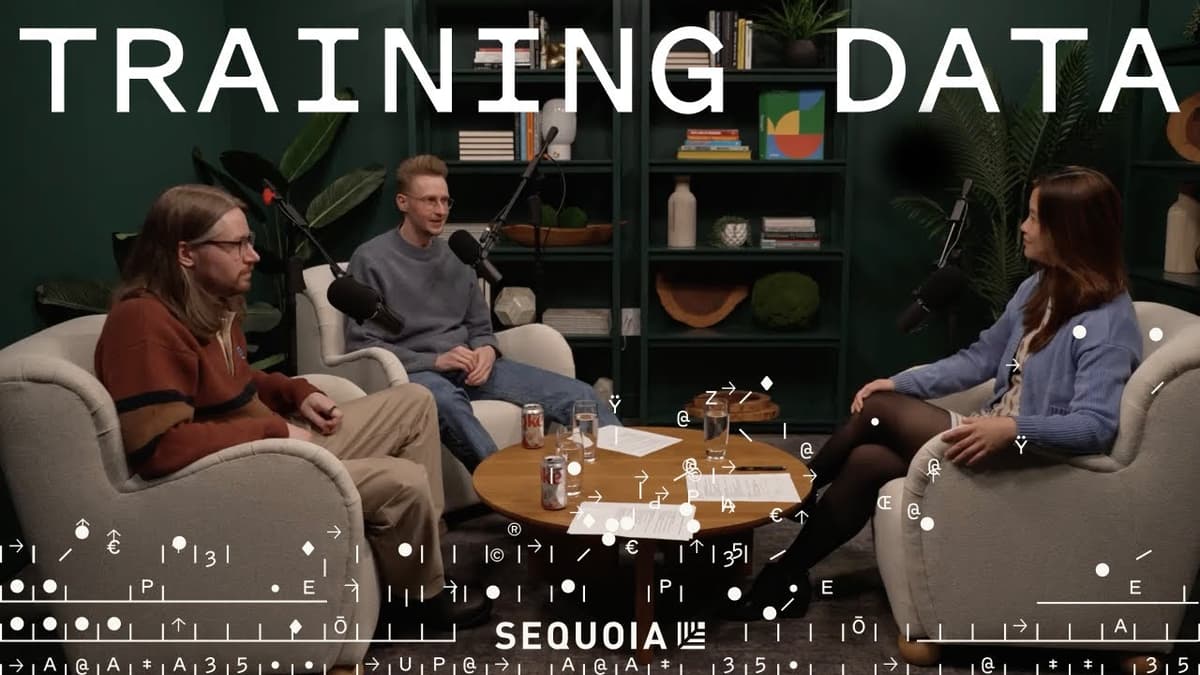
Building the GitHub for RL Environments: Prime Intellect's Will Brown & Johannes Hagemann
Prime Intellect’s founders, Will Brown and Johannes Hagemann, unveiled a vision to turn reinforcement‑learning environments into a GitHub‑style marketplace, making the same infrastructure that powers leading AI labs accessible to startups, enterprises, and independent researchers. Their Lab platform bundles compute orchestration, large‑scale training frameworks, secure sandboxes, and a community‑driven Environment Hub that hosts reusable evaluation and training tasks. The team emphasized three pillars: open‑science sharing, deep model customization beyond prompt engineering, and an end‑to‑end post‑training stack. By exposing model weights and allowing developers to fine‑tune agents within bespoke environments, companies can create cost‑effective, domain‑specific AI products without relying on generic off‑the‑shelf models. A notable example cited was Kursza, where Prime Intellect supplied the full suite of tools to post‑train a model directly inside the company’s own environment, dramatically improving performance. The discussion also clarified that an “environment” blends evaluation (benchmarks like SWEBench) with interactive training loops, while a “harness” defines how the model interfaces with that environment, enabling a modular approach across coding agents, tool‑use, and multi‑agent systems. If successful, this democratization could flatten the AI playing field, turning every organization into a mini‑research lab capable of iterating on its own models. The resulting surge in specialized agents may accelerate product innovation, increase competition for big‑lab dominance, and reshape how AI value is captured across industries.
By Sequoia Capital

Social•Jan 28, 2026
Don't Mistake High Volume for Real Market Size
Related, and also worth remembering: make sure you aren't chasing a small market masquerading as a large market. Big transaction volume doesn’t always translate to real market opportunity for startups.
By Sequoia Capital
Video•Jan 27, 2026
Making the Case for the Terminal as AI's Workbench: Warp’s Zach Lloyd
In a candid interview, Warp CEO Zach Lloyd makes the case that the traditional terminal is re‑emerging as the central workbench for AI‑driven software development. He argues that the terminal’s time‑based, text‑in‑text‑out nature aligns perfectly with agentic workflows, allowing developers...
By Sequoia Capital

Social•Jan 20, 2026
Balance Finite Wins with Infinite Growth Strategies
Businesses must play both finite and infinite games. Finite games have known players, rules, and objectives - the goal is to win. Landing a sale. Hitting a milestone. Infinite games are timeless and have unknown players, rules, and objectives - the goal...
By Sequoia Capital
Video•Jan 14, 2026
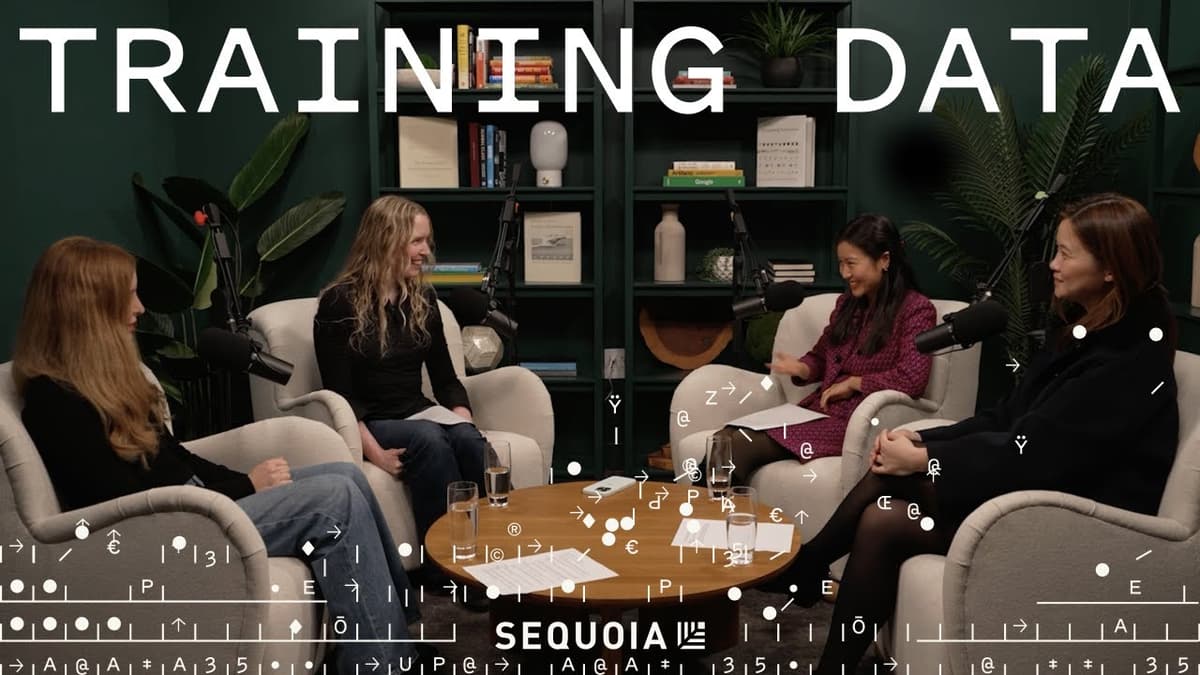
How Ricursive Intelligence’s Founders Are Using AI to Shape The Future of Chip Design
The video introduces Recursive Intelligence, founded by Anna Goldie and Aalia Mirhoseni, and explains how they are applying advanced AI techniques to the entire chip‑design workflow. Their mission is to eliminate the long, asymmetric design cycle that currently limits the...
By Sequoia Capital

Social•Jan 14, 2026
Relentless Problem‑Solving Trumps Mere Founder‑Problem Fit
The best founders are relentless problem solvers. They have founder-problem fit; but more importantly, they have an innate desire to just keep solving whatever the next problem is. Founder-problem fit matters. But relentless problem-solving wins.
By Sequoia Capital
Video•Jan 8, 2026
Palo Alto Networks CEO Nikesh Arora on the Virtues of Being an Outsider
The interview with Palo Alto Networks CEO Nikesh Arora centers on how outsider CEOs can drive growth by daring to "swing big" and building products around a clear, long‑term vision rather than merely responding to early customer requests. Arora stresses...
By Sequoia Capital

Social•Jan 7, 2026
General AI Learning Enables Robots in Unseen Environments
It’s easy to normalize rapid progress, but it’s worth pausing to appreciate how far we’ve come. We now have systems that: 🧠 learn end-to-end 📚 transfer knowledge across domains 🌍 operate in new environments with no explicit programming From vision to language to robotics, this...
By Sequoia Capital
Video•Jan 6, 2026
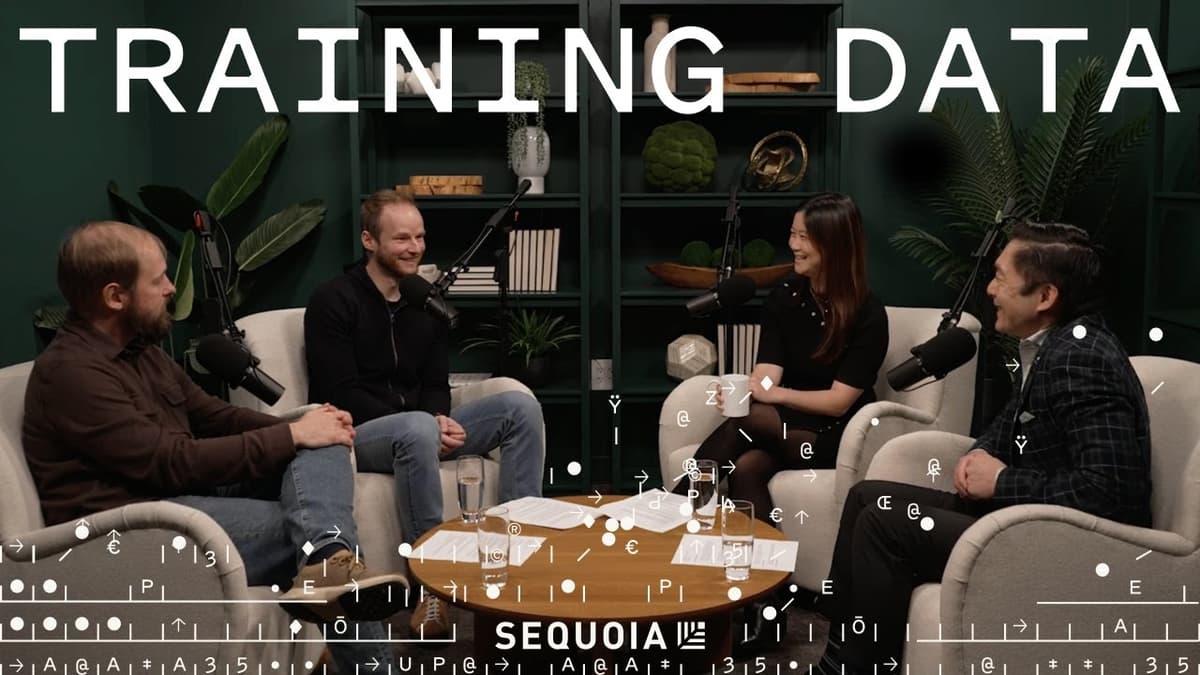
Training General Robots for Any Task: Physical Intelligence’s Karol Hausman and Tobi Springenberg
Physical Intelligence is pioneering robotic foundation models that promise any robot can learn any task. By abandoning the classic perception‑planning‑control stack in favor of end‑to‑end reinforcement learning, the company’s Pi‑Star 0.6 model can ingest raw sensor data and instructions, then directly...
By Sequoia Capital

Video•Dec 11, 2025
Hard Mode: Hypergrowth From Europe with Mati (ElevenLabs) and Anton (Lovable)
The video is a deep‑dive conversation with Mati, co‑founder of ElevenLabs, and Anton, co‑founder of Lovable, two European CEOs who are navigating hyper‑growth in the AI‑driven product space. The host frames the discussion around building technology for the “99%” –...
By Sequoia Capital