
Why an OB-GYN Won't Use DUTCH Tests
In a recent clinic discussion, an OB‑GYN explains why the DUTCH (Dried Urine Test for Comprehensive Hormones) panel is not appropriate for evaluating perimenopausal women. She notes that hormone levels during perimenopause swing wildly, making single‑point measurements unreliable for guiding treatment. Consequently, routine hormone testing—whether serum or DUTCH—is discouraged in diagnostic or therapeutic decision‑making for this stage. The physician also addresses a common misconception that adrenal glands “wear out” from stress or age, reassuring patients that adrenal function remains stable unless a specific pathology is present. The takeaway for clinicians and patients alike is to prioritize symptom‑based management over costly direct‑to‑consumer panels, reducing unnecessary anxiety and health‑care spending.
The Women's Health Initiative 20 Years Later
The video revisits the 2002 Women’s Health Initiative (WHI) trials, emphasizing that the studies enrolled women averaging 63 years—well beyond the typical perimenopausal window—and tested hormone therapy (HT) as a preventive measure, not as symptom relief. The combined estrogen‑progestin arm...
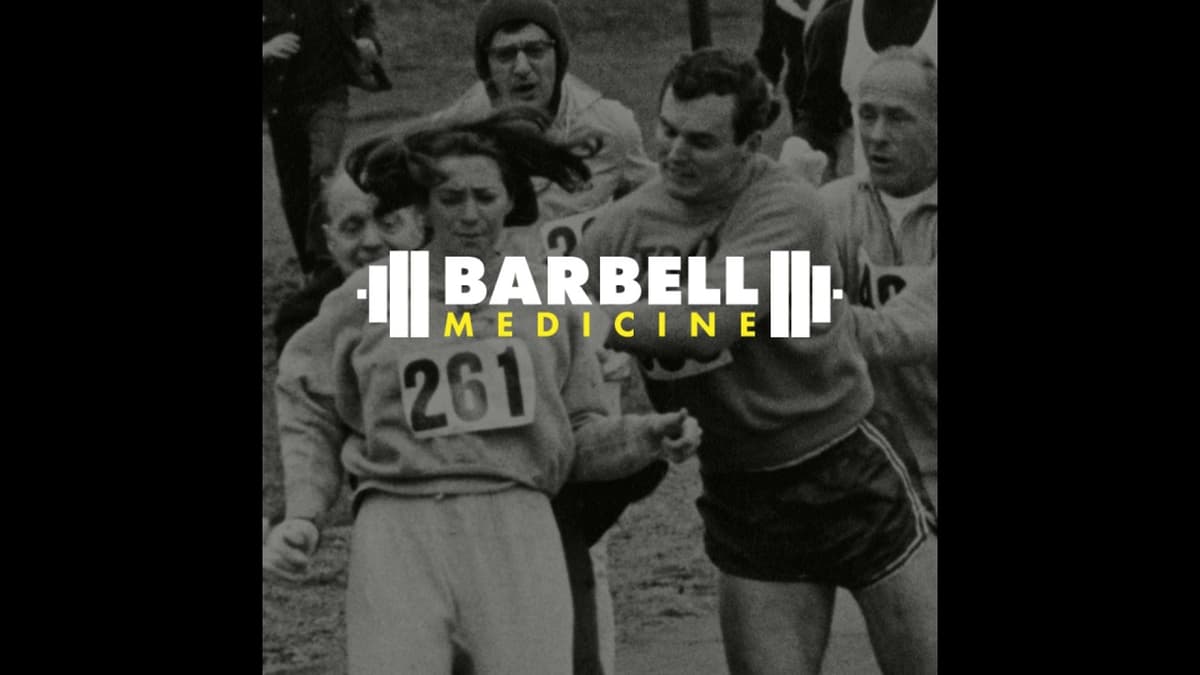
Menopause, Part 2: The 2,000-Year-Old Lie About Women and Exercise
The Barbell Medicine podcast episode tackles two intertwined myths—how testosterone is misunderstood in men and how centuries‑old misinformation tells women to avoid heavy exercise. It opens with a pitch for the authors’ new book “Signal,” then pivots to a historical...
GLP-1s and Muscle Loss: Where Are the Strength Trials?
The discussion centers on the paucity of dedicated strength‑training trials for GLP‑1 agonists and the clinical anxiety that these drugs may cause excessive muscle loss. While weight‑loss benefits are clear, patients and clinicians worry whether lean‑mass reductions translate into functional...
Hot Flashes, the KNDy Mechanism, and the New Non-Hormonal Pill
The video reviews a 2015 JAMA Internal Medicine analysis of the SWAN cohort, which tracked 1,449 women prospectively and found that frequent vasomotor symptoms persist a median of 7.4 years, with post‑menopause duration of 4.5 years and notable racial variation. It...
Your Spine Has No Compressive Budget
The video challenges the notion that the spine has a fixed compressive “budget,” arguing that fatigue is a function of overall training load rather than a unique spinal limit. The hosts cite elite powerlifters experiencing up to 36 kN on L3 without...

The CNS Fatigue Myth
The video challenges the popular belief that heavy lifting induces central nervous system (CNS) fatigue, arguing that the myth lacks empirical support. It centers on a 2018 study by Skarabot et al., which used direct electrical leg stimulation and transcranial...
Your Spine Has No Compressive Budget
The video explains that elite powerlifters subject their lumbar vertebrae—specifically L3—to compressive forces as high as 36 kN during routine training, challenging the notion that the spine has a fixed “budget” for load. Data show a strong correlation (R = 0.82) between bone mineral...

Statin Intolerant? What to Do Instead (2026 Update)
The video tackles statin intolerance, outlining the 2026 clinical update on how to manage patients who cannot tolerate traditional statin‑fibrate therapy. It follows a case study of a man whose statin‑induced myositis prompted a shift to a health‑promoting diet, fish‑oil...
How to Actually Get Tested for Low Testosterone
The video explains how clinicians should correctly order and interpret testosterone testing to avoid misdiagnosis. It stresses that blood draws must occur between 7:00 and 10:00 a.m., after an overnight fast, and when the patient is not acutely ill or sleep‑deprived. A...
Progressive Loading Part 3: Why the Novice / Intermediate / Advanced Framework Doesn't Work, and ...
The Barbell Medicine podcast’s third episode on progressive loading dismantles the entrenched novice‑intermediate‑advanced (NIA) framework, arguing that these labels are merely measurement windows rather than reflections of underlying biology. Hosts Dr. Jordan Fagenbomb and Dr. Austin Baraki explain that training...
Exercise Beat TRT in Middle-Aged Men
A 12‑week Australian trial enrolled 80 men in their 50s and 60s with average testosterone of 320 ng/dL and visceral obesity (waist ≥37 in). Participants were randomized to four arms: prescription testosterone alone, supervised exercise alone, both interventions, or neither. After 12 weeks,...

The Mevalonate Pathway and CoQ10
The video explains the mevalonate pathway, the cellular “factory” that produces cholesterol and other essential isoprenoids, and why statins target it. By inhibiting HMG‑CoA reductase, statins reduce cholesterol output, prompting the liver to clear LDL from circulation. However, the same enzymatic...

Only 3 of 32 "Low T" Symptoms Actually Mean Low T
The video examines a European Male Aging Study that evaluated which of the many complaints commonly attributed to low testosterone actually correlate with hormonal deficiency. Researchers analyzed 32 symptoms in over 3,000 men aged 40‑79, comparing each to total testosterone, free...
What Happens When You Stop a GLP-1: The Data From Three Trials
The video dissects recent evidence on how durable the weight‑loss and cardiovascular benefits of GLP‑1 receptor agonists are once the drugs are stopped. It centers on a British Medical Journal analysis and three pivotal trials—SURMOUNT‑4, STEP‑1 extension, and a semaglutide...