
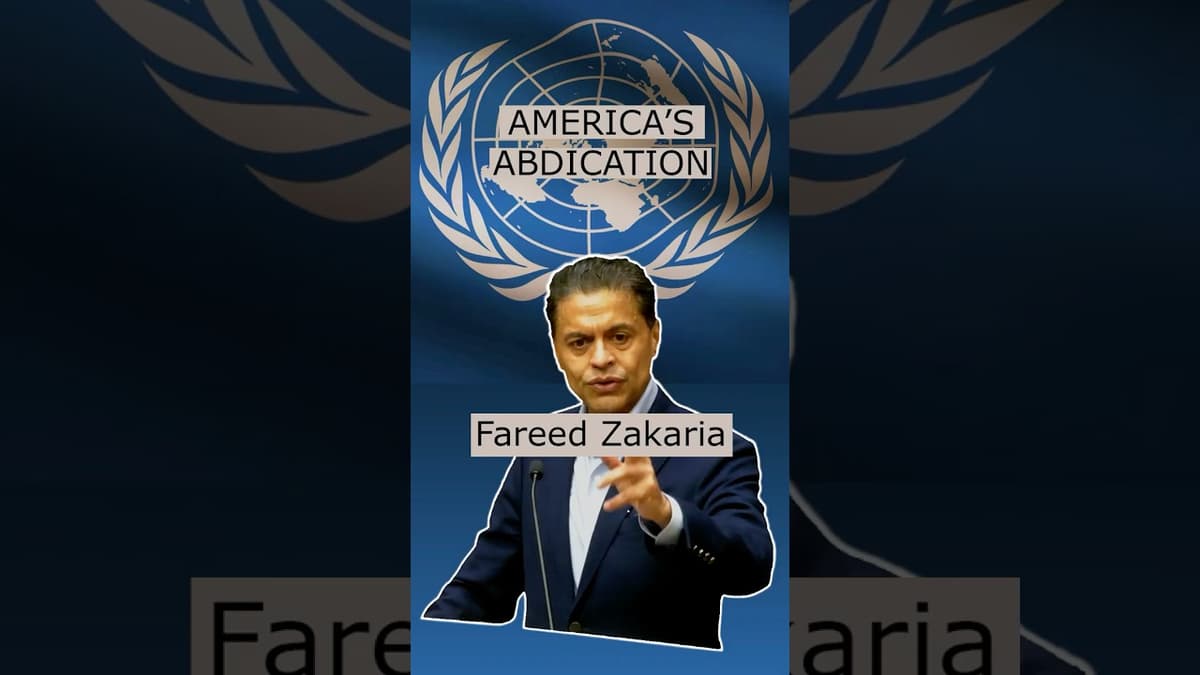
America's Abdication - Fareed Zakaria
Fareed Zakaria argues that the United States, after spearheading a post‑World War II liberal order, is now stepping back from the very principles it once championed. He traces the evolution from Roosevelt’s and Truman’s commitment to free trade and collective security to today’s reality, where the U.S. has become the most protectionist industrialized nation. The core of Zakaria’s analysis is the stark reversal in policy: tariffs that were once the lowest among peers have risen to the highest, and the U.S. routinely flouts the rules of the system it helped construct. This voluntary abdication is not a formal retreat but a gradual disengagement from the institutional framework that underpinned global stability for decades. He underscores his point with vivid language, noting that "the United States is once again the leading protectionist country in the world" and that it "openly violates" the very order it designed. These observations are bolstered by data on tariff levels and the erosion of multilateral trade commitments. The implications are profound. A protectionist America threatens the cohesion of the liberal trade regime, raises costs for multinational firms, and may embolden rival powers to reshape norms to their advantage. Policymakers and business leaders must reassess strategies in a world where the erstwhile guarantor of open markets is retreating.

India's Global Role - Fareed Zakaria
Fareed Zakaria argues that India has moved from being a peripheral player to a central actor on the world stage, driven by its rise to the third‑largest economy and its demographic heft. The interview highlights India’s rapid economic expansion, growing technological...

Jishnu Das - Information and Productivity in Education Markets
The presentation examines a market‑level information intervention conducted in rural Pakistan’s mixed education system, part of the broader LEAPS project. By providing parents and teachers with reliable quality data about local schools, researchers created an information shock that persisted for...

Biden’s Industrial Policy: What Worked, What Didn’t, and Why It Still Matters
The podcast episode examines President Biden’s recent industrial policy, anchored by the Inflation Reduction Act, the CHIPS Act, and the 2021 Infrastructure Investment and Jobs Act, and asks what they have achieved and why they still matter. Shank explains that each...

A Brief History of US Interventionism in Iran and Beyond // Trending Globally
The video traces the evolution of American interventionism from 19th‑century Manifest Destiny to modern overseas actions, using the 1890 Census declaration that the continental frontier was closed as a turning point. It argues that once domestic expansion ended, the United States...

The ‘Doom Loop’ of Global Disorder
The podcast introduces Ishwar Prasad’s "doom loop" thesis: economic globalization, domestic politics and geopolitics are now locked in a negative feedback cycle that amplifies disorder rather than reinforcing each other. The once‑celebrated trio of free trade, liberal democracy and...

A Brief History of US Interventionism in Iran and Beyond
The video frames today’s Iran‑Israel‑US clash within a century‑long American tradition of overseas intervention. It begins by recalling the 1898 Spanish‑American War, when the closing of the continental frontier forced the United States to redefine its destiny, sparking a fierce...

Fareed Zakaria - OP Jindal Distinguished Lecture - A New Star Rises: India’s Potential and Promise
Fareed Zakaria opened the OP Jindal Distinguished Lecture by framing the world’s current tectonic shift: the post‑World‑War‑II liberal order, built by the United States and Britain, is eroding, and a new multipolar reality is emerging. He traced the historical arc...

John Spencer — The Paradox of the Urban Character of Modern Conflicts
John Spencer opened the session by framing urban warfare as a paradox: militaries instinctively avoid fighting in cities, yet the increasing urbanization of the globe makes such conflicts inevitable. He highlighted his decade‑long research, fieldwork in Ukraine, Israel, Gaza, and...
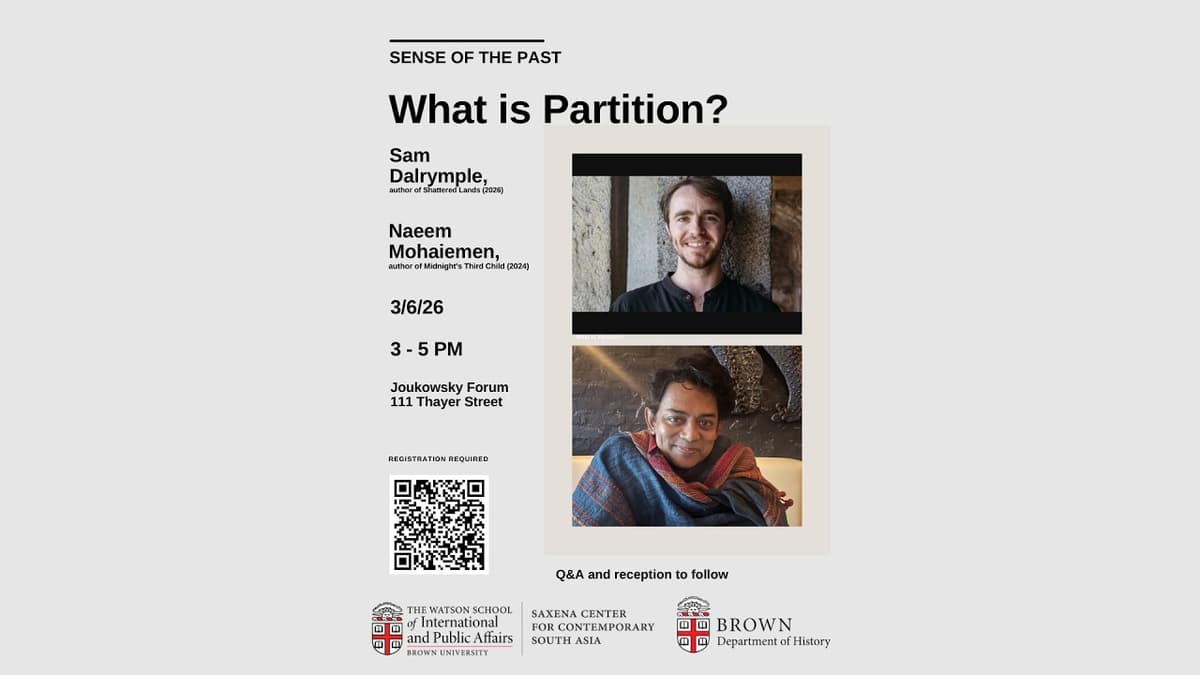
Sam Dalrymple and Naeem Mohaiemen - What Is Partition?
The seminar brought together historian Sam Dalrymple and artist‑researcher Naeem Mohaiemen to interrogate "partition" not as a single 1947 event but as a recurring, conceptual rupture that has shaped South Asia and its peripheries for a century. Dalrymple’s new book...

How US Economic Policy Is Interacting with the Global Economy Today
In this episode of Trending Globally, Brown University’s Watson School dean John Friedmann interviews Professor Shbnam Kily Orojan to dissect how recent U.S. tariff shifts and broader economic policy are reshaping the global economy. The conversation traces the evolution from...
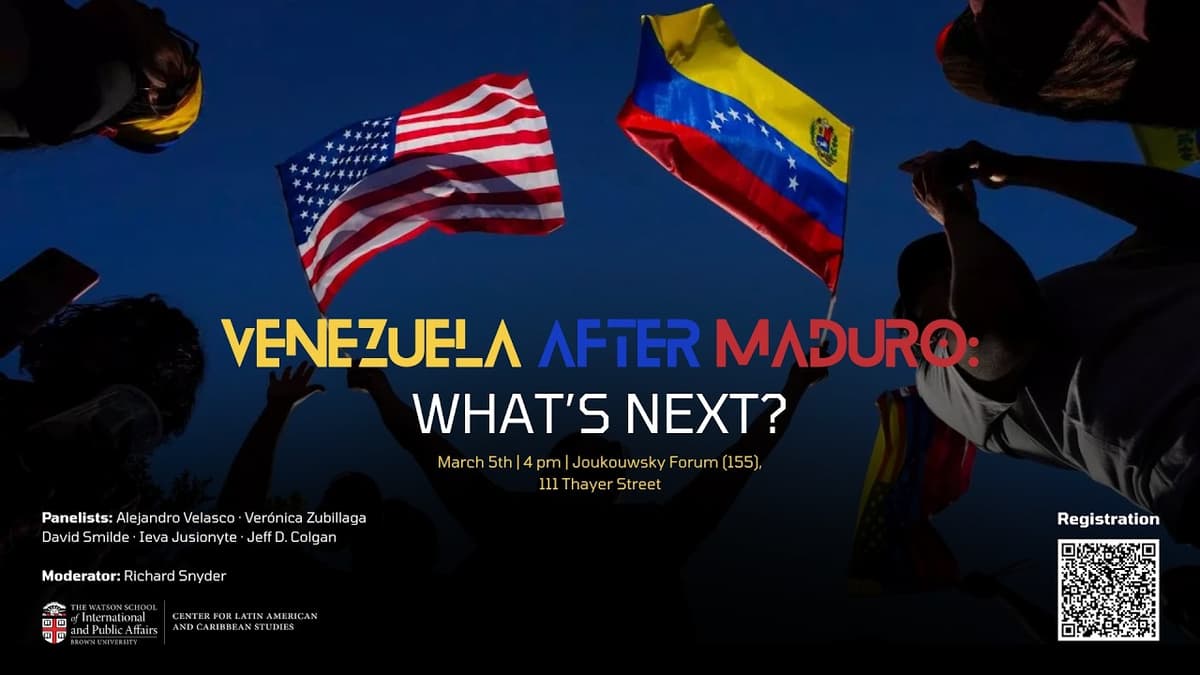
Venezuela After Maduro: What’s Next?
The Brown‑University panel titled “Venezuela after Maduro: What’s Next?” convened leading scholars and Venezuelan experts to assess the country’s political crossroads following the contested 2024 elections. Moderator Rich Snyder opened with questions for David Smiley, who highlighted the rise of...
How Authoritarianism Went From Defense to Offense on the World Stage
The Road Center podcast episode explores the authors’ new book, *Dictating the Agenda*, which argues that authoritarian regimes have moved from merely defending their sovereignty to actively shaping the global political agenda. By tracing the post‑Cold‑War liberal surge—particularly the color‑revolution...

Jason Jackson - Traders, Speculators and Captains of Industry in India
The event featured Jason Jackson discussing his new book *Traders, Speculators, and Captains of Industry*, which examines India’s turbulent journey through market liberalization, especially in the multibrand retail sector. Drawing on fieldwork, interviews, and archival research, Jackson interrogates why Indian...
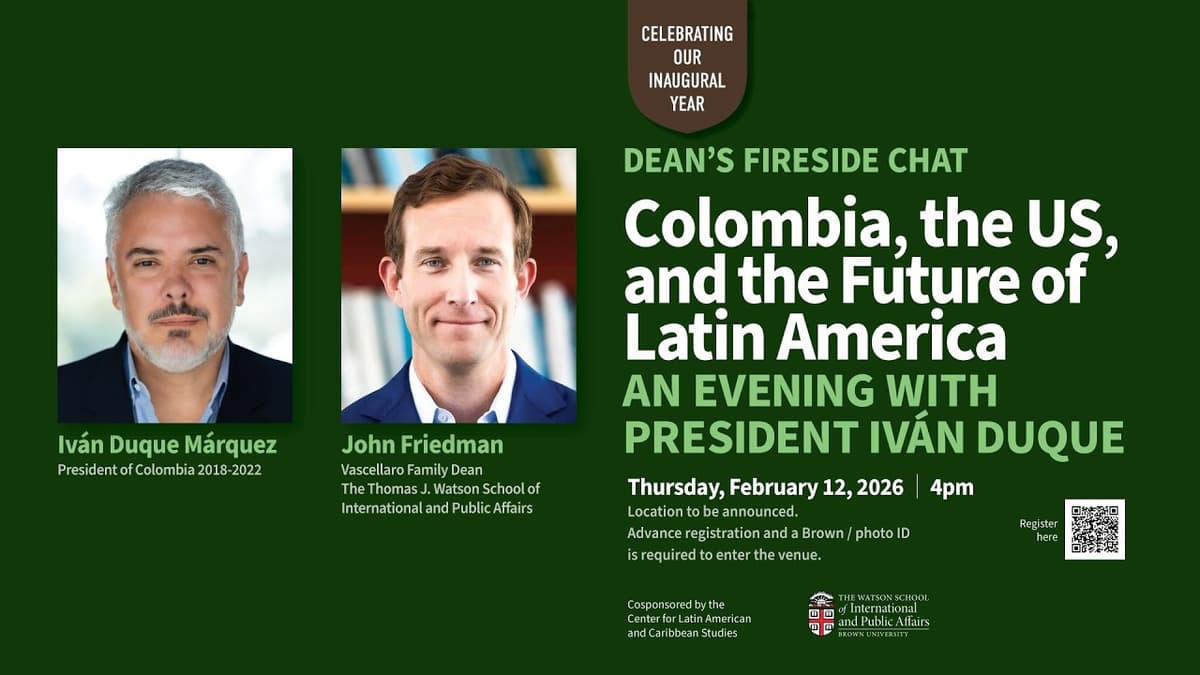
Colombia, the US, and the Future of Latin America: An Evening with President Iván Duque
The Brown University event featured former Colombian President Iván Duque reflecting on the recent U.S. operation that captured Venezuelan leader Nicolás Maduro. Duque framed the removal as a moral imperative, describing it as a precision humanitarian intervention rather than a conventional invasion,...