
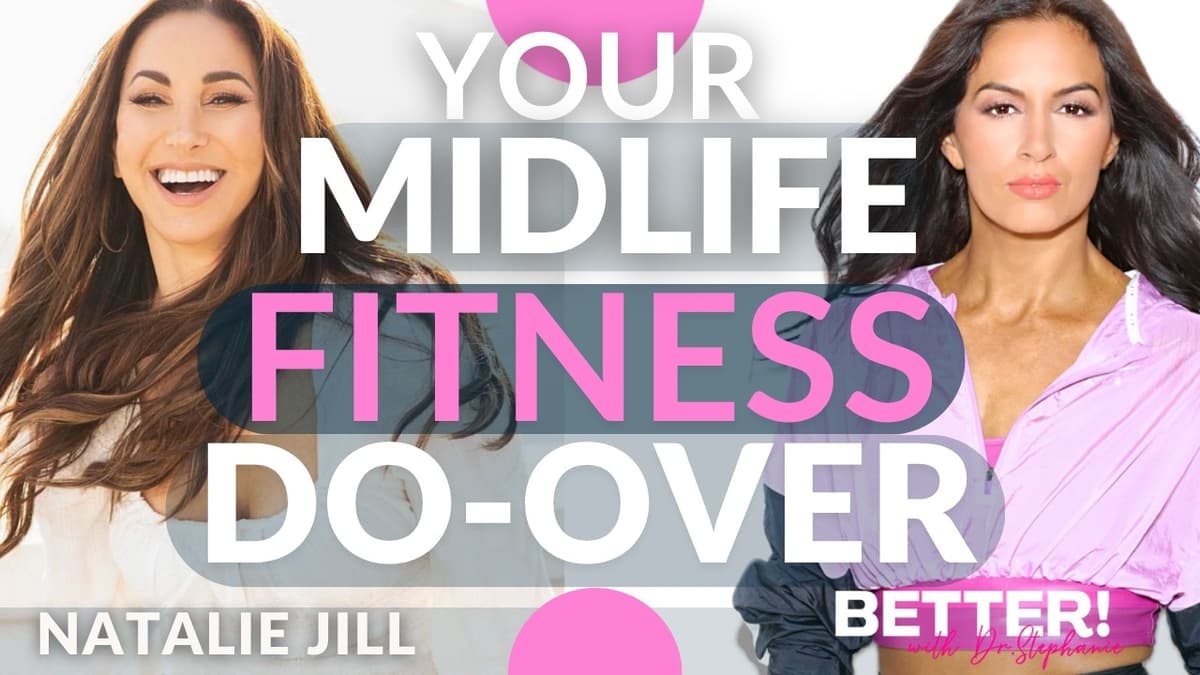
More Cardio, Less Food, Still Gaining: Your Midlife Fitness Do-Over with Natalie Jill
The episode of "Better with Dr. Stephanie" features fitness expert Natalie Jill discussing how midlife women can redesign their health strategy. Jill emphasizes that resistance training, especially weighted lifts, is essential for building lower‑body muscle, while cardio alone cannot replace strength work. She also critiques reliance on processed supplements, urging a return to whole, natural foods over protein powders and bars. Key data points include Jill’s personal revelation that removing five sets of breast implants eliminated chronic inflammation, resulting in a 15‑pound loss of water weight within four weeks. She links this to the broader concept of a "toxic load bucket," where hidden sources—implants, root canals, heavy metals—can sabotage health. Additionally, she highlights the role of NAD decline in skin aging and recommends cellular‑level skincare to restore barrier function. Notable quotes illustrate her journey: “I caught myself in a mirror and thought, what am I looking at?” and “What if?” which sparked a vision‑board exercise that reshaped her mindset. Jill also shares that she stopped using protein powders, favoring oatmeal, eggs, and real nutrients, and that she now embraces a natural A‑cup silhouette after expplanting. The conversation underscores that midlife fitness isn’t just about calories or cardio; it requires holistic detoxification, strength training, and mental reprogramming. For women navigating menopause, autoimmune issues, or post‑surgical recovery, Jill’s story offers a blueprint for reclaiming metabolic health, bone density, and skin vitality.
The Best Part of Menopause...
The video frames menopause not as a loss but as a transformative "zero‑fs era" where the ovaries wind down and their creative energy shifts to the heart and brain, unlocking a new sense of personal power. The speaker emphasizes that...
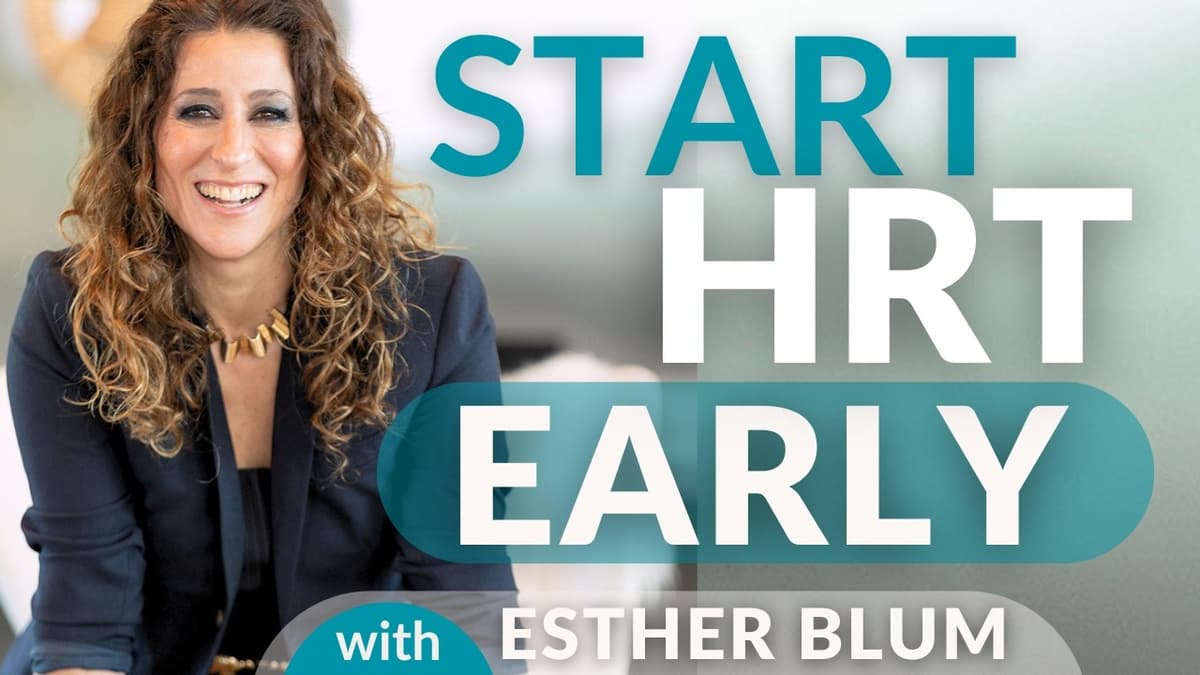
Starting HRT in Perimenopause (Not Menopause) Could Save Your Bones, Brain, Marriage | Esther Blum
The discussion centers on initiating hormone replacement therapy (HRT) during perimenopause rather than waiting until menopause. Esther Blum argues that the steepest loss of muscle and bone occurs in the final two years of perimenopause, and that estrogen, progesterone, testosterone,...

96% of Drs Weren’t Taught About Pain: The Recipe for Relief with Dr. Rachel Zoffness
The episode of “Better with Dr. Stephanie” features pain‑science expert Dr. Rachel Zoffness, who argues that the prevailing biomedical view of pain is a myth and that most clinicians were never taught the neuroscience behind it. Zoffness cites that roughly 96 %...
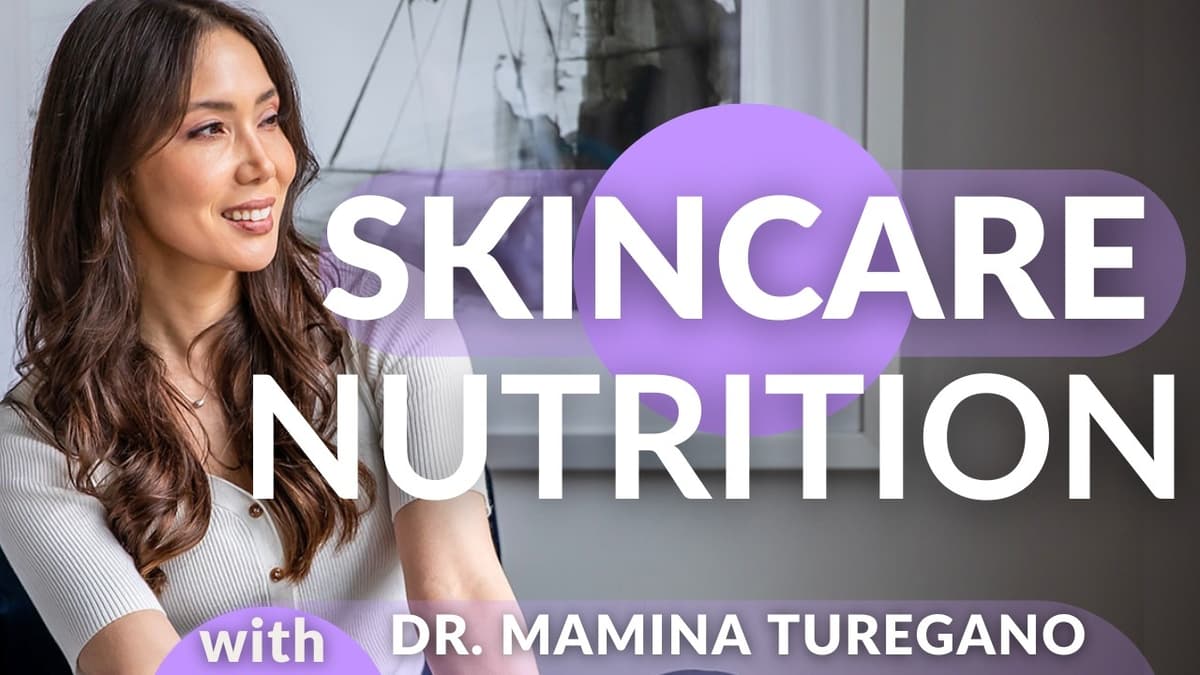
What to Eat for Better Skin: Supplements & the Fiber-Acne Connection | Dr. Mamina Turegano
The discussion centers on how internal nutrition and targeted supplements complement topical skincare to improve skin conditions ranging from acne to hyperpigmentation. Dr. Mamina Turegano emphasizes that diets high in sugar, refined carbs, and dairy elevate insulin and hormone fluctuations,...
Why Cardio Alone Won't Save You in Perimenopause — And What Will
The video argues that cardio alone won’t protect women during perimenopause because metabolic health depends on flexibility, not merely aerobic efficiency. It stresses the need to switch between fuel sources, clear glucose quickly, and tolerate sudden stress spikes. Key insights include...

Avoiding Stress Doesn't Make You Resilient. It Makes You Weaker.
The video argues that deliberately avoiding stress does not create resilience; instead, it erodes physical and neurological capacity over time. It frames stress as a training stimulus that, when dosed correctly, conditions the nervous system and improves power output, essential...

15 Minutes of This Rewires Your Brain & Metabolism — The Science of Lactate | Dr. Stephanie Estima
The video reframes lactate from a dreaded by‑product to a vital metabolic signal, emphasizing its role in high‑intensity sprint training. Dr. Stephanie Estima explains that lactate is generated continuously, even in oxygen‑rich conditions, to keep glycolysis running by recycling NAD+...
The Women's Health Initiative Wasn't a Bad Study. The Headlines Were. | Dr. Heather Hirsch
In this interview, Dr. Heather Hirsch argues that the Women’s Health Initiative (WHI) was a rigorously designed, double‑blind, placebo‑controlled trial, and that the negative headlines that followed its 2002 release have unfairly tarnished menopausal hormone therapy (HRT). She emphasizes that...

The Biggest Lie Women Are Told About Perimenopause — According to a Harvard Menopause Specialist
The video spotlights a pervasive myth: perimenopause is framed solely as a gynecologic issue. Harvard menopause specialist Dr. [Name] argues that the transition is fundamentally a cardiometabolic shift, demanding broader medical attention beyond obstetrics and gynecology. She explains that hormonal fluctuations during...
Running Through Sand in Your Luteal Phase? This Is Why.
The video explains how fluctuations in female hormones, especially during the luteal phase, directly influence creatine metabolism and overall energy availability. When progesterone dominates, creatine kinase activity, the creatine transporter, and internal synthesis enzymes all decline, reducing phosphocreatine turnover. This biochemical...

Your Brain Runs on Creatine Too — and Sleep Deprivation Proves It
The video explains how creatine, long known for boosting muscular power, also fuels the brain by acting as an ATP buffer, especially when the organ is stressed by sleep loss. Creatine exists in cells as phosphocreatine, ready to donate a phosphate...
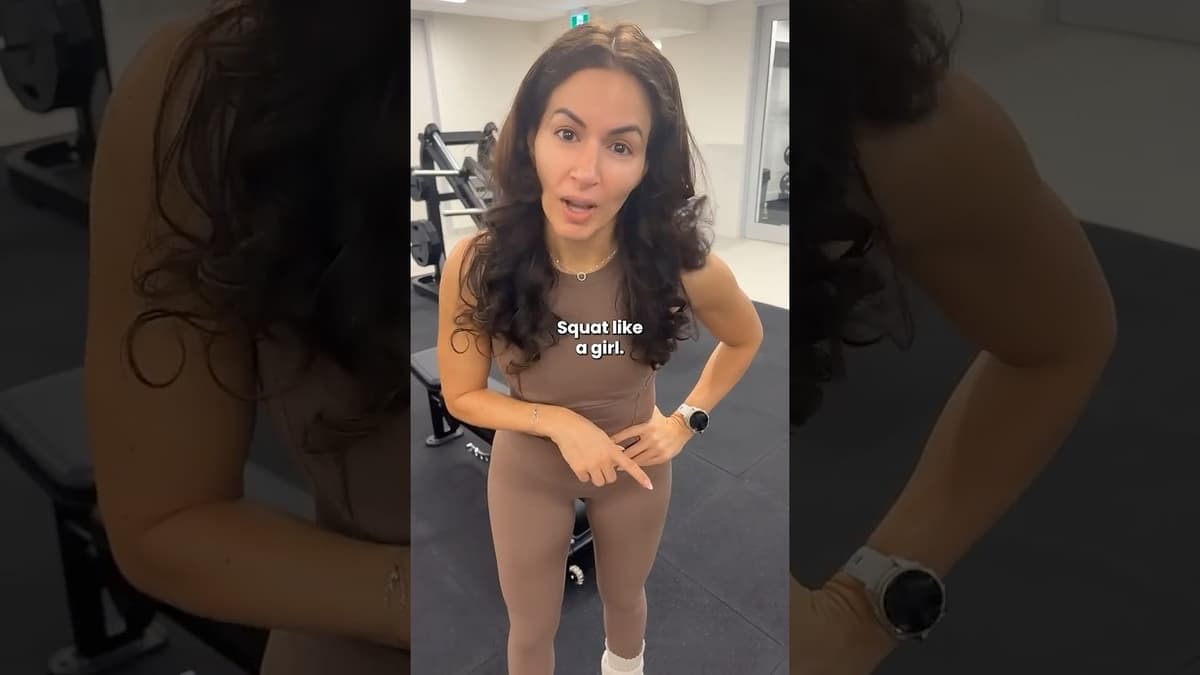
The Squat for Rounder Glutes
The video teaches women how to adjust their squat to engage the glutes rather than the quads. It explains that many women are quad‑dominant because a flared ribcage, insufficient dorsiflexion and a ‘butt‑wink’ at depth cause the pelvis to tuck under,...

Elite Rugby Players. 3 Hours of Sleep. Creatine Did This.
The video highlights recent research showing creatine supplementation can counteract the performance deficits caused by acute sleep loss. In two separate trials, older adults and elite rugby players were restricted to three hours of sleep and then tested on cognitive...

The Best Time to Take Creatine (And Why Getting It Wrong Means You Stop Taking It)
The discussion centers on the optimal timing for creatine supplementation, weighing scientific evidence against practical adherence. While many wonder whether pre‑workout, intra‑workout, or post‑workout dosing yields superior gains, the hosts argue that consistency trumps precise timing. A within‑person study cited in...