

Depleted, Foggy & Done? How Creatine Buffers Energy, Sleep Loss & Midlife Stress with Dan Pardi, PhD
The episode features Dr. Dan Pardi, chief health officer at Qualia Life Sciences, explaining why creatine is no longer just a gym‑bro supplement but a cellular energy buffer for sleep‑deprived, mid‑life professionals. He argues that the compound fuels mitochondria, stabilizing cognition and mood when caffeine and sugar fall short. Pardi debunks common myths: creatine draws water into muscle cells, producing a tighter feel rather than external bloating; the rise in blood creatinine is a benign by‑product, not a sign of kidney damage; heat only degrades a few percent of the powder, so quick consumption is optimal; and there is no credible link between creatine and hair loss. He also traces the product’s evolution from a niche Olympic aid in the 1990s to a $150 million market by the early 2000s, now expanding into broader health‑span applications. “Most people think creatine is for exercise performance, but it’s really for energy support,” Pardi says, highlighting the shift from performance‑only research to studies on cognition, sleep, and stress resilience. He cites the 1990s British Olympic sprint breakthrough and recent trials showing improved ATP production and sustained mental focus in non‑athletes. The conversation signals a widening consumer base: women, older adults, and office workers may adopt creatine as a low‑cost, low‑risk alternative to stimulants. For supplement manufacturers and retailers, this broadening appeal could drive new product lines and marketing strategies focused on cognitive health rather than pure strength gains.

Can You Build Bone Density This Way?
The video examines whether wearing a weighted vest can increase bone mineral density, emphasizing that the vest must be combined with appropriate mechanical loading to be effective. Evidence includes a 27‑week RCT where older adults wore a 3‑5% body‑weight vest two...

She Still Remembers the Girl's Name 💔
The video is a candid reflection on the first time the speaker heard a comment about her weight, recalling she was twelve when classmates teased her thighs and butt, and how that moment marked the start of self‑scrutiny. She recounts specific...

Childhood Trauma, Birth Control & Your Gut: The Perimenopause Reckoning with Cynthia Thurlow
The episode explores how perimenopause reshapes the gut microbiome, hormone metabolism, and overall health, featuring nurse practitioner Cynthia Thurlow’s insights on the often‑overlooked digestive and immune dimensions of the transition. Thurlow explains that declining estrogen alters gut bacteria, increasing susceptibility to...
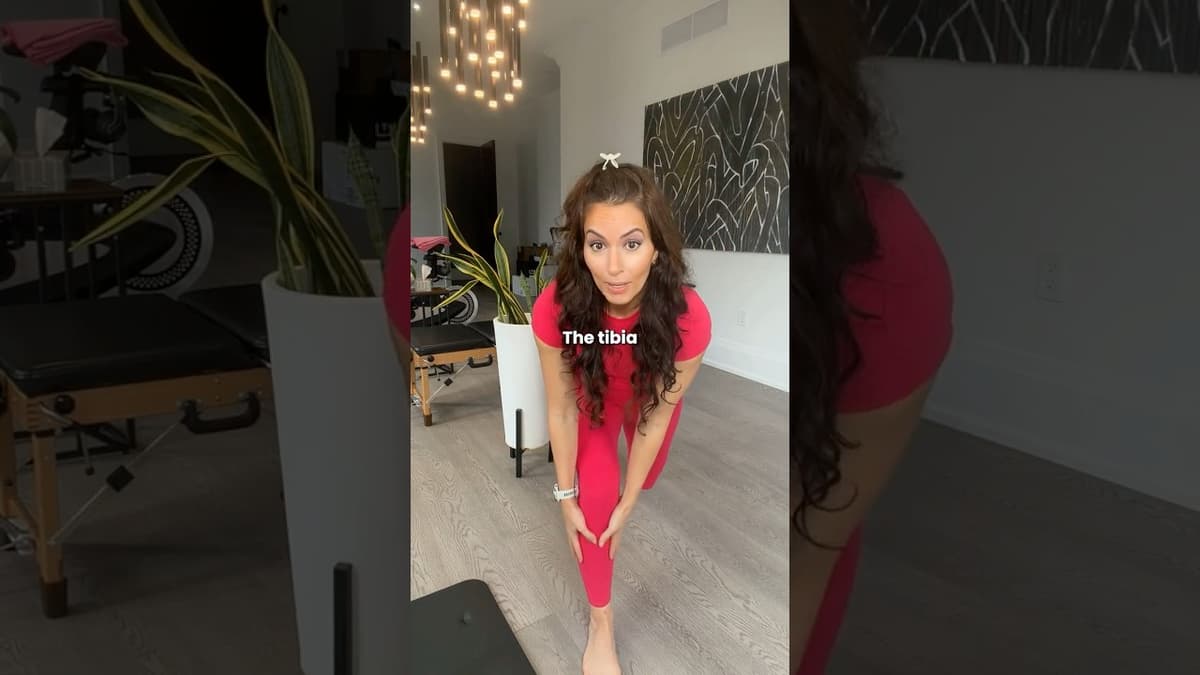
Ladies Who Lunge - Watch This
The video breaks down the biomechanics of a lunge, focusing on how the femur and tibia rotate inward as you lower into the movement and then outward as you rise. It challenges common fitness myths by explaining that foot pronation...

Could This Be the Missing Piece to Women's Health?
The video tackles the taboo surrounding women’s genital health, highlighting how few people receive basic education about the vulva’s anatomy and how it changes with age. The speaker contrasts male and female socialization—boys are encouraged to explore their genitals, while girls...

Why Sexual Health Is Actually a Life-or-Death Issue with Dr. Juliana Hauser
In this episode of the Better podcast, Dr. Juliana Hauser argues that sexuality is not a luxury but a vital sign that can determine life or death. She frames sexual health as a core component of holistic well‑being, intersecting mental,...
How Much Spermidine Do You Actually Need — And How to Know If Your Supplement Is Fake
The video explains how much spermidine people actually need, where to obtain it from whole foods, and how to evaluate the credibility of commercial supplements. Typical Western diets deliver roughly 8 mg of spermidine per day, far below the 30‑35 mg range suggested...

The Spermidine-Rich Risotto You Need to Make This Week
The video walks viewers through a spermidine‑focused culinary plan, centering on a risotto that maximizes this longevity‑linked polyamine. It highlights everyday foods—legumes, mushrooms, whole‑grain wheat, leafy greens, and especially aged cheeses—as primary dietary sources of the whole‑form compound. Key nutritional tactics...
Why You Can't Stop Snacking After 40 — And the Molecule That Fixes It Without Killing Your Muscle
The video explains why snack cravings surge after age 40, linking the phenomenon to age‑related insulin resistance and dysregulated nutrient‑sensing pathways. As insulin responses weaken, blood‑sugar spikes trigger constant hunger, inflammation, and a compulsion to reach for quick carbs. Key insights focus...

Marie Kondo Your Cells: What Spermidine Actually Does Inside Your Body
The video explains how the naturally occurring polyamine spermidine activates autophagy, a cellular self‑recycling mechanism that clears damaged proteins and organelles. By likening the process to Marie Kondo’s decluttering, the presenter emphasizes that autophagy makes room for fresh cellular components...
You Have 5 Years Left." She Proved Them Wrong - Twice! With Leslie Kenny
The episode of "Better with Dr. Stephanie" centers on spermidine, a naturally occurring polyamine, and its capacity to counteract the twelve hallmarks of aging. Host Dr. Stephanie Estima interviews Leslie Kenny, who survived multiple autoimmune diagnoses and a five‑year mortality...

We Celebrate Women Who Disappear — And Never the Ones Who Get Stronger
The video challenges the prevailing cultural narrative that celebrates shrinking—losing weight, dropping dress sizes—while overlooking the equally valuable achievements of gaining strength, endurance, and functional capacity. The speaker argues that this one‑dimensional praise reinforces a harmful mindset that equates worth...

Fasting, Fiber & Menowashing: What Works in Perimenopause Vs. What Doesn't | Dr. Mary Claire Haver
Dr. Mary Claire Haver, a menopause specialist, tackles three hot topics in perimenopause: intermittent fasting, fiber supplementation, and the surge of so‑called “menowashing” products. She frames fasting as one tool among many, emphasizing that it should never compromise essential nutrient...

She's Not Exercising for the Bikini. She's Exercising for Her 80-Year-Old Self.
The video reframes fitness motivation, emphasizing that the speaker works out not for a bikini but to safeguard her future self in her 80s and beyond. She stresses that daily rituals—adequate protein, vitamin D, balanced nutrition, consistent exercise, and quality...

Stop Exercising for How You Look, Start Exercising for Your 80-Year-Old Self | Dr. Mary Claire Haver
Dr. Mary Claire Haver argues that exercise should be driven by the goal of preserving function for an 80‑year‑old version of yourself, not by short‑term aesthetic goals. She stresses that habits formed in one’s 20s and 30s—adequate protein, vitamin D,...

"I Don't Feel Like Myself" — Science Finally Has an Answer
The video tackles pmenopause, highlighting how erratic estrogen spikes leave many women feeling detached from their usual selves. Researchers recently quantified the ubiquitous complaint, "I don’t feel like myself," linking it to diminished resilience, coping skills, and daily functioning as hormone...

"It's Not a Gentle Decline" — The Hormone Chaos Nobody Warned You About | Dr. Mary Claire Haver
Dr. Mary Claire Haver, author of "The Hormone Chaos Nobody Warned You About," describes perimenopause as a “zone of chaos” rather than a smooth hormonal decline. She argues that the transition is marked by erratic fluctuations in estrogen, progesterone, LH...

Great News About Perimenopause
The video addresses the challenges of diagnosing perimenopause, emphasizing that a single hormone measurement—whether blood, saliva, or urine—fails to capture the condition’s hormonal volatility. Instead, clinicians are urged to adopt a clinical diagnosis that integrates a detailed patient history, covering...

What Antidepressants Are Actually Doing to Your Emotions
The video examines why antidepressants have become the go‑to response for mood disorders, noting that roughly 70% of people will meet clinical depression or anxiety criteria by age 45. It critiques the checklist‑driven diagnosis that prompts physicians to reach for...

If Depression Isn't a Chemical Imbalance, What Are Antidepressants Really Doing?
The video questions the long‑standing chemical‑imbalance model of depression, arguing that antidepressants do not simply restore a missing neurotransmitter but instead modify the brain’s normal chemistry. It highlights that, in the absence of a proven biochemical defect, these medications act...

Feeling Stuck on Antidepressants in Midlife? How to Taper Off Safely with Mark Horowitz, PhD
The discussion centers on the widespread, often long‑term use of antidepressants among mid‑life women, questioning the prevailing serotonin‑deficiency narrative and featuring deprescribing expert Dr. Mark Horowitz. Horowitz cites striking statistics—56 million Americans on antidepressants, 25 million for over five years—and explains that...

What to Eat for a Sharper Brain: Omega-3s, Polyphenols & Nutrients That Matter | Dr. Tommy Wood
The video centers on how targeted nutrition can sharpen cognition and support long‑term brain health, with Dr. Tommy Wood outlining a flexible yet evidence‑based framework. He emphasizes a core set of nutrients—vitamin D, B‑vitamins (especially B12, folate, B6), magnesium, zinc,...

Your Brain Responds to Exercise the Same Way Your Muscles Do | Dr. Tommy Wood
The video explains that just as muscles need regular challenge, the brain requires cognitive stimulus to stay sharp, drawing a direct parallel between physical and mental training. Dr. Wood outlines that both exercise and mentally demanding tasks activate similar biochemical pathways—enhancing...

"Heart Surgery Looks Like Murder" — Why Exercise Inflammation Is Actually Good | Dr. Tommy Wood
Exercise triggers acute stress responses—elevated cortisol, adrenaline and inflammatory markers such as CRP and IL-6—that can look harmful in the short term. Dr. Tommy Wood argues these transient inflammatory and stress reactions are adaptive: they divert resources to repair and...

Stop Avoiding Stress, It's Making You Weak: Cortisol & Inflammation | Dr. Tommy Wood
Dr. Tommy Wood argues that acute stress and inflammation from exercise are adaptive, not harmful, because they redirect resources to performance and trigger repair and long-term reductions in baseline inflammation. He explains that short-term rises in cortisol and cytokines during...
Is Mold Making You Fat, Foggy & Inflamed? (The Signs You're Missing) | Kyal Van Der Leest
The video centers on how chronic mold exposure can sabotage weight management, cognition, and overall health, especially for women. Host Kyal Van Der Leest draws on personal experience living in humid, mold‑prone regions—from Toronto to Queensland—to illustrate the pervasive nature of indoor...

The Ozempic Face Explanation
The video tackles the phenomenon popularly dubbed “Ozempic face,” arguing that the gaunt, hollow‑cheeked appearance seen in some rapid‑weight‑loss patients is less a direct side effect of GLP‑1 agonists and more a manifestation of accumulated toxins that become visible when...
The GLP-1 Side Effect Nobody's Talking About (And What To Do Instead) with Kyal Van Der Leest
GLP‑1 agonists such as Ozempic and tirzepatide drive rapid fat loss, but high‑dose regimens can impair gastric motility, leading to bacterial overgrowth, leaky gut, and bloating. Kyal Van Der Leest explains that fast fat loss also releases stored toxins—heavy metals...

The Anti-Aging Peptide That Works On 900 Longevity Genes (GHK-Copper Explained) | Kyal Van Der Leest
The video explains how the tripeptide GHK‑copper (GHK‑Cu) can be used as an oral and topical anti‑aging ingredient, highlighting its ability to survive stomach acid and reach systemic circulation. Because GHK is only three amino acids, it can cross the intestinal...
Most Oral Peptides Don't Work
The video asserts that oral administration of most peptide therapeutics fails, highlighting a fundamental limitation in the market. It explains that peptide size, exemplified by insulin's 52‑amino‑acid chain, leads to enzymatic degradation in the gastrointestinal tract, making injection necessary; only peptides...
BPC-157 Explained: The One Peptide Every Midlife Woman Should Know About with Kyal Van Der Leest
The video introduces BPC‑157, a multifunctional peptide touted as essential for midlife women dealing with joint degeneration and gut dysfunction. Host Kyal Van Der Leest and a chiropractic doctor explain how the peptide’s primary action—restoring tight‑junction integrity in the intestinal...

Heal Your Gut, Fix Your Joints & Glow Up Your Skin: Your Peptide Guide with Kyal Van Der Leest
The episode of "Better with Dr. Stephanie" dives deep into the world of peptides, contrasting oral and injectable formats while highlighting their roles in gut health, joint repair, and skin rejuvenation. Host Dr. Stephanie Steema and guest Kyle Vanderle, founder...
You Don't Need to Train Like an Athlete to Grow a Bigger Brain | Dr. Majid Fotuhi
Dr. Majid Fotuhi explains that achieving a larger, healthier brain does not require elite‑level workouts; modest, regular exercise is sufficient. He outlines two effective protocols: a daily 45‑minute moderate routine, or three weekly sessions of one hour high‑intensity cardio followed by...
This Is What Estrogen Is Actually Doing to Your Brain in Perimenopause | Dr. Majid Fotuhi
Dr. Majid Fotuhi explains how estrogen fluctuations during perimenopause directly alter brain structures, especially the hippocampus and cortex, leading to memory lapses and brain fog. He highlights a lesser‑known vascular component that intensifies these cognitive shifts. The impact varies widely...
The #1 Thing a Neurologist Does for Brain Health (It's Not What You Think) | Dr. Majid Fotuhi
Dr. Majid Fotuhi highlights exercise as the top pillar of brain health, surpassing sleep, nutrition, stress reduction, and brain training. He explains that physical activity multiplies neuronal mitochondria, cuts inflammation, and spikes brain‑derived neurotrophic factor (BDNF). These changes not only...
Forgetting Words & Losing Your Keys in Perimenopause Is NOT Alzheimer's | Dr. Majid Fotuhi
Dr. Majid Fotuhi explains that memory lapses common in perimenopause are not early signs of Alzheimer’s disease. He outlines clinical criteria that separate normal hormonal‑related fog from genuine cognitive red flags. The discussion also covers how lifestyle factors such as...

Is It Alzheimer’s or Perimenopause?
Neurologist Dr. Majid Fotuhi explains that the forgetfulness and mental fog experienced during perimenopause are normal, not signs of neurodegeneration. He highlights that targeted habits—such as walking three times weekly and using hearing aids—can increase brain volume and improve memory....
Is It Alzheimer's or Perimenopause? 5 Ways to Protect Your Midlife Brain with Dr. Majid Fotuhi
Dr. Majid Fotuhi, an adjunct professor at Johns Hopkins, explains that the cognitive fog experienced during perimenopause is not an early sign of Alzheimer’s but a reversible hormonal effect. He highlights that lifestyle interventions—particularly walking three times weekly—can increase brain...
Tendon Adaptation: Mechanotransduction & Training Insights
Dr. Stephanie Estima explains that tendons remodel through mechanotransduction, converting mechanical strain into anabolic signals that drive collagen synthesis and tissue strengthening. She emphasizes that heavy, consistent loading is essential for healthy tendon adaptation, while abrupt increases in intensity raise...

Tendons Are My Spirit Animal (They HATE Surprises)
Dr. Stephanie likens tendons to her own temperament, emphasizing that they cannot tolerate sudden, unexpected loads. She explains that after a prolonged break from activity, athletes must rebuild tendon capacity through gradual, progressive training rather than jumping straight into high‑intensity...
The Six-Week Trap: Understanding Tendon Adaptation & Healing
Dr. Stephanie Estima describes the "Six‑Week Trap," a pattern where trainees gain early strength but encounter tendon pain after six to ten weeks. She attributes this to tendons’ slower remodeling compared with muscle and neural adaptations, compounded by limited blood...