
Recent Posts
Video•Feb 28, 2026
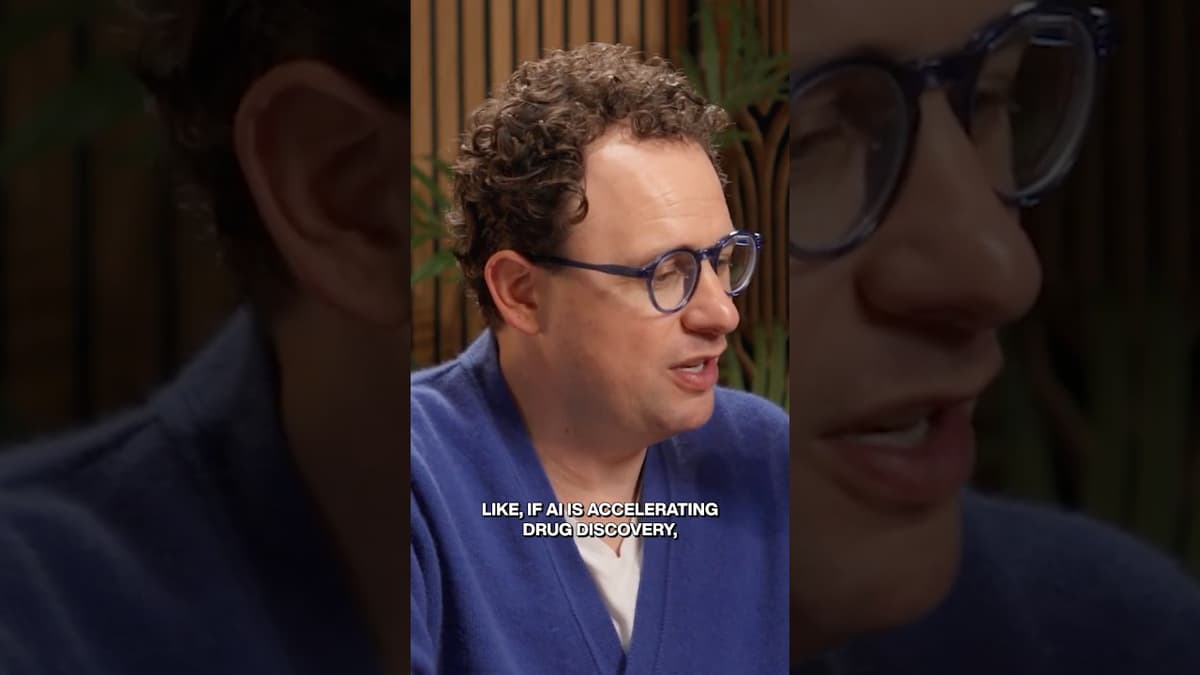
What Happens to Developing Countries in an AI-Driven World - Dario Amodei
Dario Amodei argues that the AI revolution fundamentally reshapes the development trajectory of low‑income economies, because the traditional engine of catch‑up—under‑utilized labor supplemented by foreign capital—will lose its potency when intelligent automation makes labor less scarce. He notes that while philanthropy can help, it cannot replace the need for structural AI‑driven industries. Deploying data centers, cloud infrastructure, and AI‑enhanced pharmaceutical research in regions such as Africa would create new sources of productivity and export revenue, replicating the historic model of capital inflows but with technology as the catalyst. Amodei cites his own stance that “we shouldn’t build data centers in China, but there’s no reason we shouldn’t build them in Africa,” and points to AI‑accelerated drug discovery as a concrete sector where startups could emerge in the Global South, provided local talent supervises the models. The implication is clear: governments and investors must deliberately seed AI ecosystems in developing markets, or risk widening the global wealth gap as AI benefits concentrate in already advanced economies.
By Dwarkesh Patel
Video•Feb 25, 2026
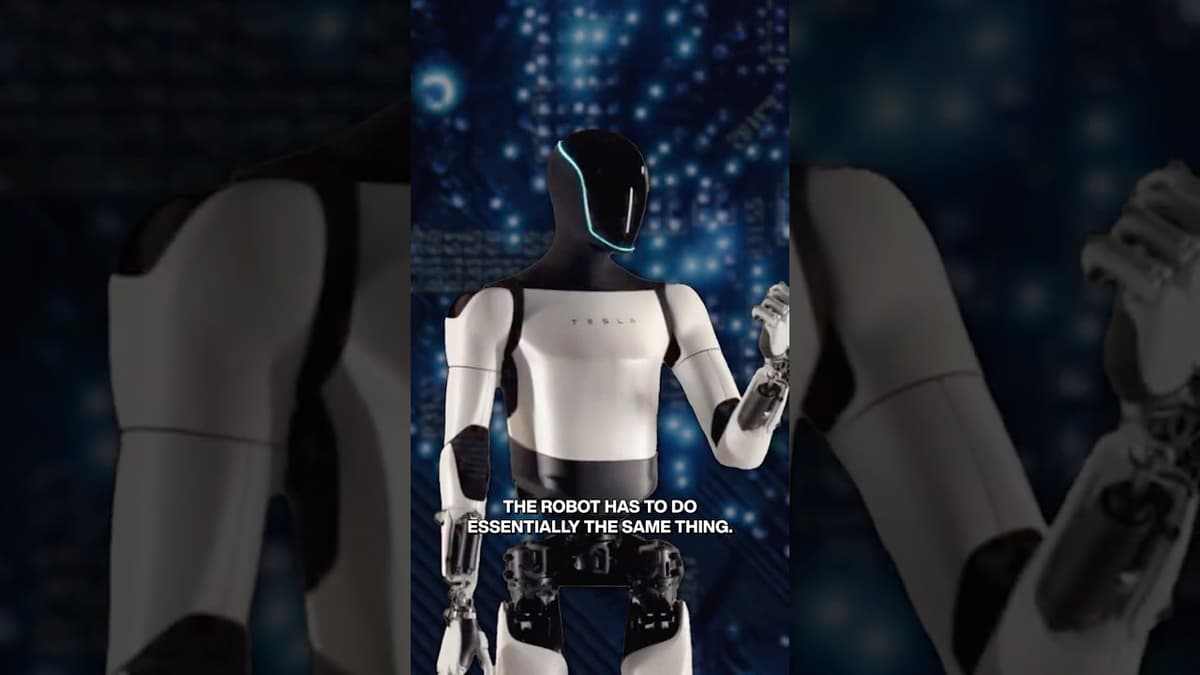
Why The Robot Revolution Will Come Sooner Than You Think - Elon Musk
Elon Musk says Tesla has been developing humanoid robots for five to six years and will leverage the company’s self-driving AI stack and custom chips to accelerate progress. He argues the core technical challenge—compressing rich visual input into compact control...
By Dwarkesh Patel
Video•Feb 23, 2026
Why Anthropic Won't Outspend Its AI Rivals - Dario Amodei
In a recent interview, Anthropic co‑founder Dario Amodei explained why the company will not try to outspend its AI rivals. He framed the discussion around the narrow timing window in which a breakthrough can secure market leadership, and argued that...
By Dwarkesh Patel
Video•Feb 21, 2026
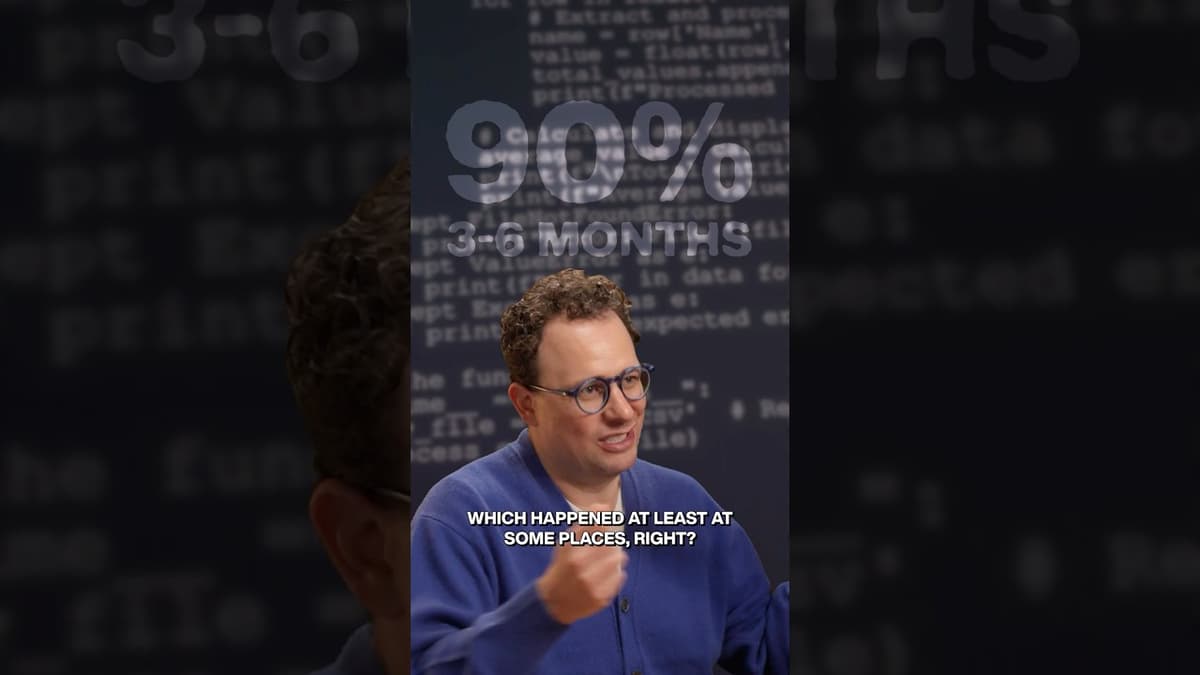
The AI Coding Prediction Everyone Got Wrong - Dario Amodei
Dario Amodei, co‑founder of Anthropic, revisits a series of predictions he made about AI‑generated code, emphasizing that many listeners misinterpreted his forecast. He explains that the original claim was that AI models would write roughly 90 % of the lines of code...
By Dwarkesh Patel
Video•Feb 18, 2026
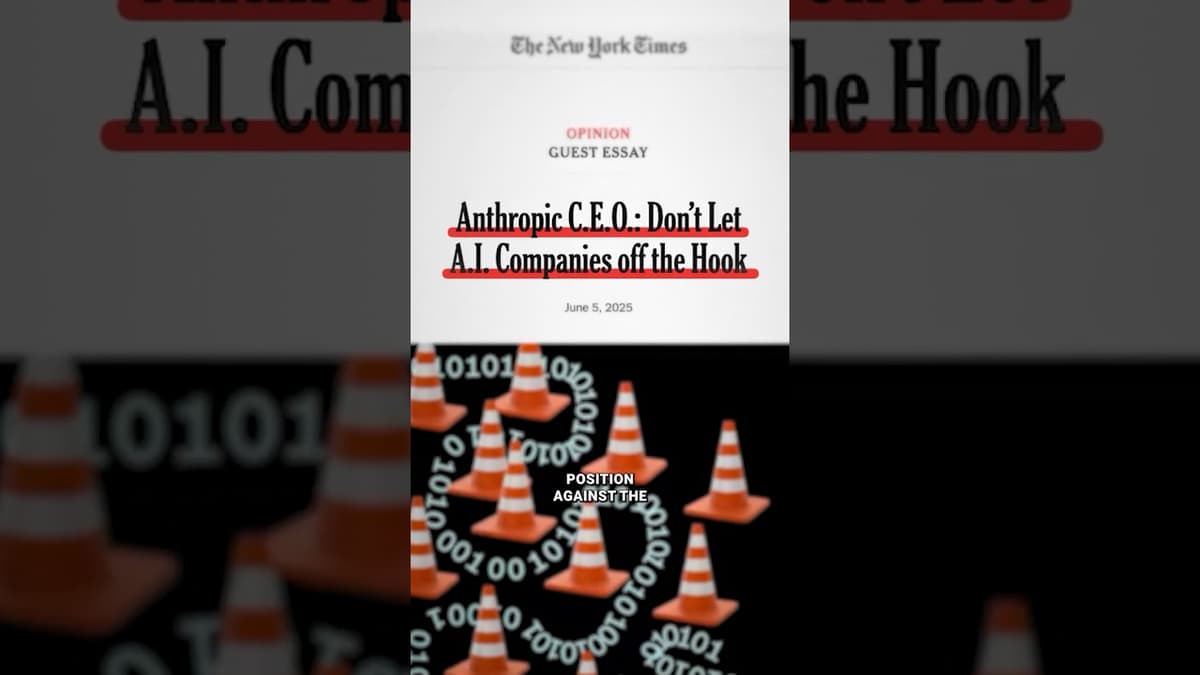
Why Anthropic's CEO Supports AI Regulation
The video centers on Anthropic’s chief executive reacting to recent legislative moves targeting artificial intelligence. He critiques a Tennessee proposal that would make it a crime to train AI systems for emotional‑support conversations, arguing the language reflects a fundamental misunderstanding...
By Dwarkesh Patel

Video•Feb 17, 2026
How Claude Code Was Actually Developed - Dario Amodei
In a candid interview, Anthropic co‑founder Dario Amodei explains how the company’s internal coding assistant, Claude Code, emerged from a simple experiment with its own coding‑focused language models. Around early 2025 Amodei encouraged teams to build a harness—initially called Claude CLI—to...
By Dwarkesh Patel
Video•Feb 16, 2026
Can The CCP Exist After AGI - Dario Amodei
In a recent interview, OpenAI researcher Dario Amodei tackles the provocative question “Can the CCP exist after AGI?” He argues that the rise of artificial general intelligence could fundamentally alter the social contract that allows authoritarian regimes to persist. Amodei warns...
By Dwarkesh Patel

Video•Feb 15, 2026
Can We Prevent Authoritarian States From Weaponizing AI? - Dario Amodei
In a recent talk, OpenAI researcher Dario Amodei warned that powerful artificial‑intelligence systems could become tools of authoritarian repression if governments acquire them without adequate safeguards. Amodei outlined two intertwined dangers: first, states may deploy AI to monitor, predict, and silence...
By Dwarkesh Patel

Video•Feb 13, 2026
Dario Amodei — “We Are Near the End of the Exponential”
Dario Amodei reflects on the past three years of AI development, arguing that the exponential growth of model capabilities has unfolded roughly as he anticipated and that we are now approaching the tail end of that exponential curve. He revisits...
By Dwarkesh Patel
Video•Feb 11, 2026
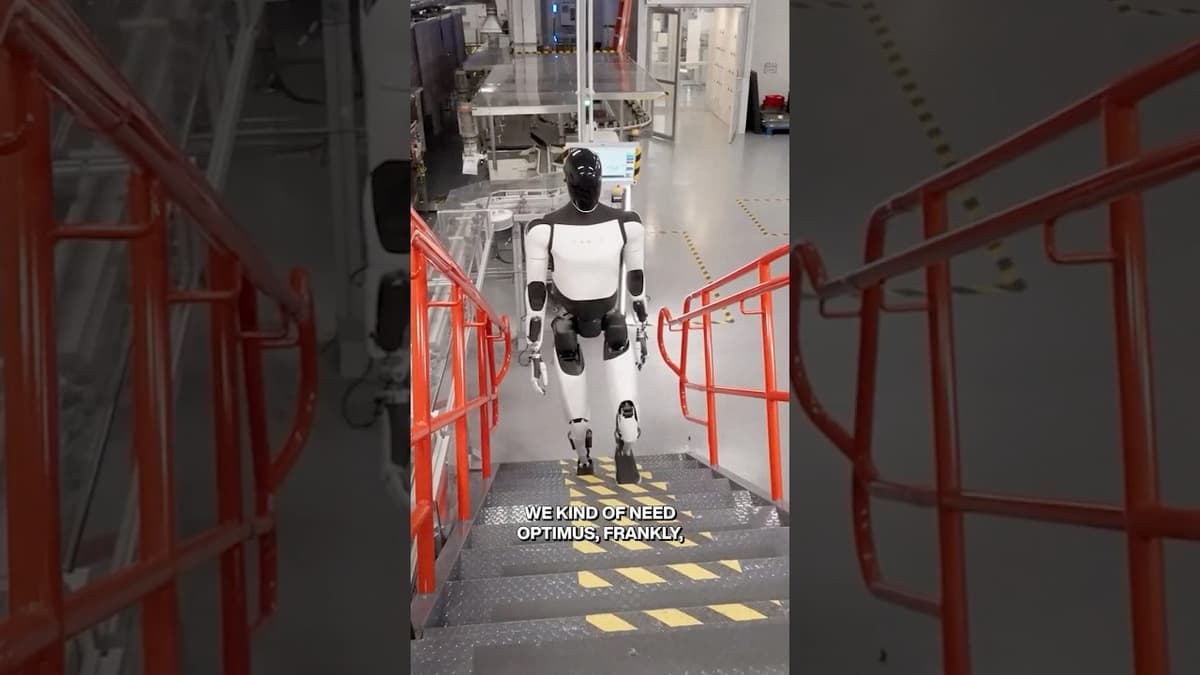
The Real Reason America Needs Robots - Elon Musk
Elon Musk uses a recent interview to argue that America’s manufacturing lag, especially in rare‑earth refining, can only be closed with advanced robotics. He points out that China processes roughly twice the global ore output, and the United States routinely...
By Dwarkesh Patel