
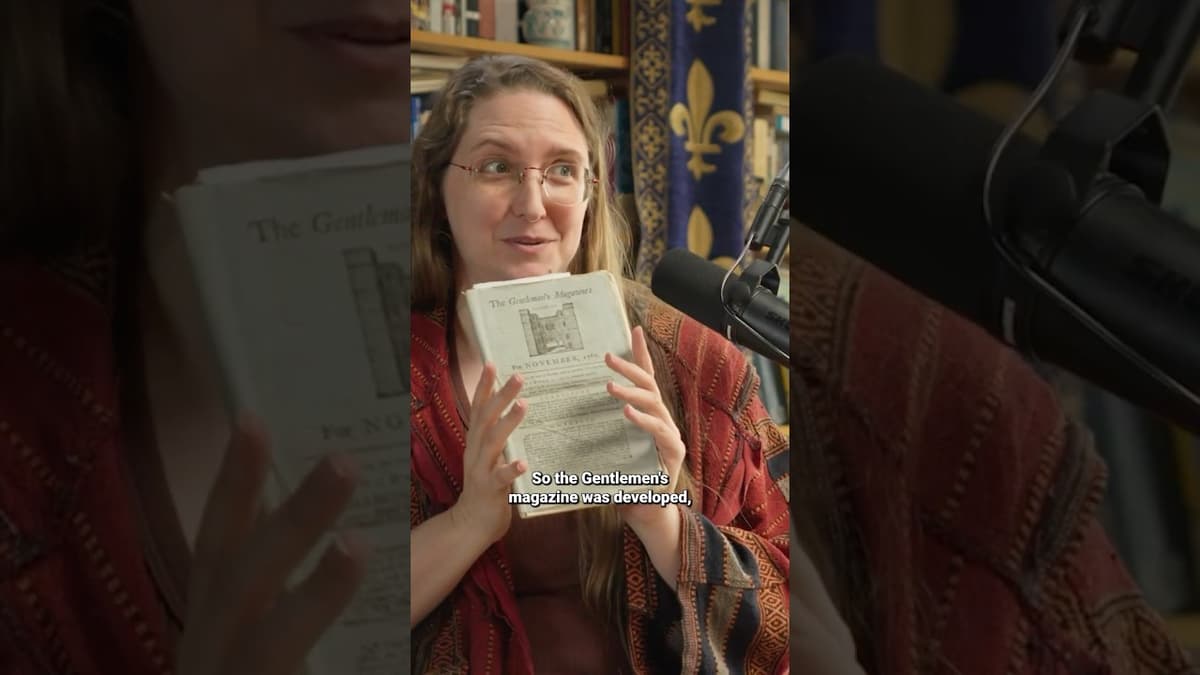
Pamphlets, Newspapers, and the Birth of the Magazine — Ada Palmer
Ada Palmer’s lecture traces the birth of the modern magazine, beginning with the humble pamphlet—a hand‑stitched, short‑text sheet that could be printed in a few days and sold cheaply across towns. Pamphlets mixed fact, rumor and sensationalism, exemplified by a lurid title about a Padua doctor. Their low cost stemmed from rag‑based paper, which gave the familiar blue‑gray hue of early publications. When newspapers proliferated, contradictory reports created confusion, prompting The Gentleman’s Magazine to publish weekly round‑ups that compared and judged competing accounts—a practice Palmer calls “fact‑checking.” Palmer highlights material constraints: papyrus, brittle and suited to scrolls, and parchment, whose animal‑skin fibers showed wear and even holes that scribes worked around. These physical limits shaped how information was recorded and preserved. Understanding these origins reveals how media formats and material economics have long influenced news reliability and distribution, offering context for today’s digital information ecosystem.

Jensen Huang on Why Nvidia Passed on Anthropic the First Time
Jensen Huang, Nvidia’s CEO, explained why the chipmaker passed on a multi‑billion‑dollar investment in Anthropic, the AI startup behind Claude. At the time, Nvidia’s balance sheet and corporate policy prevented it from committing capital outside its core business, leaving the...

The Idea That China Can't Have AI Chips Is Nonsense - Jensen Huang
In a recent interview, Nvidia CEO Jensen Huang dismissed the idea that China is unable to field advanced AI chips, arguing that the country’s massive energy reserves and under‑utilized data‑center capacity give it a solid foundation for large‑scale AI compute. Huang...

Jensen Huang Fires Back on China Chip Ban
Nvidia CEO Jensen Huang pushed back against recent U.S. proposals to restrict chip shipments to China, framing the debate as a question of American competitiveness rather than security. Huang argued that a blanket ban would undermine the United States’ own AI...

Why It Took Centuries to Invent Science - Ada Palmer
Renaissance scholar Ada Palmer argues that the emergence of modern science was not inevitable after the rediscovery of ancient texts; it required a long‑term buildup of a “book‑literate” culture. She stresses that simply being able to read letters is insufficient—societies...

Why Quantum Computing Was Delayed by 30 Years - Michael Nielsen
The video explains that quantum computing’s birth was postponed by roughly three decades because the experimental tools required to isolate and manipulate individual quantum systems simply did not exist in the 1950s and 1960s. Two parallel developments created the right conditions...

The Time Florence Had Enough of Its Nobles - Ada Palmer
The video recounts how Renaissance Florence broke with the Roman‑style aristocratic model and, after a near‑coup, violently purged its noble families. The massacre—heads on pikes, homes torched—cleared the way for a commoner‑run republic dominated by merchant guilds rather than hereditary...

Machiavelli Chose Loyalty Over Power - Ada Palmer
The video examines Niccolò Machiavelli’s final years, focusing on his choice to prioritize loyalty to Florence over personal power after being exiled by the Medici. It recounts how the Medici, after returning from exile, arrested and banished Machiavelli to a...

How AI Is Killing Cheap Smartphones - Dylan Patel
The video examines how the surge in AI‑driven workloads is inflating DRAM prices, fundamentally reshaping the economics of low‑cost smartphones. Patel notes that a 12‑GB iPhone memory module now costs roughly three times what it did a few years ago,...

Why Heliocentrism Was Actually Wrong At First - Terence Tao
The video explains that the heliocentric model, first championed by Copernicus, was not immediately correct; it replaced a millennia‑old geocentric system but retained the assumption of perfect circles. Copernicus offered a simpler circular orbit model, yet it was less accurate than...

How a Lost Book Launched the Scientific Revolution - Ada Palmer
The video explains that the rediscovery and translation of Lucretius’s De Rerum Natura—once a manuscript readable by only a handful of Latin scholars—served as a catalyst for the Scientific Revolution. In the 14th‑15th centuries the work was confined to two dozen...

Why The Italians Cosplayed The Romans - Ada Palmer
The video examines how the Medici, upon seizing power in Florence, deliberately preserved the city’s republican symbols by enforcing a mandatory dress code for officials—a long red robe, the lucco Florentino, that resembled a Roman toga. This sartorial choice was...

Why Medieval Books Cost as Much as a House - Ada Palmer
Ada Palmer explains that a handwritten medieval volume was as pricey as a modern house because each page was written on expensive animal skin, or vellum, rather than cheap papyrus. The choice of substrate turned a single sheet into a...

The Medici Were Too Scared to Walk Their Own Streets - Ada Palmer
The video examines the Vasari Corridor in Florence, an elevated passageway commissioned by the Medici dukes to move safely between palaces without exposing themselves to street‑level threats. Its very existence signals a ruler so fearful of assassination that he...

Why Great Leaders Raise Terrible Sons - Ada Palmer
Ada Palmer argues that great leaders often produce incompetent heirs because entitlement follows inherited power. She contrasts rulers who earned their position through hard work with those born into privilege, noting that merit‑based or adopted successors historically governed more effectively. Palmer cites...

We've Been Misreading Machiavelli for 200 Years - Ada Palmer
Historian Ada Palmer argues that for two centuries readers have misread Machiavelli’s references to the 'popolo' and 'best' by assuming he meant the broad populace and democratic ideals. In Renaissance Florence, 'popolo' referred to the wealthy merchant class—the top ~4–5%—while...

The Department of War Is Making a Huge Mistake.
The video criticizes the Department of War’s designation of Anthropic as a supply-chain risk after the company refused to remove restrictions banning use of its models for mass surveillance and autonomous weapons. The narrator argues the government’s action goes beyond...
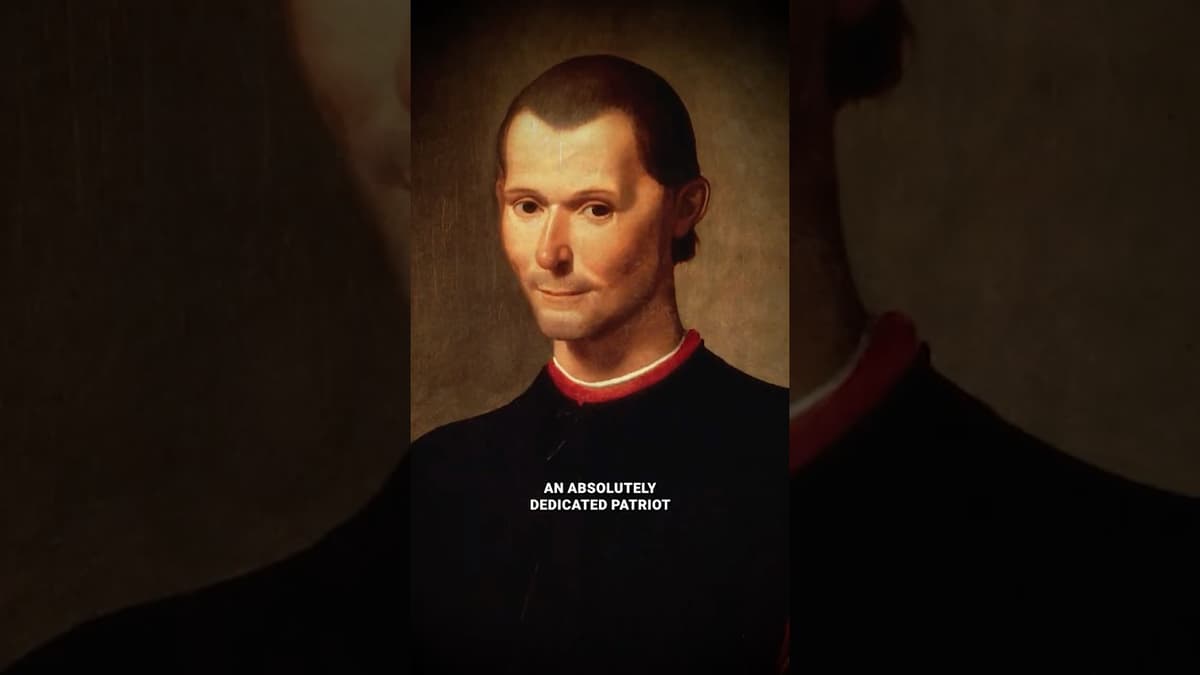
The Truth Behind Machiavelli's "The Prince" - Ada Palmer
The video reexamines Niccolò Machiavelli’s The Prince, arguing it was less a cold‑hearted manual for despots than a patriotic petition written during his exile. After the Medici were expelled and later restored, Machiavelli was arrested, tortured, and banished. In exile he...

How To Stop Authoritarianism With AI - Dario Amodei
The video features AI researcher Dario Amodei exploring whether artificial intelligence can become a tool to counter authoritarian rule. He asks if an equilibrium can be reached where citizens in repressive states gain private, uncensorable AI models that protect them...

The AI Industry Will Hit Trillions by 2030 - Dario Amodei
Dario Amodei argues the artificial‑intelligence sector will generate trillions of dollars in revenue by 2030, envisioning a “country of geniuses” housed in massive data‑center clusters that will accelerate growth. He points to an unprecedented 10×‑per‑year revenue expansion: 2023 rose from zero...

What Happens to Developing Countries in an AI-Driven World - Dario Amodei
Dario Amodei argues that the AI revolution fundamentally reshapes the development trajectory of low‑income economies, because the traditional engine of catch‑up—under‑utilized labor supplemented by foreign capital—will lose its potency when intelligent automation makes labor less scarce. He notes that while philanthropy...
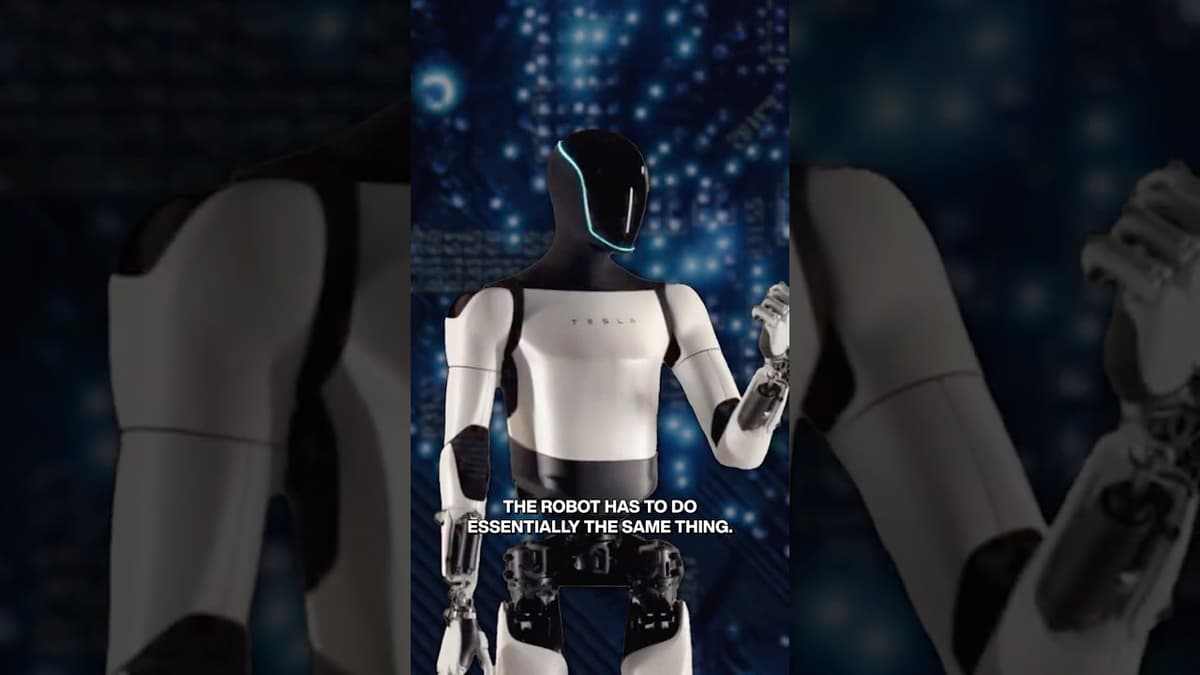
Why The Robot Revolution Will Come Sooner Than You Think - Elon Musk
Elon Musk says Tesla has been developing humanoid robots for five to six years and will leverage the company’s self-driving AI stack and custom chips to accelerate progress. He argues the core technical challenge—compressing rich visual input into compact control...

Why Anthropic Won't Outspend Its AI Rivals - Dario Amodei
In a recent interview, Anthropic co‑founder Dario Amodei explained why the company will not try to outspend its AI rivals. He framed the discussion around the narrow timing window in which a breakthrough can secure market leadership, and argued that...
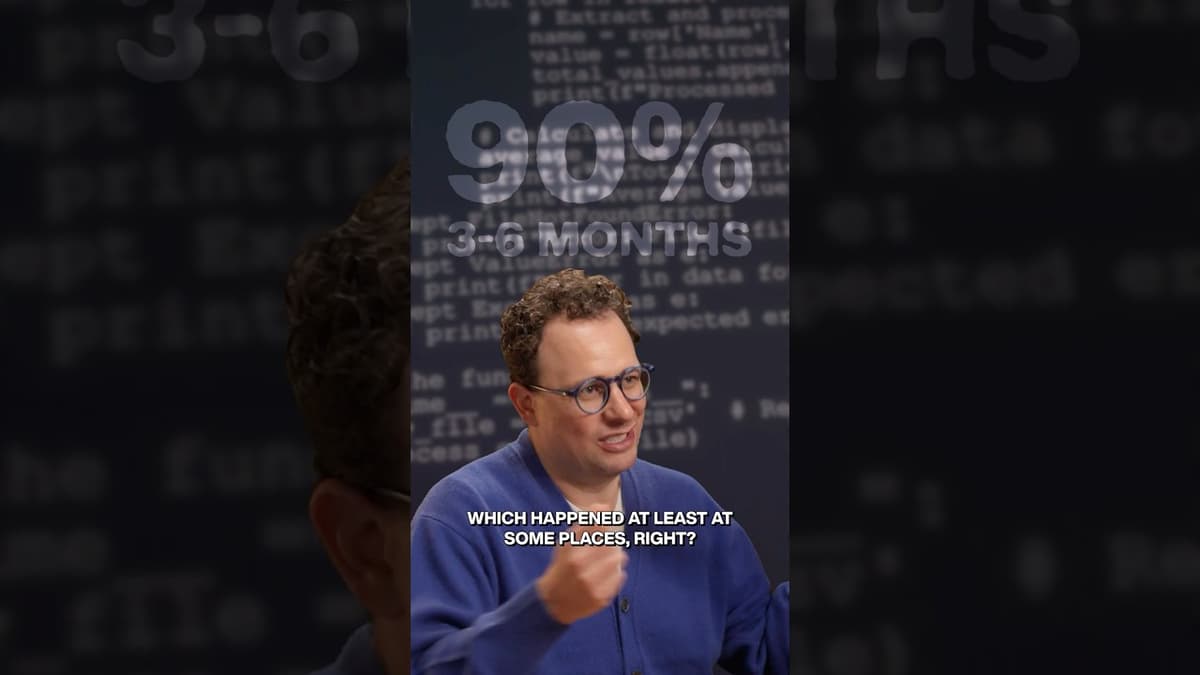
The AI Coding Prediction Everyone Got Wrong - Dario Amodei
Dario Amodei, co‑founder of Anthropic, revisits a series of predictions he made about AI‑generated code, emphasizing that many listeners misinterpreted his forecast. He explains that the original claim was that AI models would write roughly 90 % of the lines of code...

Why Anthropic's CEO Supports AI Regulation
The video centers on Anthropic’s chief executive reacting to recent legislative moves targeting artificial intelligence. He critiques a Tennessee proposal that would make it a crime to train AI systems for emotional‑support conversations, arguing the language reflects a fundamental misunderstanding...

How Claude Code Was Actually Developed - Dario Amodei
In a candid interview, Anthropic co‑founder Dario Amodei explains how the company’s internal coding assistant, Claude Code, emerged from a simple experiment with its own coding‑focused language models. Around early 2025 Amodei encouraged teams to build a harness—initially called Claude CLI—to...
Can The CCP Exist After AGI - Dario Amodei
In a recent interview, OpenAI researcher Dario Amodei tackles the provocative question “Can the CCP exist after AGI?” He argues that the rise of artificial general intelligence could fundamentally alter the social contract that allows authoritarian regimes to persist. Amodei warns...

Can We Prevent Authoritarian States From Weaponizing AI? - Dario Amodei
In a recent talk, OpenAI researcher Dario Amodei warned that powerful artificial‑intelligence systems could become tools of authoritarian repression if governments acquire them without adequate safeguards. Amodei outlined two intertwined dangers: first, states may deploy AI to monitor, predict, and silence...

Dario Amodei — “We Are Near the End of the Exponential”
Dario Amodei reflects on the past three years of AI development, arguing that the exponential growth of model capabilities has unfolded roughly as he anticipated and that we are now approaching the tail end of that exponential curve. He revisits...
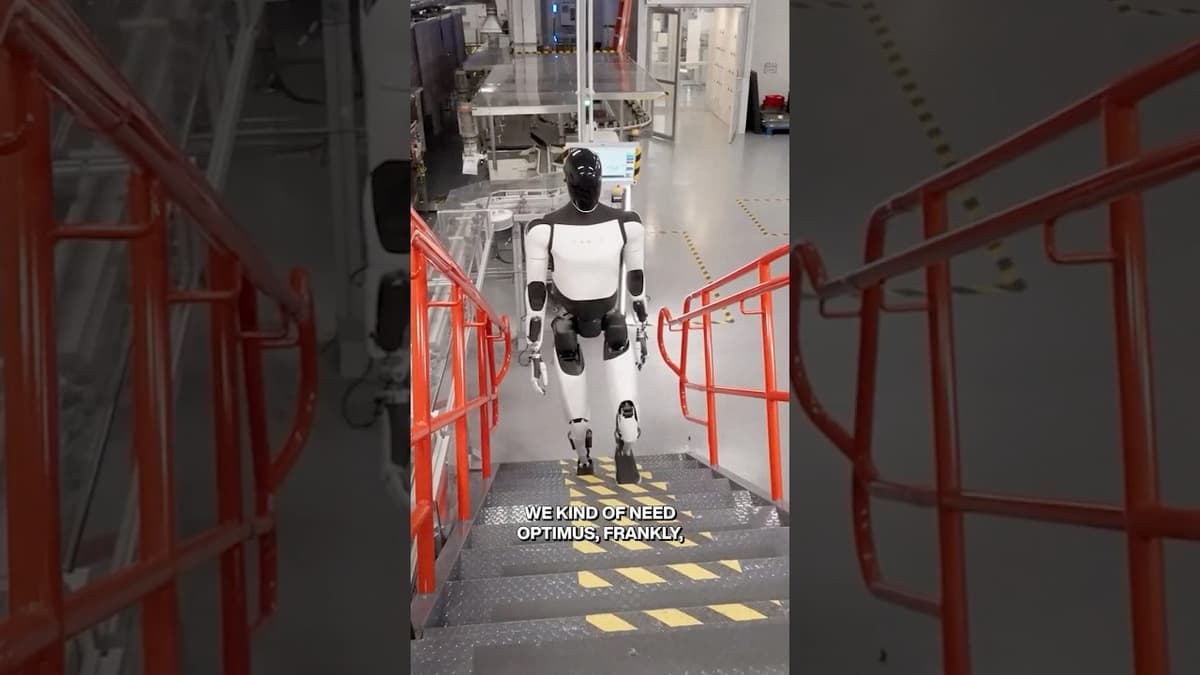
The Real Reason America Needs Robots - Elon Musk
Elon Musk uses a recent interview to argue that America’s manufacturing lag, especially in rare‑earth refining, can only be closed with advanced robotics. He points out that China processes roughly twice the global ore output, and the United States routinely...
Why China Initially Supported Japan - Sarah Paine
Sarah Paine explains that early Chinese revolutionaries, including Sun Yat-sen, celebrated Japan’s 1905 victory over Russia as an “east over west” triumph and a model to emulate. Japanese success was seen as proof that an Asian power could modernize and...

China's Forgotten Civil War - Sarah Paine
By the mid-19th century China had reached its pre-industrial ceiling: population growth outstripped agricultural productivity, forcing cultivation of marginal lands and triggering widespread famines. Those famines both provoked and were exacerbated by large-scale armed unrest that swept across the country,...

Why China and the USSR Turned Against Each Other - Sarah Paine
After Stalin's death Mao Zedong expected to lead global communism but clashed with Nikita Khrushchev over ideology, prestige and strategy. Khrushchev's de‑Stalinization and policy of peaceful coexistence conflicted with Mao's Cultural Revolution and militantly anti‑Western posture. Tensions escalated over credit...

Why the Soviet-Chinese Alliance Couldn't Last - Sarah Paine
Sarah Paine argues the Soviet-Chinese alliance collapsed because shared communist ideology could not override deep-rooted national interests and continental power dynamics. Both Russia and China, as large Eurasian states, prioritized regional dominance and security instincts shaped by historical experience, making...

The Era of Easy AI Progress Is Ending - Ilya Sutskever
Ilya Sutskever says the recent burst of AI progress driven by scaling pre‑training recipes—where increasing model size, data and compute reliably improved results—has reached diminishing returns as data is finite and compute costs surge. That scaling era (roughly 2020–2025) offered...

Real Intelligence Is Continual Learning - Ilya Sutskever
Ilya Sutskever argues that the label "AGI" arose mainly as a reaction to "narrow AI," not as a precise descriptor of an endpoint; pre-training pushed models toward broadly useful capabilities and created momentum behind the AGI idea. He emphasizes that...
Scaling Sucked Out All the Air in the Room - Ilya Sutskever
Ilya Sutskever argues that the AI field’s heavy focus on scaling and extreme compute has overshadowed idea generation, leaving a perceived shortage of novel concepts despite abundant computing power. He traces historical bottlenecks from limited compute in the 1990s to...
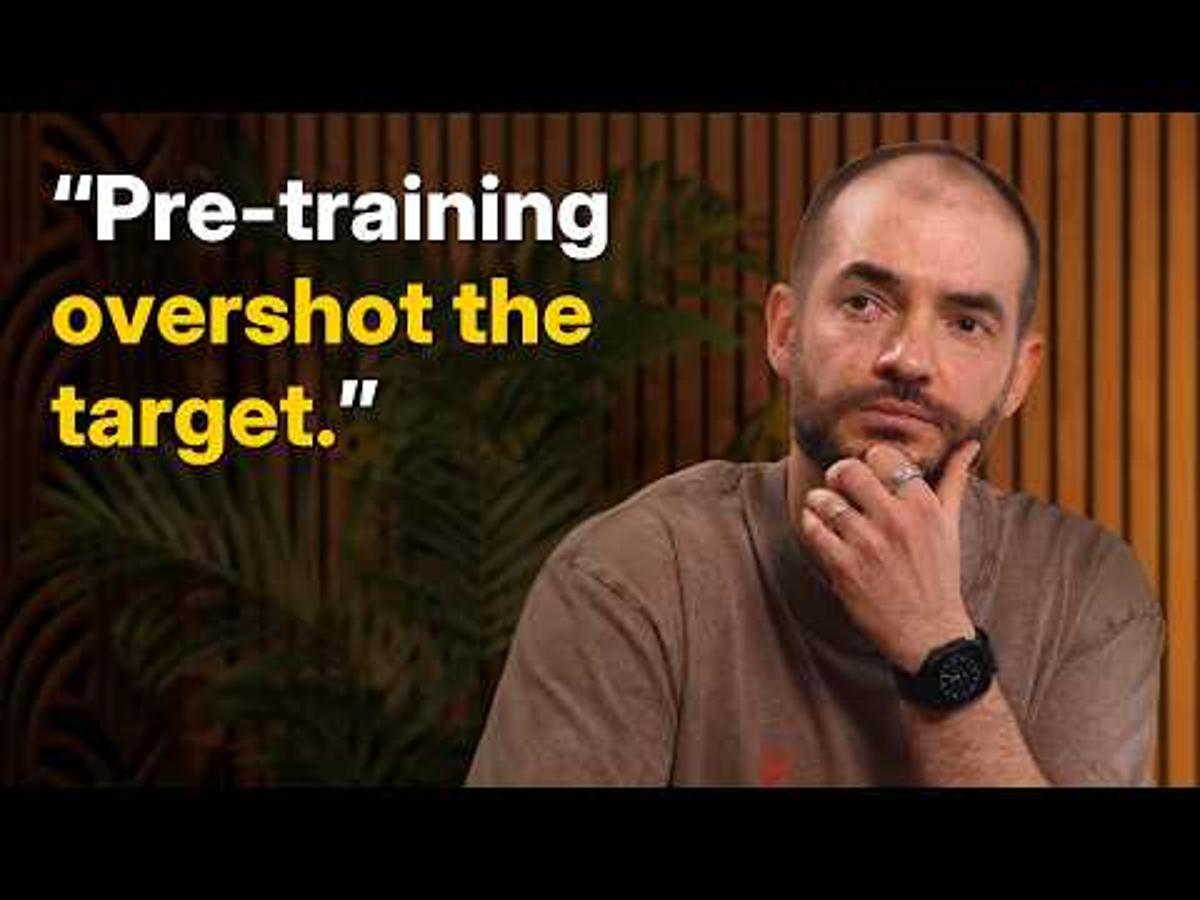
Ilya Sutskever – We're Moving From the Age of Scaling to the Age of Research
OpenAI cofounder Ilya Sutskever argues the field is shifting from an era of pure scaling to one dominated by targeted research, noting a paradox: models score exceptionally on benchmarks yet their real-world economic impact remains muted. He suggests this gap...