
![When Will Rockets Finally Evolve? [Q&A Livestream]](/cdn-cgi/image/width=1200,quality=75,format=auto,fit=cover/https://i.ytimg.com/vi/ZrVeOftHHRE/maxresdefault.jpg)
When Will Rockets Finally Evolve? [Q&A Livestream]
The livestream “When Will Rockets Finally Evolve?” turned a casual chat into a rapid‑fire Q&A on the state of space‑flight technology, covering propulsion, re‑entry, astronomical instrumentation, and legacy missions. Host emphasized that chemical rockets still dominate because of their high thrust, while ion and Hall‑effect thrusters provide unparalleled fuel efficiency but lack launch‑grade power. Nuclear thermal concepts could bridge the gap, yet environmental concerns and engineering hurdles keep them experimental. For Earth return, parachutes remain the cheapest deceleration method despite advances in propulsive landing. Examples included the ion engines powering Starlink satellites, the theoretical fusion‑ion hybrid Hall thruster, and the Voyager scenario where loss of signal would leave its fate unknowable. The discussion on 10,000 synchronized telescopes illustrated how sheer collecting area improves signal‑to‑noise, but true resolution still depends on interferometric baselines and adaptive optics. The takeaways signal that breakthroughs will likely come from incremental improvements—higher‑efficiency reactors, better adaptive‑optics networks, and more robust communication protocols—rather than a single disruptive propulsion leap. Investors and policymakers must balance funding between proven chemical launch systems and long‑term research into nuclear or antimatter concepts to sustain the next wave of deep‑space missions.
![A Telescope Experience You Just Can't Repeat [Q&A Livestream]](/cdn-cgi/image/width=1200,quality=75,format=auto,fit=cover/https://i.ytimg.com/vi/w8pm1c72YUA/maxresdefault.jpg)
A Telescope Experience You Just Can't Repeat [Q&A Livestream]
The livestream centers on a journalist‑host’s recent acquisition of an 8‑inch Dobsonian telescope and his invitation for viewers to ask space‑related questions. He explains how he sourced the “light bucket” on Facebook Marketplace for a fraction of retail cost, and...
![How Do We Know Dark Energy Exists? [Q&A Livestream]](/cdn-cgi/image/width=1200,quality=75,format=auto,fit=cover/https://i.ytimg.com/vi/2t71Jdjrp38/maxresdefault.jpg)
How Do We Know Dark Energy Exists? [Q&A Livestream]
The livestream opens with the host catching up after a month‑long trip to Thailand, explaining his production schedule and setting the stage for a rapid‑fire Q&A format. He emphasizes that he will only repeat the scientific consensus, not offer personal...
![Where Did the Sun Come From? [Q&A Livestream]](/cdn-cgi/image/width=1200,quality=75,format=auto,fit=cover/https://i.ytimg.com/vi/h7iO587I8vA/maxresdefault.jpg)
Where Did the Sun Come From? [Q&A Livestream]
The livestream tackled the question “Where did the Sun come from?” focusing on how astronomers search for the Sun’s birth siblings and what that reveals about our star’s history. Using data from ESA’s Gaia mission, researchers first filter stars that share...
Understanding Universe's Scale, Mars Missions, Colonizing Gas Giant Moons | Q&A 415
The video is a Q&A where the host tackles the universe’s scale, humanity’s long‑term expansion, and the practical differences between low‑Earth orbit operations and future Mars missions. He argues that continuous economic growth makes solar‑system colonization inevitable, suggesting massive rotating...

Extracting Even More Gravitational Waves From The Pulsar Timing Array
The interview centers on how pulsar timing arrays (PTAs) can move beyond detecting a stochastic background of super‑massive black‑hole (SMBH) mergers to identifying individual events. Dr. Kiara Mingelli explains that millisecond pulsars serve as ultra‑stable clocks—accurate to about 100 nanoseconds...

Illuminating The Earth, Voyagers' Lifetime, JWST's Planets | Q&A 414
The latest Q&A episode tackles four space‑related questions: the feasibility of orbital reflectors to brighten night skies, the remaining power life of Voyager 2, the meaning of the habitable‑zone concept, and why the James Webb Space Telescope (JWST) has yet to...
![Is Our Sun An Oddball? [Q&A Livestream]](/cdn-cgi/image/width=1200,quality=75,format=auto,fit=cover/https://i.ytimg.com/vi/6oMnUsxwsQM/maxresdefault.jpg)
Is Our Sun An Oddball? [Q&A Livestream]
The livestream centered on a fundamental question: is our Sun and its planetary family an outlier in the galaxy? The host highlighted early exoplanet discoveries—starting with the hot Jupiter 51 Peg b—and explained how those massive, close‑orbiting worlds dominate current catalogs because...

Phobos Might Already Be Destroyed and Reformed. Possibly Multiple Times
The discussion centers on the nature of small asteroids, emphasizing that the overwhelming majority are loosely bound rubble piles rather than solid monoliths. Recent missions such as OSIRIS‑REx, Hayabusa‑2, and the upcoming MMX to Phobos have confirmed this picture, while...

"Accidental" Moon Photo // New NASA Budget Cuts // New Class of Stars
The episode spotlights Artemis 2’s latest milestones, including a stunning Earth‑rise image taken from the crew’s lunar flyby and a record‑breaking 406,772 km distance that eclipsed Apollo 13. The mission also enjoyed a rare total solar eclipse, allowing astronauts to observe the Sun’s...

Moon Atmosphere, Habitable Quasars, Sun's Red Giant Phase | Q&A 413
The episode is a rapid‑fire Q&A that touches on astrobiology, planetary atmospheres, future habitability and career pathways for aspiring space engineers. The host emphasizes that liquid water—our universal biosignature—appears beneath the icy crusts of Europa, Titan, Enceladus and most of...

It's Insane What Vera Rubin Is Doing for Meteorite Hunting
The video explains how the Vera Rubin Observatory’s new live‑alert system is transforming meteorite hunting. By streaming roughly 800,000 nightly alerts that flag any change in the sky, Rubin gives astronomers a real‑time view of near‑Earth objects, from variable stars to...

How Mars Fights Back The Contamination From Earth
The interview with Penn State microbiologist Dr. Karine Bakerman explores whether Mars’ surface material can act as a natural barrier against Earth‑origin microbes. Using tardigrades—renowned for their extreme resilience—as a model organism, the study exposed them to commercially available Martian...

Jet-Powered Comet // Artemis 2 Launched // NO-Dark-Matter Galaxy
The video covers a roundup of this week’s biggest space headlines, headlined by the launch of NASA’s Artemis 2 mission, a crewed Orion flight that will perform a lunar flyby and return to Earth in about ten days. Artemis 2 lifted off from...

Reasons to Return to The Moon, WW3 and The Kessler Syndrome, Time Delay Cosmography | Q&A 411
The latest episode of the Question Show tackled a range of frontier topics, from novel cosmological probes and the practicalities of a permanent lunar outpost to the strategic dangers of anti‑satellite warfare and the presence of dark matter in our...

A NIAC Project That Could Crush The Hubble Tension
The video focuses on the Hubble‑constant tension and a bold NIAC‑funded proposal to build a Cosmic Positioning System that would use fast radio bursts (FRBs) as a universal GPS, measuring the universe’s expansion out to roughly 500 million light‑years. Dr. Matt McQuinn...

Best Space Pet, Aftermath of 3I/ATLAS Flyby, Limits on Lagrange Points | Q&A 410
The video is a rapid‑fire Q&A covering quirky and serious space topics—from which animal might thrive as a space pet to the latest on Vera Rubin Observatory data, starshade concepts, the 3I/Atlas flyby, and next‑generation spacesuit designs.\n\nThe host explains that Rubin’s...
![Asteroids Striking The Moon [Q&A Livestream]](/cdn-cgi/image/width=1200,quality=75,format=auto,fit=cover/https://i.ytimg.com/vi/NBbCY6qJUM8/maxresdefault.jpg)
Asteroids Striking The Moon [Q&A Livestream]
The livestream centered on a fundamental question: does the Moon get bombarded during Earth’s meteor showers? Host Fraser Kane explained that the Earth‑Moon system travels together through cometary debris streams, so the Moon experiences the same particle flux, but without...

The Limits of The Habitable Worlds Observatory
The video examines the Habitable Worlds Observatory (HWO), NASA’s next‑generation flagship telescope designed to obtain the first direct images of Earth‑sized planets orbiting Sun‑like stars and to probe their atmospheres for potential biosignatures. It highlights the scientific ambition of...

Nuclear Mars Mission // Moon Base // ISS Replacements
The video outlines NASA’s sweeping redesign of its post‑ISS exploration strategy, highlighting a shift toward commercial low‑Earth‑orbit habitats, a pause on the lunar Gateway, and an aggressive push toward a Moon base and a nuclear‑powered Mars probe. Key points include the...

Nights on Venus, Best Interstellar Propulsion Tech, Sun's Stellar Flybys | Q&A 409
The episode is a rapid‑fire Q&A where the host tackles a range of astrophysical curiosities—from whether Venus truly goes dark at night, to the plausibility of a rogue planet reshaping dwarf‑planet orbits, to the propulsion concepts that could enable interstellar...

There Might Be A Limit on How Many Satellites We Can Launch
The video examines the rapid expansion of low‑Earth‑orbit satellite constellations, now exceeding 10,000 units and projected to reach tens of thousands or even a million. While these networks promise global connectivity, experts warn that the sheer volume of launches could...
![Why Don't We Hear About LUVOIR Anymore? [Q&A Livestream]](/cdn-cgi/image/width=1200,quality=75,format=auto,fit=cover/https://i.ytimg.com/vi/s9XkvvAyx9g/maxresdefault.jpg)
Why Don't We Hear About LUVOIR Anymore? [Q&A Livestream]
The livestream addressed why the once‑prominent LUVOIR concept has faded from headlines, explaining that NASA’s Decadal Survey combined it with the HABEX mission into a single flagship called the Habitable Worlds Observatory (HWO). HWO inherits LUVOIR’s ultraviolet‑optical‑infrared coverage while...

How Moon's Ridges Reveal Secrets About Its Geology
The video explores the recent surge in lunar geological research that has cataloged thousands of shallow thrust faults—linear scarps visible from orbit—across both the bright highlands and the dark maria. Dr. Cole Nipover explains that these features, typically less...

Weird New Planet // New Moon in A Bag // Superstorm Hit Mars
This week’s Space Bites covered a suite of out‑of‑the‑ordinary astrophysical findings, from a planetary system that flips conventional formation rules to a record‑breaking solar storm that battered Mars, plus a rare seven‑hour gamma‑ray burst and a daring asteroid‑mining concept. Astronomers identified...

Moon Bases Locations, Lunar Internet, Sun's Companion | Q&A 407
The latest Q&A episode tackled a range of space‑related questions, from whether the Sun has a hidden stellar partner to the practicalities of building lunar habitats and establishing a moon‑based internet. The host explained how infrared surveys by the WISE...
![Why Do I Show Artists' Illustrations of Space Stuff Instead of Actual Data? [Q&A Livestream]](/cdn-cgi/image/width=1200,quality=75,format=auto,fit=cover/https://i.ytimg.com/vi/esBOfZhJTWk/maxresdefault.jpg)
Why Do I Show Artists' Illustrations of Space Stuff Instead of Actual Data? [Q&A Livestream]
The livestream opens with the host addressing a viewer’s frustration about seeing artist renderings instead of raw telescope footage. He explains that many cosmic phenomena lack high‑resolution images, so scientists rely on spectra, radio maps, and other data that are...

Little Red Dots Could Be Something Completely Unexpected
The video examines the puzzling “little red dots” that the James Webb Space Telescope has been spotting in virtually every deep‑field image. These objects appear as point‑like sources, only a few tens of light‑years across, and emit strongly at...

How Vera Rubin's Insane Data Pipeline Works. And How You Can Use It
The video explains how the Vera Rubin Observatory’s massive time‑domain survey generates an unprecedented flood of alerts—millions of transient detections each night—and how those data are handed off to a network of seven data brokers. The raw images are taken in...

New Findings About The Sun // More From DART // Starshade for ELT
The episode covered a suite of recent space‑science advances, from a novel starshade design for Earth‑orbiting use with next‑generation ground observatories to fresh insights from the DART impact, a new stellar‑age based estimate of the universe’s age, a setback on...

Superfast Neutrinos, Types of Astronomers, Gravitational Limits for Planets | Q&A 405
The latest Q&A episode tackled a range of astrophysics questions, from how observatories allocate scarce telescope time to the physics of neutrinos, planetary gravity, and gravitational waves. The host explained that major facilities such as Hubble and James Webb run oversubscribed...

The Architect for JWST, Habitable Worlds Observatory and LIFE. Lee Feinberg
The interview with Dr. Lee Feinberg, the veteran architect behind JWST, focused on the telescope’s current health, the status of the upcoming Habitable Worlds Observatory (HWO), and Europe’s Large Interferometer for Exoplanets (LIFE) project, with brief forays into quantum‑telescope concepts. Feinberg reported...

Jupiter’s New Size // NO Moon Impact // More Years for ISS
The weekly Space Bites covered five major developments: asteroid 2024 YR4 will safely fly past the Moon in 2032, new Juno‑based measurements show Jupiter is slightly smaller and markedly flatter, LOFAR completed an unprecedented low‑frequency radio map of 13.7 million objects,...

The Next ISS, Europan Life, Heat Death of The Universe | Q&A 403
The video fielded audience questions about the future of low‑Earth‑orbit habitats, detailing plans for a modular, commercially‑driven space station to replace the ISS. It explained how NASA’s Europa Clipper will search for plume‑borne biosignatures, offering the first realistic chance to...

Largest Image of The Heart of The Milky Way
The video announces the release of the most detailed image ever captured of the Milky Way’s central region, produced by the ALMA telescope and the ACES collaboration led by Dr. Adam Ginsberg of the University of Florida. The image spans...
![Space Stuff Is HUUUGE [Q&A Livestream]](/cdn-cgi/image/width=1200,quality=75,format=auto,fit=cover/https://i.ytimg.com/vi/8sRgMLnjMZ8/maxresdefault.jpg)
Space Stuff Is HUUUGE [Q&A Livestream]
The livestream centers on the astronomical community’s excitement over the Extremely Large Telescope (ELT), a 39‑meter primary‑mirror instrument under construction in Chile. The host contrasts its size with existing giants like the Vera Rubin Observatory (8.1 m) and the Keck telescopes (10 m),...
AMATERASU Rays // Late Heavy Bombardment Doubts // Titan Bully
The episode covers a wide‑ranging set of space‑science stories, from the detection of an ultra‑high‑energy cosmic ray dubbed the Amaterasu particle to fresh insights on the Moon’s impact history, Titan’s possible role in creating Saturn’s rings, a massive ring system...
Ancient Venus Civilization, Dark Matter, Great Attractor | Q&A 397
In this episode of the “Question Show,” the host tackles four fan‑submitted topics: whether an ancient civilization could have turned Venus into a hellish world, the nature of dark matter, the mystery of the Great Attractor, and the current state...
How Japan Built Its Crazy Space Agency
The video explores the evolution of Japan’s space agency, featuring an interview with historian Dr. Subo Vijatna. It traces the program from early 20th‑century curiosity, through wartime rocket experiments, to the formal establishment of JAXA in 2003, highlighting how cultural...
Crazy New SpaceX Plans // AI Mars Takeover // NO Artemis 2 in February
The episode covers a wide‑ranging space briefing: new research questioning Europa’s habitability, a month‑long postponement of NASA’s Artemis 2 crew flight, an AI‑driven rover‑navigation experiment on Mars, SpaceX’s ambitious plan to launch up to a million data‑center satellites, and Blue Origin’s...
AI Warp Drive, Surviving in Space, Firing at a Black Hole | Q&A 394
In this episode of the Q&A series, Fraser tackles a range of speculative astrophysics questions—from whether aliens could survive interstellar travel, to the fate of gamma‑ray bursts striking black holes, the existence of Lagrange points in binary star systems, and...
Everything You Need to Know About JWST's Discoveries in 2026
Since its launch, JWST has confirmed the existence of galaxies within a few hundred million years after the Big Bang and refined many contested photometric redshifts with spectroscopic measurements. Detailed JWST spectra and high-resolution imaging reveal surprising early complexity: some...
Magnetic Poles Flip, Hypervelocity Stars From Andromeda, Potential Target for New Horizons | Q&A 393
The latest Q&A episode tackles three headline‑grabbing topics: the prospect of a new Kuiper Belt flyby for New Horizons, the science and risks surrounding an upcoming Earth magnetic pole reversal, and the existence of hypervelocity stars possibly ejected from Andromeda....
How Magnetars Are Born
The video centers on Dr. Genevieve Schroeder’s search for a newborn magnetar hidden in the afterglow of GRB 211211A, a nearby gamma‑ray burst whose properties blur the line between classic short‑duration merger events and long‑duration core‑collapse bursts. By targeting the radio...
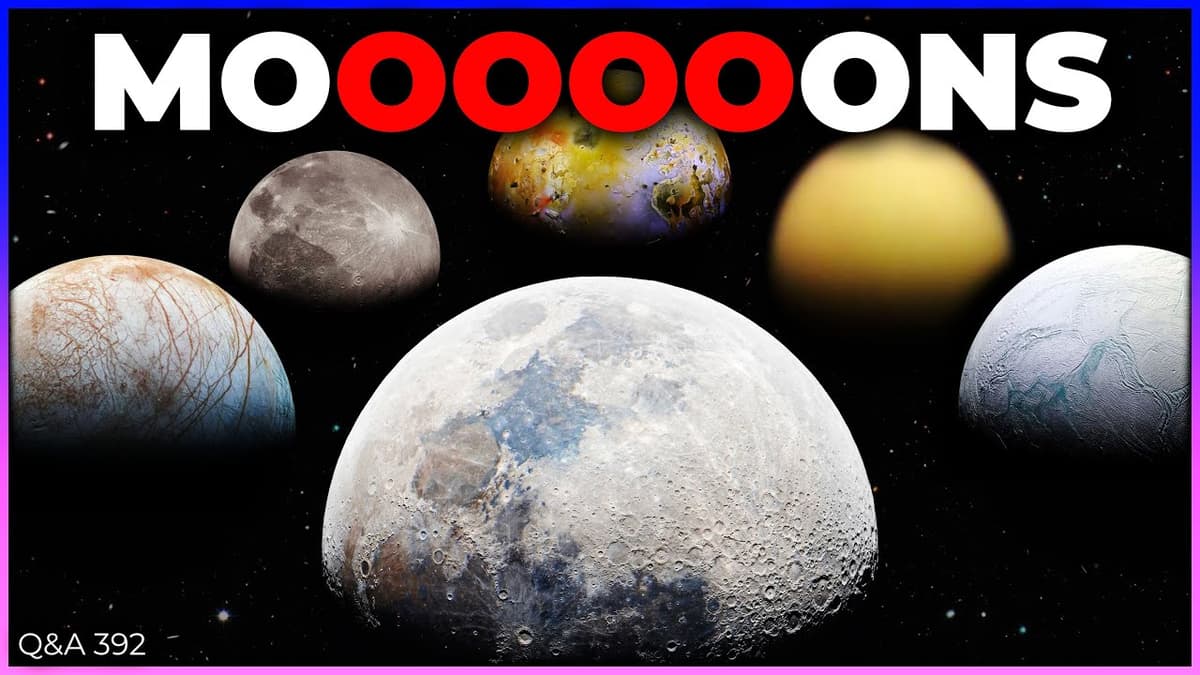
Moons Q&A Special | Q&A 392
Host answers listener questions about exploration of icy moons, outlining a variety of nontraditional rover concepts—large-wheeled vehicles, rocket-assisted hoppers, snake-like robots, under-ice crawlers and rappelling bots—designed to handle pulverized ice, spikes and cliffs. He notes hoppers that leap on ballistic...
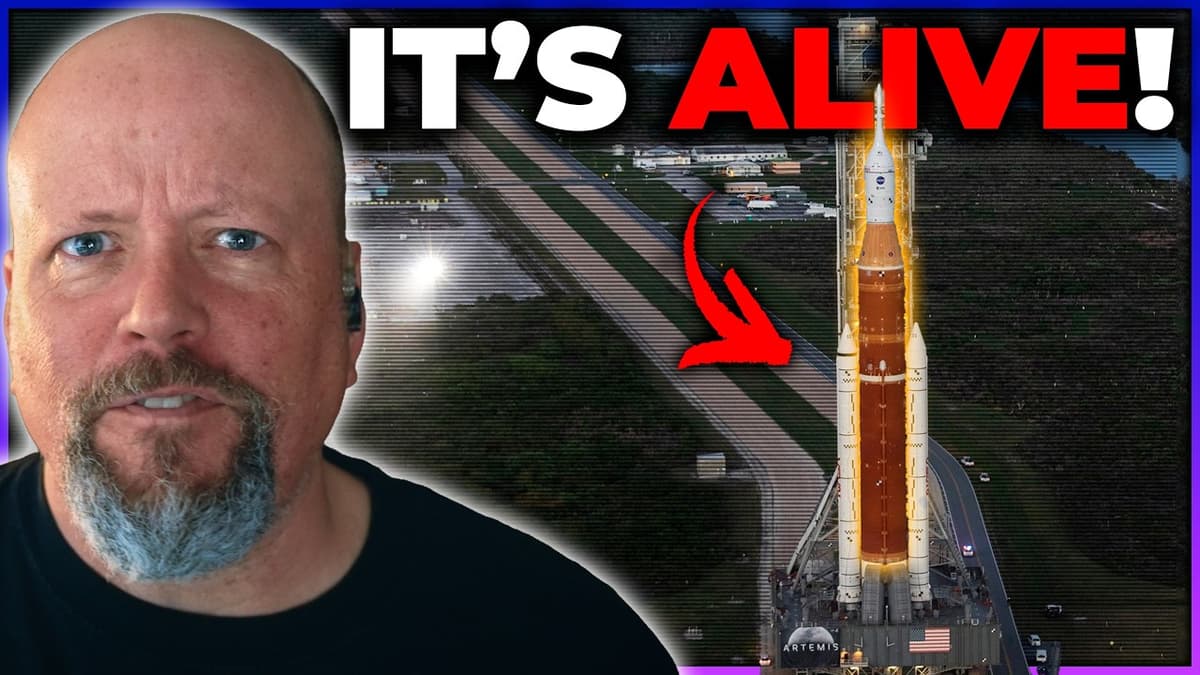
Comet Interceptor Accelerated // Artemis II SLS Rollout // Nuclear Lunar Race
The video covers a suite of near‑term space milestones: Europe’s Comet Interceptor mission is being accelerated to launch in 2028‑2029, NASA’s Artemis II crewed lunar flyby is rolling out on the Space Launch System, and the agency is reviving its kilopower...
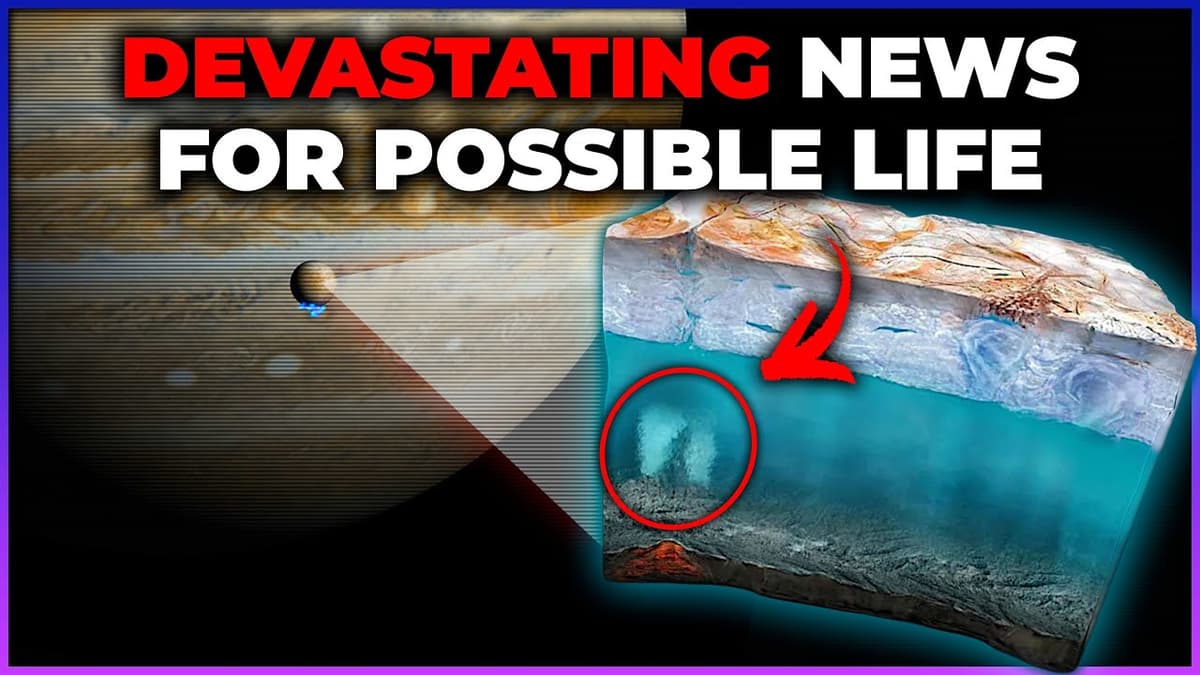
We Were Wrong About Europa’s Sub-Surface Ocean
The video centers on a recent paper by Dr. Paul Burn that reevaluates Europa’s potential for hosting life. While the moon still boasts a vast subsurface ocean, the study argues that the conditions required for a thriving biosphere—liquid water, organic...
AI Writing Science Papers, Private Space Science, Targets for ELT | Q&A 390
The video is a rapid‑fire Q&A where the host tackles five hot topics: the upcoming Extremely Large Telescope (ELT), billionaire‑backed private space observatories, the state of AI‑generated scientific papers, the fate of primordial black holes, and the existential dread of...
Building LISA, Humanity's Biggest Telescope
The video explains how the European Space Agency’s LISA mission will become humanity’s largest gravitational‑wave observatory, extending detection capability far beyond the ground‑based LIGO network. While LIGO can sense stellar‑mass black‑hole mergers at frequencies above 10 Hz, it cannot capture the...

Flat Planet, 3I/ATLAS vs Jupiter, Next Gen Space Stations | Q&A 388
The video is a rapid‑fire Q&A covering topics from a hypothetical 3I Atlas collision with Jupiter to the future of space stations, the role of billionaire space entrepreneurs, and the technical limits of upcoming telescopes. The host explains that a...