
![What's The Lowest Possible Moon Orbit? [Q&A Livestream]](/cdn-cgi/image/width=1200,quality=75,format=auto,fit=cover/https://i.ytimg.com/vi/fU-9u94lezQ/maxresdefault.jpg)
What's The Lowest Possible Moon Orbit? [Q&A Livestream]
The livestream tackled a viewer’s question about the minimum altitude for a stable lunar orbit, especially for low‑altitude reconnaissance drones. The host explained that, unlike Earth, the Moon’s exosphere is essentially negligible, so atmospheric drag does not dictate orbital lifespan. Instead, the Moon’s irregular gravitational field—caused by massive mascons and rugged topography—dominates orbital dynamics. Below roughly 50 km, these “bumps” induce rapid decay, making sustained orbits impossible. However, scientists have identified a set of “frozen” orbits around 50‑60 km where the perturbations balance, allowing spacecraft to remain aloft for years with minimal station‑keeping. The host cited the GRAIL mission as a real‑world example: its low‑altitude orbits decayed faster than anticipated due to mascon effects. He emphasized that a 1 km orbit is unfeasible; even hovering above the highest lunar peak would eventually result in impact because the gravitational irregularities cannot be countered without constant thrust. For lunar hopper drones and future surface infrastructure, these findings impose strict design constraints. Mission planners must target the stable frozen‑orbit band or allocate fuel for continuous adjustments, influencing payload mass, cost, and operational timelines for commercial and scientific lunar ventures.
How Bad Is Crashing Rockets in the Ocean, Really? | Q&A 431
The episode tackles three seemingly unrelated questions: the environmental fallout of rockets crashing into the ocean, the realistic timeline for reaching Alpha Centauri, and whether fusion or antimatter will power future spacecraft. The host argues that a Starship splash‑down in the...
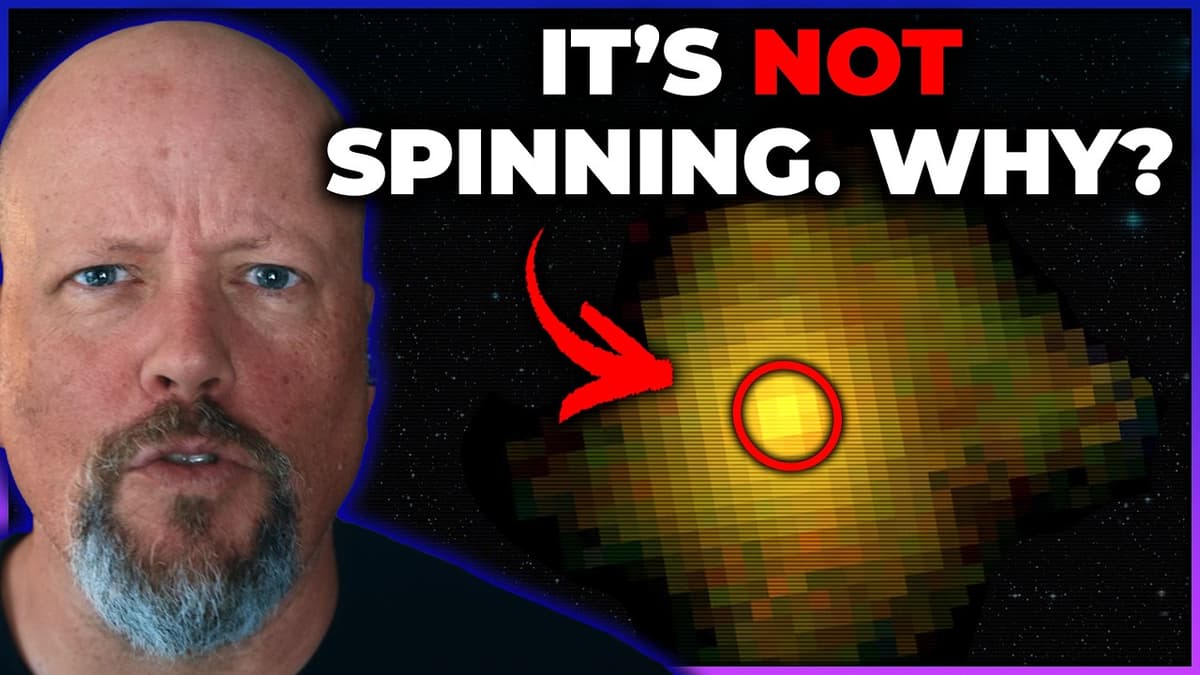
This Bizarre Galaxy Doesn't Spin. We Now Know Why
The video opens with a roundup of recent space news, highlighting a newly identified galaxy, XMM‑J... that shows virtually no rotation less than 2 billion years after the Big Bang. Researchers propose the galaxy’s lack of spin results from a head‑on merger...
![Do Black Holes Eat Dark Matter? [Q&A Livestream]](/cdn-cgi/image/width=1200,quality=75,format=auto,fit=cover/https://i.ytimg.com/vi/LlJfrV1GO7Q/maxresdefault.jpg)
Do Black Holes Eat Dark Matter? [Q&A Livestream]
The livestream tackled a viewer’s question: can black holes develop an accretion disc composed of dark matter? Host John Kokajko explained that, from a black‑hole’s perspective, matter, antimatter, photons or even gravitational waves are indistinguishable once they cross the event...
![We Need the Mars Sample Return [Q&A Livestream]](/cdn-cgi/image/width=1200,quality=75,format=auto,fit=cover/https://i.ytimg.com/vi/iWuSI41LmhM/maxresdefault.jpg)
We Need the Mars Sample Return [Q&A Livestream]
In a live Q&A, the host addressed a flood of viewer questions before turning to the most pressing issue for planetary science: the fate of NASA’s Mars Sample Return (MSR) program. He explained that the White House’s latest NASA budget...
The Green Bank Telescope Took This Image of Orion
The episode surveys several fresh space‑science results, from a Kuiper‑belt object that appears to retain a short‑lived atmosphere to a new model for Saturn’s rings, and highlights Green Bank Observatory’s role in tracking Artemis 2 and searching for extraterrestrial signals. Astronomers detected...
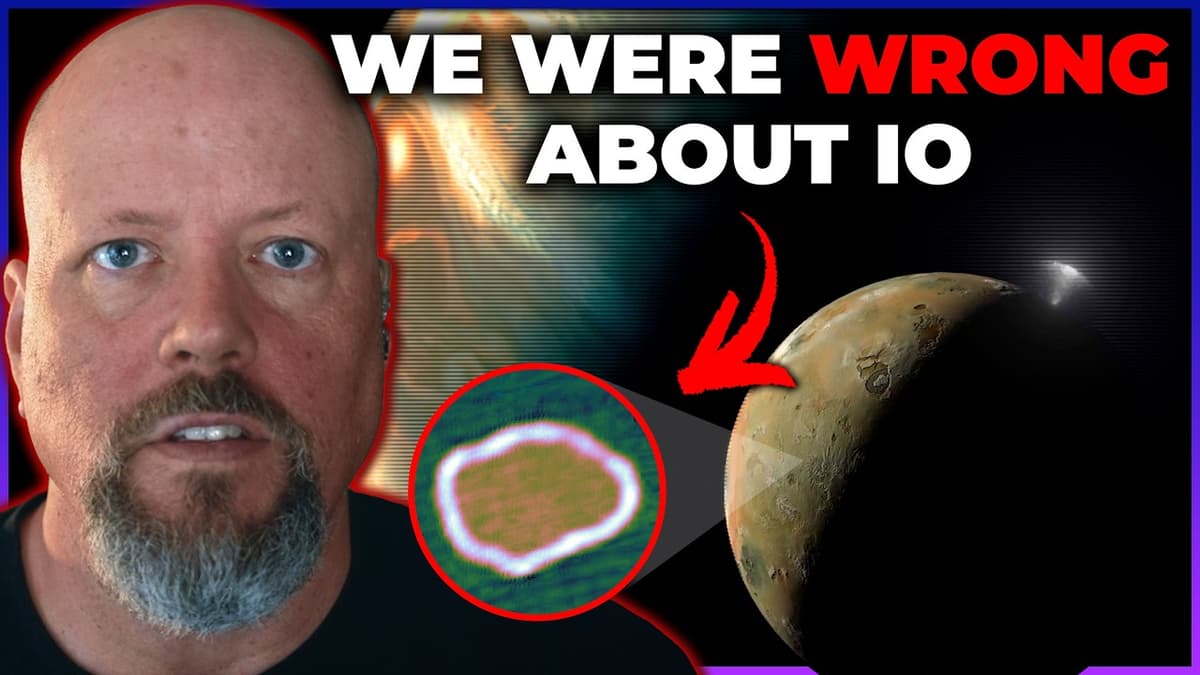
Io's Lava Lakes Turned Out Weirder Than We Thought
The episode stitches together a week of space headlines, from NASA’s Artemis 2 image dump to a surprising revision of Io’s volcanic heat output. The centerpiece is a new study showing a single Io lava lake radiating roughly 80 GW—about ten times...
![How I Refuse To Spread Bad Science [Q&A Livestream]](/cdn-cgi/image/width=1200,quality=75,format=auto,fit=cover/https://i.ytimg.com/vi/P3czC0mKvNA/maxresdefault.jpg)
How I Refuse To Spread Bad Science [Q&A Livestream]
The livestream Q&A centers on a veteran science journalist’s commitment to reporting the scientific consensus rather than offering personal theories. He clarifies his role as a communicator, not a researcher, and sets ground rules for answering audience questions, promising to...
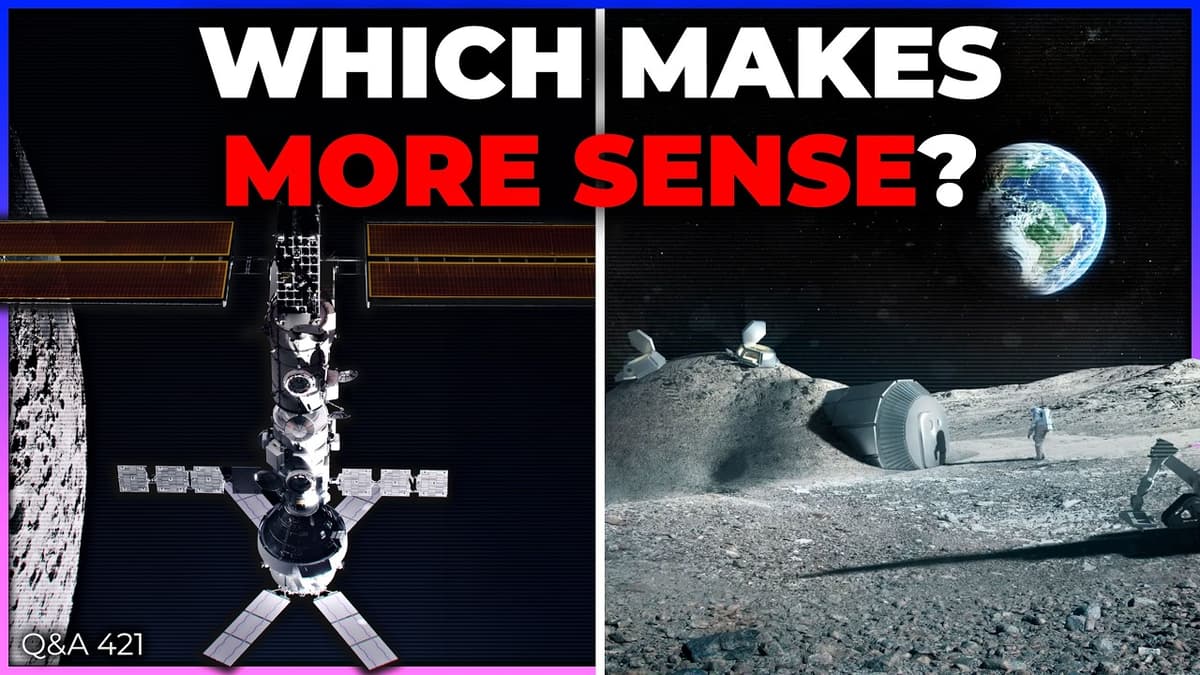
Orbital VS Surface Lunar Bases | Q&A 421
The video’s Q&A tackles three core themes: the technical hurdles of storing rocket propellant in orbit, the strategic trade‑offs between lunar surface habitats and orbital stations, and the feasibility of launching interstellar probes today. Hydrogen’s tiny molecules make it prone to...
What If AI Finds An Alien Technosignature Tomorrow? | Q&A 419
The video tackles a speculative but pressing question: what would happen if humanity detected an extraterrestrial technosignature tomorrow? Host Page Potter frames the discussion as a Q&A, exploring scientific, philosophical, and practical angles—from immediate skepticism to the broader implications of contact. Potter emphasizes...
![Why Didn't The Universe Collapse? [Q&A Livestream]](/cdn-cgi/image/width=1200,quality=75,format=auto,fit=cover/https://i.ytimg.com/vi/gtvRDBOqVK4/maxresdefault.jpg)
Why Didn't The Universe Collapse? [Q&A Livestream]
The livestream is a two‑hour, audience‑driven Q&A where the host, a science journalist, fields astronomy questions submitted via YouTube comments. He emphasizes his role as a conduit for consensus science, outlines submission rules, and mixes casual banter with technical explanations. Key...
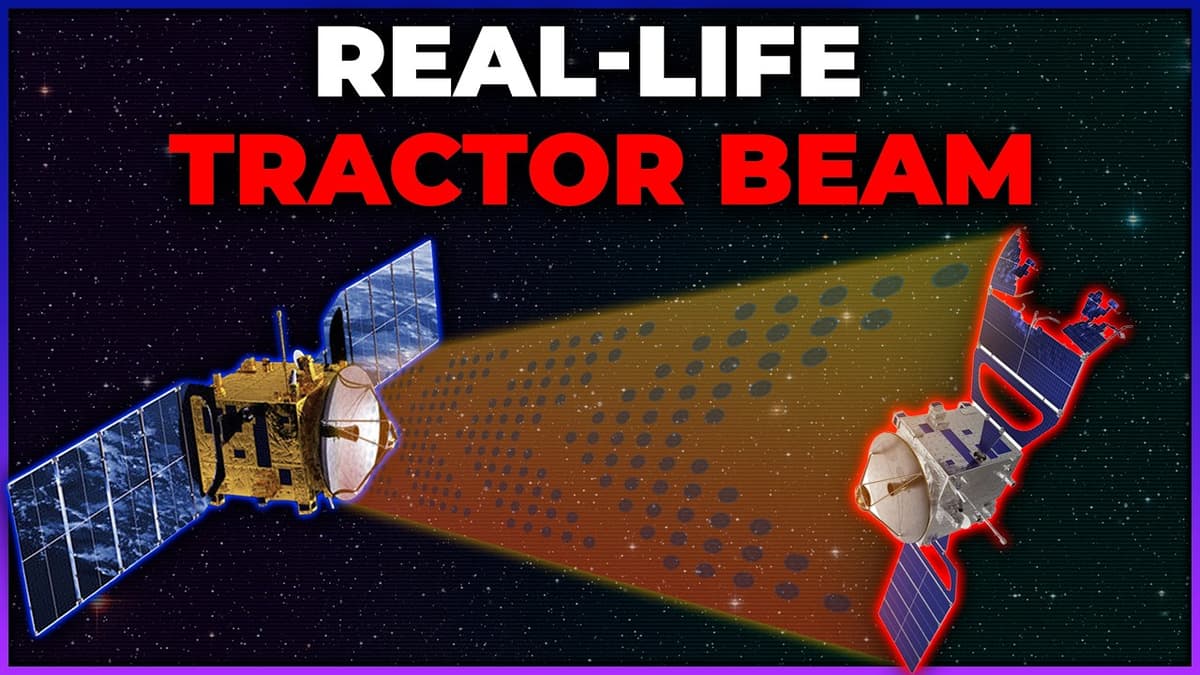
Removing Space Debris with Real-Life Star Trek Tech
The video introduces an electrostatic “tractor beam” concept that could pull defunct satellites away from valuable orbital slots without any physical contact. Aerospace engineer Amy Aft, a NASA FINESST fellow at CU Boulder, explains how a servicer spacecraft fires...
![Can We Extract Power From a Black Hole? [Q&A Livestream]](/cdn-cgi/image/width=1200,quality=75,format=auto,fit=cover/https://i.ytimg.com/vi/f7HUnpoXkZ0/maxresdefault.jpg)
Can We Extract Power From a Black Hole? [Q&A Livestream]
The livestream centered on a viewer’s question: can a black hole be used to generate power? Host Fraser clarified that, while he is a journalist—not a physicist—the scientific consensus outlines several theoretical mechanisms. He outlined three primary concepts: capturing high‑energy...
![How Fast Is The Earth Disintegrating to Space? [Q&A Livestream]](/cdn-cgi/image/width=1200,quality=75,format=auto,fit=cover/https://i.ytimg.com/vi/eEwAbIxFNBs/maxresdefault.jpg)
How Fast Is The Earth Disintegrating to Space? [Q&A Livestream]
The livestream Q&A, hosted by a space journalist, fielded audience questions on a range of astronomical topics, from Earth’s mass balance to the structure of the universe and the mysterious companion of Betelgeuse. The host explained that Earth accretes roughly 100 tons...
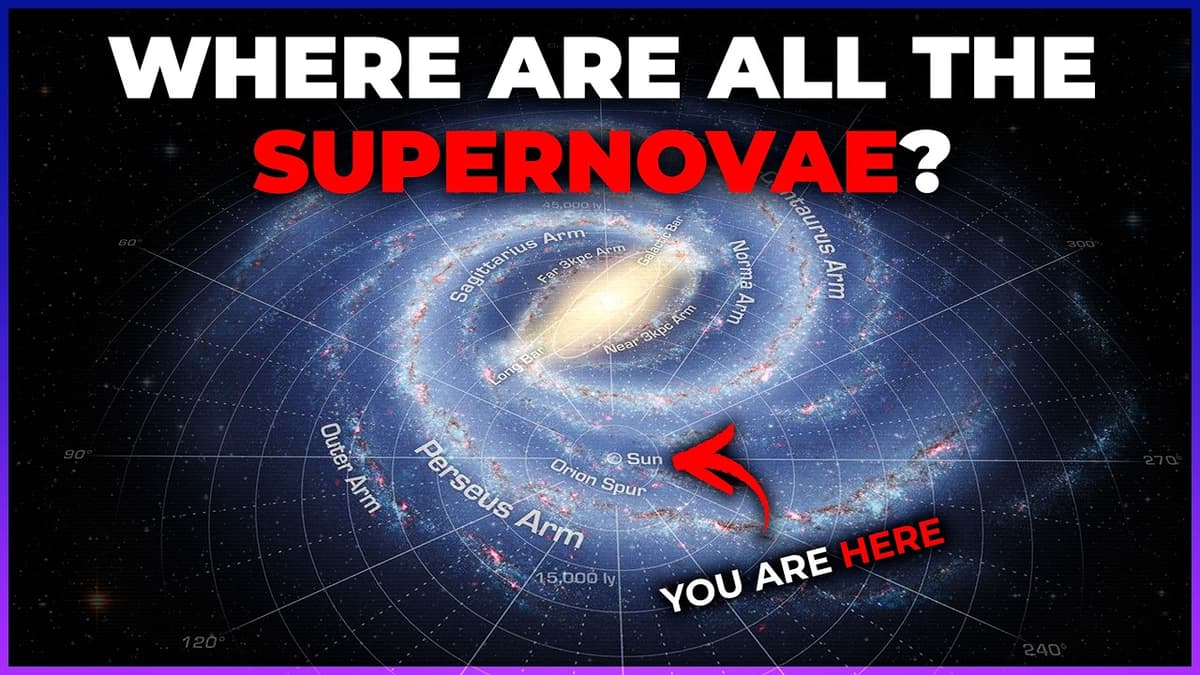
We Don't See Supernovae In The Milky Way. Nobody Knows Why
Astronomers expect a Milky Way supernova roughly every century, yet the last confirmed event, the Kepler supernova of the 1600s, predates modern instrumentation. The apparent silence raises questions about observational bias, especially given the dense dust lanes and the so‑called...