
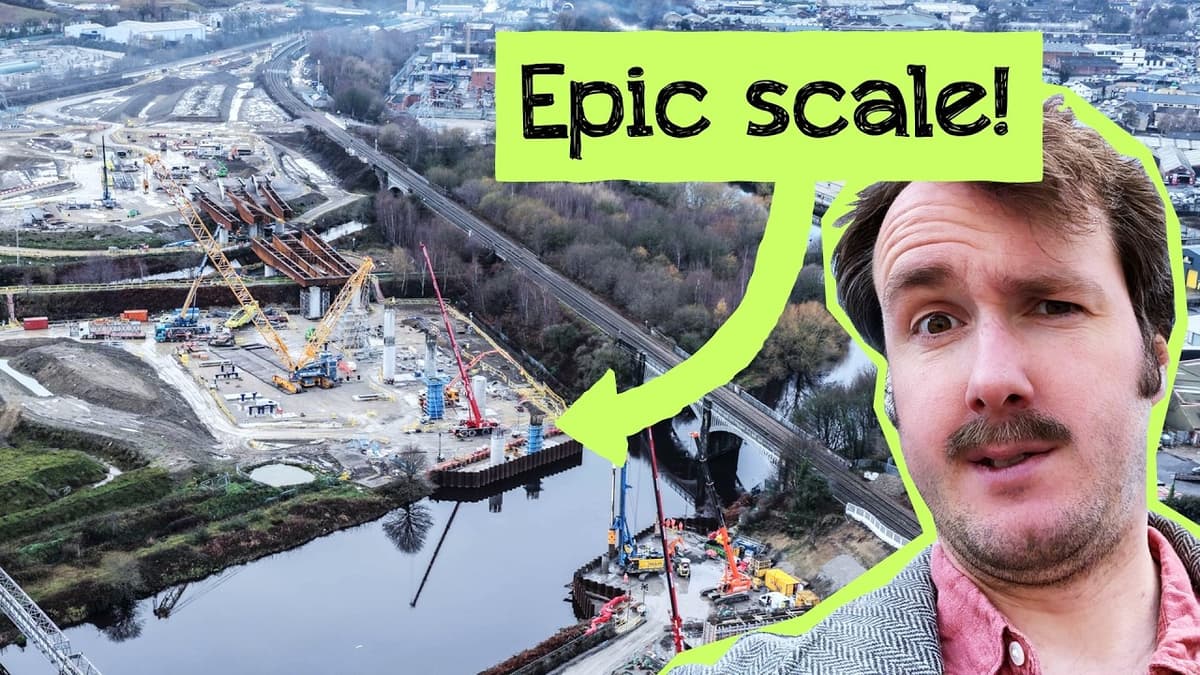
The MASSIVE Changes at Ravensthorpe You Missed
The video tours the massive civil‑engineering works unfolding at Ravensthorpe, a key segment of the Transpennine Route Upgrade (TRU). The presenter highlights the new Baker Viaduct, extensive earthworks, and the removal of a reverse curve that will allow trains to travel faster through the corridor. The upgrade will boost line capacity by roughly one‑third, introducing four‑track sections that separate fast and slow services and paving the way for full electrification. Work includes grade‑separation structures, a new Ravensthorpe station, and the abandonment of legacy viaducts that will likely become access roads. Onboard a Class 158, the narrator points out the viaduct piers, the split‑track formation, and the upcoming intersection where fast lines will cross over slower tracks. He notes that the old arches will be bypassed and that the project, originally conceived in the late 1980s, is finally materialising after decades of delay. When completed, the TRU will modernise a critical north‑south rail artery, cut journey times, and support regional economic growth, while also demonstrating the scale of infrastructure investment required to meet future demand.
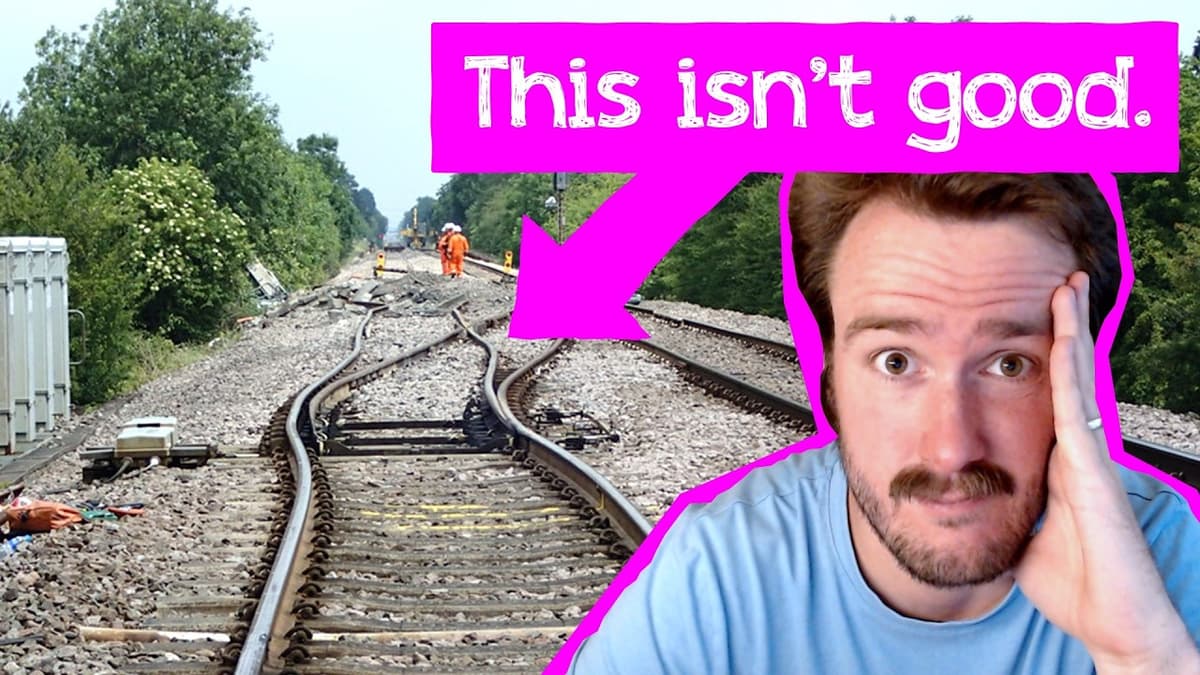
Explaining Track Buckles and Hot Weather | BBC Morning Live
The BBC Morning Live segment examines how rising summer temperatures are causing UK railway tracks to buckle, a problem that could become more frequent as climate change pushes temperatures beyond historical norms. Engineer Gareth Dennis explains that steel rails expand when...
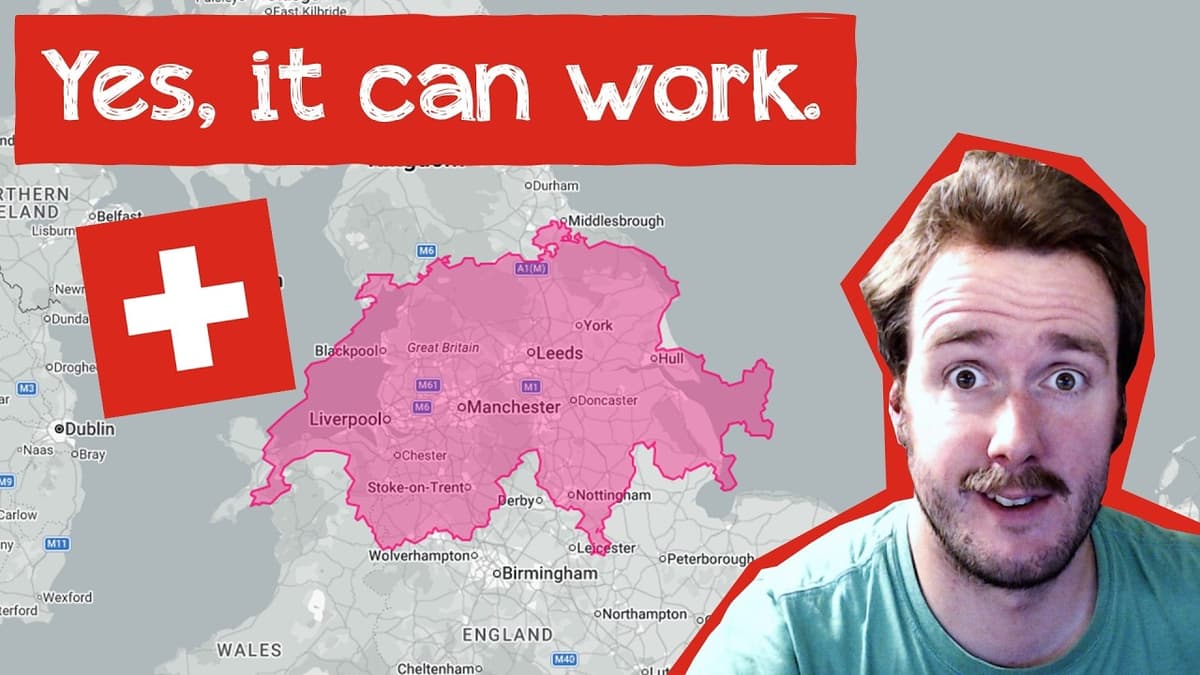
No, Britain Is NOT Too Big for Taktfahrplan Timetables
The video tackles a common scepticism: whether Britain’s geographic scale makes the Taktfahrplan—regular‑interval, high‑frequency rail timetables—impractical. By juxtaposing the UK’s size with that of Austria and Switzerland, the presenter argues that size alone does not dictate feasibility. Key insights include a...

Tens of Thousands of Flights Cancelled as Fuel Runs Out
The podcast highlights a wave of flight cancellations after Lufthansa announced the removal of roughly 20,000 flights because jet fuel costs have surged to historic highs, forcing the carrier to drop about 120 daily services and suspend unprofitable routes from...
The Secret to Fixing Britain's Railways | #Railnatter 305
The video argues that Britain’s rail modernization has been hampered by a focus on large, one‑off projects, using the Transpennine Route Upgrade (TRU) as a case study. It proposes shifting to a programme‑based model where numerous small, incremental upgrades replace...

We Didn't Order Enough Class 185 Trains
The video critiques the Strategic Rail Authority’s (SRA) handling of the TransPennine rail upgrade, focusing on its decision to slash the originally proposed fleet of 56 four‑car trains to a smaller set of three‑car diesel Class 185 units and to abandon...

The Best Way to Link HS2 to HS1 at Euston
The video examines a concrete proposal to connect HS2 with HS1 by constructing a deep underground link beneath London’s Euston terminus. The author critiques the current surface‑level plans and argues that a subterranean “box” station, similar to Glasgow’s Enoch Street...
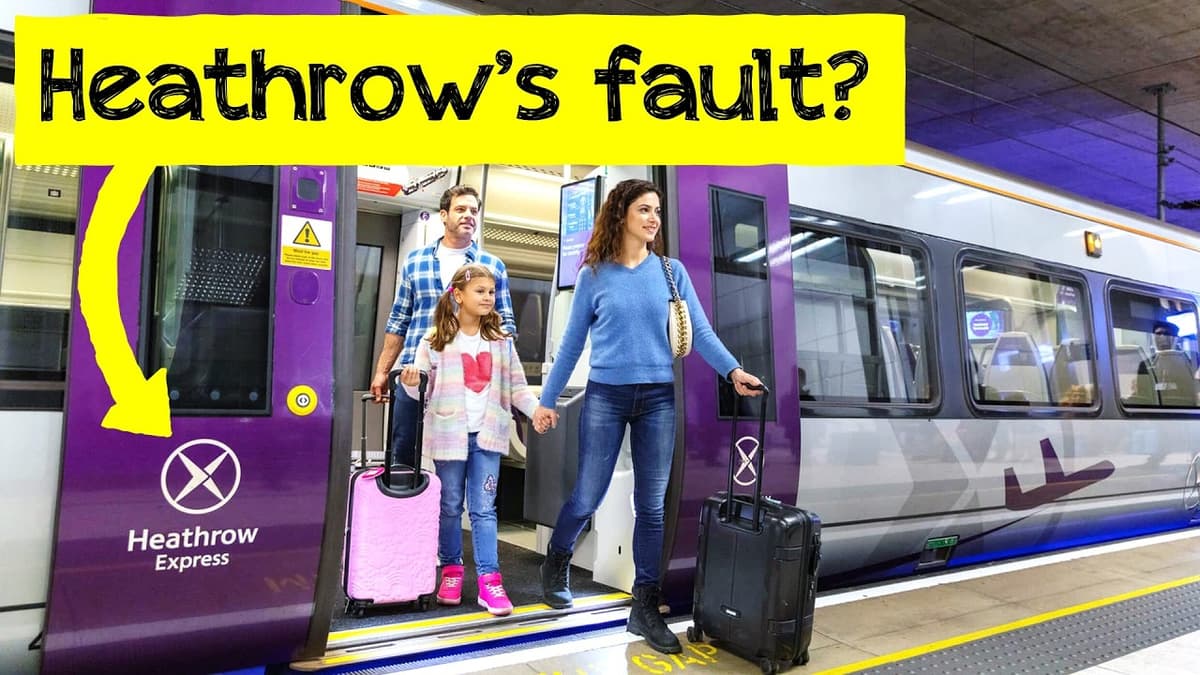
Who Caused Crossrail's Billion Pound Blunder?
The video examines why the £26.4 billion Crossrail (Elizabeth line) project opted for 1,100 mm high platforms in its central tunnels, a departure from the UK’s 915 mm standard. The decision was justified by precedent – Thameslink and Heathrow Express also use 1,100 mm heights...
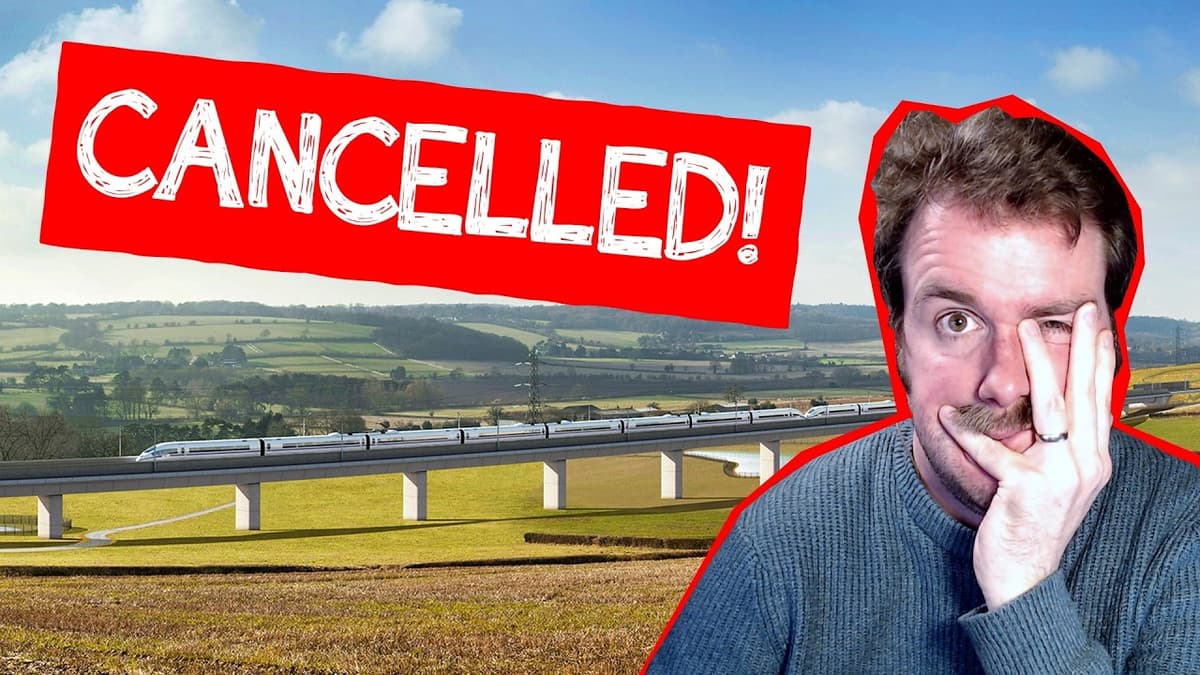
Is HS2 to Yorkshire Finally Dead? | #NEWS
The video examines the latest developments surrounding the HS2 project’s Yorkshire leg, focusing on the government’s plan to begin land disposal this year and the broader challenges of private‑sector involvement in railway infrastructure. Rail Minister Peter Hendy outlined a multi‑year...
This Cheap Fix Will SOLVE Rural Travel | #Railnatter 304
The video examines how the Swiss "Takt" or rhythmic timetable—an hourly, clock‑face service model—could be deployed to solve rural transport challenges in the UK, focusing on a pilot project in the Hope Valley between Sheffield and Manchester. It outlines the...

The Death of HS2 in Boris Johnson's Words
The video is a point‑by‑point rebuttal of Boris Johnson’s recent HS2 statements, accusing the former prime minister of deliberate misinformation. It argues that Johnson’s claim of building three new high‑speed lines is a semantic stretch, and that the so‑called Leeds‑Manchester...

THIS Is How You Give Manchester High Speed Rail
The video reviews a proposal to deliver a high‑speed rail link serving Manchester, critiquing the accompanying presentation. The speaker praises the use of clear graphics that compare current capacity with the projected gains once the new line is operational, emphasizing...

Very Few UK Airports Have a Future
The video argues that the United Kingdom’s airport network is unsustainable and that a high‑speed rail system could reshape air travel. By connecting major cities directly, rail would render most domestic flights obsolete, allowing the country to focus airport capacity...

Stratford Greenway - a Missing Link? #railnatter
The video spotlights the Stratford Greenway, a repurposed stretch of track that once formed part of the Great Western Railway’s main line linking Cheltenham to Stratford and onward to Birmingham. Viewers learn that the line originally served as a vital connector...

Britain's Loves AND Hates High Speed Trains | Great British Railway Journeys
The video features railway engineer Gareth Dennis discussing Britain’s ambivalent relationship with high‑speed rail. He explains that in the 1970s the UK chose to expand motorways rather than emulate Japan’s Shinkansen, leaving high‑speed rail development lagging. Dennis highlights two pivotal projects:...
Free Public Transport to Alleviate UK Energy Crisis?
The video examines the United Kingdom’s emerging energy crunch, focusing on a looming jet‑fuel shortage and its broader implications for transport policy. It references the EU energy commissioner’s warning that the oil shock triggered by recent geopolitical tensions could spark...

The SECRET Report that Killed Leeds Trams AGAIN
The video examines the latest setback for Leeds’ tram network, tracing it to a confidential NISTA review that warned the project’s timeline posed a high risk of wasted taxpayer money. While the West Yorkshire Combined Authority pushes for an integrated...
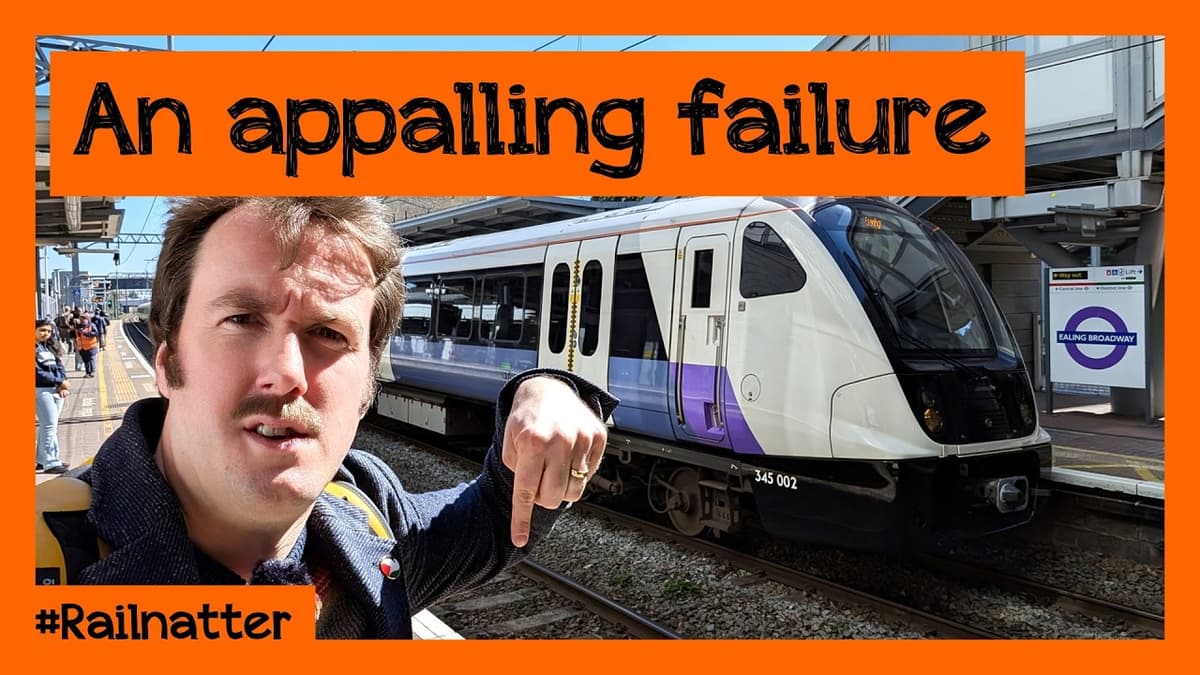
The BILLION POUND Flaw on the Elizabeth Line | #Railnatter 303
The video examines a fundamental design flaw in London’s Elizabeth line – the decision to install 1,100 mm high platforms in the central tunnel section, contrary to the national 915 mm standard. This non‑standard height, granted through a Department for Transport dispensation,...
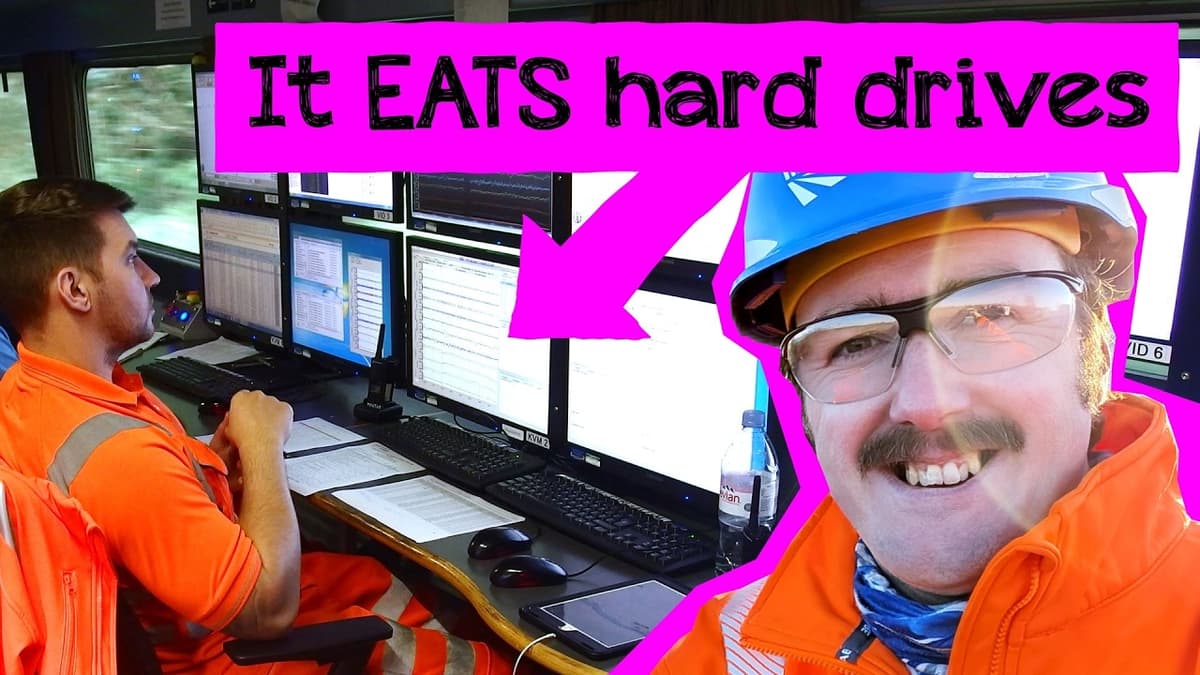
This Inspection Train Is A BEAST
The video tours a rail‑inspection train equipped with a massive data‑capture suite, dubbed the PL PR system. Inside the coach, arrays of hard drives record high‑resolution imagery and laser profiles as the train roams the 24,000‑mile network, generating roughly 14 terabytes...
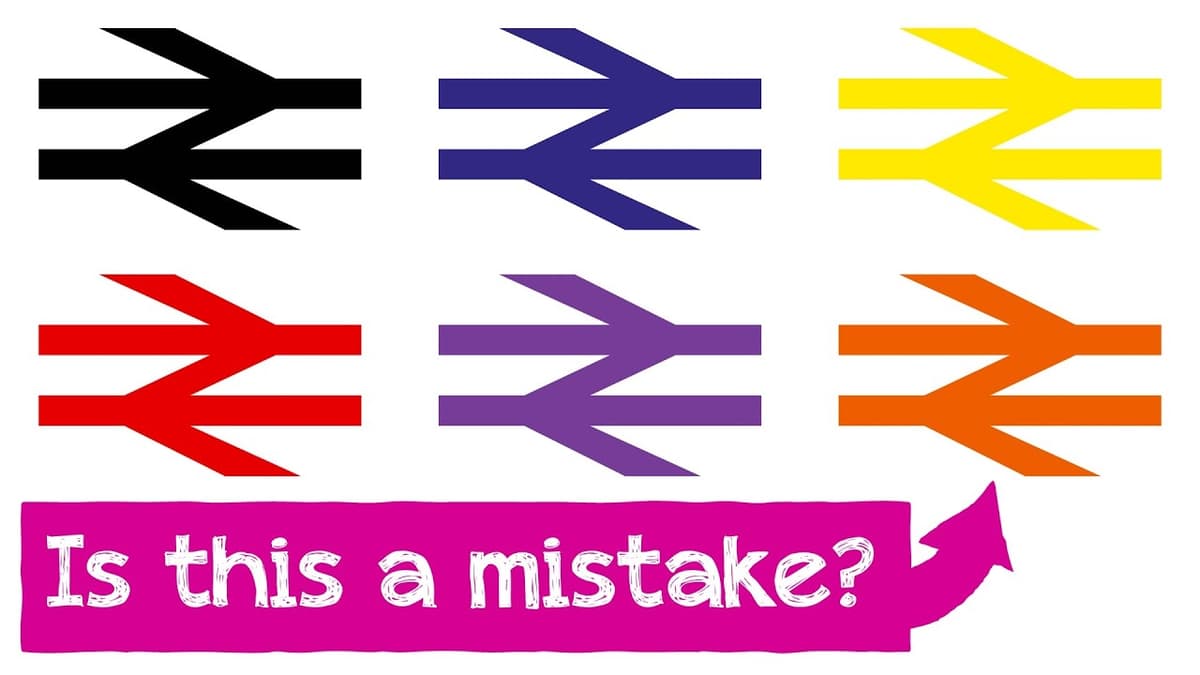
Secret Great British Railways Branding Trademark?
A recent trademark application has surfaced for the original Great British Railways logo, known as rail symbol one, sparking curiosity among industry watchers. The filing, unlike the officially adopted rail symbol two, specifically claims the older emblem and enumerates a narrow colour spectrum...
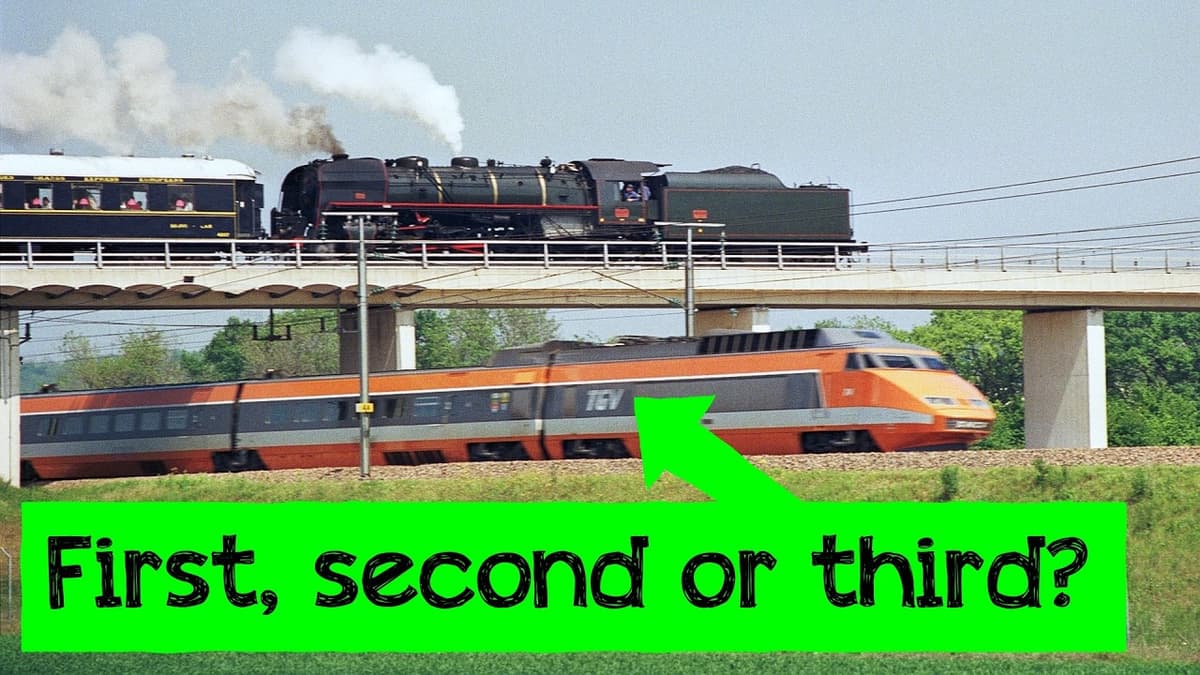
Poland, Italy or France: Europe's First High Speed Line
The video examines the contested claim of which railway can be called Europe’s first high‑speed line, tracing origins from Japan’s pioneering Shinkansen to early continental projects. It notes Japan’s 1964 Tokaido Shinkansen operated at 140 mph, meeting modern high‑speed criteria except for...
Getting Into York City Centre Is HORRIBLE
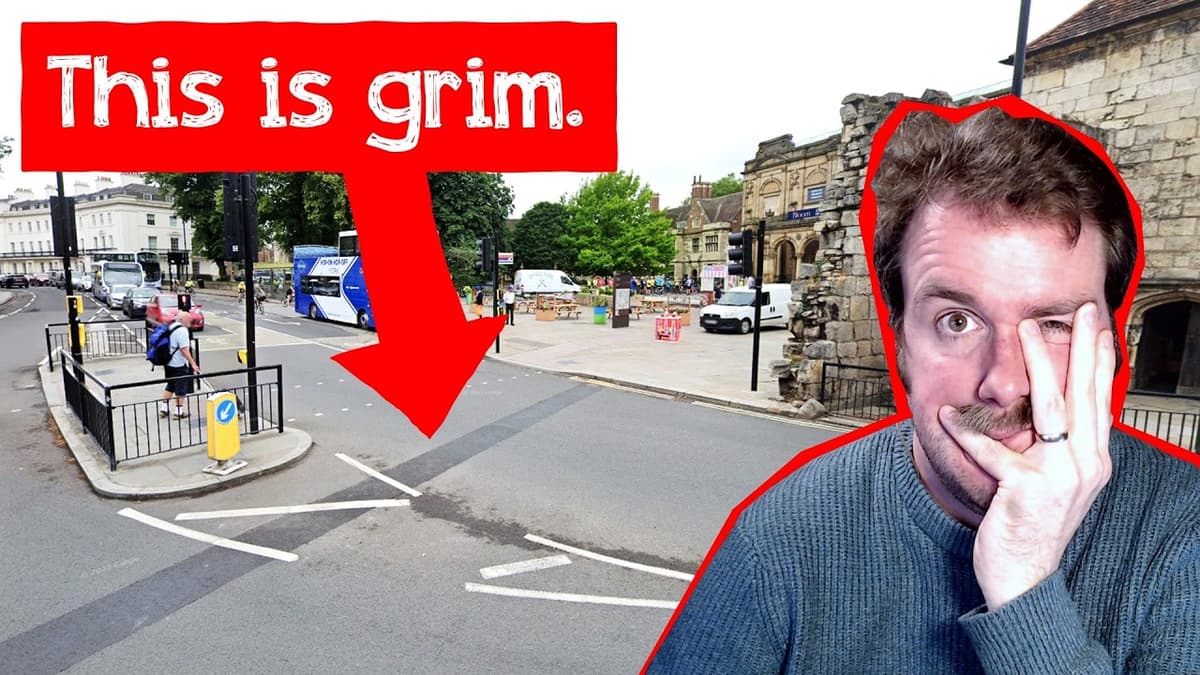
The video takes a hard look at York’s city‑centre accessibility, mapping all fourteen pedestrian‑friendly entrances and exposing why exiting the historic core feels like navigating a maze of concrete. While the medieval walls are often blamed, the presenter argues they...
British Rail Got This Wrong for 33 Years
The video explains how British Rail deliberately altered the standard track gauge from 4 ft 8½ in (1 435 mm) to 4 ft 8 ⅜ in (1 432 mm) between 1963 and 1996. The change was introduced as a “failed” attempt to curb wheel‑set hunting – a sinusoidal oscillation that could...

The Company that Built Tilting Trains AND Solid Rocket Boosters
The video examines how solid rocket boosters (SRBs) are manufactured, contrasting aerospace giants like Lockheed with chemical‑industry firms such as Hercules and Thol, and highlights United Technologies’ role in merging propulsion with avionics, even noting its foray into tilting turbo...

Old Oak Common Level Boarding Update #railnatter #accessibility
Old Oak Common’s level‑boarding initiative took a step forward as the campaign group published a formal letter to Network Rail’s Old Oak Common project team, endorsing the proposed design while flagging several caveats. The correspondence, linked on Blue Sky and...

This Train TRANSFORMED Britain’s Railways | #Railnatter 302
The episode of Railnatter focuses on the Plain Line Pattern Recognition (PLPR) train, a 20‑year‑old measurement unit that has become a cornerstone of Britain’s rail‑track inspection regime. Host Gareth and guest Alex, a veteran Network Rail engineer, explain why this...

Where Did "Standard Gauge" Come From?
The video explores the historical roots of the 4 feet 8½ inches "standard gauge," tracing it back to George Stephenson’s work on early coal‑transport wagonways in northeast England. Stephenson’s engineering on the Killingworth and Hetton collieries laid the groundwork for a uniform track...
This Man Killed the Advanced Passenger Train
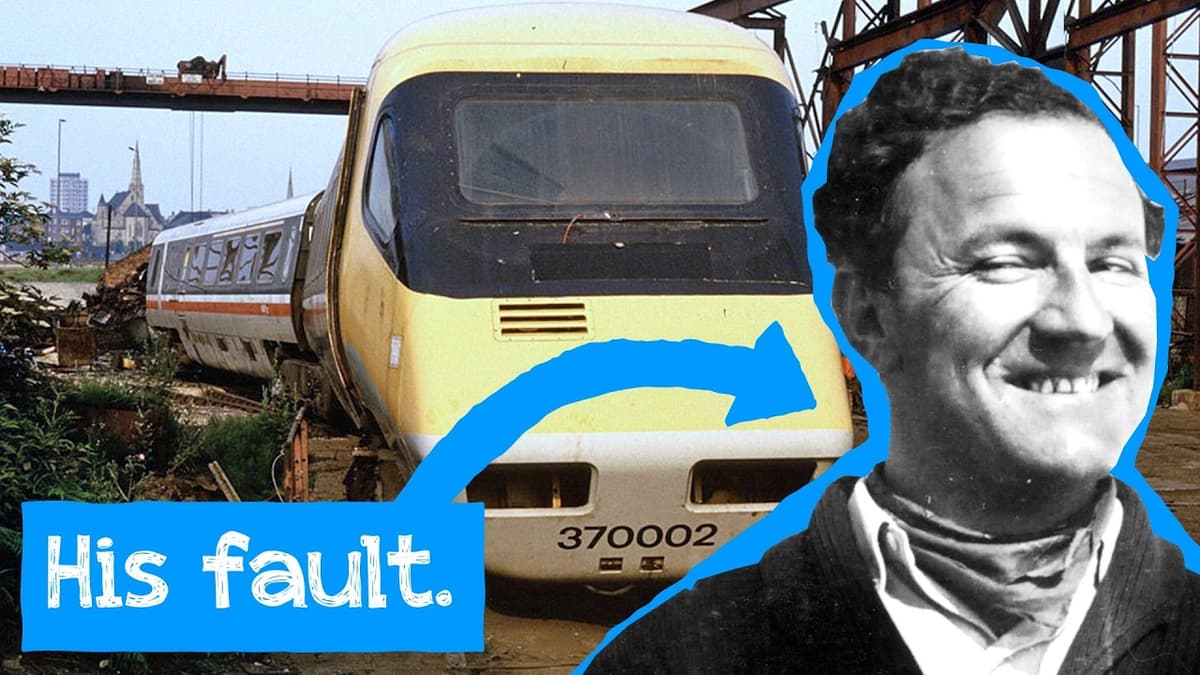
The video recounts how George Jelico, son of Admiral Jelico, was tasked in early 1970s to revive Britain’s economy by pouring money into R&D, and he singled out British Rail’s Advanced Passenger Train (APT) for rapid development. At the time, APT...

The Space Shuttle Had Nothing to Do with Roman Chariots
The video dismantles a viral claim that the Space Shuttle’s design, specifically its solid‑rocket boosters, traces back to the wheel spacing of an ancient Roman war chariot. The presenter walks listeners through the original email chain, highlighting how the story...
This Is How Transport Disables People
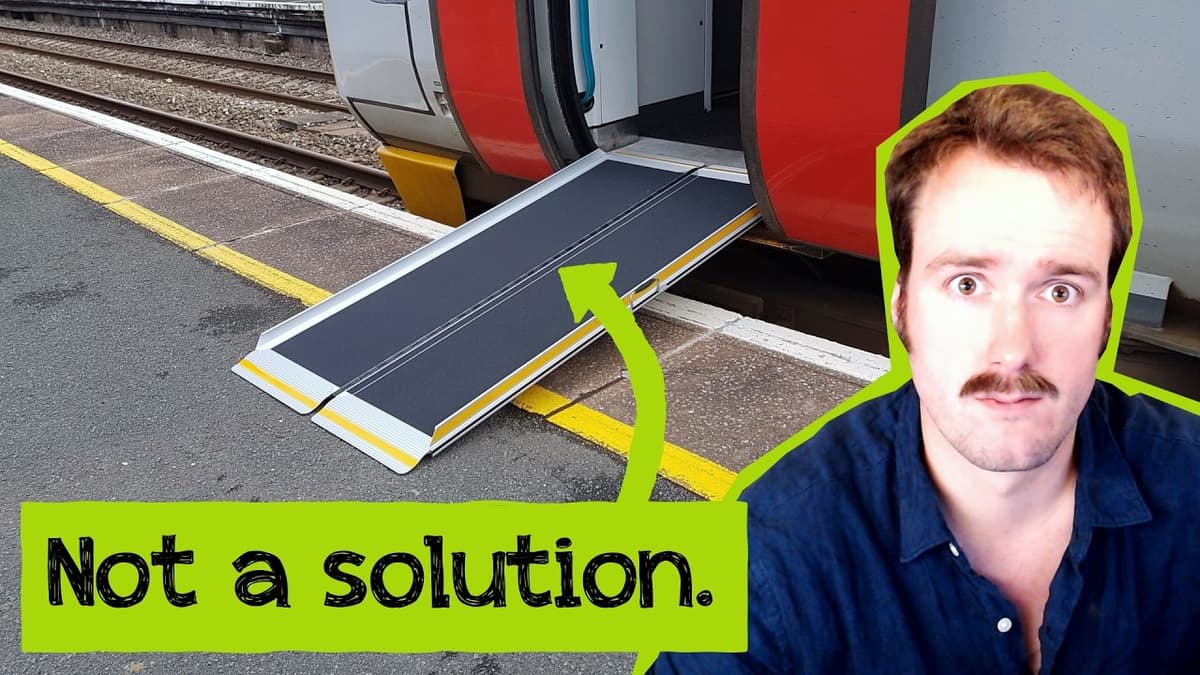
The video delivers a scathing assessment of Britain’s transport policy, arguing that the absence of a unified, inclusive strategy leaves disabled passengers stranded and the system inefficient. The speaker points out that the government has never produced a credible national...
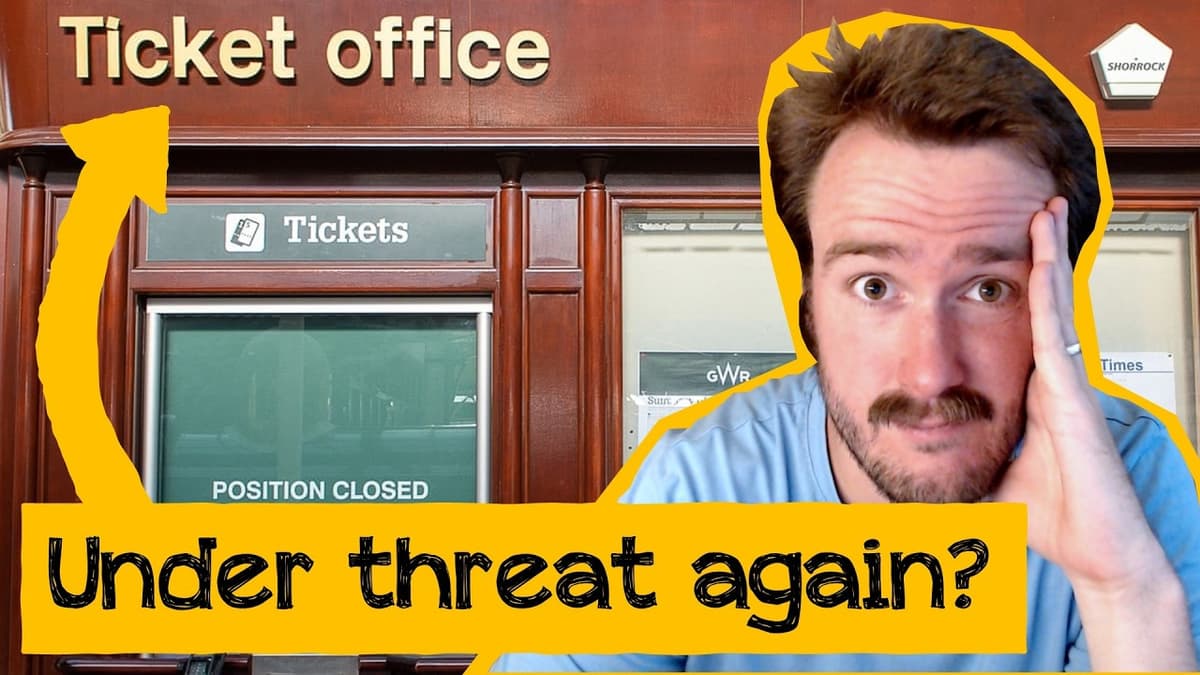
Another Fight over Ticket Office Closures Coming?
The video highlights a growing dispute over the concealment of ticket offices, as operators relocate or hide them from the public realm, making them difficult for passengers to locate. Participants argue that recent design directives prioritize aesthetic uniformity and machine placement...
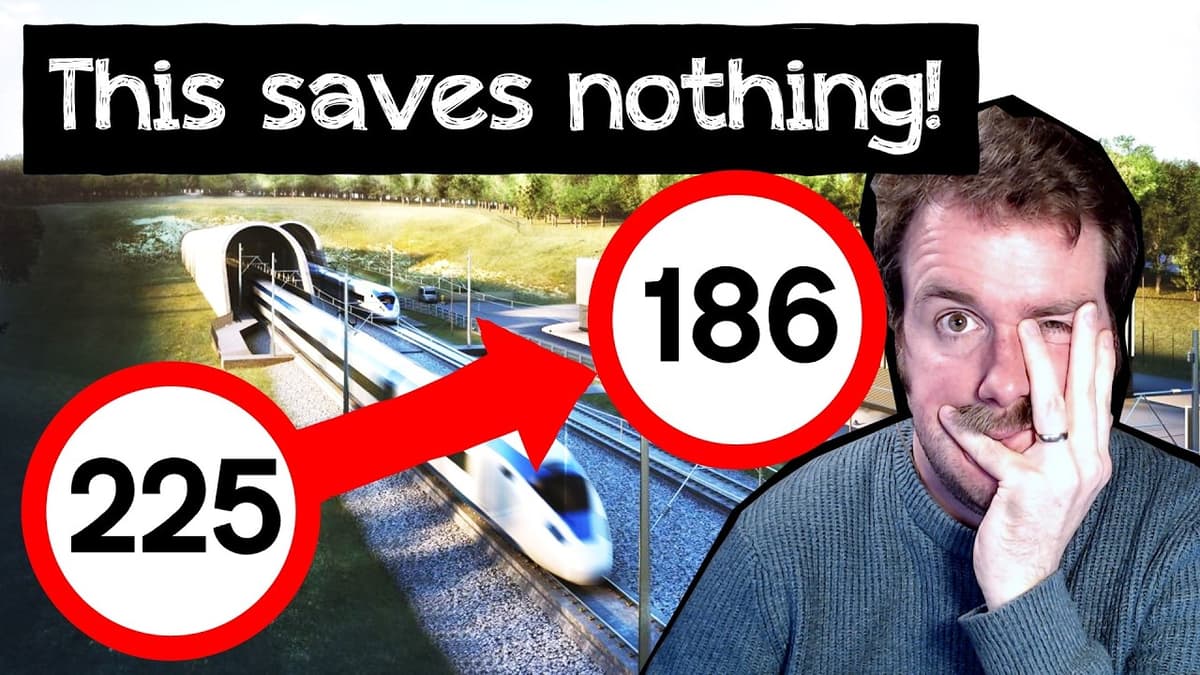
Slowing Down HS2 Won't Save Any Money
The video tackles the UK government’s latest proposal to lower HS2’s operating speed, a move touted as a way to claw back billions. Critics argue the claim is unfounded, noting that the project’s original design already reflects high‑speed standards and...

Talking Violence, Iran and Cost of Living with TSSA’s Maryam Eslamdoust | #Railnatter 301
General Secretary Maryam Eslamdoust sat down with Railnatter to discuss the TSSA’s strategic priorities. She highlighted concerns over unions being co‑opted by consultancy firms, the ripple effects of the Iran‑Russia war on UK cost‑of‑living inflation, and the ongoing rail reform...
The Problem with Control Periods
The discussion centers on the UK rail industry's reliance on five‑year "control periods" – funding cycles intended to provide certainty for renewals and enhancements. While the model offers a rare multi‑year budget guarantee in the public sector, participants argue it...

Is Thorpe Park Station Arriving Too Late?
The video examines the long‑awaited Thor Park railway station, highlighting that its opening has slipped beyond the optimistic one‑year target and may not materialise for several more years. The presenter walks the site, pointing out that the surrounding commercial and residential...

What SPEED Says About US Transit Culture
The video dissects a recent film that uses a Los Angeles bus hostage scenario to comment on American transit culture. It contrasts the gritty, stressful highway imagery with a pristine subway station, underscoring how public transportation is often framed as the...

Starmer Threatens Scottish and Welsh Governments
The video focuses on Labour leader Keir Starmer’s confrontational approach toward Scotland, Wales, and other devolved administrations, alongside criticism that Treasury procedures are hindering regional transport projects and broader economic growth. Think‑tank IPR argues that Treasury red tape blocks new transport...
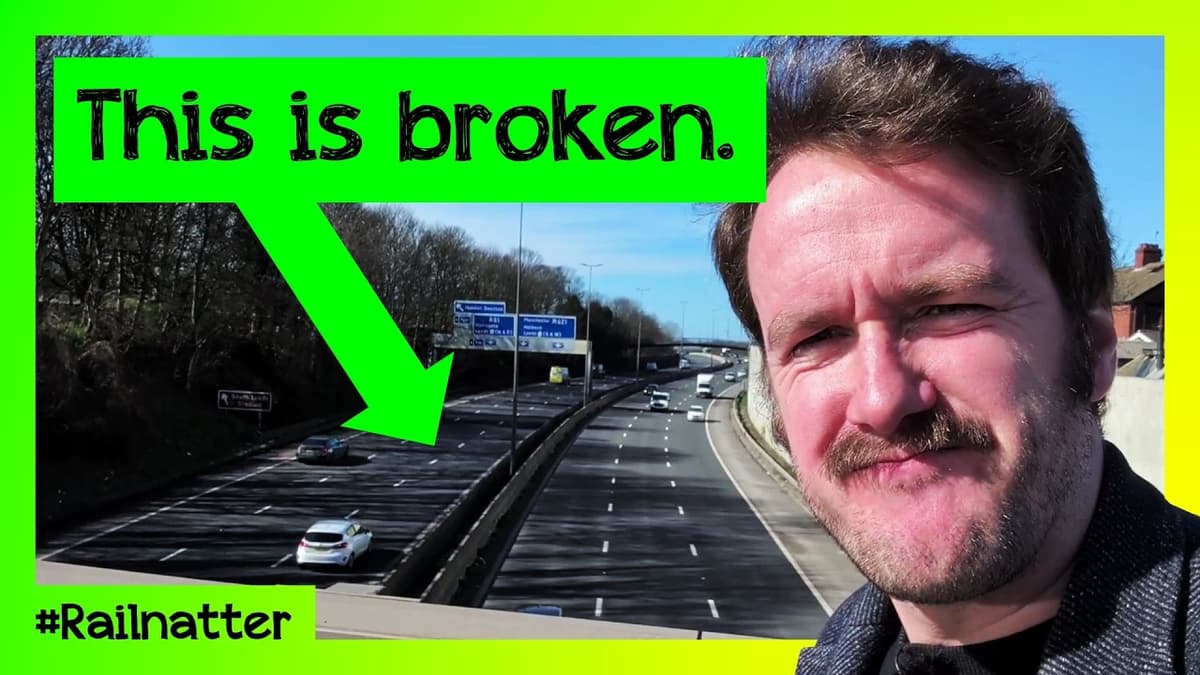
Transport in Leeds Isn't Working | #Railnatter 300
The video, marking episode 300 of the #Railnatter series, takes viewers on a 10‑hour, 22‑stop tour of Leeds to illustrate why the city’s transport system is failing. It argues that despite a proclaimed integrated policy covering roads, parking, and public...

Hyperloop Will NEVER Work
The video argues that the Hyperloop concept is fundamentally unworkable, centering on a simple physics‑based capacity calculation that reveals severe limitations. By applying basic SUVAT equations, the presenter shows a 1,000 km/h pod with 20 seats can only run every 40 seconds,...
Every Version of Northern Powerhouse Rail We Never Got
The video traces the rise and fall of Northern Powerhouse Rail, beginning with the 2018 blueprint that earmarked £70 billion for a high‑speed corridor linking Liverpool, Manchester, Manchester Airport, Bradford, Leeds and extensions toward York and Hull. The plan was anchored...

Why Transport Fever 3 Might Be the BEST EVER Transport Simulator | #AnEngineerPlays
Transport Fever 3, the next installment of the acclaimed transport‑management series, is the focus of Gareth Dennis’s deep‑dive video. As a railway engineer and creator of the Archipelago series, Dennis evaluates the game’s promised features and visual fidelity, positioning it...
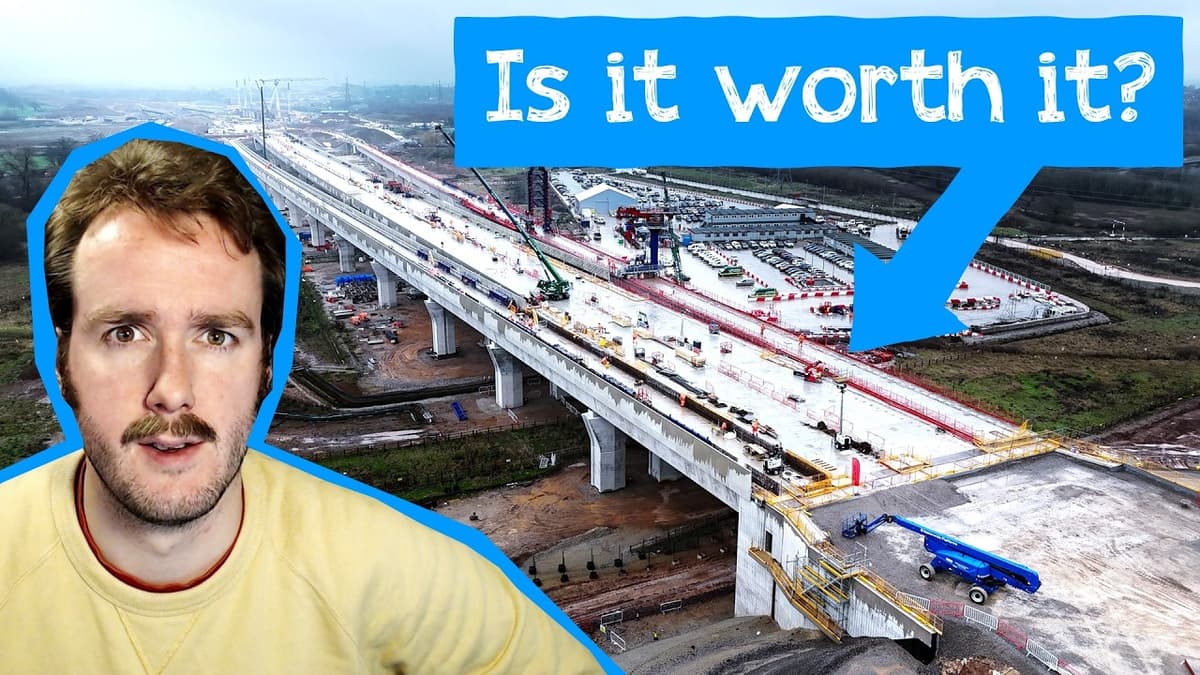
THIS Is What High Speed 2 Was All About
The video dissects the current state of Britain’s High Speed 2 (HS2) project, emphasizing how the scheme has been dramatically trimmed, especially the Birmingham segment, and why that matters for national rail capacity. The presenter overlays population density maps and...
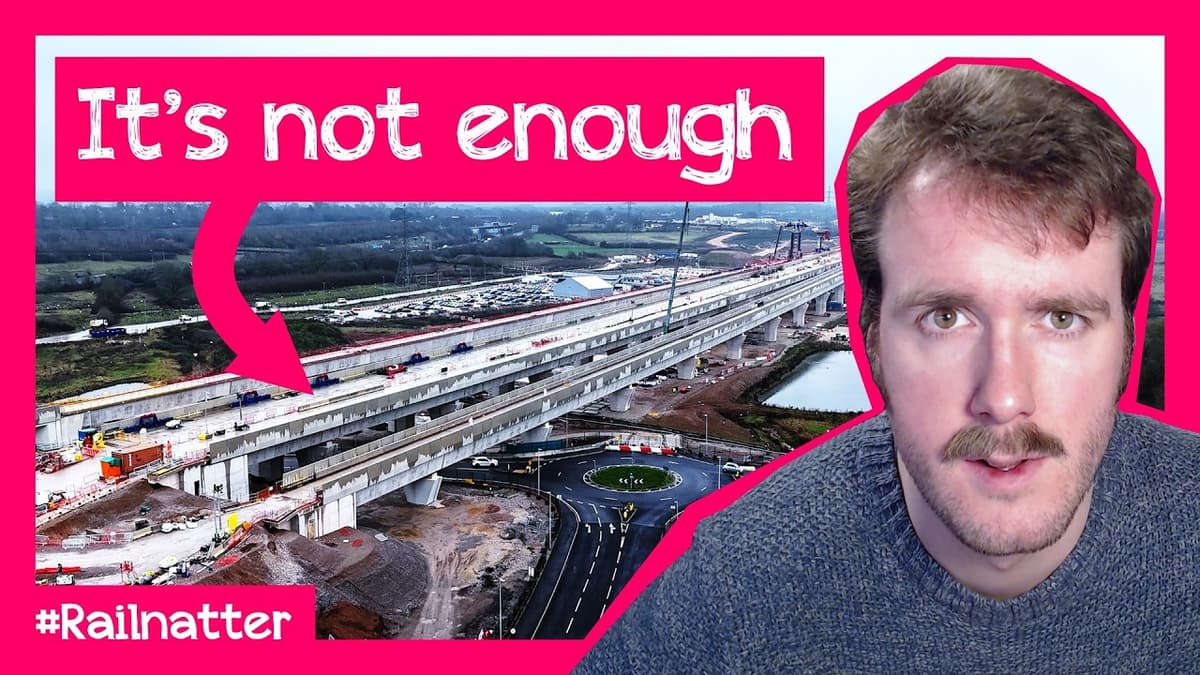
Can We End Britain's Boom and Bust Problem? | #Railnatter 297
In February, the UK Transport Select Committee released a report targeting the rail sector’s chronic boom‑and‑bust investment cycle, which inflates ticket prices and stalls upgrades. The document maps current pipeline weaknesses, proposes a unified, long‑term funding framework, and recommends statutory...
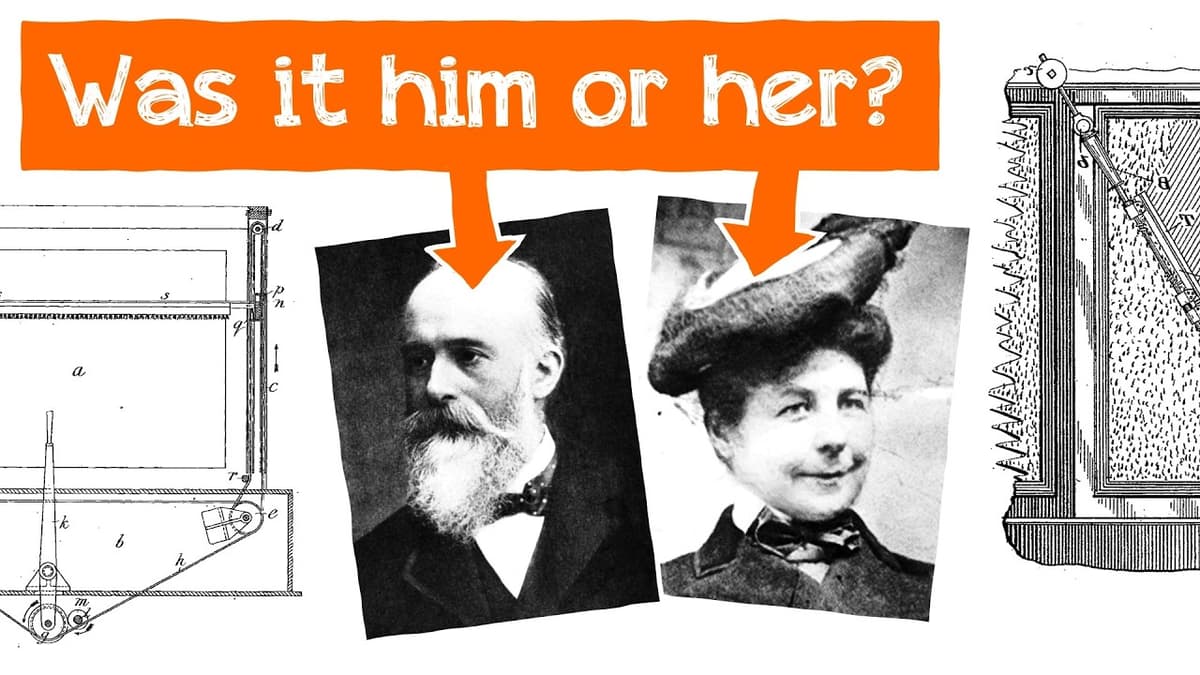
Who REALLY Invented the Windscreen Wiper?
The episode investigates the true origins of the windshield wiper, debunking common myths and highlighting early inventors. It credits Mary Anderson’s 1903 patent as the first practical device, while also acknowledging earlier concepts and later innovations like Robert Kearns’ intermittent...
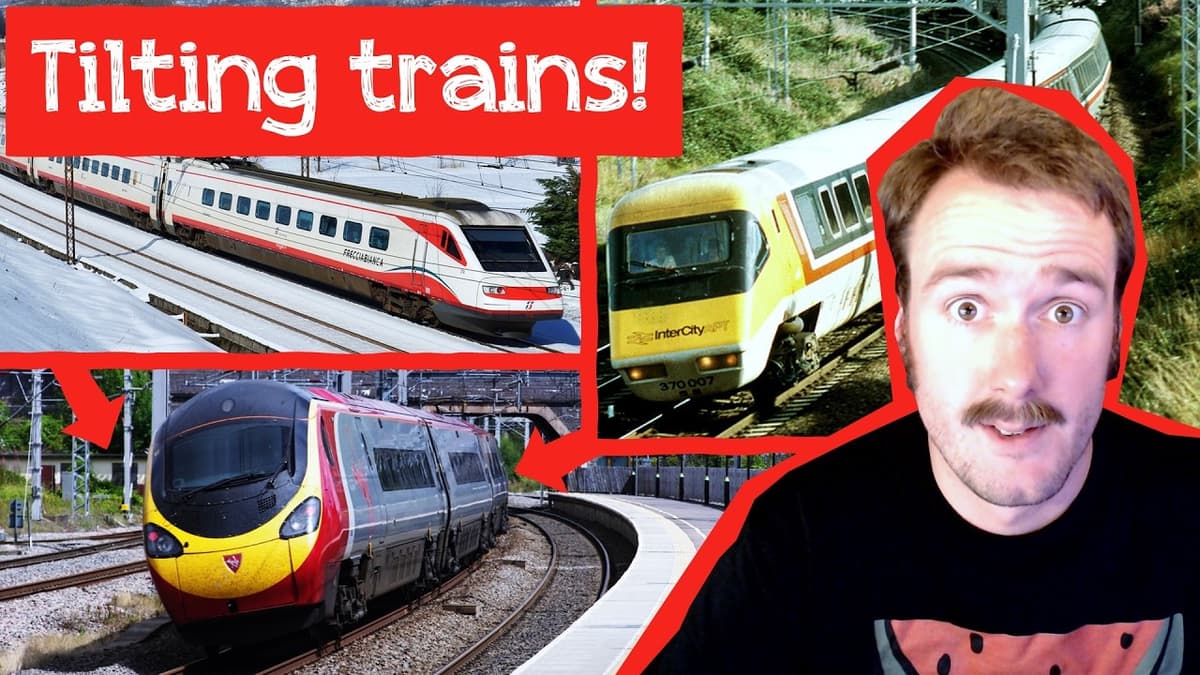
The Origins of the Pendolino Tilting Train
The video traces the development of Italy’s Pendolino tilting‑train family, beginning with the first‑generation ETR 450 introduced in 1988 and culminating in the sophisticated Class 390 fleet that entered service at the turn of the millennium. It highlights how the original ETR 450 merged...
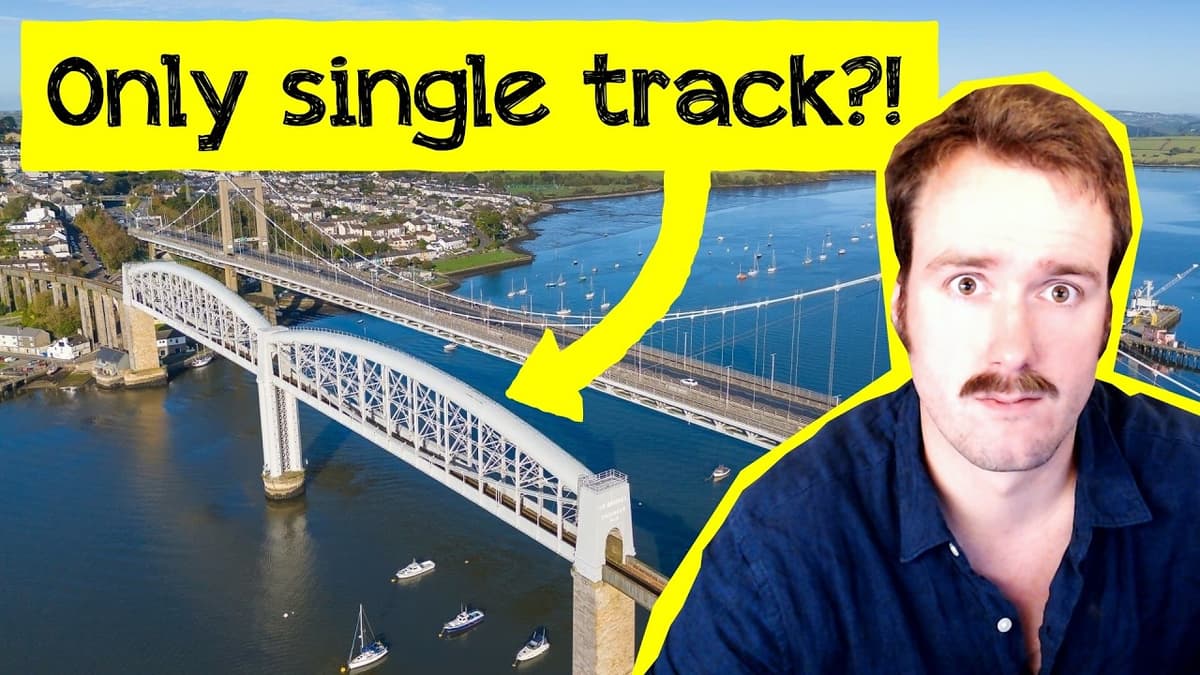
Devon and Cornwall's Railways Are Unfinished
The video maps an “ideal” rail layout for Devon and Cornwall against the current fragmented system, illustrating how planners might connect the southwest to national corridors from London and Bristol while grappling with the region’s sparse population and rugged geography. Using...

The FOUR Grades of Train Automation, Explained
The video breaks down four grades of train automation (GOA1‑GOA4), clarifying what “driverless” truly means for urban rail. GOA1 is fully manual; GOA2 automates traction while a driver still controls doors and handles exceptions; GOA3 removes the driver from the cab,...
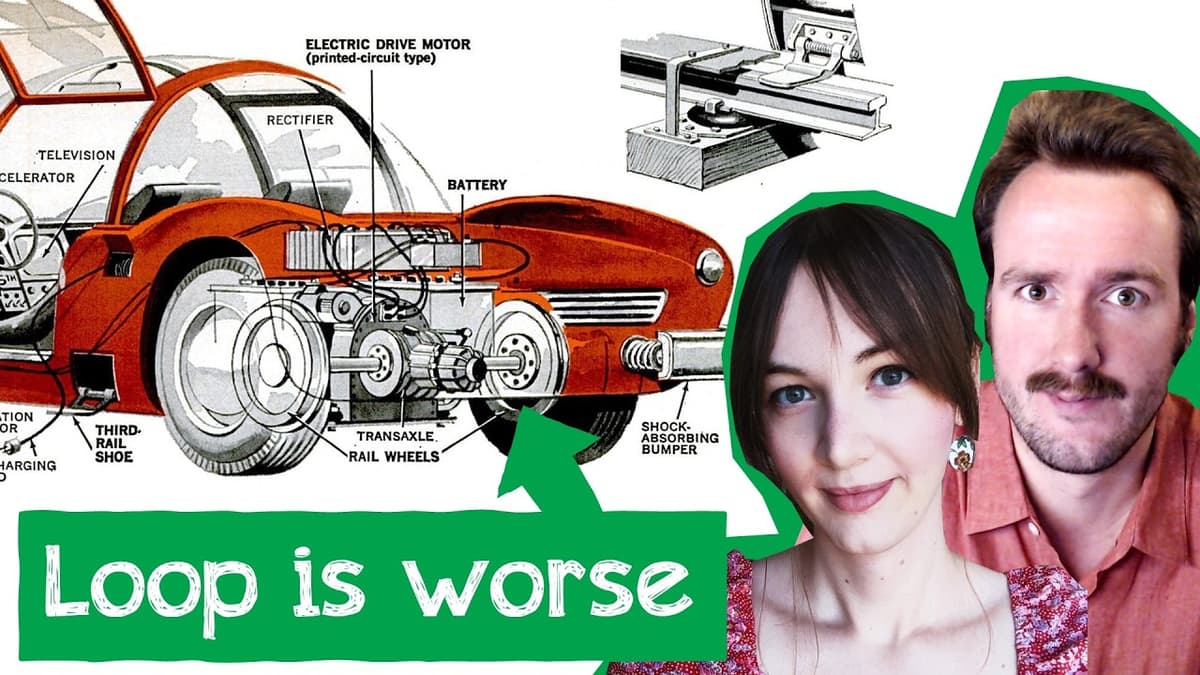
Did Musk's Boring Company Just Copy the 1967 Urbmobile?
The video examines Elon Musk’s Boring Company Loop and argues it closely resembles the 1967 “Herb Mobile” dual‑mode transport concept, a little electric car that could drive on regular roads and then launch onto a dedicated guideway at high speed. Herb...

Engineers DESTROY Latest High Speed Loop Idea
The video takes aim at a newly floated “Neom‑inspired” high‑speed loop intended to link northern British and Irish cities, arguing the plan is fundamentally absurd. Presenter Ros and the host dissect a series of glossy renderings and a proposal from...

The Swiss Cheese Model, Explained
The video breaks down the Swiss‑cheese model, a safety framework that visualises multiple defensive layers as slices of cheese with potential holes. It explains how accidents happen when these holes line up, allowing hazards to pass through all barriers. The...