
Recent Posts
Video•Jan 8, 2026
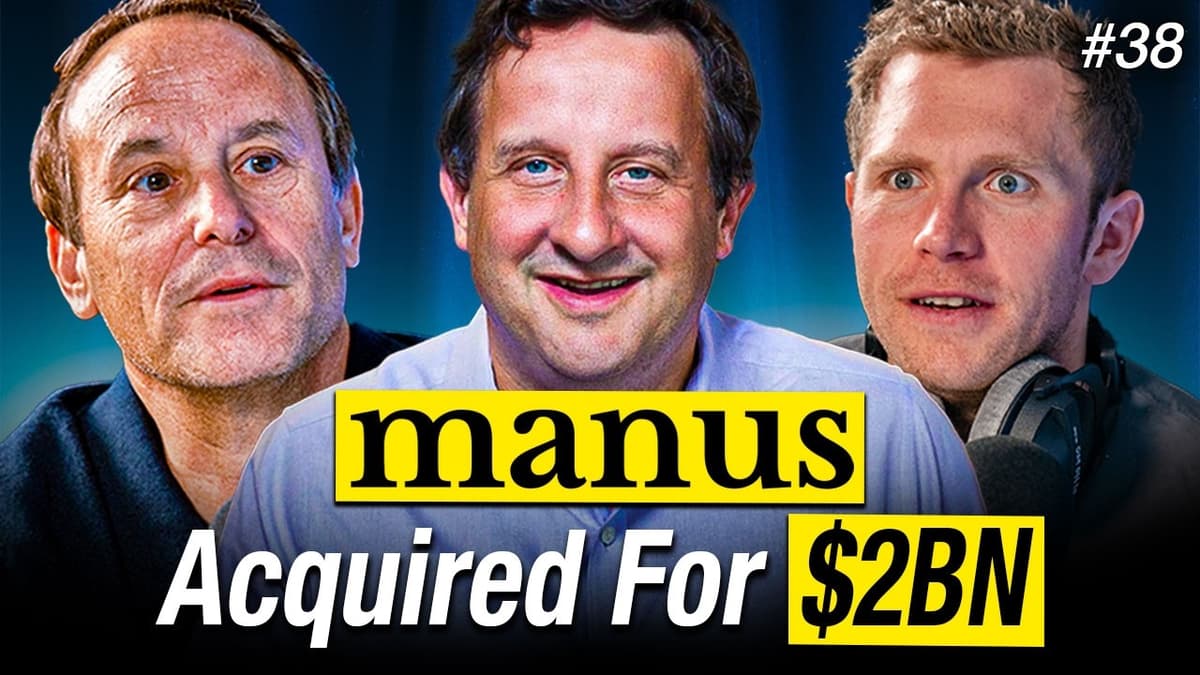
Groq’s $20BN NVIDIA Deal | Why Sam Altman Doesn’t Care About Dilution & Invisible Unemployment 2026
The video dissects Nvidia’s surprise $20 billion cash acquisition of Groq, a boutique chipmaker known for ultra‑low‑latency inference silicon. The deal closed just before Christmas, with Chamath and Jensen Huang driving a rapid, three‑times‑last‑round price to eliminate a nascent competitor that could erode Nvidia’s margins. Analysts note that AI workloads split into two distinct phases: one‑time model training, where Nvidia’s GPUs dominate, and continuous inference, where Groq’s deterministic, sub‑microsecond chips excel. By buying Groq, Nvidia removes a potential threat to its 75% gross‑margin, $100 billion‑plus cash‑flow business and secures a strategic foothold in the emerging “always‑on” AI inference market that knowledge workers will increasingly rely on. Key anecdotes include Jensen Huang’s directive to close the transaction before Christmas, Tabus’s use of Groq for real‑time conversational AI, and Chamath’s view that the purchase is less than 1% of Nvidia’s market cap yet protects a $50 billion‑plus addressable market. The discussion also highlights the valuation paradox: Groq’s standalone worth may be $5 billion, but to Nvidia it commands $20 billion because it safeguards future revenue streams. The acquisition resets the pricing bar for AI‑chip startups, giving venture firms a new comp for fundraising and pressuring rivals such as Cerebras, Amazon, and Microsoft to reconsider their silicon strategies. It also signals that mega‑cap players are willing to pay premium multiples to lock down niche capabilities, accelerating consolidation in the semiconductor ecosystem and shaping the economics of AI inference for years to come.
By Harry Stebbings

Social•Jan 8, 2026
Speed Wins: Upstarts Respond, Incumbents Stall
I often cold outbound mega CEOs to come on 20VC: The upstarts who are crushing, taking incumbent share and moving fast; respond and take it themselves. The incumbents; forward it to comms, who send me BS emails a week later...
By Harry Stebbings

Social•Jan 7, 2026
Europe’s Booming Entrepreneurs Signal Strong Investment Opportunities
If you are not bullish on Europe right now I can categorically tell you, you have s*** dealflow and need to improve. Never been more great entrepreneurs building mega European businesses.
By Harry Stebbings

Social•Jan 7, 2026
Project Europe Poised to Lead EU Entrepreneurship
Project Europe has been live for 10 months. 12 Project Europe companies. 4 have raised significant up rounds from Tier 1s. 1 has been acquired by category leader. Never been more confident that Project Europe will be the dominant entry...
By Harry Stebbings
Social•Jan 5, 2026
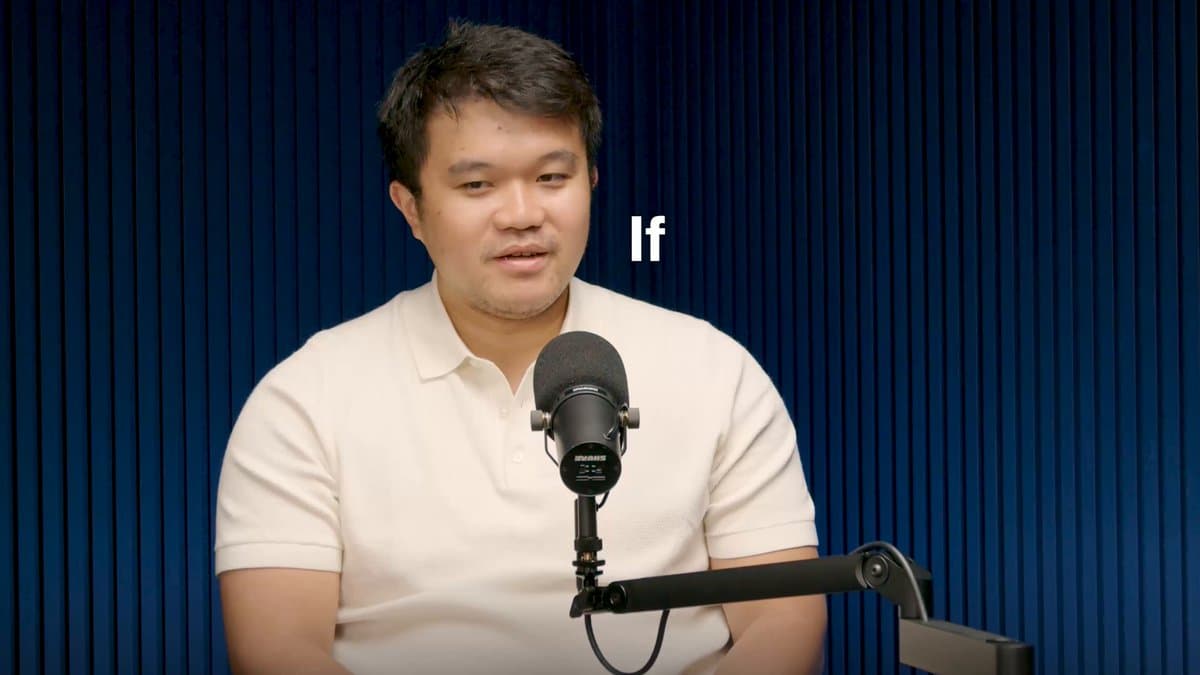
Winning Obsession: Why Founders Must Sacrifice Work-Life Balance
I have interviewed 1,000 of the best founders over the last 10 years. The top three: 1. Nik Storonsky (Revolut) 2. @awxjack (Airwallex) 3. @alanchanguk (Fuse Energy) All three share one trait. Unwavering obsession to win. We BS so many founders today because people hate what...
By Harry Stebbings
Video•Jan 5, 2026
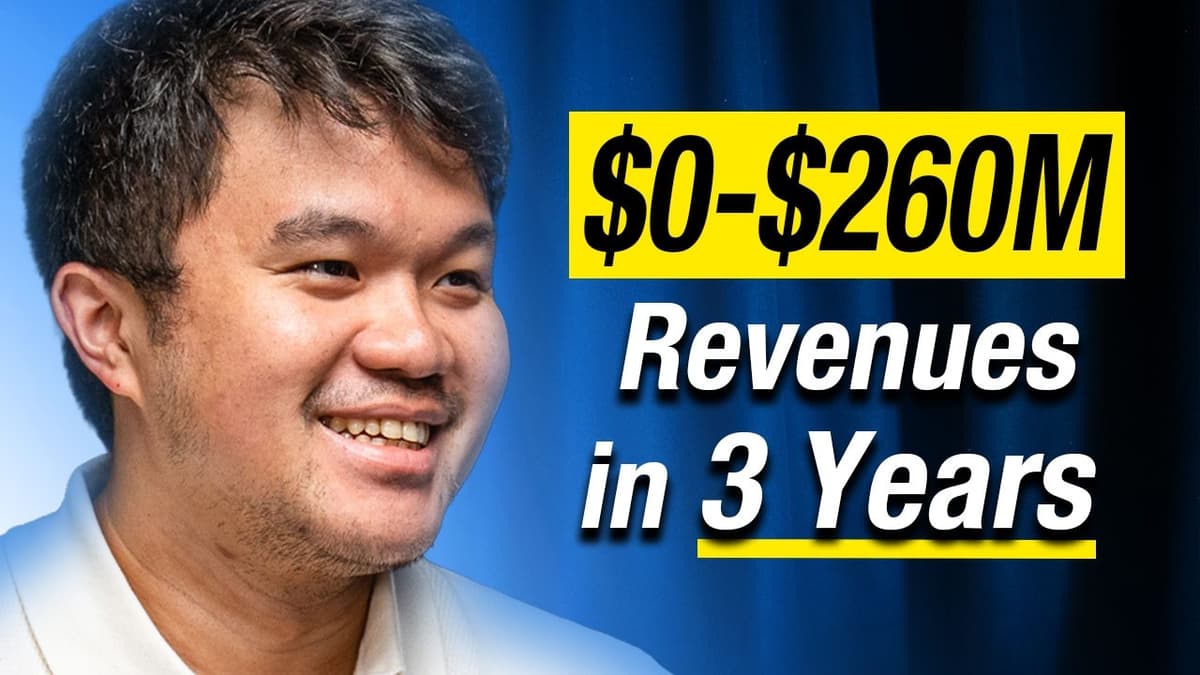
Fuse CEO Alan Chang: The Revolut Playbook of Speed & Ownership, Why Founders Aren’t Ambitious Enough
Alan Chang, co‑founder and CEO of Fuse Energy, uses his Revolut experience to outline a playbook for disrupting the energy sector. He likens Fuse’s ambition to Netflix’s media takeover and Revolut’s banking conquest, arguing that only a ferocious work ethic...
By Harry Stebbings

Social•Dec 31, 2025
Enterprise AI Adoption Hinges on Forward‑deployed Engineers, Not Just Data Labeling.
Enterprises will not adopt AI without forward-deployed engineers? Are revenue numbers posted from data-labelling companies real revenue or GMV? There are 8+ players in the data-labelling market with $100M in ARR, who wins? Who loses? Are AI talent marketplaces dead? Do you have...
By Harry Stebbings
Video•Dec 31, 2025
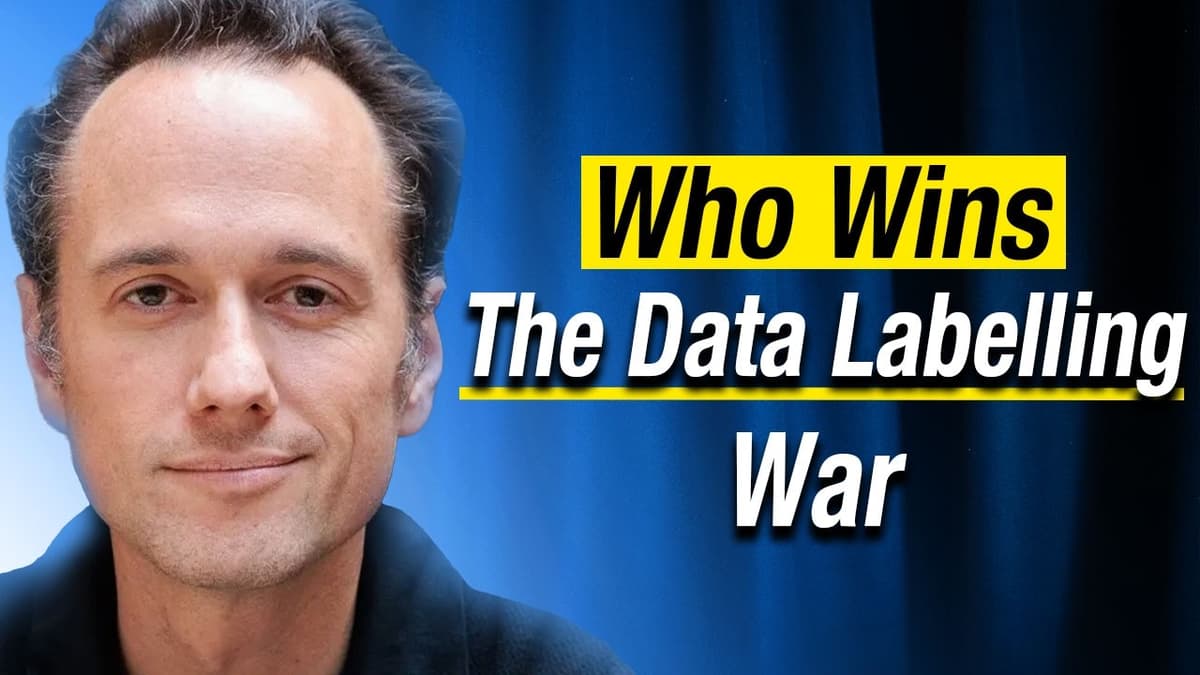
Matt Fitzpatrick on Who Wins the Data Labelling Race & Why AI Needs Forward-Deployed Engineers?
Matt Fitzpatrick discusses why the AI data‑labeling race is stalling in large enterprises, emphasizing that only a tiny fraction of generative‑AI projects ever reach production. He cites MIT’s finding that just five percent of GenAI deployments work in any form...
By Harry Stebbings

Social•Dec 22, 2025
2025 Winners Revealed, 2026 Tech Stock Predictions Unveiled
2025 was a crazy year. 2026 will be even less predictable. So at 20VC we thought it was time for @jasonlk, @rodriscoll to do a very special “20VC Big Fat Quiz of the Year”. For 2025: - Best Founder of the Year -...
By Harry Stebbings

Video•Dec 21, 2025
My Top 3 YC Companies
The video spotlights three Y Combinator alumni that the presenter, a prolific YC investor, believes have the strongest commercial potential. After reviewing 150 pitches and backing 13 companies, the narrator narrows the field to Torniol, Clix, and Crunched, each tackling...
By Harry Stebbings

Deals•Sep 7, 2025
Meta's Acquisition of Scale Criticized over Structure and Potential Write-Down
The newsletter discusses Meta's acquisition of Scale, noting concerns about talent fallout, questionable asset fit, and a deal structure involving approximately $14BN in distributed cash that could lead to a future write-down for Meta.
Harry Stebbings

Deals•Jul 6, 2025
Melio Sells for $2.5B After Growing to $153M ARR
Melio, a SaaS payments company with $153M ARR and 127% YoY growth, was sold for approximately $2.5 billion, reflecting roughly a 16x revenue multiple. The transaction outcome was discussed as a disappointing valuation for similar high-growth portfolio companies.
Harry Stebbings

Deals•Jun 1, 2025
Yuri Milner Invested $100M Into Airwallex at $1.1B Valuation
Airwallex received a $100M investment from Yuri Milner at a reported $1.1B valuation, recounted by CEO Jack Zhang on the 20VC podcast. The anecdote highlights a rapid, high-conviction check after a brief personal conversation.
Harry Stebbings