
Genuine Conversations Build Loyalty
The video underscores that authentic, one‑to‑one conversations are more effective at building loyalty than generic sales pitches. The speaker recounts a recent interaction with a learning‑and‑development client, where sharing a timely article sparked a genuine dialogue about the content rather than a product. He highlights practical tactics: logging personal details—birthdays, grandchildren’s sports—in a CRM, then setting reminders to reach out with a simple “thinking of you” note. By focusing on the person’s interests instead of the car, he cultivated trust and kept the prospect engaged over months. A memorable line—“Hey, just thinking about you today”—illustrates how non‑salesy check‑ins can turn a cold lead into a loyal client. The speaker notes that the resulting loyalty often attaches to the individual rep rather than the company they represent. For businesses, the lesson is clear: invest in relational selling, equip teams with tools to capture personal data, and encourage spontaneous, value‑adding outreach. Doing so can shorten sales cycles, improve retention, and create brand ambassadors who follow the salesperson, not just the product.
Find Your Ideal Customer
The video explains how to identify and target the ideal customer for a home‑services CRM solution. It emphasizes that the most promising prospects may not be visible online, so networking events become essential for uncovering hidden opportunities. Key insights include defining...
C Suite Sales Strategy
The video teaches sales professionals to adopt a C‑suite mindset, shaping pitches as if they were the executive decision‑maker. It stresses framing value in financial terms—cost savings, revenue uplift, and competitive positioning—while spotlighting three AI trends that will reshape the industry...
AI's Sales Revolution
The video argues that artificial intelligence is poised to overturn the long‑standing belief that empowered buyers render salespeople obsolete. Instead of merely responding to inbound requests, reps will leverage AI‑generated insights to become true consultants, presenting data‑driven ROI scenarios that...
Conquer Buyer Resistance
The video emphasizes that conquering buyer resistance is the top priority for salespeople and leaders in 2026. Colleen points to heightened resistance driven by macro‑economic headwinds and micro‑level market shifts, noting that prospects are increasingly skeptical, especially amid AI‑generated content. She...
90 Days to Level Up Your Sales Skills Unboxing
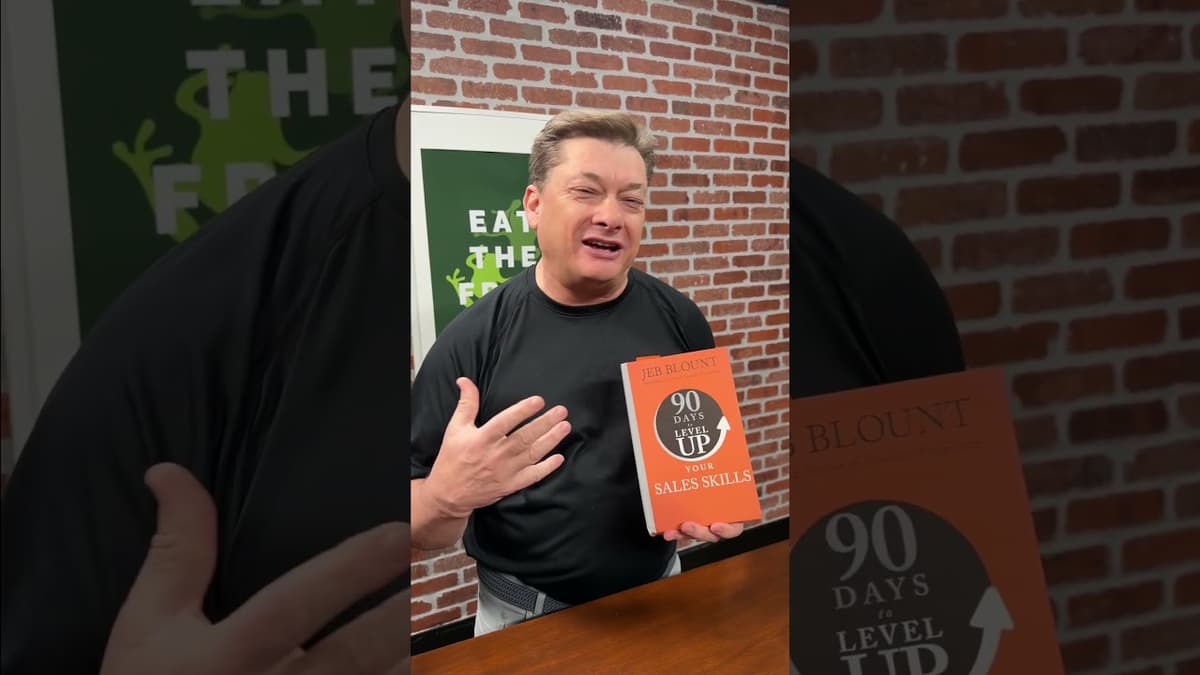
Author unveils his 18th book, "90 Days to Level Up Your Sales Skills," a 90‑day, daily‑focused guide paired with a free multimedia learning path on Sales Gravy University. The book breaks each day into a brief lesson—typically five to ten minutes—followed...
The Best Way to Coach Resistance
The video addresses how sales leaders can coach resistance by embodying the same behaviors they expect from their reps, emphasizing listening and empathy as core tools. It draws a clear line between sympathy—simply agreeing with a rep’s complaints—and empathy, which involves...

The Secret to Scaling Sales Fast Is Systemizing
The video argues that rapid sales growth hinges on turning the go‑to‑market function into a repeatable system rather than relying on ad‑hoc tactics. Executives must embed a culture of excellence and accountability, ensuring every team member buys into a unified...
Why Your Fear of the Phone Is Costing You
The video tackles the common dread of cold‑calling, arguing that the fear itself is a revenue leak. The speaker frames the phone as a gateway to market exposure and stresses that avoiding calls means “closed mouths don’t get fed.” He proposes...

Engagement Without Context Is Just Noise
The video stresses that engagement without clear context is merely noise, urging sales reps to anchor every interaction in a well‑defined customer problem before reaching for tools or platforms. First, reps must crystallize the specific pain they solve, treating that insight...

Why "Nice" Sales Leaders Fail
The video warns that sales leaders who prioritize niceness over accountability are setting themselves and their teams up for failure. It argues that leaders must ride alongside reps, point out mistakes in real time, and enforce corrective actions, otherwise performance stagnates. As...

Why Your Sales Team Won't Prospect ❌ | Sales Leadership Secrets
Sales leaders often find their teams avoiding prospecting because the playbook lacks clear expectations. The video argues that without a structured mandate for new‑logo creation, reps default to nurturing existing accounts, chasing the easiest commission. Key insights include setting explicit prospecting...

Why Your Prospects Are Ghosting Your Meetings (Ask Jeb)
The Sales Gravy podcast episode tackles a common pain point: low show rates for first‑time sales appointments. Host Jeff Blunt brings in Jeb Blunt, who explains that a 50% attendance rate is the realistic ceiling and outlines a disciplined, time‑sensitive...

What a Secret Service Interrogator Can Teach You About Building Trust in Sales
Brad Beeler, a retired Secret Service polygraph specialist, reveals that the same instincts that compel criminals to confess also drive buyer behavior in sales. He explains that prospects instinctively assign "horns"—a threat signal— to salespeople within the first moments of...

3 Micro Behaviors That Make You Instantly More Likable in Sales (Ask Jeb)
In this Wisdom Wednesday episode, sales veteran Jeb Blunt breaks down three micro‑behaviors that instantly boost likability on sales calls and in everyday interactions. He frames likability as the gateway to emotional connection, arguing that a prospect’s emotional experience predicts...