
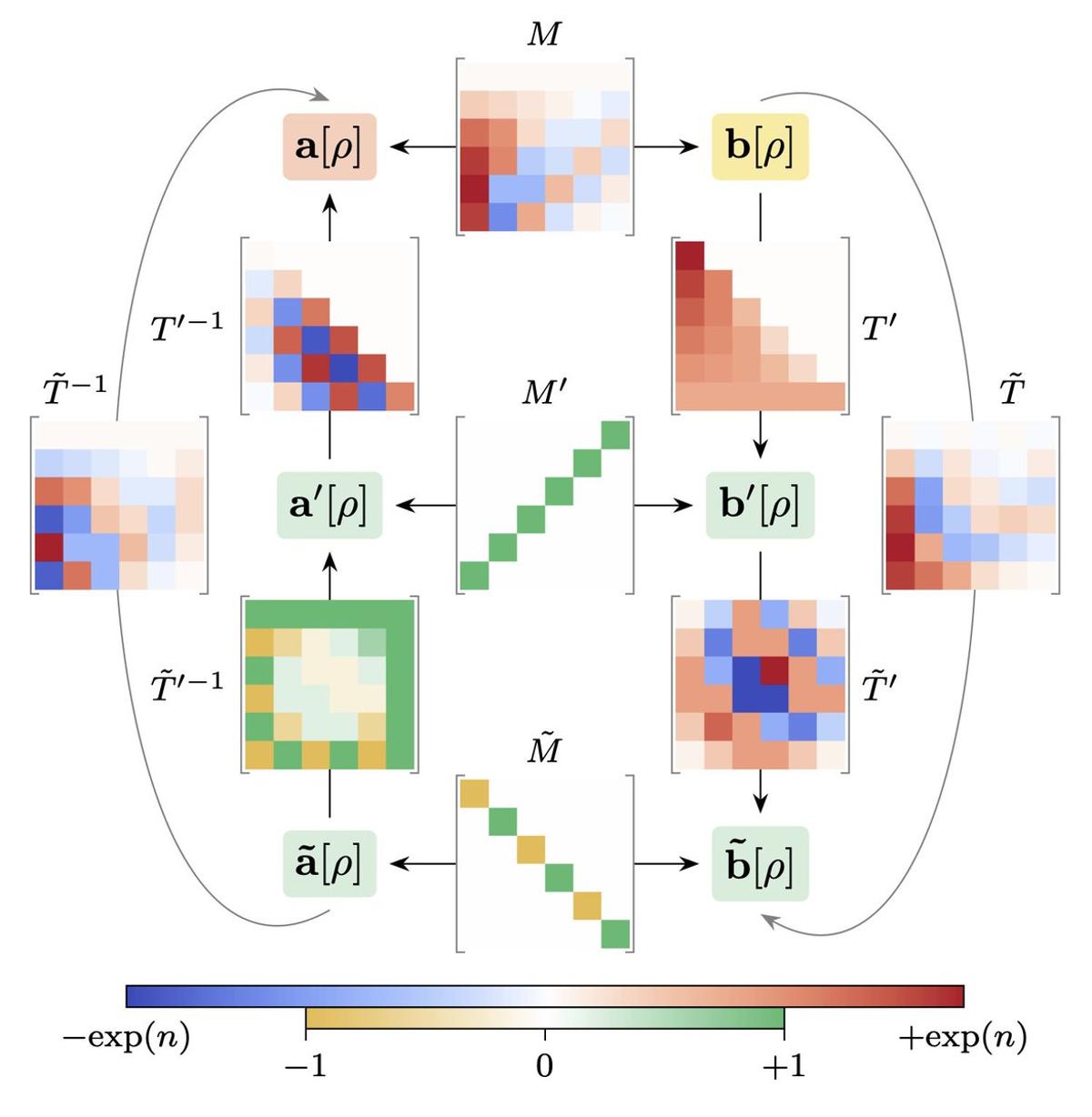
Quantum Shadow Enumerators Linked to Bell Measurements, Demonstrated Experimentally
Experimental measurement and a physical interpretation of quantum shadow enumerators We show that Rains' quantum shadow enumerators - a powerful mathematical tool in the theory of #quantumerrorcorrection - admit a direct physical interpretation in terms of outcome statistics of two-copy Bell measurements. This connection enables efficient #learning protocols for these quantities and is demonstrated experimentally on a trapped-ion quantum device. https://t.co/yB1z583uQD Happy to see this paper out. Warm thanks to @dm28295 who has been in the driver's seat here, the local team of @SumeetKhatri6, @lorenzo_leone_ , @QuAntonioMele, Kyano Levi, Lennart Bittel, Gregory White, Yifan Tang, Eric J. Kuehnke, Jose Carrasco, and our friends at the Universität Innsbruck under the lead of Thomas Monz and @MartinRingbauer, for making this joint theoretical-experimental work possible.
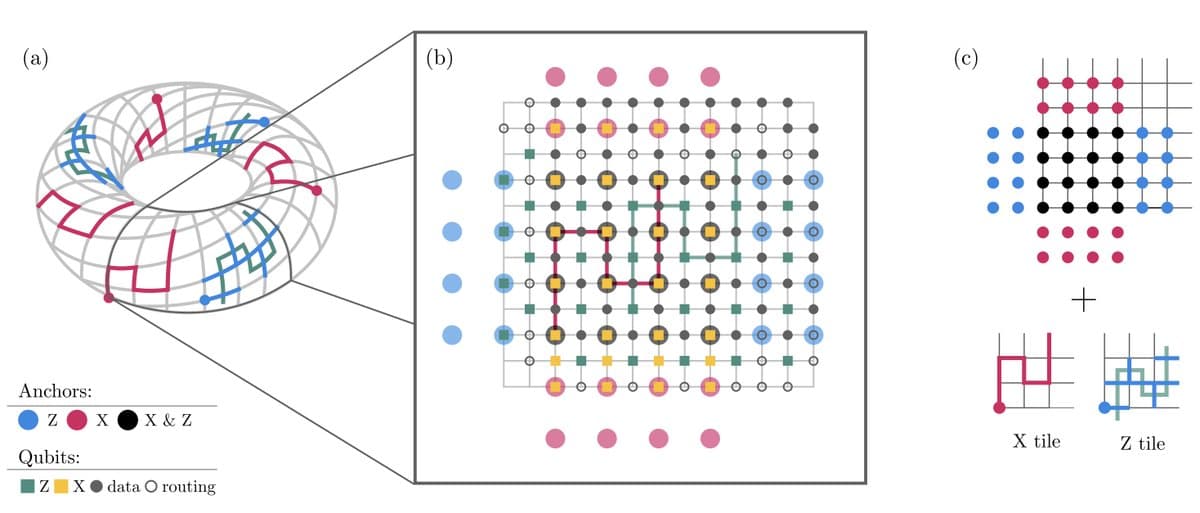
Nearest‑Neighbor Gates Enable Planar High‑Rate Quantum LDPC Codes
Nearest-neighbour gates are all you need: High-rate quantum low-density parity-check codes on a planar grid This is a piece of work I am particularly happy with. It shows that many of the advantages of quantum low-density parity-check (#qLDPC) codes can be...
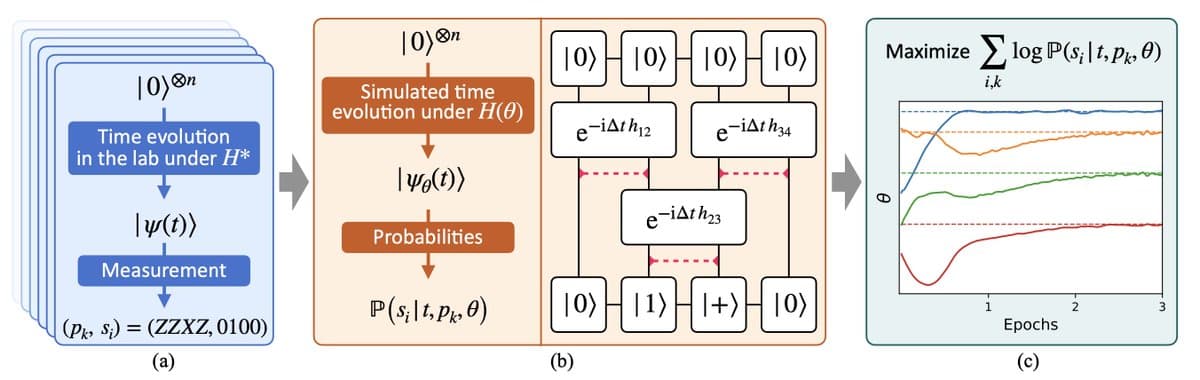
Scalable Hamiltonian Learning via Tensor Networks and ML
Scalably learning one-dimensional quantum many-body Hamiltonians from dynamical data By combining #tensornetwork techniques with those of automated differentiation and #machinelearning, we find a new way of pursuing scalable #Hamiltonian learning from data. I am happy to see our work out in...
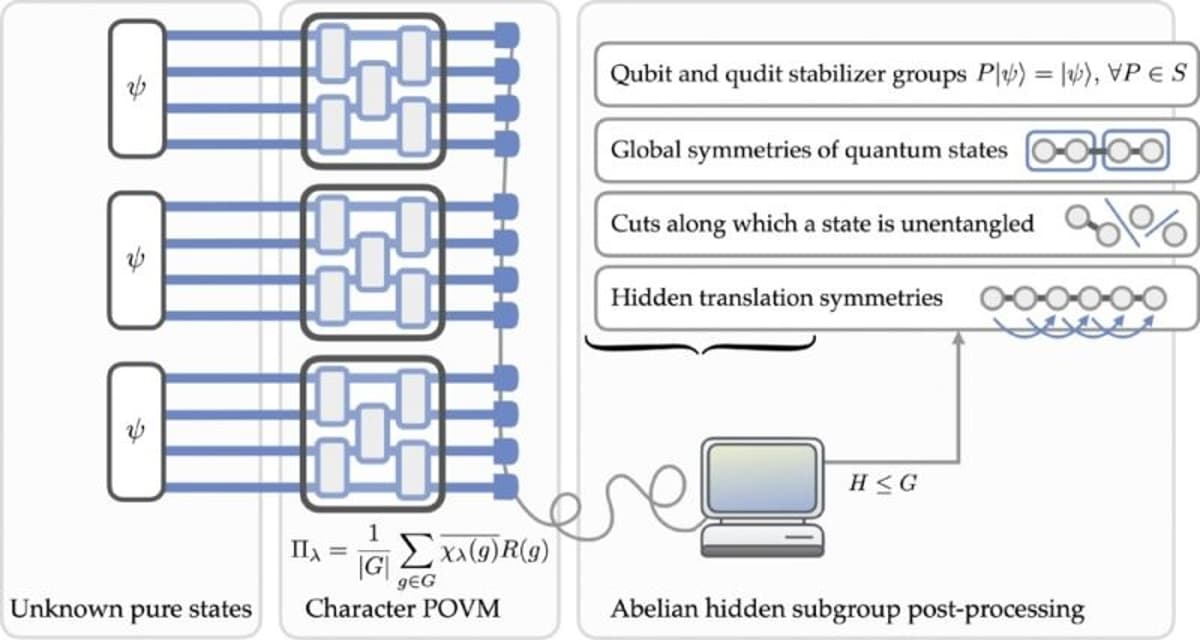
Measurement-Based Fourier Sampling Solves Hidden Symmetry Problems
What role do measurements play in quantum algorithms? We systematically explore this question in the context of a greatly simplified quantum algorithm for the abelian hidden subgroup problem for states (StateHSP), featuring substantially reduced circuit complexity. In this work, we...
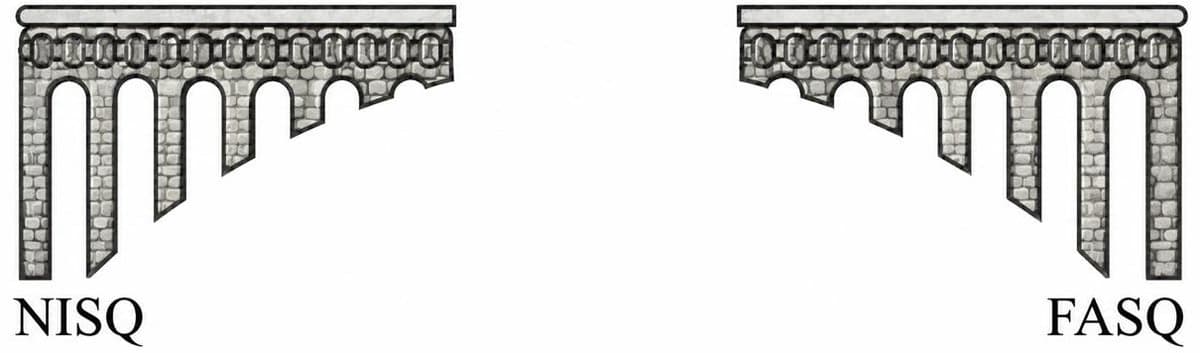
Bridging Four Key Gaps Toward Quantum Advantage
Mind the gaps: The fraught road to quantum advantage Quantum computing is advancing rapidly, yet substantial gaps separate today's noisy intermediate-scale quantum (#NISQ) devices from tomorrow's fault-tolerant application-scale quantum (#FASQ) machines. https://t.co/aSWIa4Z6CA In this perspectives article, @preskill and I identify four related hurdles...
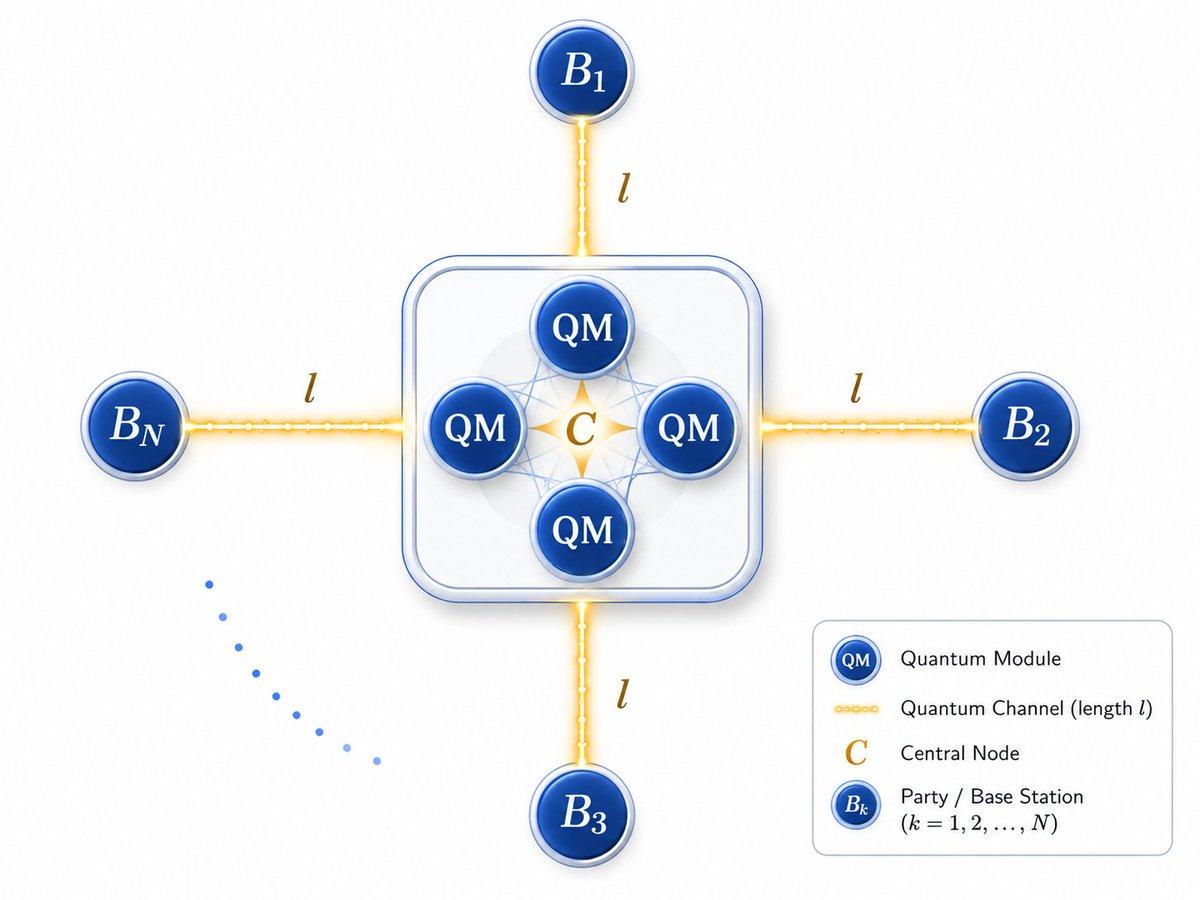
Monte Carlo Simulations Optimize Asymmetric Quantum Conference Keys
Multipartite quantum communication is subtle, and the design principles become complicated when aiming for experimentally feasible schemes. This is why event-ready Monte Carlo simulations of protocols are so important. Here, we illustrate this through strategy optimization for quantum conference key...
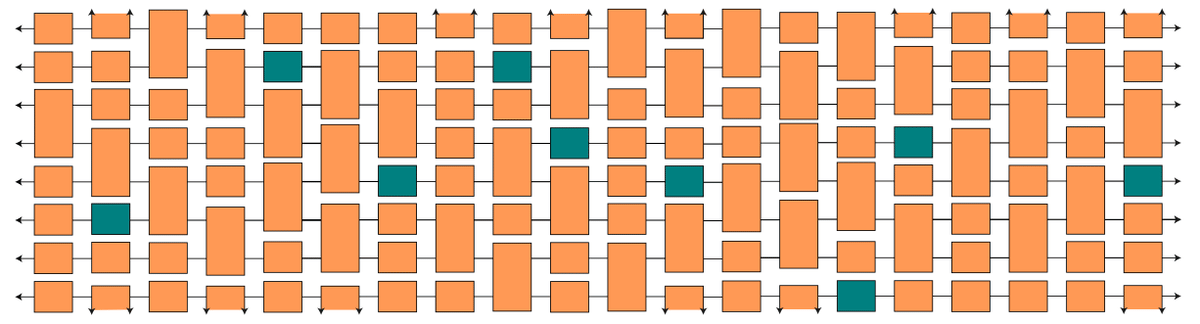
T‑Doped Clifford Circuits Efficiently Approximate Unitary K‑Designs
Recent years have enjoyed a strong interest in exploring properties and applications of random quantum circuits. In this work, we explore the ensemble of 𝑡-doped Clifford circuits on 𝑛 qubits, consisting of Clifford circuits interspersed with 𝑡 single-qubit non-Clifford gates. We establish rigorous convergence bounds...
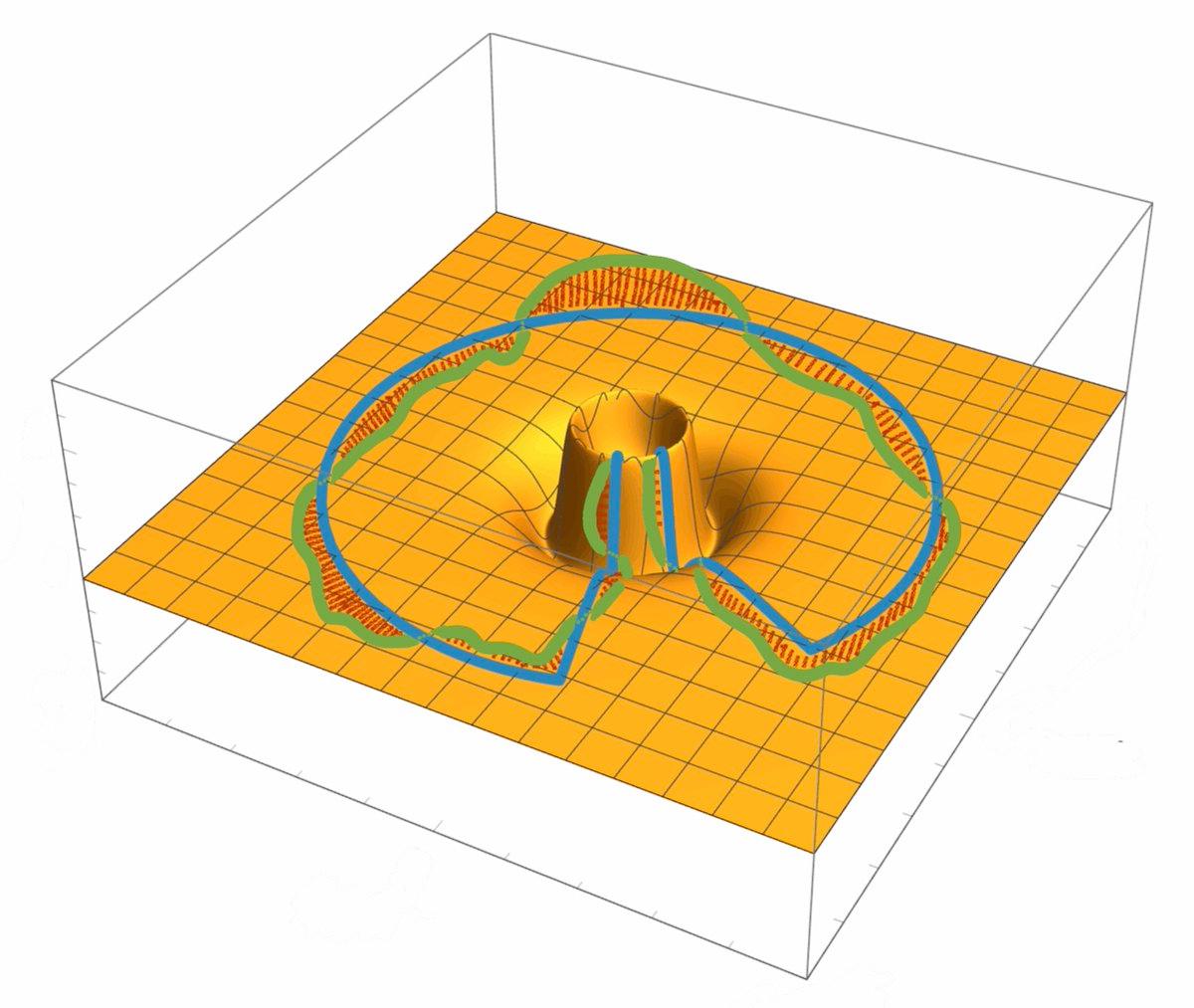
Scalable Holonomic Adiabatic Gates Offer Robust Quantum Computing
Holonomic quantum computing is not a new idea, but it has been too little studied in the context of reasonable architectures for quantum computing. Here, we present a scalable adiabatic architecture. I am happy to see this work out in...

Clustered‑Cyclic qLDPC Codes Spotlighted at Growing QEC2026
The accepted talks at #QEC2026 on #QuantumErrorCorrection are out. This conference has grown from a small fringe event into a major conference, mirroring the rapid development of the field. https://t.co/A7laIEyznK I am glad to see our work on clustered-cyclic codes on the...
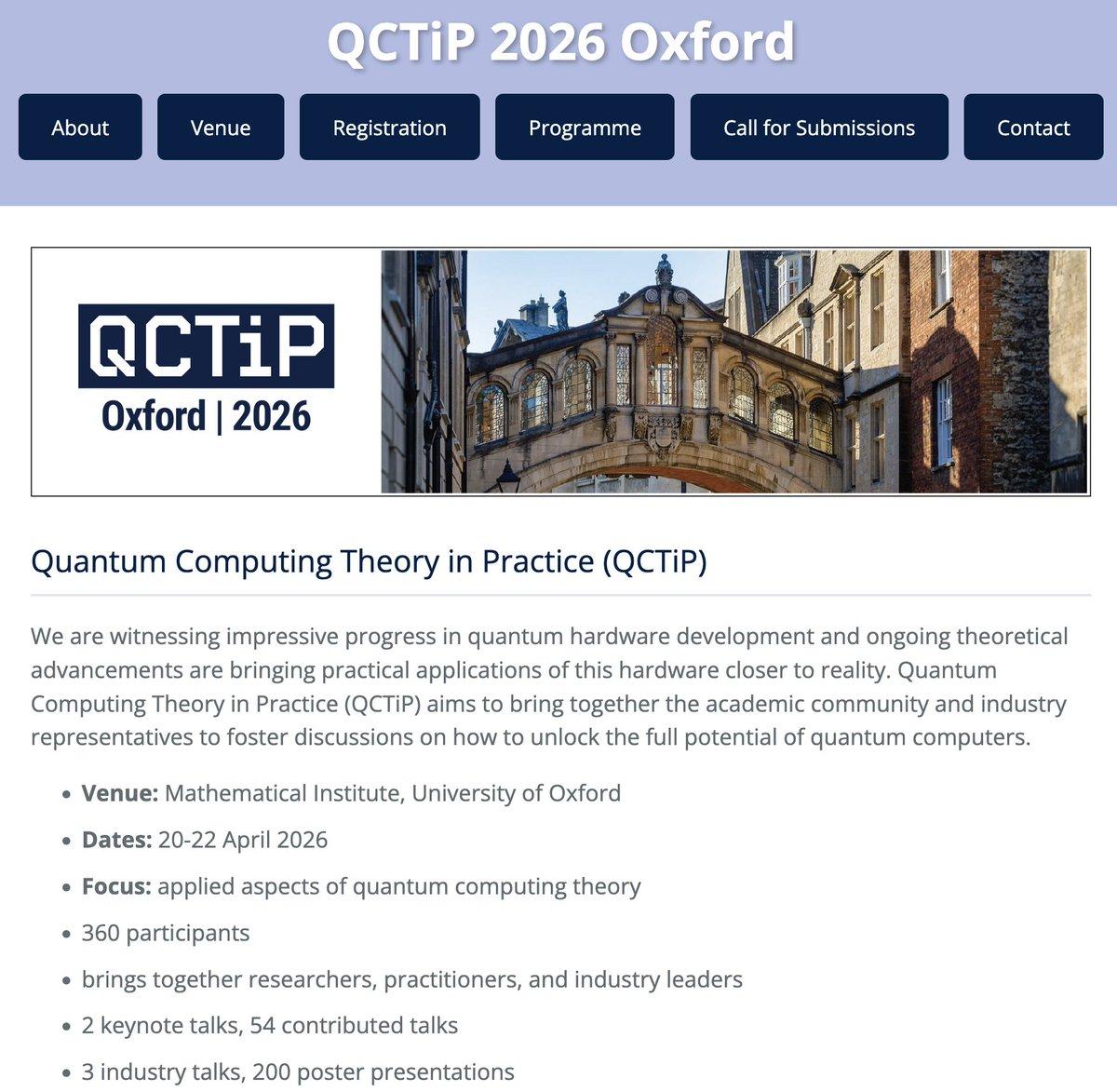
QCTiP2026 Launches in Oxford with Five Quantum Talks
#QCTiP2026 is about to begin in Oxford. Given the rapid progress in the field, this conference on quantum computing theory in practice could hardly be more timely: https://t.co/FCb3yhGhgD was a real pleasure to host #QCTiP2025 in Berlin last year, and...
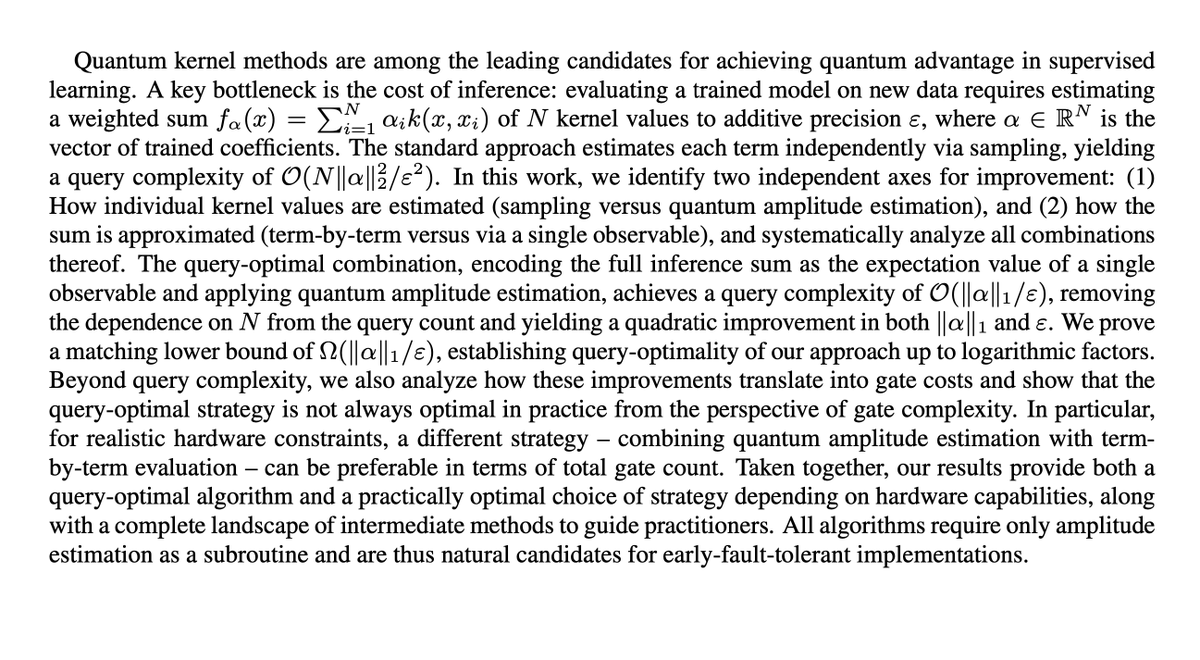
Tight Bounds Reveal Optimal Inference Complexity for Quantum Kernels
Optimal algorithmic complexity of inference in quantum kernel methods for classical data. Quantum kernel methods are among the leading candidates for achieving quantum advantage in supervised machine learning. A key bottleneck is the cost of inference: evaluating a trained model on...

Bridging Gaps: Navigating Roadblocks to Quantum Advantage
The challenges in and possibilities of achieving quantum advantage. It has been a great pleasure to discuss with @science_eye where we stand in quantum computing, what the remaining road blocks or "gaps" are and how we can overcome them. Recent months...

Quantum 2025 Trends: Error Correction Dominates, Simulation Lags
On his blog https://t.co/OV89KJngtS, the friend and colleague @quantum_minhsiu presents the 2025 "trends in quantum research". He offers the results of a comprehensive analysis of quantum papers and their ranking on SciRate, having run sophisticated scripts. Some trends do not surprise...

Logarithmic-Depth Quantum Circuits Possible Without Error Correction
In the absence of quantum error correction, and under fairly general—possibly even non-unital—noise models, one can still hope to achieve quantum circuits of logarithmic depth. While these can still be quite deep in practice, this insight is important when planning...

Just-in-Time Decoding Enables High‑Threshold 2D Non‑Pauli Quantum Gates
Recent weeks have brought a range of new ideas in quantum error correction for fault tolerant-quantum computing, along with deeper exploration of their implications. We introduce a new approach: a method for achieving high-threshold decoding of non-Pauli codes aimed at...