

Twitch’s Community Focus Creates Moat, TikTok Stays Swipe‑driven
Daniel Clancy thinks nobody met their partner by leaving a TikTok comment. "I really like your comment. Want to get together sometime?" was something nobody ever said on TikTok. Ever. The Twitch CEO delivered that line with a straight face yesterday at the Scalable Summit. The room laughed, but Clancy wasn't joking. Leaving a comment is not community. Community is what happens when you hang out in the same virtual space long enough to recognize each other's names. Twitch builds its entire product around keeping you in one stream rather than nudging you toward the next. That’s Twitch’s moat. TikTok and other video platforms? They’re swipe machines, constantly incenting you to move on. Next up was TikTok’s Marisa Hammonds . Nobody brought up any of Clancy's comments. Not her, not the moderator. Clancy had just eviscerated TikTok’s community 5 minutes earlier and it was like it never happened. Hammonds is also very excited about micro dramas. Or mini dramas. Or micro-mini dramas. She used all three interchangeably. My Take? TikTok clearly wants to rebrand the category so they can own it.. But despite the coaching, she kept sliding back into old habits. The session afterwards focused on creators and big media, including Ian Schafer , head of Issa Rae’s Ensemble. Rae’s Hoorae launched a sparkling “mini drama” on TikTok and their dedicated PineDrama app last week. But Schafer wasn’t spouting the TikTok party line. He was all in on microdramas. Schafer also compared this new format to the soap operas from the 50s. Schafer and Tubi’s Rich Bloom got into it on stage at the beginning of the session. Bloom declared the monoculture dead, and Schafer quickly turned the tables and asked him to explain. After quipping, “I was told there would be no follow-up questions”, Bloom and Schafer ended up debating what a monoculture really means. Bloom's argument was fragmentation killed monoculture. Schafer's counter was that fragmentation is actually giving people freedom to find exactly what they want, not less. The algorithm might be the problem, but the sheer volume of content is the solution. Amanda Mccants , one of two creators on the mainstage (breakouts don't count), was asked whether she'd take a deal offering creative freedom, a real budget, and IP ownership. "Oh my god, of course. Are you hiring?" Then: "You have a budget? I'll cut it in half and still get you the product." That’s the difference between media execs and creators right there. David Duxin from OpenAI was more real. Highlights included why Sora got cancelled (too expensive in a compute-constrained world), and that there’s no silver bullet to hack AI SEO. He also said that despite buying TBPN, OpenAI isn’t become a media company, so all you podcasters can stop calling him. Overall, a great event and congrats to Kaya Yurieff and Jasmine Enberg . I can't wait until next year. Note, I missed the afternoon mainstage because of a Secret Sauce event. More on that later.

Resurrecting Vine: 6-Second Human Videos Against AI Overload
AI made video infinite. Real people are fighting back 6 seconds at a time. In a world where creators need to produce ever-longer content to get views... partly because YouTube is increasingly fixated on big-screen TVs. In a place where...
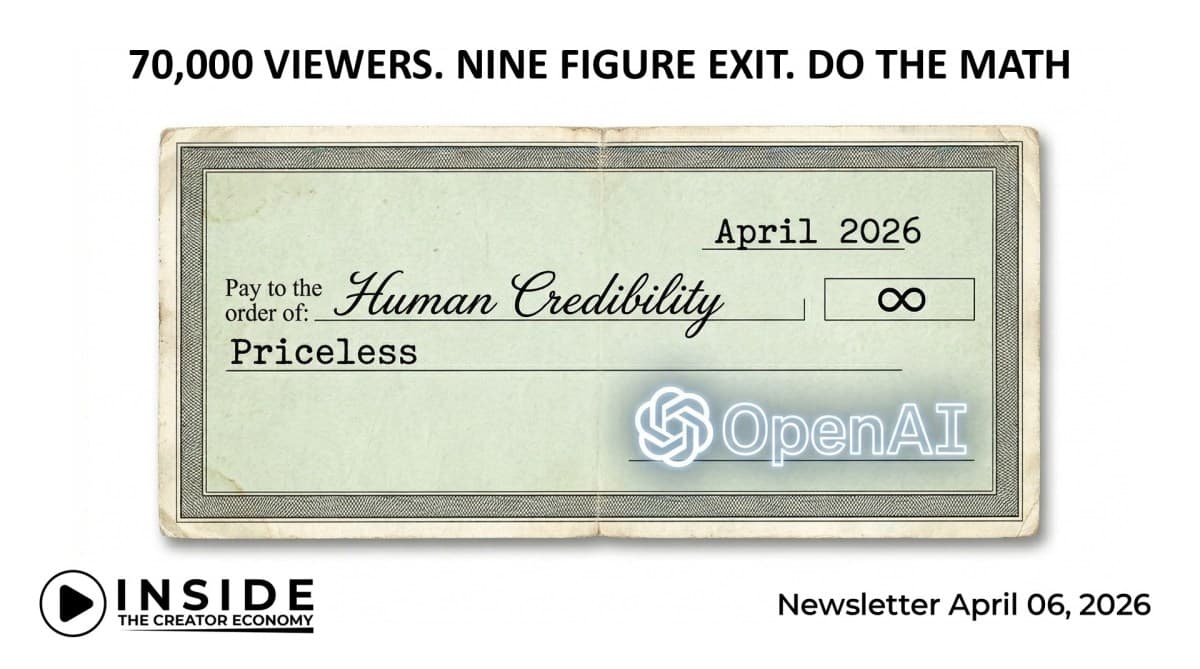
OpenAI Acquires TBPN: A New Era for Creators
OpenAI has acquired the daily tech show TBPN for an estimated low‑mid nine‑figure sum, roughly $200 million. The channel commands about 70,000 average daily viewers and a combined 400,000 followers on X and YouTube, making it the largest single‑creator sale to...
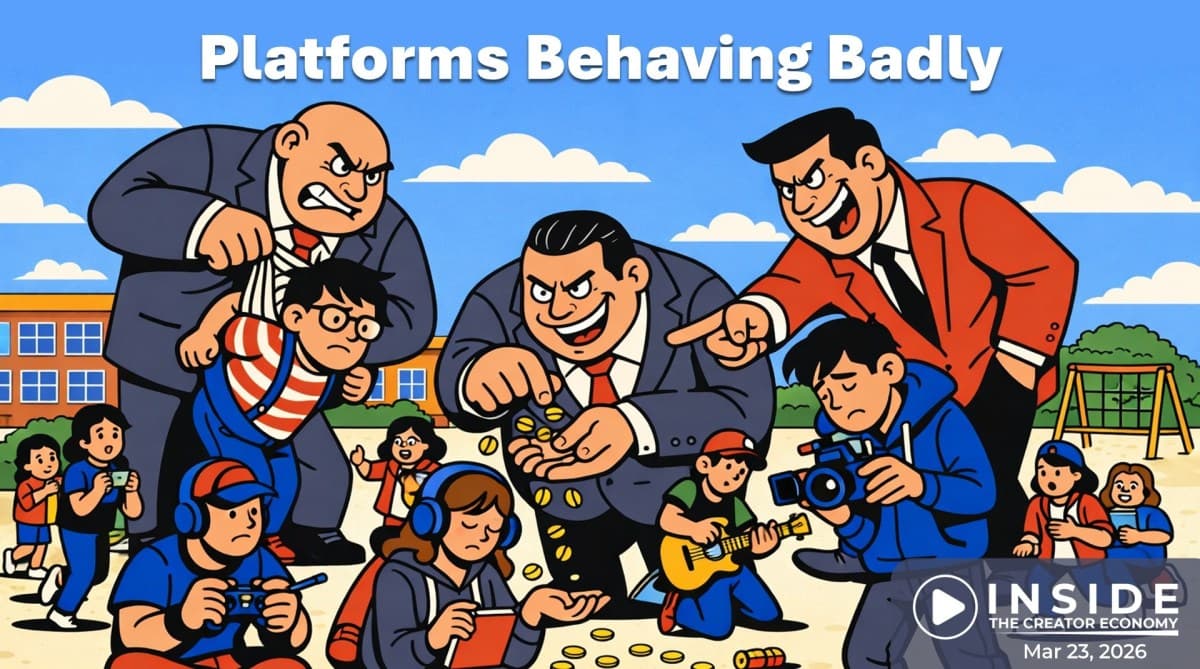
PLATFORMS BEHAVING BADLY
This week’s creator‑economy briefing highlights escalating platform governance and legal challenges. Grammarly’s new “Expert Review” feature, which let users receive feedback attributed to high‑profile writers for $12 a month, triggered a class‑action lawsuit alleging violation of publicity rights. Roblox announced...

What I Learned on Creator Spring Break
Jim Louderback reports that SXSW has become a creator‑focused spring break, featuring his hour‑long AI‑infused creator economy talk and attendance at over ten sessions. Highlights include TikTok offering ten‑times bonuses for content aimed at older women, a study showing 25%...
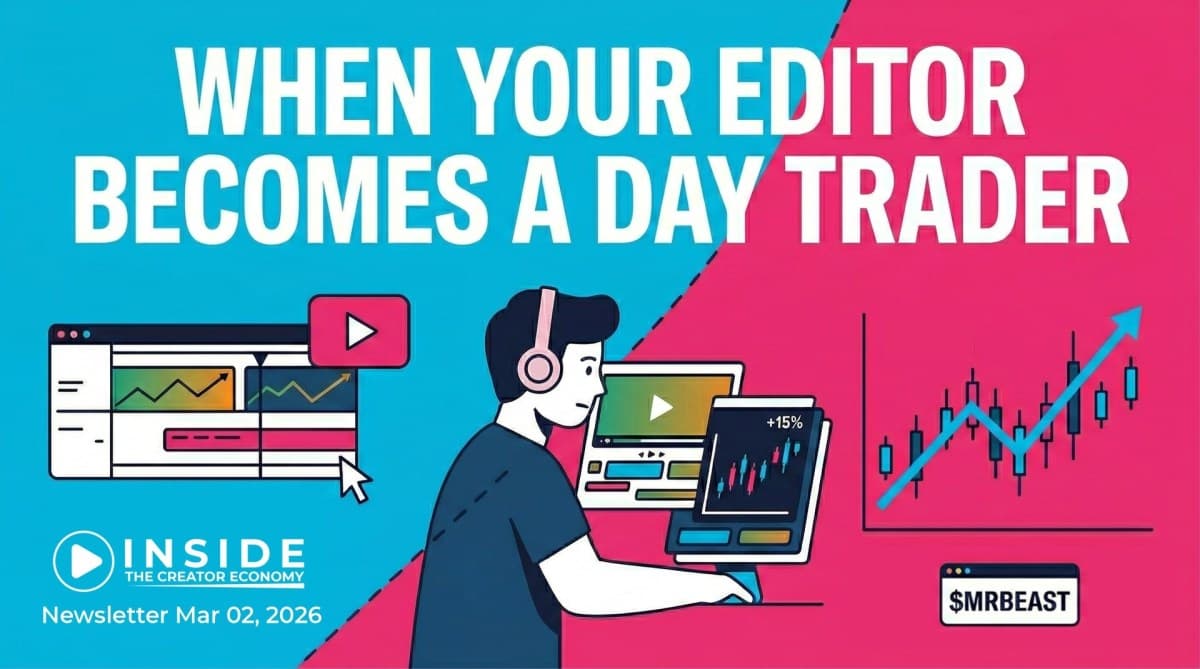
When Your Editor Becomes a Day Trader
The creator economy faced its first insider‑trading scandal when a MrBeast editor was banned for two years and fined $20,000 for using confidential information on prediction platform Kalshi. That incident highlights a surge in wagering, with roughly $300,000 now bet...
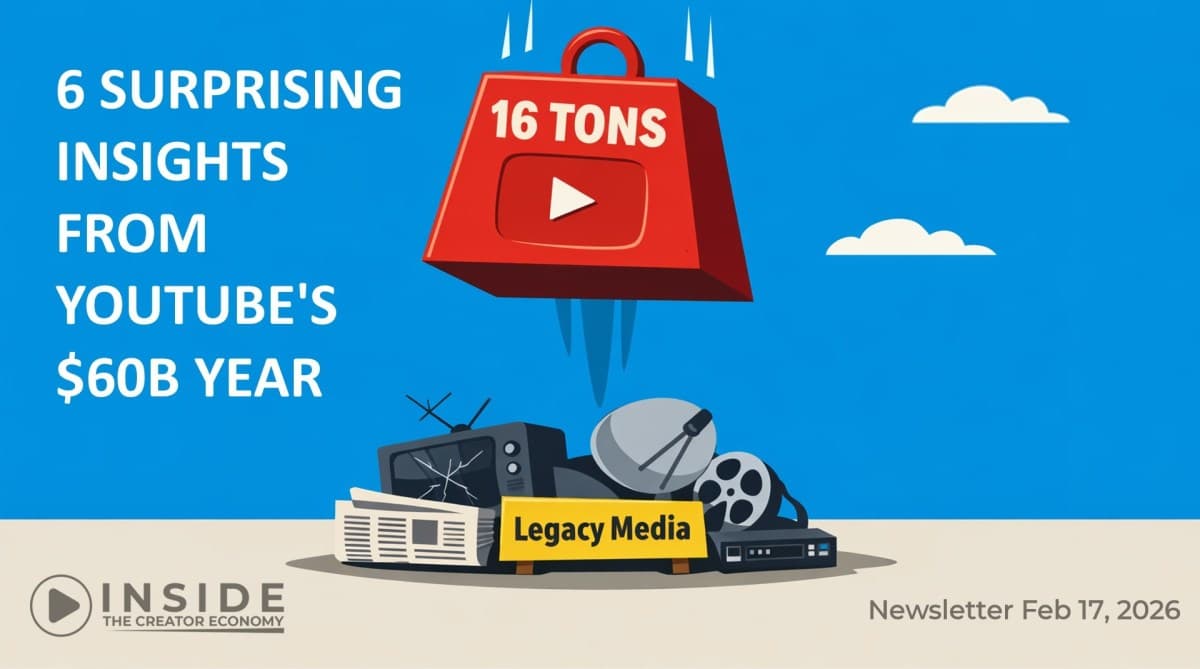
YouTube’s Quiet Monopoly
Alphabet’s recent disclosure shows YouTube generated roughly $60 billion in 2025, making it the third‑largest revenue stream for the parent company and outpacing Netflix by a third in total earnings. The platform now boasts about 325 million paid subscriptions—essentially matching Netflix’s subscriber...

Arbitraging Authenticity
The NFL is turning the Super Bowl into a "Creator Bowl," pairing $10 million TV spots with over 160 influencers to reach younger fans as Gen Z’s interest in traditional sports wanes. Athletes themselves are becoming creators, building portable audiences that...
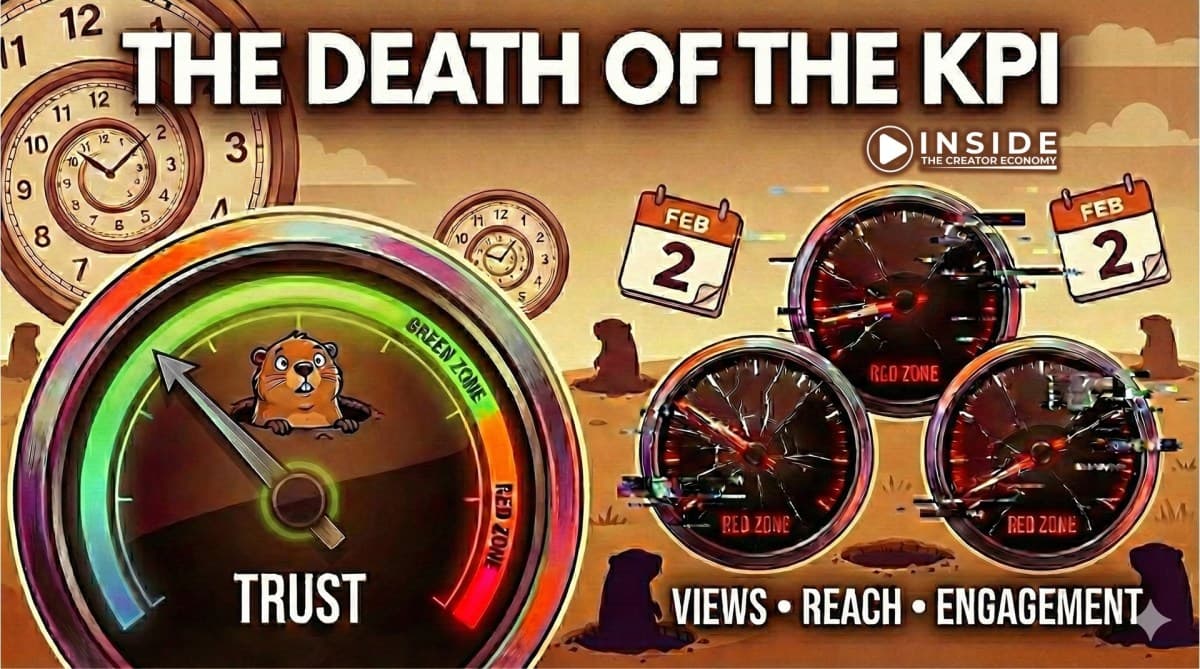
TRUST RISES, KPIs CRASH
The newsletter spotlights three major shifts: a rising "trust graph" poised to become the dominant metric for platforms, TikTok’s USDS launch plagued by a cascading outage and controversial privacy changes, and the turbulent rebranding of the local AI agent Clawdbot....