
Pilgrimage Is More Than Travel. It Changes How You See Reality
The video records a dialogue between John and Ish, a seasoned pilgrim and contemplative practitioner, exploring why pilgrimage is more than a journey. Ish shares his multicultural background, the poetic adoption of the name "Ish Peragro"—meaning pilgrim—and his decades of study across Hindu, Buddhist, and indigenous traditions. Together they argue that pilgrimage operates as a "meta‑practice," simultaneously demanding rigorous discipline and opening space for deep contemplation. Key insights emerge around three pillars: the need for apatheia—freedom from unexamined passion—to avoid spiritual bypass; the role of epistemic vulnerability, moments when humility and curiosity enable rapid insight; and the importance of an ecology of practices, including mentors, community, and ritual, to ground transformative experiences. Ish illustrates these ideas with personal anecdotes, such as his jungle retreat, his work with war‑torn Colombian communities, and the ancient Greek notion that "theoria" originally meant pilgrimage. Notable quotes include Ish’s description of his name as a poetic act of belonging, the claim that "theoria" was pilgrimage, and the observation that disciplined pilgrimage tests and refines one’s inner ecology. John highlights the Buddhist critique of both aestheticism and inert contemplation, underscoring the balance required for authentic growth. The conversation suggests that leaders, educators, and mental‑health professionals can adopt pilgrimage‑like structures—intentionally designed, community‑supported, and humility‑oriented practices—to foster resilience, ethical clarity, and deeper learning in increasingly complex personal and organizational landscapes.
William Desmond and John Vervaeke: Why Transcendence Still Matters
John Vervaeke and William Desmond explore why transcendence remains vital, arguing that a revived Platonic tradition can counter the contemporary meaning crisis. Their dialogue builds on prior conversations about relevance realization, positioning Desmond’s phenomenological notion of the "metaxu" – the...
Are We Losing Our Taste for the Real? John Vervaeke, Guy Sengstock, Kyle Koch
The video introduces the second “Reconnecting to the Real” retreat, organized by philosopher John Vervaeke, experiential facilitator Guy Sengstock, and nature‑oriented guide Kyle Koch. It will take place Aug 31‑Sept 4 at Brew Creek Lodge, a sustainable cabin complex near Whistler, British...
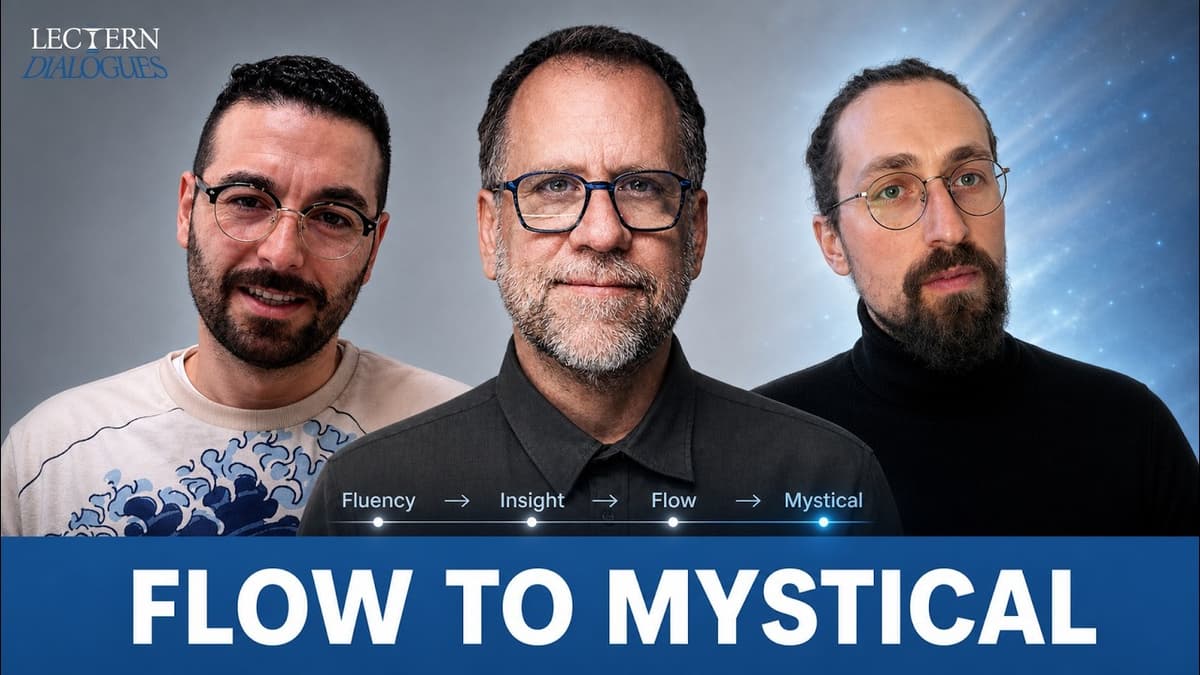
From Flow to Mystical Experience | John Vervaeke, Hüseyin Beyköylü, and Daniel Meling
John Vervaeke hosts co‑authors Hussein Beyköylü and Daniel Meling to unpack their newly published paper that extends the cognitive continuum—from basic fluency through insight and flow to full mystical experience—by embedding it within the inactive approach and complex‑systems theory. The...
Zen Neoplatonism: Healing the Meaning Crisis Between East and West
The hosts introduce an upcoming course, Zen Neoplatonism, which aims to synthesize East Asian Zen and Western Neoplatonic strands into a practical framework for confronting today’s “meaning crisis.” The presenter frames the project as a dialogical, historically grounded attempt—not to...
Silk Road Seminar: Edward Slingerland
The Silk Road Seminar featured Edward Slingerland discussing his new trade book, Trying Not to Try, which reframes the ancient Chinese concept of wu wei as a modern counterpart to the psychological flow state. Drawing on his interdisciplinary career—philosophy, Asian...
Who Is Ethan Hsieh Beyond the Facilitator? | Teaching, Play & What TIAMAT Is For
The video is the third installment of the "Theory into Practice, Practice into Theory" series, focusing on Ethan Hsieh’s perspective on his dual roles as facilitator and teacher within the TIAMAT program. Hsieh explains that teaching involves two core questions—knowing‑doing and...
Why You Need Both Zen and Science to Understand Reality
The video proposes a new interdisciplinary framework—Zen Neoplatonism—that fuses Eastern Zen’s focus on immediacy and intimate experience with Western Neoplatonism’s emphasis on transcendence and scientific intelligibility. The presenter argues that each tradition alone risks either hubris or despair, but together...
Taylor Barratt in Facilitation: Revealing the Really Real
The video records the second installment of a three‑part dialogue on the interplay between theory and practice in facilitation, centering on Taylor Barratt. Host introduces Taylor, notes a newly formed business partnership that blends his facilitation platform with a teaching...
Silk Road Seminar with D.C. Schindler and James Matthew Wilson II
The seminar brings together David Schindler and James Matthew Wilson II to critique the modern collapse of logos into narrow logical reasoning. Wilson, drawing on Russell Kirk’s phrase “defecated reason,” argues that contemporary thought has stripped rationality of its transcendental depth,...

Why a “Good Life” Might Be Built on Self-Deception
The video argues that a seemingly comfortable “good life” often rests on unexamined self‑deception. It challenges listeners to move beyond surface‑level contentment—church attendance, family harmony, career success—and to interrogate the underlying meaning system that sustains those experiences. The speaker stresses that...
Poetry Wakes You to Reality | John Vervaeke & Adam Walker
John Vervaeke and poet‑scholar Adam Walker explore poetry as a disciplined spiritual practice, arguing that close reading awakens the "imaginal" faculty—distinct from mere entertainment—and grounds a deeper grasp of reality.\n\nThey contend that the disciplined imagination cultivated through poetry can be...
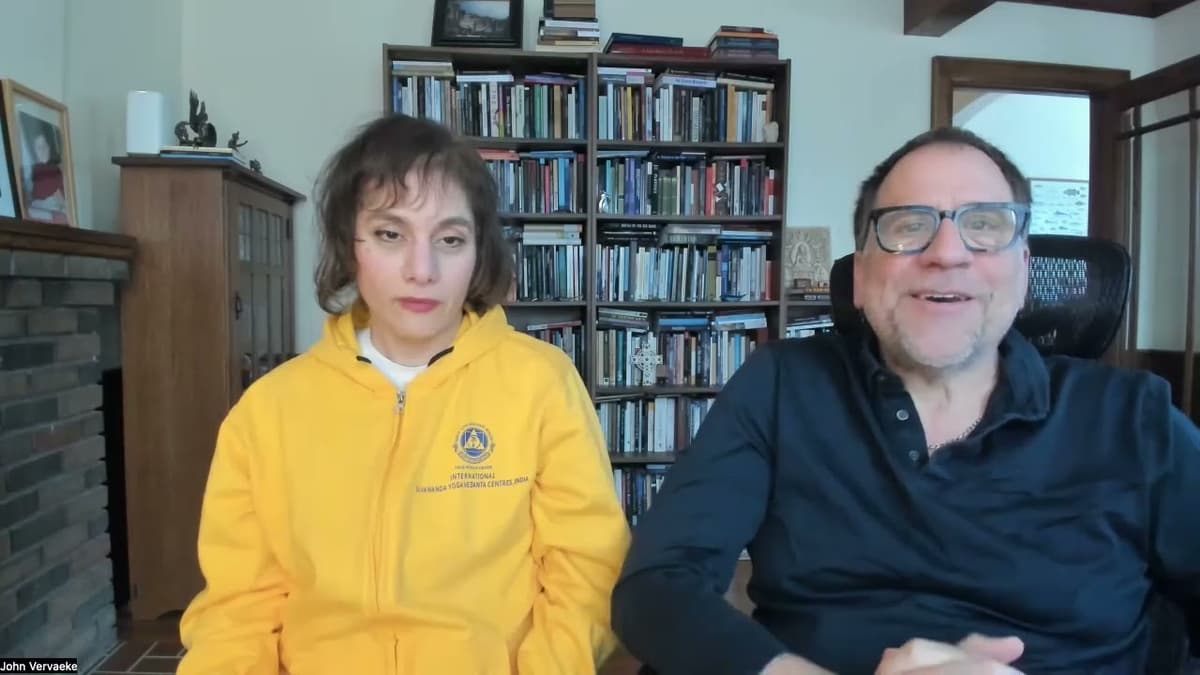
Upcoming Lecture Course in Toronto
A three‑session lecture series will be held at Toronto’s Sivananda Yoga Center on April 18, April 25 and May 2. Hosted by John Veriki and Sara, the events combine a 90‑minute talk with a 30‑minute Q&A. The curriculum covers the cognitive science of mindfulness,...

Poetry as a Spiritual Practice | John Vervaeke & Adam Walker
John Vervaeke and former Harvard English Ph.D. Adam Walker explore poetry as a spiritual practice and diagnose a widening chasm between academia and the public. Walker argues that the humanities, especially English departments, have transformed from teaching‑focused vocations into research‑driven...

Lectern Live Q&A with Mark Miller (03.29.26)
The Lectern Live Q&A with Mark Miller explored how a computational neuroscience lens can illuminate spiritual practice and mental health. Miller argued that starting from the brain’s predictive architecture—rather than from mystical phenomena—yields fresh hypotheses about why humility, uncertainty tolerance,...