
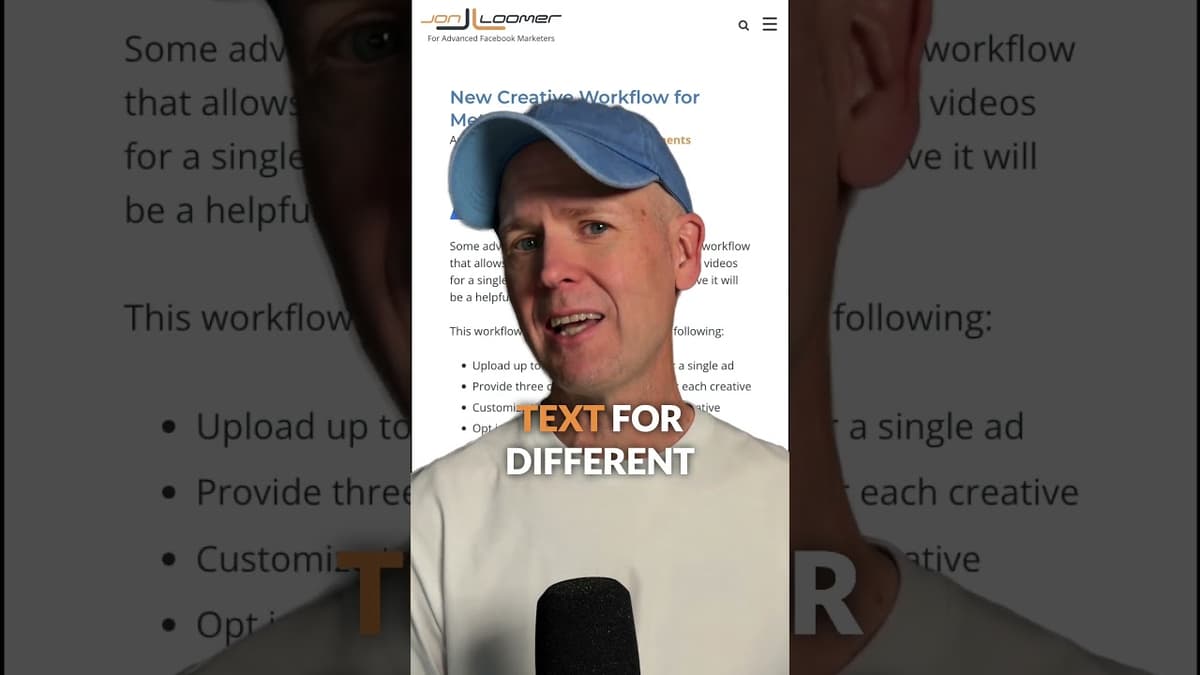
Consolidate Ads with the New Creative Workflow
The video introduces Meta’s new Creative Workflow, a tool that lets advertisers consolidate up to ten images or videos into a single ad unit. This change eliminates the need to build separate campaigns for each visual format, streamlining the ad creation process. Under the new system, marketers can apply the same primary text and headline to all creatives, while still retaining the option to customize copy on a per‑creative basis when needed. The workflow addresses the previous dilemma of whether to generate distinct copy for each visual, which often resulted in redundant effort or forced uniformity. The presenter references a detailed blog post on jonloomer.com, highlighting how the feature resolves the “weird place regarding text” advertisers faced when diversifying formats. By allowing up to ten assets per ad, the platform encourages broader creative experimentation without additional copywriting overhead. For advertisers, this means faster rollout of diversified creatives, reduced production costs, and more flexibility to test visual performance. Agencies can now allocate resources toward strategic optimization rather than repetitive asset creation, potentially boosting ROI across Meta’s ad ecosystem.
How Do You Reach Only New Customers?
John Loomer explains that Meta automatically retargets existing customers even when advertisers use broad targeting, so marketers must consciously decide whether to exclude them. He outlines the upside—lower cost per purchase—and downside—potentially inflated conversion metrics and lower average order values—of serving...

Stop Hiding Your Ad Account From Clients
John Loomer’s latest podcast episode tackles a pervasive issue in digital advertising: agencies that hide ad accounts from their clients. He argues that trust, the cornerstone of any client‑agency relationship, is compromised when marketers conceal campaign data, pixels, and audience...

Can Your Audience Be Too Niche for Meta Ads?
Meta ads can reach even highly specialized B2B audiences, but profitability hinges on several variables. The discussion centers on a client selling direct‑mail services to companies that market to doctors, prompting the question of whether such a narrow market can...

Does a Higher CPM Mean You Should Spend More?
The podcast tackles a common advertiser dilemma: why cost‑per‑thousand impressions (CPM) in the United States is roughly double that of the United Kingdom, and whether that disparity should dictate budget splits. Martina, a marketer running identical campaigns in both markets,...

What Meta Isn't Telling You About Your Creative
John Loomer’s Pubcast spotlights Meta’s persistent opacity around creative‑level performance metrics, arguing that advertisers still cannot see which specific images or videos drive results when using flexible format, related media, or AI‑generated assets. He explains that Meta only reports aggregate rows—single‑media...

Audience Segments Change Everything
The video spotlights Meta’s audience‑segments tool, launched for manual sales campaigns in summer 2024, and argues it fundamentally reshapes how marketers approach algorithmic targeting. The presenter notes that while the feature is powerful, a majority of advertisers either ignore it or...

How Do You Advertise Products with Long Buying Cycles?
The podcast tackles a common dilemma for marketers on Meta: how to promote high‑ticket items whose purchase decisions extend beyond the platform’s standard 7‑day or 28‑day attribution windows. Camila asks whether to shift from conversion‑optimized campaigns to traffic‑driven ones when...

Meta's Conversion Reporting Is Not the Problem
John Loomer tackles the persistent claim that Meta "steals" conversion credit, arguing that the issue lies in misunderstanding attribution rather than platform deception. He emphasizes that conversion reporting, while imperfect, captures genuine user actions—impressions and clicks that precede purchases—so dismissing...

Does Meta Want Audience Suggestions?
The video examines recent changes to Meta’s advertising platform that appear to downplay the role of audience suggestions in campaign setup. It notes that most targeting inputs are now presented as “suggestions” by default, and that Meta has altered both...

Click Attribution Isn't What It Used to Be
Meta announced a overhaul of its click‑through attribution, now counting only clicks on outbound links as click‑through conversions. All other interactions—likes, comments, shares, saves—are reclassified under a new “engage through” metric that replaces the former engaged‑view category. The change stems from...

Concerns About AI for Meta Advertisers
The video warns that AI tools, when applied to Meta advertising, risk turning existing poor practices into faster, larger‑scale losses. The speaker argues that AI will automatically optimize the wrong metrics, generate glossy dashboards, and highlight insignificant variations derived from tiny...

Should You Start New Campaigns with Creative Testing?
The podcast tackles a common dilemma for marketers: whether to launch a brand‑new campaign with creative testing built in or to add testing later. Host John Lomer explains his preferred workflow, emphasizing that the creative testing tool should be applied...
Why Your Ads Aren't Working Today
In this PubCast episode, John Loomer explains why advertisers often see sudden drops in Meta ad performance and why the “today” filter can be misleading. He identifies five common culprits: statistical randomness, recent campaign changes that cause auction overlap, external competitive...
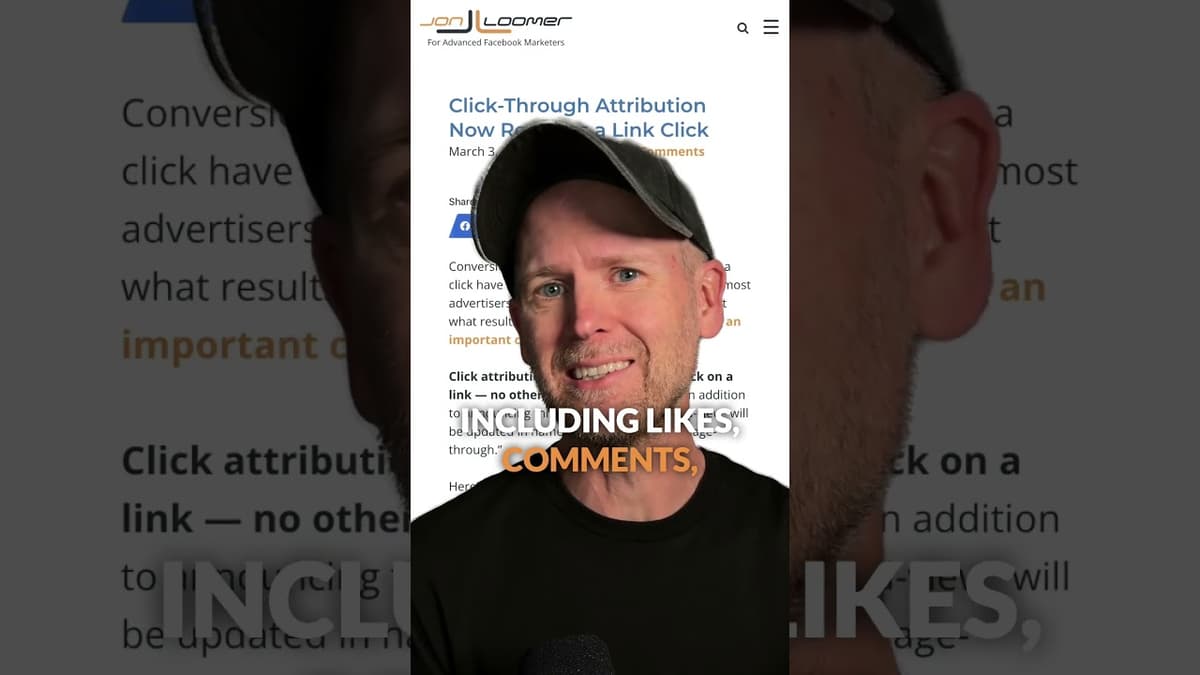
Lost Conversions Due to Attribution Changes
Meta announced a significant change to its ad attribution framework, mandating that only clicks on a direct link count toward click‑through conversions. Previously, any interaction with an ad – including likes, comments, saves, or shares – could trigger a conversion...
Does Manual Bidding Actually Work?
The episode tackles whether manual bidding—specifically cost‑cap bidding—actually improves Meta ad performance, responding to a listener’s proposal to set a $13 cost per customer while inflating the daily budget. John explains that Meta’s default objective is to deliver the most conversions...
How I Actually Approach Targeting in 2026
John Loomer outlines a radically hands‑off approach to Meta advertising in 2026, arguing that the era of granular audience controls is over. He dismisses Meta’s audience‑suggestion tool, age and gender filters, detailed targeting, and look‑alike audiences, insisting that the platform’s...
Misinformation About Meta Andromeda and Creative Diversification
The video tackles widespread misconceptions about Meta’s Andromeda platform, explaining that it is fundamentally an ad‑retrieval engine—the first step in deciding which users see a given advertisement. Andromeda’s recent hardware and software upgrade was necessary to support today’s massive scale...
Do You Need Separate Ad Sets for Customer Personas?
The podcast tackles a common dilemma for Facebook advertisers: whether to create separate ad sets for each customer persona when using Meta’s creative testing tool. Host Matt asks John how to structure ads for distinct audience segments such as “soccer‑mom”...

Targeting Has Changed
The video warns advertisers that Meta’s targeting framework has fundamentally shifted, rendering legacy tactics from 2018‑2021 obsolete. Detailed targeting inputs are now treated as optional suggestions for eleven performance goals, while lookalike audiences influence only nine goals and cannot be disabled....
What to Do With Creative Testing Results
John Loomer advises marketers to shift creative testing from hunting single “winning” ads to generating diverse asset combinations that perform well in aggregate. Modern ad platforms create thousands of copy-and-creative permutations from multiple headlines, texts, placements, and AI enhancements, so...
You're Overthinking Meta Advertising
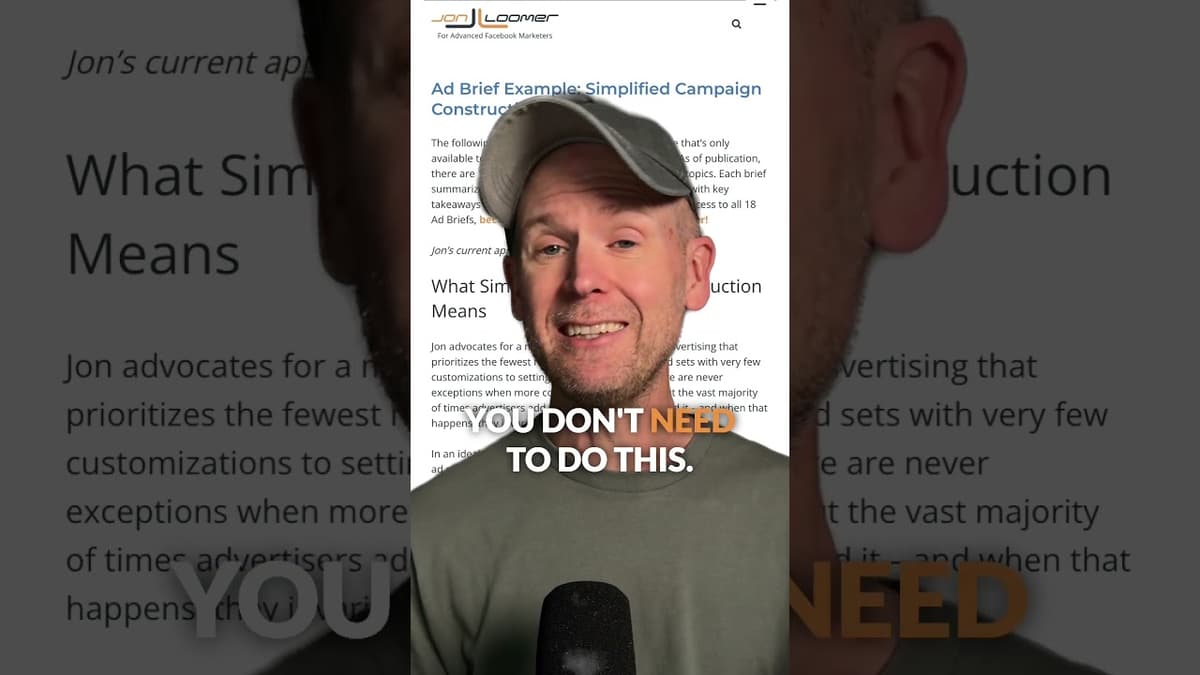
John Loomer argues that most advertisers overcomplicate Meta campaigns, wasting budget on unnecessary ad sets and manual targeting. He stresses that a streamlined structure—single campaign, focused audience, and clear conversion goal—often yields better performance than fragmented approaches. The video highlights three...
How to Exclude Customers From Your Ads
The video addresses a common problem for authors and e‑commerce sellers: preventing Facebook ads from targeting customers who have already bought a product, specifically an audiobook bundle. John recommends building multiple custom audiences to capture prior purchasers. First, create a website...
Audience Suggestions Are an Illusion of Control
In this podcast, Meta advertising expert John Loomer argues that Meta should scrap its audience‑suggestion feature, labeling it an illusion of control for advertisers. Loomer notes that Meta’s algorithmic targeting consistently overrides manual inputs such as age, gender, look‑alike and detailed...
What Andromeda Wants
The video denounces the industry buzzword “Andromeda wants,” arguing that treating the platform as a sentient entity distracts marketers from the real goal: selling to people. The speaker contends that advertisers obsess over meeting vague algorithmic expectations instead of asking...
Challenge Every Choice That Adds Complexity
John Loomer opens the podcast by warning advertisers that they often over‑engineer Meta campaigns, adding unnecessary layers that hurt performance. He advocates a stripped‑down structure—minimal campaigns, few ad sets, and limited custom settings—while acknowledging that occasional complexity may be justified...

Stop Obsessing Over Short-Term Results
Advertisers often make the mistake of judging ad performance based on short-term results, such as the first few days after launch or brief dips in performance. For purchase-focused campaigns, the speaker stresses that conversions can occur up to seven days...
How to Structure Seasonal Ad Campaigns
John Loomer advises seasonal-product advertisers to use a campaign-level budget optimization (CBO) structure with distinct ad sets: one evergreen ad set running year-round and separate seasonal ad sets for holidays. Seasonal ad sets should launch with 2–5 creatives via Meta’s...
You Can Control Lead Quality From Meta Ads
The video explains that lead quality from Meta ads is not determined solely by the platform’s targeting, but largely by the advertiser’s post‑click processes. Loomer points out that Meta’s algorithm will chase the lowest‑cost leads, often ignoring purchase intent. He identifies...
Remarketing Doesn't Make Sense Anymore
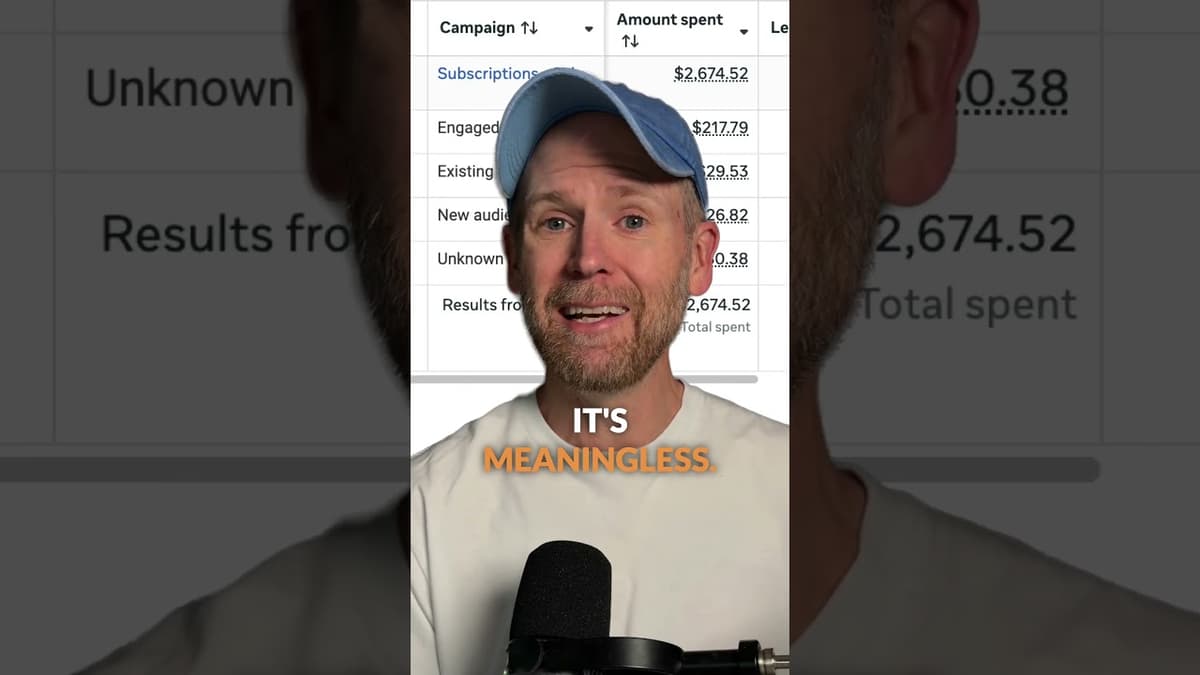
The video argues that remarketing as a standalone tactic no longer makes sense for most advertisers because platforms like Meta already prioritize and allocate budget between remarketing and prospecting to maximize outcomes. Many advertisers cling to remarketing due to seemingly...
Stack Creative Diversity in Phases
The podcast introduces “stacking creative diversity” – a phased approach to Meta’s Andromeda‑driven creative diversification. Loomer argues that small‑budget advertisers should resist the temptation to flood the platform with dozens of variants and instead begin with one cohesive theme, testing...

Why Can't You Submit Multiple Creative Versions By Placement?
The video highlights a persistent limitation on Meta’s advertising platform: marketers cannot upload a single campaign that automatically serves different creative formats—images or videos—based on placement. Currently, advertisers must create separate ads for each placement or settle for a one‑size‑fits‑all asset....
When to Use Multiple Campaigns or Ad Sets
The podcast tackles a common dilemma for Meta advertisers: when, if ever, should you run multiple campaigns or ad sets versus a streamlined single‑campaign structure. Host John Loomer explains that most marketers benefit from a simplified approach, keeping one campaign...
How to Use Value Rules to Solve Problems
Meta introduced value rules in 2025, allowing advertisers to adjust bids based on demographic, placement, and device criteria rather than relying solely on the algorithm. Loomer argues that this tool counters Meta’s trend of reducing advertiser control and offers a...

Meta Needs a Detailed Log of Attributed Conversions
The video calls for Meta to overhaul its conversion reporting by offering a dedicated log that captures every attributed conversion tied to an advertiser’s campaigns. The speaker argues that the current Ads Manager dashboard provides only high‑level aggregates, leaving marketers...