
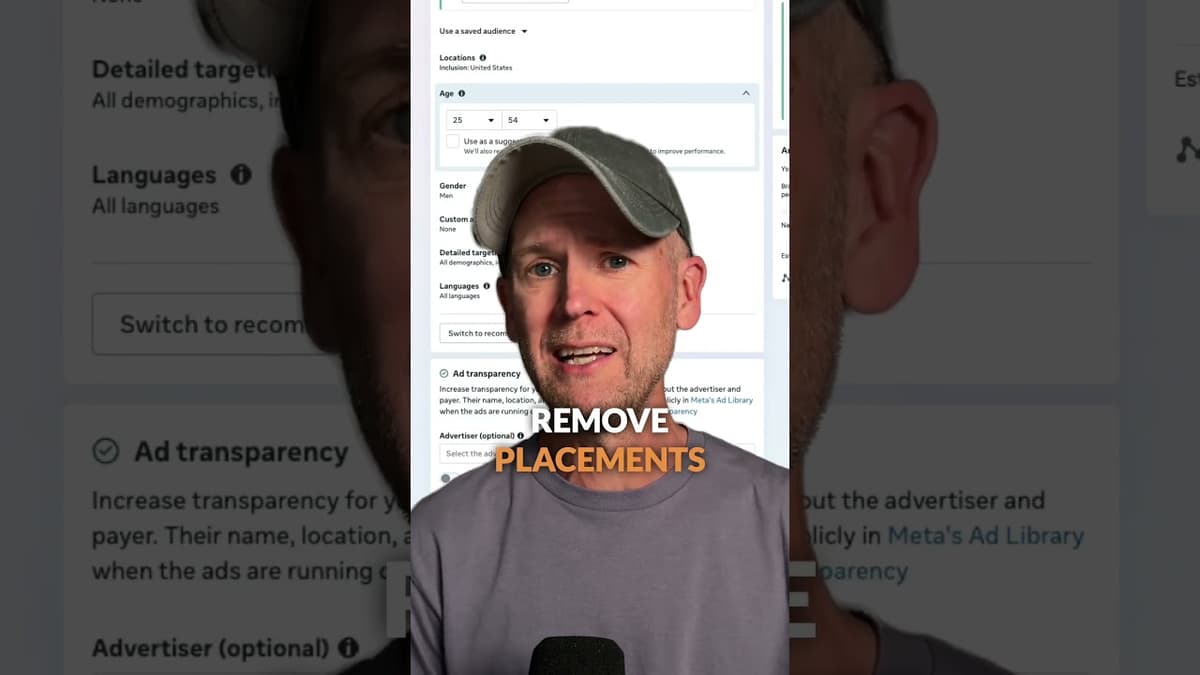
Age, Gender, and Placement Restrictions
The video tackles a common pitfall in Meta advertising: over‑restricting audiences by age, gender, or placement. The presenter argues that when campaigns are optimized for purchase events, the platform’s algorithm already filters low‑quality traffic, making manual exclusions redundant. Key insights include the recommendation to rely on value‑based rules rather than blanket bans when a specific demographic or placement underperforms. For conversion‑focused ads, Meta automatically limits impressions on low‑ROI placements such as the Audience Network, so removing them manually yields little benefit. Conversely, placement restrictions become relevant only for top‑of‑funnel objectives where brand awareness, not direct sales, is the goal. The speaker cites typical advertiser behavior: “Advertisers love to restrict by audience or placement when it isn’t necessary,” and notes that many agencies indiscriminately discard the Audience Network, assuming it’s “trash.” He advises using value rules to solve genuine performance issues instead of broad exclusions. The broader implication is clear: agencies that eliminate these unnecessary constraints can unlock higher conversion efficiency and reduce wasted effort. By focusing on algorithmic optimization and targeted rule‑based adjustments, marketers can avoid one of the seven most common agency mistakes highlighted on jonloomer.com/mistakes.

7 Things That Aren't Worth Your Time
John Loomer’s latest Pubcast episode tackles the seven Meta‑advertising elements he deems not worth a marketer’s time, urging listeners to stop obsessing over minutiae and focus on high‑impact levers. He argues that placement performance, detailed targeting, lookalike audiences, age and gender...

Every Change You Make Should Solve a Problem
John Loomer stresses that every Meta ad change must solve a specific problem, warning against habit‑driven tweaks. He illustrates how over‑segmenting campaigns, unnecessary demographic filters, and manual bidding fragment budgets, produce low‑quality data and auction overlap, ultimately hurting ROAS. Loomer cites examples—five‑ad‑set...

The Mistakes I See in Almost Every Ad Account
John Loomer’s latest Pubcast zeroes in on five recurring errors that cripple Meta ad accounts. He explains that failing to define audience segments—or defining them incorrectly—starves campaigns of the granular data needed for effective optimization. Loomer warns against over‑reliance on...

Stop Tinkering with Things That Don't Matter
In this Pub Cast, John Loomer argues that advertisers obsess over trivial delivery details in Meta campaigns, urging them to stop micromanaging and accept reduced control. He explains that many complaints—ads not showing on certain placements, age groups, or Reels—are often...
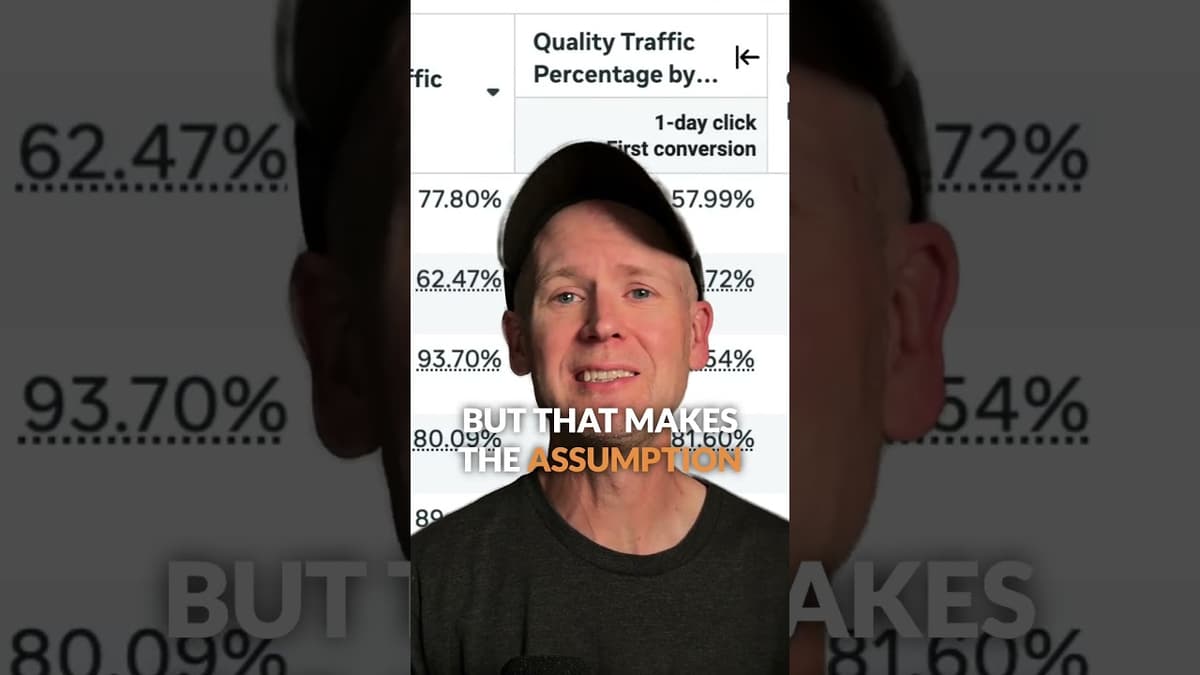
How to Track Quality Traffic Percentage From Ads
The video addresses a common blind spot in digital advertising: relying on sales, click‑through rates, and cost‑per‑click without confirming whether the traffic is genuinely engaged. The presenter introduces a new metric—quality traffic percentage—that gauges the share of landing‑page views where...

Is Meta Spending Too Much on One Ad?
The video tackles a common advertiser dilemma: Meta’s algorithm disproportionately allocates half of a campaign’s budget to a single ad. The host explains why this isn’t necessarily a red flag and outlines how the platform’s delivery logic works, especially for...

Change Will Always Be Your Biggest Problem
John Loomer opens the Pub Cast by highlighting the relentless pace of change in Meta advertising, noting that iOS 14 marked the beginning of a shift toward automation and diminishing direct control for marketers. He explains how conventional training—courses, webinars, and static...

You're Probably Not Wasting Money on Ads
John Loomer’s latest podcast argues that most advertisers mistakenly label ad spend as waste simply because short‑term metrics fall short of expectations. He stresses that evaluating performance with an all‑or‑nothing mindset—treating any result below a preset threshold as failure—leads to...

Self Serve ChatGPT Ads Beta
The video announces the launch of a self‑serve ChatGPT advertising beta for U.S. advertisers, following a limited test that began in February. The program allows qualified marketers to create ads that appear within OpenAI’s conversational interface. The beta is deliberately stripped...

Does Adding More Ads Actually Hurt Performance?
The episode tackles whether loading an ad set with dozens of creatives hurts delivery, a question many Meta advertisers face. John notes Meta once advised a six‑ad ceiling, but that guidance vanished with the Andromeda updates, leaving marketers without a hard...

New Creative Workflow Replaces Flexible Format
The video announces that Meta’s Flexible Format ad product is being discontinued and replaced by a new Creative Workflow. This shift aims to resolve long‑standing frustrations around limited customization and opaque performance reporting. The new workflow retains the ability to...

Meta's Empty Promises Keep Platform Favoring Content Thieves
People getting all excited about Instagram supposedly changing rules to favor original content have a bad memory. Meta's made nearly the same announcement so many times throughout the years, and we still have this hell scape that benefits slackers and...

Are You Setting Up Client Access the Wrong Way?
The video explains how agencies should structure access to a client’s Meta advertising assets. It stresses that the client must retain ownership of their Business Manager, ad accounts, pages, Instagram profiles, pixels, and catalogs, rather than allowing the agency to...

Why Meta Keeps Pushing Value Rules
The video explains how Meta is systematically stripping advertisers of direct control over ad delivery—targeting parameters, audience selections, and placement choices are increasingly treated as suggestions rather than hard settings. Loomer highlights that age, gender, and custom audience inputs now...