

Rare Traits: Clarity, Conviction, Courage, Craft, Commitment
Original ideas aren’t rare. Here’s what is: 👉 Having CLARITY on what you actually believe—that’s rare. 👉 Having CONVICTION in your approach even when others may disagree—that’s rare. 👉 Having the COURAGE to share your idea publicly before it feels “perfect”—that’s rare. 👉 Having the CRAFT to express it in a way that makes it travel—that’s rare. 👉 Having the COMMITMENT to repeat it until you’re known for it—that’s rare. — So do what’s rare. Because the world doesn’t remember the people who *almost* shared something.

From Expertise to Narrative: Reputation Now Fuels Growth
OLD GAME: > Compete on expertise > Hope the work speaks for itself > Grow on referrals NEW GAME: > Compete on ideas > Win on narrative > Grow on a reputation that spreads while you sleep
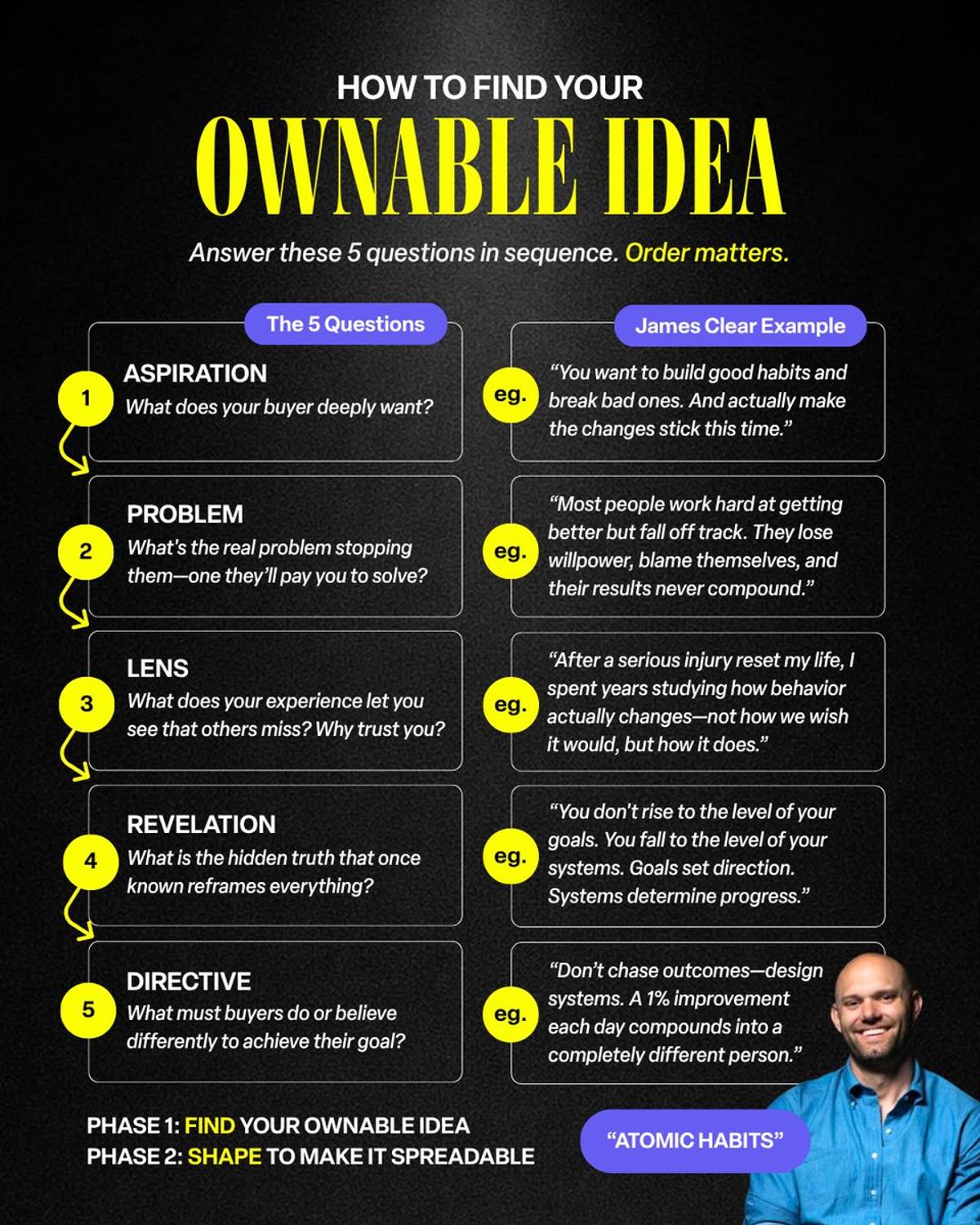
Ownable Ideas Come From Answering Five Strategic Questions
“How do I find my ownable idea?” The question I’ve been asked 146 times Here’s the answer: The top paid experts don’t just share ideas—they own one. An ownable idea is the strategic territory you claim and become known for. To find yours, answer...

Sell Mental Real Estate, Simplify Any Sale
Some people sell services. Some physical products Some digital ones. I sell mental real estate. I help you become known for an idea you own in your target buyer’s mind. Get that right? And selling anything gets easier.

Own a Rebel Idea to Build Authority Fast
The authority “shortcut”: 1. Find your rebel POV 2. Shape it into an argument your audience doesn’t know they need to hear 3. Share it relentlessly 4. Become known for an idea you own Simple. (Not easy.)

Proof Comes in Tiers: Rank Yours Strategically
Not all proof is created equal. How does yours rank up? So if you’ve been following me for a while or done any of my programs, then you already know that I talk about proof… A LOT. You can have the best product...

Be Top‑of‑Mind: Buyers Choose the First Idea
Your buyer’s brain is lazy. That’s why your positioning can’t be. Have you lost work to someone you’re objectively better than? It stings. Maybe you found out later. Maybe you just suspected. The thinking was shallower, the track record thinner—but they got...

Focus on Your Own Game, Not Bigger Teams
You’re creating content solo or with a tiny team. And you’re comparing yourself to people wirh full time content crews. Be inspired by their come-up story, but ignore what they’re doing today. They’re playing a different game. Play your own...

Own a Bold Idea; Ditch Empty Consistency.
F*ck "staying consistent." Consistency without a sharp idea is just showing up to be ignored on a schedule You need to say something that’s helps you break through. Don’t just share ideas. Own one.

Earned Ideas Win: Act, Prove, Think Differently
Differentiated thinking is hard won through action. If a person hasn’t really done anything themselves—they've just analyzed others’ wins or been along for the ride but never drove the bus—they rarely have a real POV. They'll just parrot their peers....

Offer Fresh Insights, Not Louder or More Posts
The fix isn't posting more. The fix isn't shouting louder. The fix is having something different to say that your audience doesn’t know they need to hear.

Own a Unique Belief, Not Just a Point of View
What’s the difference between a point of view and an ownable idea? Commitment What differentiated belief do you have, that your audience doesn’t know they want to hear, that no one else is saying? That’s the foundation of your ownable idea But you must...

Shift From Expertise to Ideas: Reputation Wins
Old game: → Compete on expertise → Win on competence → Grow on referrals New game: → Compete on ideas → Win on narrative → Grow on a reputation that spreads while you sleep Most experts are still playing the old game

Focus on What Never Changes, Not Every New Tool
Don’t ask: “How can I survive all this change?” Ask: “What *won’t* change?” Jeff Bezos built Amazon by asking that exact question. He didn’t obsess over competitors or waste time trying to predict the future. Instead, he built Amazon around things he knew customers...

Think Publicly; People Must Buy Your Ideas First
If you want to get rich, you should think in public Why? Because people need to buy into your thinking before they'll buy from you