
The SAVE America Act Targets Millions of Eligible Americans
The House‑passed SAVE (Safeguard American Voter Eligibility) Act seeks to replace the self‑attestation system with a documentary proof of citizenship (DPOC) mandate, limiting acceptable documents to passports or enhanced driver’s licenses and requiring additional birth‑certificate or naturalization paperwork for most voters. The bill also forces in‑person verification, cross‑checks voter rolls with the DHS database every 30 days, and imposes criminal penalties on officials who register voters without proper documentation. Proponents argue the measure curbs non‑citizen voting, yet studies from the Brennan Center and the Kato Institute show such incidents comprise roughly 0.001% of ballots. By contrast, an estimated 21.3 million voting‑age citizens—about 9% of the electorate—lack the required documents, with the burden falling disproportionately on Black, low‑income, elderly, and rural populations. The cost of compliance ranges from $31 for a birth certificate to $165 for a passport, far exceeding the inflation‑adjusted $15 pole tax struck down in Harper v. Virginia (1966). The video cites historical pole taxes that deliberately disenfranchised Black voters after the 15th Amendment, quoting Virginia’s 1902 convention delegates who called the amendment a “crime against civilization.” It also references modern analogues: Kansas’s DPOC law blocked 12% of new registrations, and New Hampshire’s recent rejections of women with maiden‑name birth certificates. Senate Minority Leader Chuck Schumer labeled the SAVE Act “Jim Crow 2.0,” while Republican Rep. Chip Roy and Sen. Mike Lee champion it as election security. If enacted, the SAVE Act would effectively re‑introduce a wealth‑based barrier to voting, likely prompting extensive litigation and further polarizing election reform debates. Even without passage, its introduction fuels a wave of state‑level DPOC bills, signaling a broader shift toward stricter voter‑identification regimes that could reshape voter participation across the United States.

Krafton's Desperate ChatGPT Defense Backfired Spectacularly
The Delaware Court of Chancery ruled on a high‑profile dispute between South Korean gaming giant Krafton (formerly Craftton) and Unknown Worlds Entertainment, the studio behind Subnautica. The case centered on a $500 million acquisition that included a $250 million earnout tied to...

Who Really Gets The Tariff Refunds - Not You - #shorts #tariffs #money
The video explains that tariff refunds are paid to the importer of record, not the consumer who actually paid the higher price at the checkout. It argues that the legal framework treats the importer as the sole party entitled to...
They Get the Tariff Refunds - You Don't. (Atmus Filtration V. U.S.)
The video dissects the fallout from the U.S. Supreme Court’s February 20, 2026 ruling in Learning Resources v. Trump, which struck down the emergency tariffs imposed under the International Emergency Economic Powers Act. The Court of International Trade subsequently ordered Customs and...

Turning a False DMCA Takedown Into the Best Outcome Possible for an Indie Dev
The video recounts how an indie title, Alumia, was abruptly removed from Steam after a Microsoft‑powered AI mistakenly identified a screenshot as infringing on Minecraft, prompting a blanket DMCA takedown just before Steam Next Fest. The developer’s legal counsel faced...

Jury Finds $10 Million Verdict in Tik Tok Psychic Case (Scofield V. Guillard)
A Nevada jury delivered a $10 million verdict in Scoffield v. Gillard, finding TikTok self‑styled psychic Ashley Gillard liable for defamation after a four‑day trial. The jury concluded, by a preponderance of the evidence, that Gillard’s false statements that plaintiff Rebecca Scoffield—a...
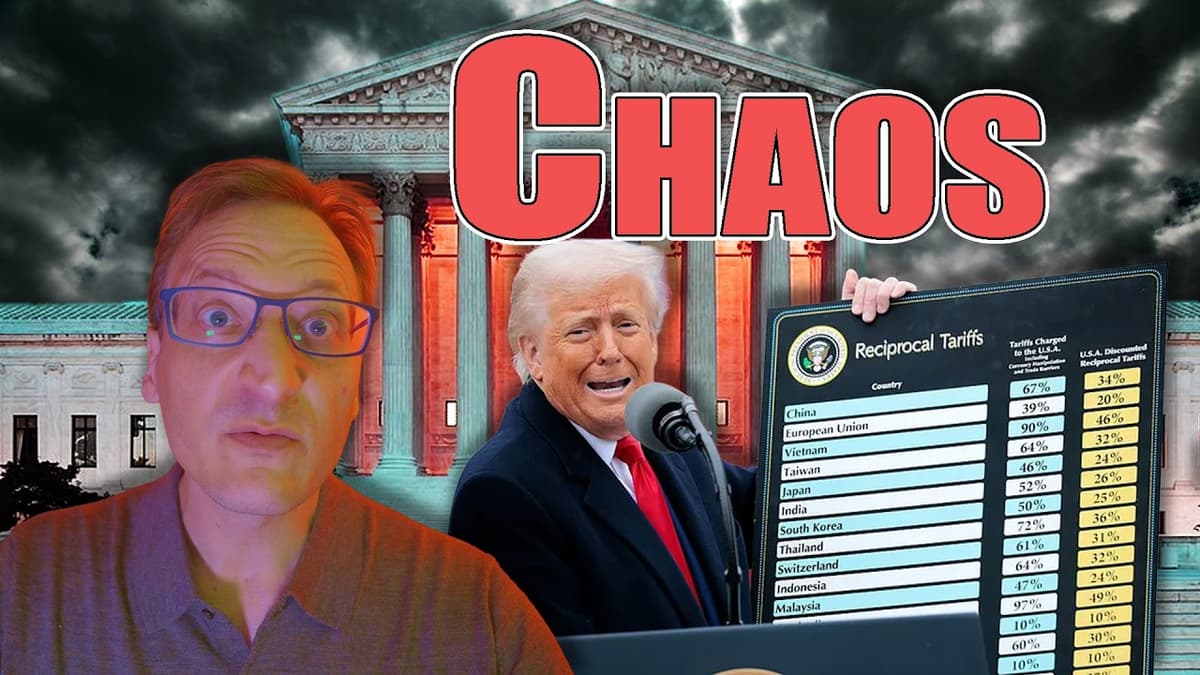
Chaos: Supreme Court STRIKES DOWN Trump Tarrifs
The Supreme Court issued a landmark ruling that invalidates the tariffs imposed by former President Donald Trump under the International Emergency Economic Powers Act (IEPA). The 170‑page opinion, released after extensive briefing, held that the executive branch lacks constitutional authority...

Sloppy: Microsoft AI Takes Down Indie Game
The video examines a recent DMCA takedown of Alumeriia, an indie Voxil‑style game, after Microsoft’s automated content‑identification system flagged a single gallery screenshot as infringing on Minecraft assets. The notice, apparently generated without any human review, led Steam to remove...

The DMCA Might Be About to Destroy Fair Use
A Northern District of California judge has refused to toss a DMCA anti‑circumvention claim brought by Denver Metro Audits creator Mr. Cordova against the Frauditor Troll Channel, opening the door to liability for fair‑use videos that are downloaded by bypassing...

Microsoft Sends DMCA for Indie Game Allumeria
Microsoft’s copyright team sent a DMCA takedown notice to the indie studio behind Allumeria, claiming the game used assets from Minecraft. The notice triggered Steam’s removal of the title just weeks before the developer’s planned showcase at Steam Next Fest...

Lawyer Reviews Discord Dispute Terms After ID & Face Scan Announcement
Discord has announced that it will soon require users to provide government‑issued identification or a facial scan to access any content deemed unsuitable for users under 13. The move, framed as an age‑verification measure, has sparked immediate backlash from long‑time...