
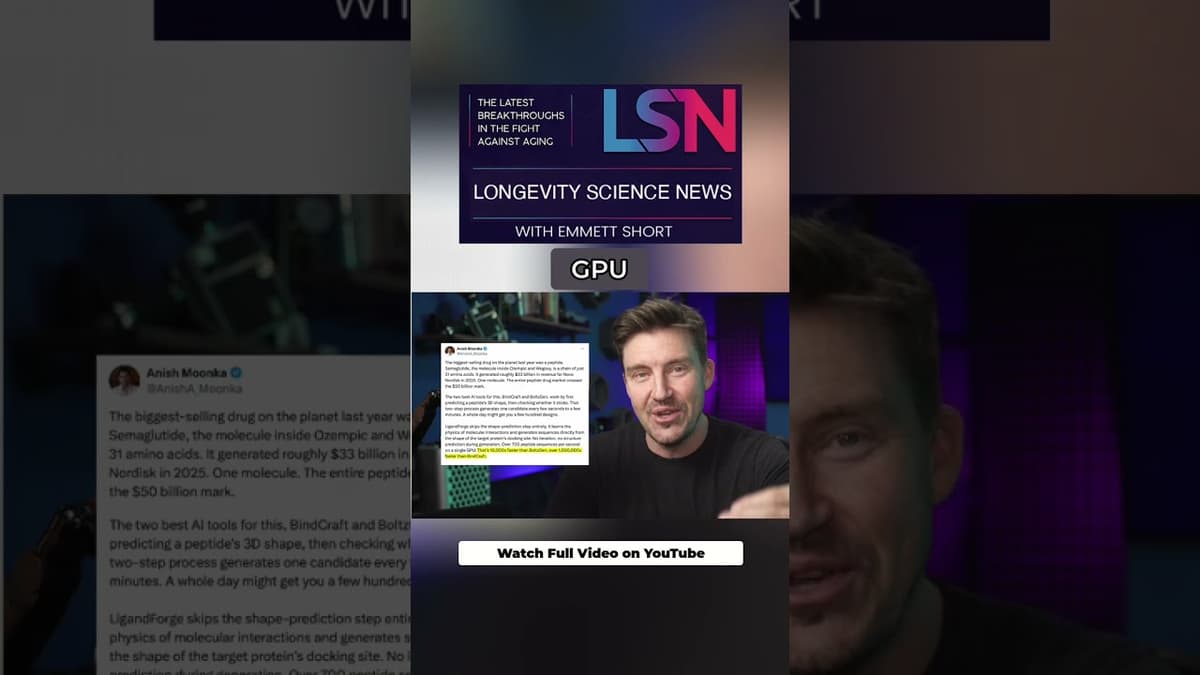
AI Just Made Drug Discovery 1,000,000x Faster
The video announces LiganForge, a new AI platform that accelerates peptide drug design by bypassing traditional 3‑D shape prediction. With the peptide market now over $50 billion, the combinatorial space—10 positions × 20 amino acids—exceeds 10 trillion possibilities, making conventional discovery painstaking. Existing tools such as Bind Craft and Bolts Gen generate a few hundred candidates per day by first modeling structure then screening. LiganForge replaces the two‑step workflow with a single forward pass, delivering roughly 700 sequences per second on a single GPU—10,000× faster than Bolts Gen and over a million times faster than Bind Craft. In a benchmark against five of the most challenging therapeutic targets, it produced 150,000 candidates in 3.4 minutes, achieving predicted binding affinities in the low‑nanomolar range, whereas Bolts Gen succeeded on only one target and Bind Craft on none. If the predictions hold up experimentally, the platform could compress years of laboratory work into hours, slashing R&D costs and reshaping competitive dynamics in peptide therapeutics.
Scientists May Have Found a Protein That Spreads Aging
A July 2025 study led by Oak Hee‑Jun at Korea University of Medicine identified the protein high‑mobility group box‑1 (HMGB1) as a circulating factor that can transmit aging signals through the bloodstream. The researchers showed that senescent cells leak HMGB1, which...
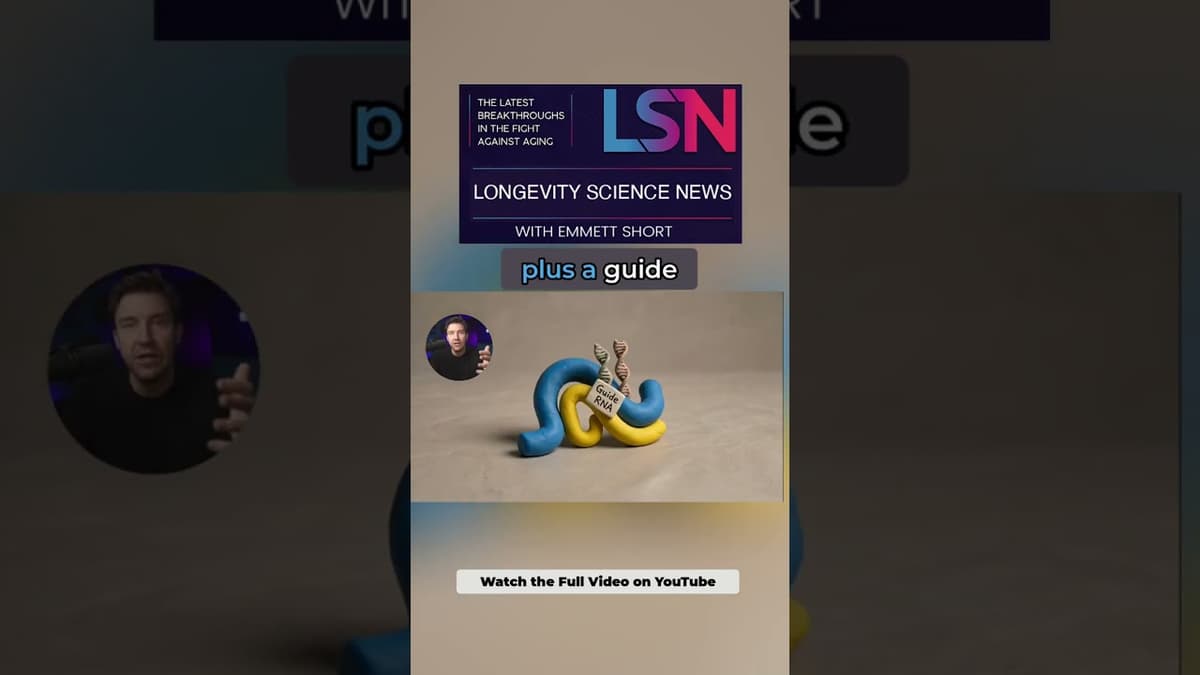
Gene Editing Risks: VERVE 102 Diabetes Concerns Explored #shorts
The video outlines Verve 102, a CRISPR‑based base‑editing therapy that permanently disables the PCSK9 gene to dramatically lower LDL cholesterol. Verve 102 uses a Cas9‑derived base editor that chemically flips one nucleotide, shutting off PCSK9 production. The therapeutic mRNA and guide...
What if We Stopped Waiting for People to Win the Genetic Lottery and Simply Gave Them the Ticket?
The video discusses Verve 102, a one‑time gene‑editing therapy designed to mimic the natural loss‑of‑function mutations in the PCSK9 gene that keep LDL cholesterol low and protect against heart attacks. Researchers have identified that roughly 2.6 % of Black participants carry nonsense PCSK9...
Long-Term Meditators Have Younger Brains
The video reports that individuals who have practiced meditation consistently for at least five years exhibit brain‑age metrics roughly 7.5 years younger than age‑matched non‑meditators, positioning meditation as a potential lever for longevity. Researchers attribute the effect to preserved prefrontal cortex...
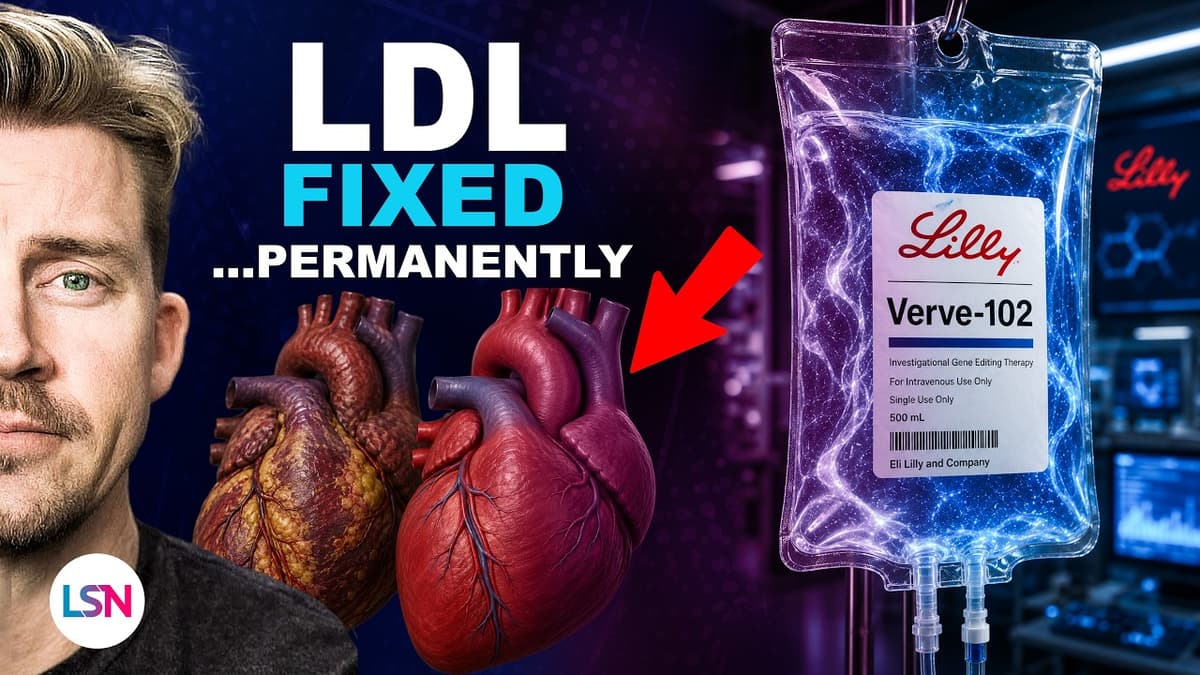
How Eli Lilly LDL Therapy VERVE 102 Could End Heart Disease
Eli Lilly’s Verve 102 gene‑editing therapy aims to eradicate high LDL cholesterol with a single intravenous infusion, targeting the PCSK9 gene in liver cells. The phase‑1 trial involved 35 participants, many already on high‑intensity statins, and achieved an average 62% drop in...
A Man with Terminal Glioblastoma Was Given 12–15 Months to Live.
The video follows a man diagnosed with terminal glioblastoma, given a 12‑15‑month prognosis, who is now on his fourth dose of Anktiva and whose latest MRI returned a normal result. Dr. Patrick Soon‑Shiong, the billionaire surgeon who created the drug,...
Would You Upload Your Brain?
The video explores the emerging concept of uploading human consciousness into digital formats, highlighting the staggering price tags—up to $50 million per brain—and the rapid advances in neuroscience that could make such transfers feasible. Researchers at Princeton have produced a complete connectome...
Could Telomeres Reverse Aging?
The video explores how telomeres—protective caps on chromosome ends—govern cellular longevity and, by extension, organismal aging. It highlights the biological limit on cell division imposed by telomere shortening and introduces Telomere Pharmaceuticals’ experimental drug designed to lengthen telomeres directly. Key points...
Gut Health Is Becoming Programmable
The video outlines an emerging field where the gut microbiome can be programmed, moving beyond generic probiotic advice to precision interventions. Researchers now identify optimal microbial compositions for individuals and deliver them via personalized transplants, currently in early human trials. Companies...
Can Aging Be Reversed?
The video spotlights two emerging longevity strategies: an IL11 gene knockout that appears to alleviate age‑related disease in mice, and a synthetic alkaloid that activates telomerase, modestly extending lifespan. Researchers report that disabling IL11 improves disease markers, while telomerase stimulation...
The AI Super Scientist
The video introduces Alex Zhavoronkov, founder and CEO of In Silico Medicine, showcasing how the company leverages artificial‑intelligence‑driven drug discovery to tackle complex diseases. Using AI, the firm mined massive biomedical datasets to map idiopathic pulmonary fibrosis (IPF), identified key pathogenic...
What if Aging Organs Could Actually Repair Themselves?
The video explores emerging regenerative therapies that pair stem‑cell delivery with epigenetic reprogramming and retinoic‑acid signaling to repair age‑related organ damage rather than replace organs outright. Researchers argue that activating retinoic‑acid pathways in kidney tissue, together with guided stem‑cell progenitors, could...

Why Delivery May Be the Biggest Problem in Longevity
The video discusses how delivery, not just molecular design, is the biggest obstacle to translating rejuvenation biotechnologies—such as Yamanaka factor gene therapies—into practical longevity treatments. It highlights that only a few tissues are naturally amenable to current delivery methods. The eye...
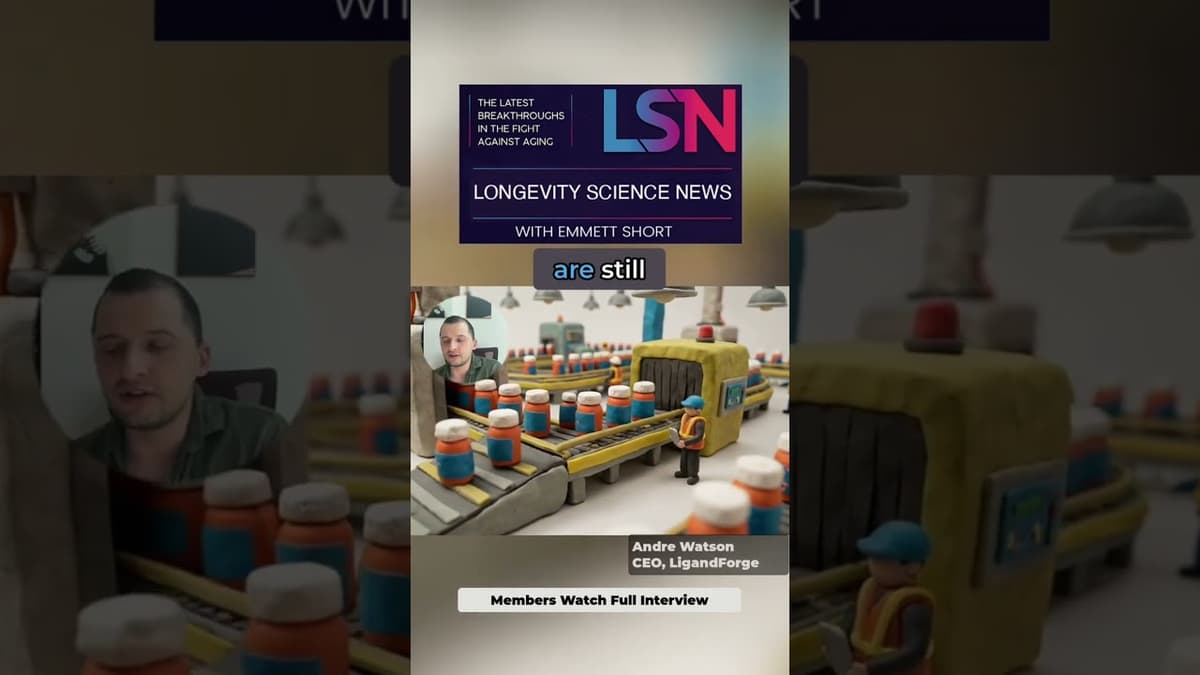
The Real Future of Personalized Medicine
The video examines the economics of personalized medicine, contrasting the astronomical price tags of current one‑off gene‑therapy treatments with the potential for mass‑produced, low‑cost alternatives. Today, a single curative gene therapy can cost $1.7‑2.7 million, while manufacturing a short peptide costs roughly...