

Fed Underestimates Pre‑war Inflation, Mislabels Risks
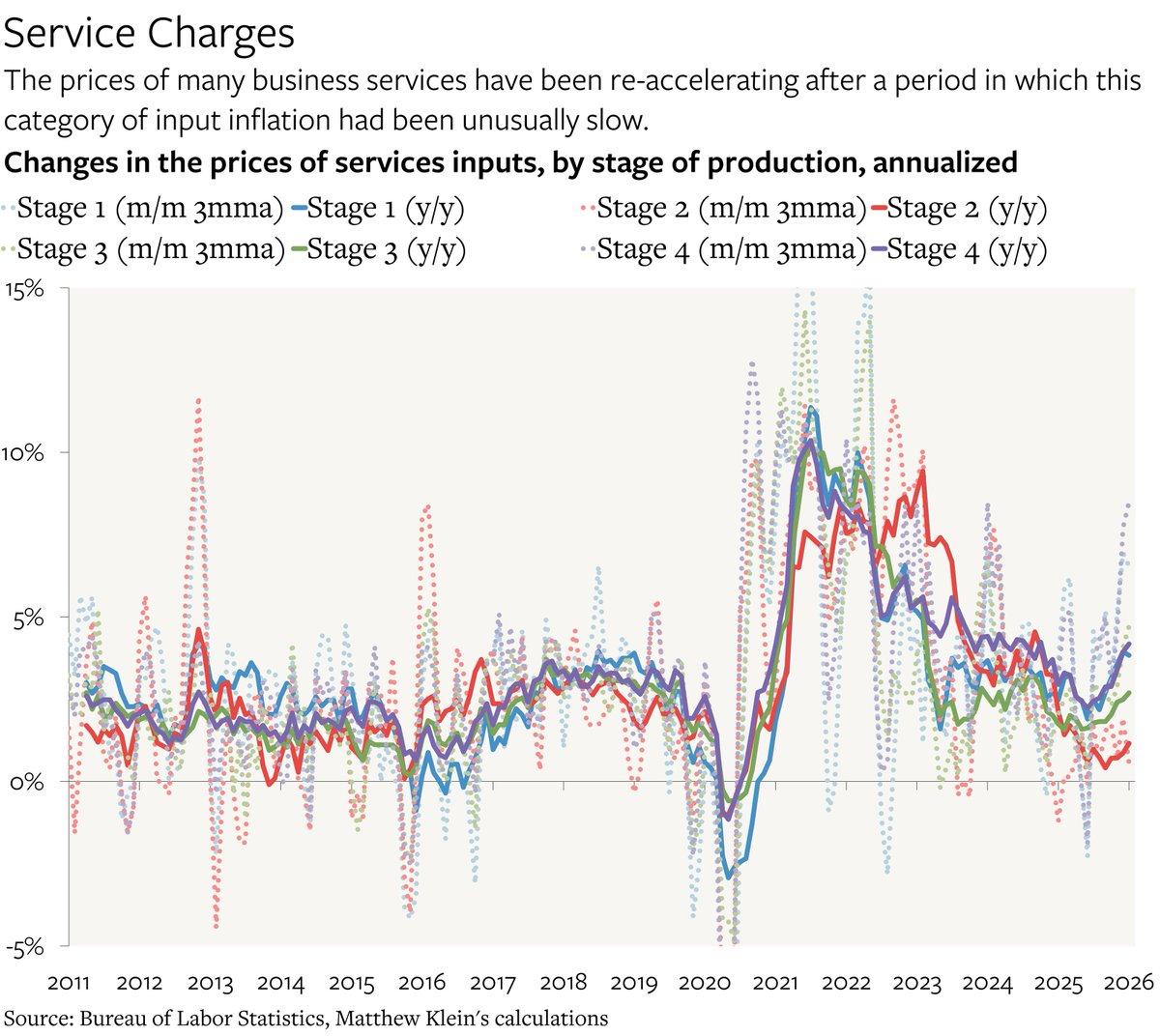
New at THE OVERSHOOT: The Fed is Misreading the Inflation Risks https://t.co/NIh6rJDQhK Inflation was getting worse *before the war* across a broad range of categories. Yet Fed officials are still blaming "one-time things". https://t.co/xbrposAsbQ

Powell Sees AI as Marginally Inflationary Now
Appreciate that Powell thinks that AI is inflationary on the margin as of now (because of capex etc)

Fed Could Take Cues From RBA’s Recent Pivot
Would be neat if someone asks about whether the Fed has anything to learn from the RBA's recent pivot

One‑off Shocks Keep Inflation Above 2% Target
The problem with dismissing all the shocks as "one-time things" is that they all have the same directional impact on inflation and underlying inflation was already running around 3%, which means that in practice you will never hit a 2%...

Powell Stumped by Rising Services Inflation Amid Soft Job Market
Powell did not have a good answer to the question of why non-housing services inflation has been moving the wrong way if the job market is actually "not inflationary"

Powell Shifts From Labor Market Weakness to Downside Risk
Interesting catch where Powell corrects himself from saying "weakness in the labor market" (objectively wrong) to "downside risk in the labor market" (maybe wrong but at least defensible)

Rising Oil Prices May Spark Investment and Job Growth
Someone needs to ask about what happens if sustained high oil prices leads to *higher investment and hiring*

Services Inflation Accelerates Across Broad Range of Categories
Don't know why he said this, services inflation is also accelerating across a broad range of categories

Lower‑income ZIP Codes Outpace Wealthier Areas in Spending Growth
"We can also crudely proxy for consumer spending by income quartile, based on consumer MCC transactions and average income in the ZIP code of the spender...at least on Stripe, lower-income ZIP codes have seen more robust spending growth than the...

Future Oil Prices Lag Spot Gains, Threatening Well Profitability
"Dan Pickering...said that while the spot market price for oil was up 65 per cent at $99, it was only up 17 per cent for 2027 and 12 per cent for 2028....not high enough for most producers to get returns...

Markets Stay Optimistic Despite Unprecedented Oil Volume Shock
New at THE OVERSHOOT: Markets Are Still Sanguine About the Oil Outlook https://t.co/QsizGVkoI5 Prior oil shocks in 1973 and 1979 involved far larger price increases than what we have seen so far. Yet this shock involves a hit to volumes that is unprecedented...
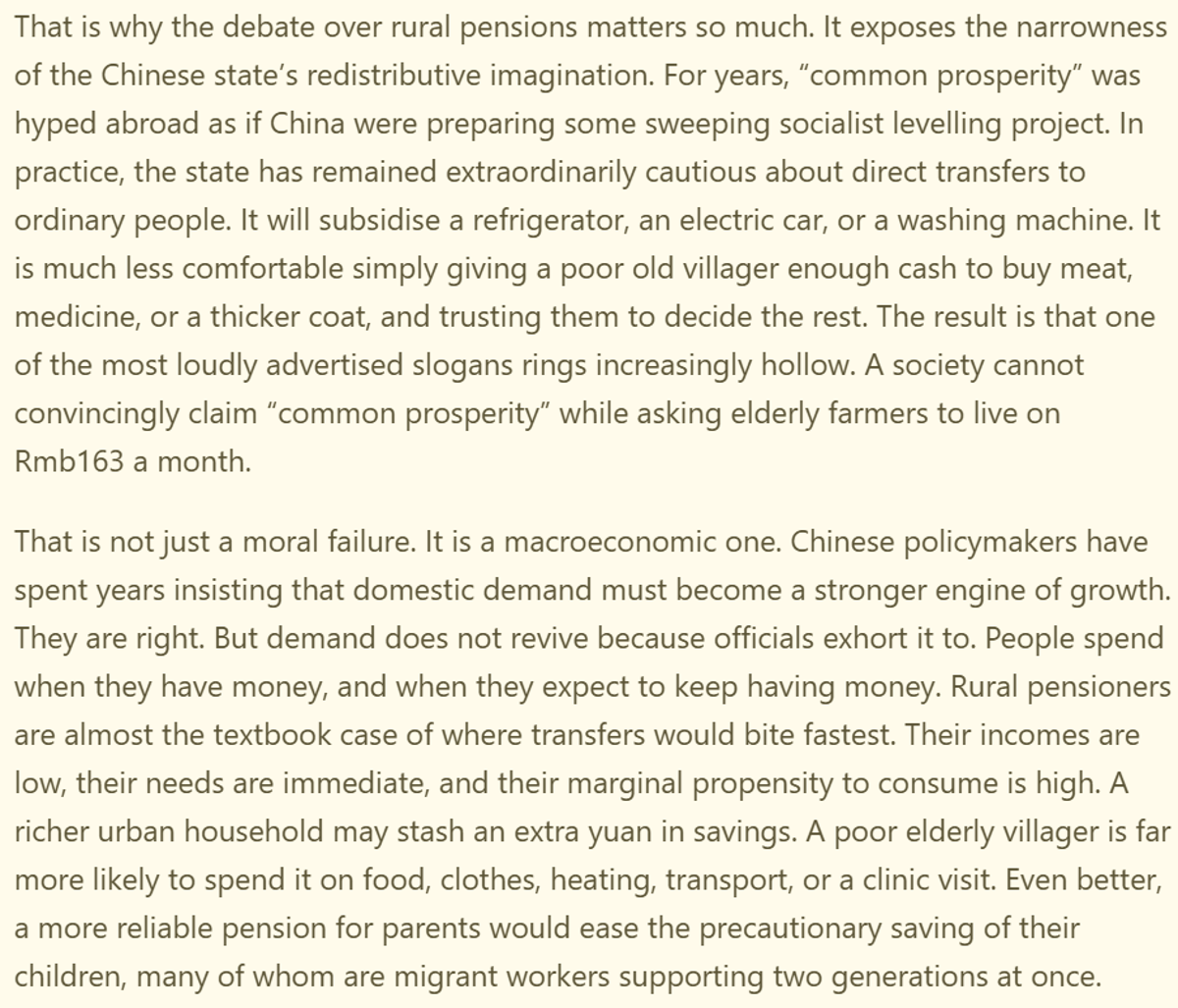
Beijing Hesitates Spending to Limit Household Financial Autonomy
"Beijing is not allergic to spending. It is just not confident about spending that gives households too much autonomy over how to use the money." --@ZichenWanghere Very good read on the need for rural pension reform, among other things https://t.co/HMmzkQ9ZMn https://t.co/sEMkJotQeP

Buy Distant Futures at Discount, Earn Risk Premium
[looks at Brent curve] Gary Gorton voice: "investors can earn a risk premium by buying distant commodity futures at a discount to spot"
Third Inflation Shock May Reset Economic Normal
New at THE OVERSHOOT: If You Thought the Inflation Outlook Was Bad Before... https://t.co/EpRm2cRwzB The big question is whether the latest "shock", which by my count is at least the 3rd in the past 6 years, is enough to recalibrate beliefs about what's...
Are Tariffs Still Viable for US 2026 BOP?
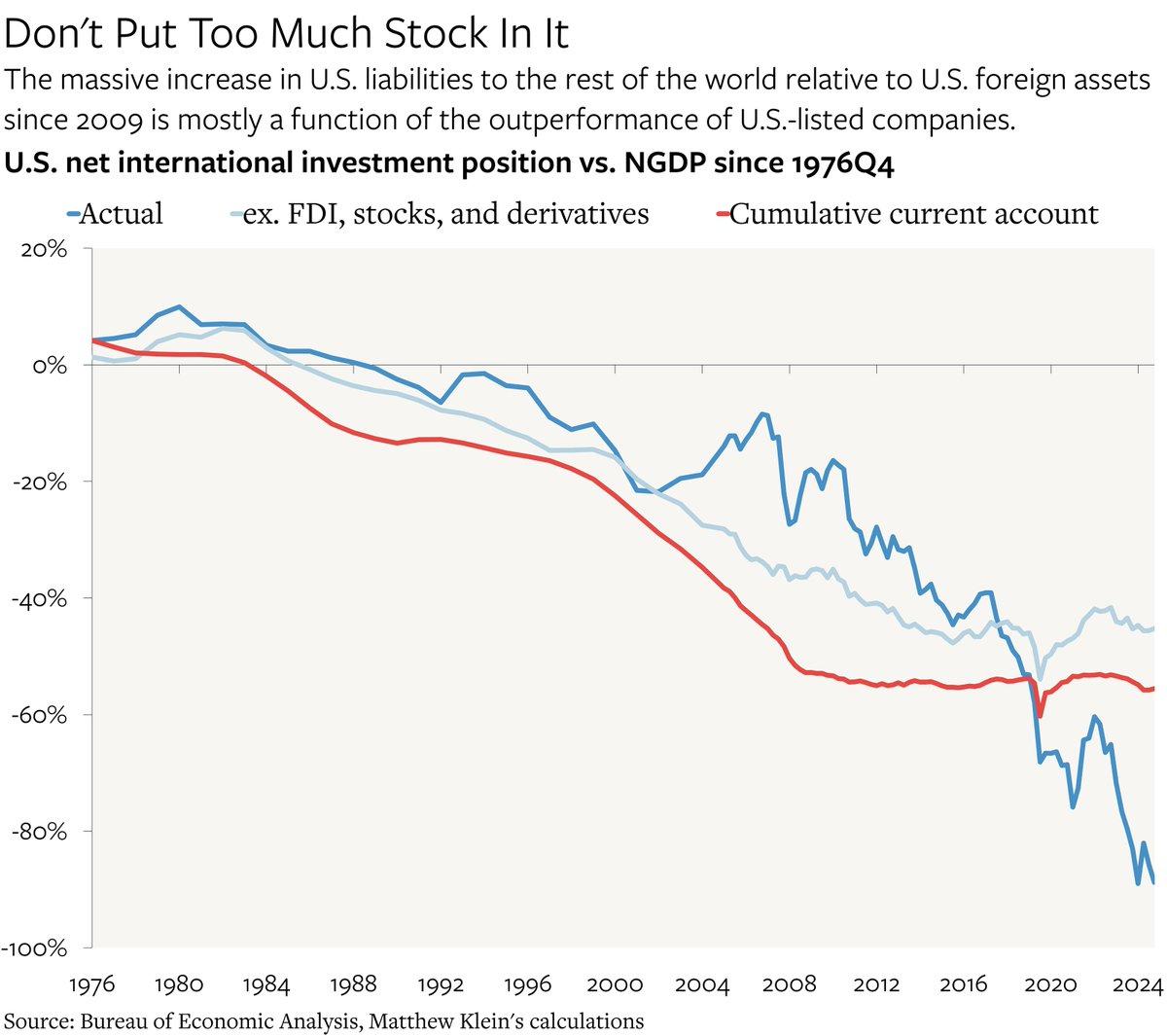
New at THE OVERSHOOT: Tariffs and "International Payments Problems" https://t.co/A8fIZJSUSB It has long been accepted that tariffs (eg Section 122) are an acceptable tool for managing BOP issues. The real question is whether they would be useful for the U.S. in 2026. https://t.co/CDdBRF2zxx

Excessive Household Debt Dampens Consumer Spending, BIS Finds
Interesting research paper from the BIS and Bank of Korea on the interplay between excessive household debt and consumer spending https://t.co/inCiWR5V6F

We Can Cushion Job Losses, Yet Resistance Persists
This is why I think the @Citrini7 scenario is plausible: We demonstrated that we have the power to minimize employment disruptions associated with big supply shocks and shifts in demand... ...but everyone decided they hated it.