
Recent Posts

Social•Feb 20, 2026
Protecting Domestic EVs Requires Tariffs or Local Content Rules
Very good Rhodium piece on the cost advantage of Chinese EVs: “In practice, countries seeking to protect domestic industries have two broad options. One is to impose very high tariffs that account not only for subsidies but also for structural cost advantages, as the US has done. The other is to introduce non-price criteria, such as local content requirements.”
By Michael Pettis

Social•Feb 19, 2026
China’s Growth Model Shift Faces Deep Structural Hurdles
Now that there is a consensus on what has caused the imbalances and why they are so damaging to China and to the global economy, we have to begin to understand just why it will be so difficult for China...
By Michael Pettis

Social•Feb 19, 2026
China’s Hidden Subsidies Dwarf IMF’s 4% Estimate
FT: “The IMF estimated that China spends about 4 per cent of its GDP subsidising companies in critical sectors, and said it should reduce that by 2 percentage points in the medium term.” This is a start, of course, but just...
By Michael Pettis
Social•Feb 17, 2026
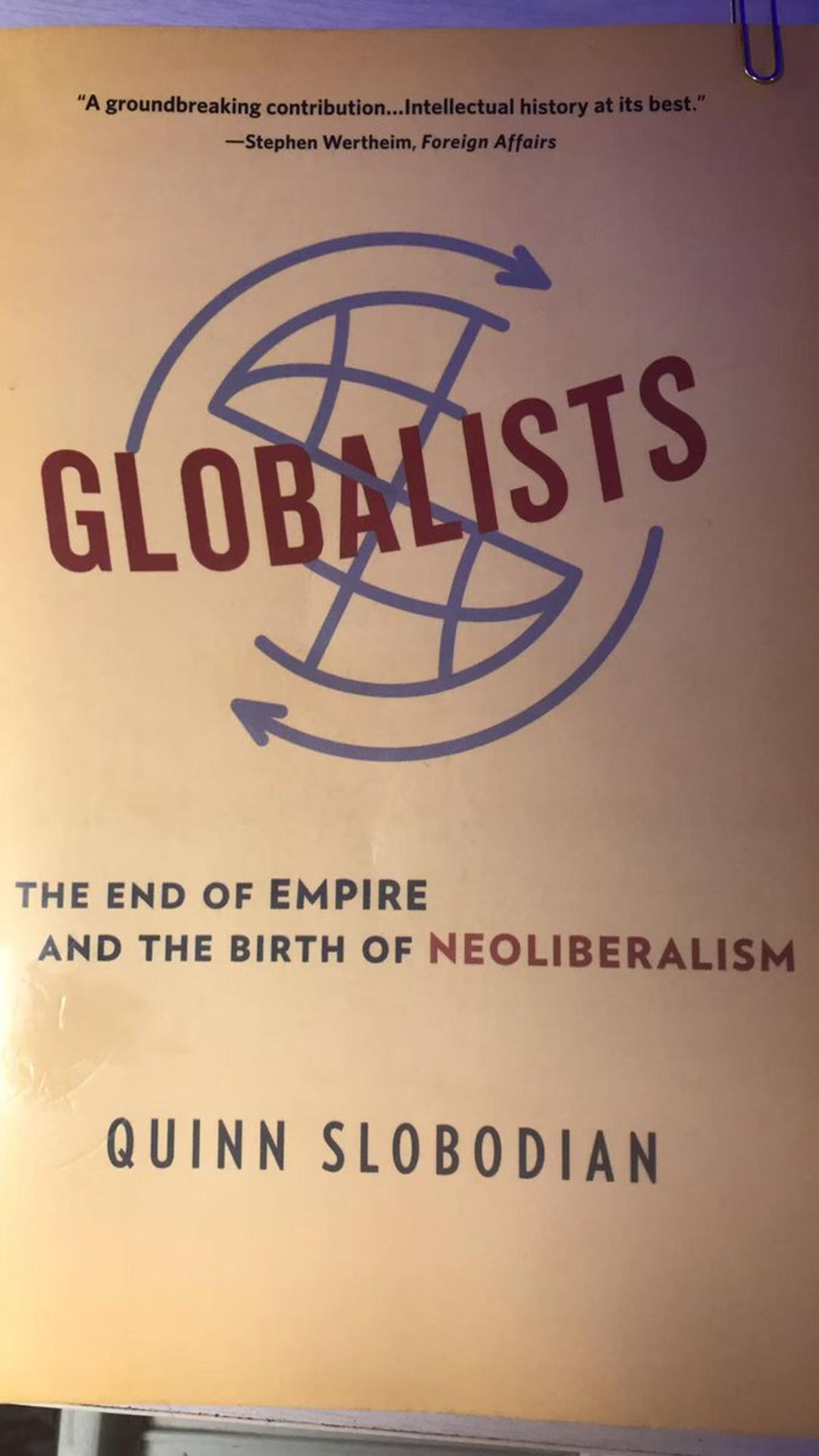
Neoliberalism Crafts Rules to Shield Global Capitalism From Democracy
I just finished Quinn Slobodian's fascinating book on the parallel evolution of globalization and neoliberalism, with the former (according to the latter) requiring specific rules and institutions to "protect" global capitalism from democratic political pressures. While he focuses very heavily...
By Michael Pettis

Social•Feb 17, 2026
2025 Year-End Bonuses Shrink, Uneven Amid Economic Slowdown
1/2 SCMP: "Long viewed by Chinese employees as a barometer of corporate prospects, industry momentum and even the broader economy, the year-end bonus packages for 2025 have become smaller, rarer and far more unevenly distributed, amid slowing... https://t.co/MFbnMtmZdY
By Michael Pettis

Social•Feb 15, 2026
US Controls Slow China, Ignite Homegrown Chip Drive
NYT: "While Washington’s export controls have slowed China’s chip development, they have added fuel to Beijing’s decade-long push to make strategic technologies like semiconductors and A.I. entirely at home." https://t.co/OcHRXob06N
By Michael Pettis

Social•Feb 15, 2026
WTO Warns China's $1.2T Surplus Unsustainable, Urges Model Shift
1/2 AFP: "WTO chief Ngozi Okonjo-Iweala on Friday urged China to change its growth model, arguing that its soaring trade surplus risked sparking new trade barriers. “The $1.2 trillion trade surplus is not sustainable because the rest of the world cannot... https://t.co/fvOrE6LYBH
By Michael Pettis

Social•Feb 14, 2026
EU Trade Surplus Shrinks as Tariffs and China Pressure
1/5 Reuters: "The EU's trade surplus kept shrinking, data showed on Friday, as tariffs weighed on exports to the U.S. and rising Chinese imports crowded out domestic production, highlighting existential threats to the bloc's economic model." https://t.co/91sJO2nGjP
By Michael Pettis

Social•Feb 14, 2026
Provincial Revenues Forecast 2‑3% Growth, Lagging Economy
1/4 SCMP: "Major provinces are budgeting for 2 to 3 per cent growth this year in general public operating revenue, broadly in line with last year but below broader economic growth targets, Fitch Ratings said in a research note." https://t.co/HwyAPw042O
By Michael Pettis

Social•Feb 14, 2026
China Cracks Down on Hidden Corporate IOU Market
1/3 Very interesting Caixin article on attempts by Chinese regulators to get their arms around "the opaque market for corporate IOUs that has allowed big-name companies to defer payments to suppliers on a massive scale." https://t.co/FIJywKAtIX
By Michael Pettis

Social•Feb 14, 2026
China's January Financing Jumps 2.4% Year‑over‑year, Beating Forecasts
1/5 According to Caixin, China’s aggregate financing grew slightly faster than expected in January, rising by RMB 7.22 trillion. This was 2.4% more than in January 2025 and 10.4% more than in January 2024. It is equal to 5.1% of annual...
By Michael Pettis

Social•Feb 14, 2026
China's Railway Investment Climbs 5.5% in January
Xinhua: "China's railway sector completed 46.3 billion yuan (about 6.67 billion U.S. dollars) in fixed-asset investment in January, up 5.5 percent year on year." https://t.co/g109GF2REm
By Michael Pettis

Social•Feb 13, 2026
US Firms and Consumers Shoulder Most 2025 Tariff Burden
1/5 The New York Fed finds that "U.S. firms and consumers continue to bear the bulk of the economic burden of the high tariffs imposed in 2025." https://t.co/X3Xz2tRn1j
By Michael Pettis

Social•Feb 13, 2026
Distinguish Inefficiency From Global Uncompetitiveness in EU Manufacturing
1/7 My latest piece was written for friends who are EU policymakers or advisors. In it I argue that there is a difference between an inefficient manufacturing sector and a globally uncompetitive manufacturing sector. We shouldn't conflate the two. https://t.co/qer7BAvgnc
By Michael Pettis

Social•Feb 13, 2026
State Firms Snap up Foreclosed Homes, Easing Oversupply
1/2 Reuters: "Chinese state-owned companies are buying foreclosed property projects, in a sign that long-promised government efforts to reduce massive oversupply in the crisis-hit housing sector are finally getting traction, albeit at a slow pace." https://t.co/Nk0gtgJVgr
By Michael Pettis