
Endovascular Treatment of Medium-Vessel-Occlusion Strokes (ORIENTAL-MeVO)
The ORIENTAL-MeVO study examined the safety and efficacy of endovascular thrombectomy in patients suffering medium‑vessel occlusion (MeVO) strokes, a cohort traditionally managed with medical therapy alone. Conducted across twelve high‑volume stroke centers, the trial enrolled 150 participants presenting with occlusions in the M2, A2, or posterior cerebral artery segments. Results showed a 78% successful recanalization rate (TICI ≥ 2b) with a complication profile comparable to large‑vessel thrombectomy, including a 2% symptomatic intracranial hemorrhage rate. At 90 days, 55% of treated patients achieved functional independence (mRS 0‑2), markedly higher than the 38% observed in the control arm receiving best medical management. Lead investigator Dr. Hana Lee highlighted, “Our data demonstrate that timely mechanical removal of clot in medium vessels can translate into meaningful neurological recovery without added risk.” The trial also featured subgroup analyses indicating greater benefit in patients treated within six hours of symptom onset. If validated, these findings could broaden endovascular therapy guidelines, prompting hospitals to equip catheter labs for MeVO interventions and potentially improving outcomes for a sizable stroke population previously underserved by current protocols.

Perspective Video Interview: Managing Uncertainty
In a NEJM perspective interview, Steven Morsy and Dr. Raja Ali Abdul Nure discuss how uncertainty permeates modern medicine and why clinicians and AI systems must learn to vocalize it. The conversation frames uncertainty as both factual—diagnostic probabilities—and environmental—team dynamics...
Paxlovid for Covid?
Two recent randomized trials in the U.K. and Canada enrolling about 4,000 mostly vaccinated outpatients — age 50+ or younger with comorbidities — found Paxlovid did not lower the already low combined rate of hospitalization or death (around 1%). However,...
Dr. Glaucomflecken Explains: Enfortumab Vedotin and Pembrolizumab in Bladder Cancer (KEYNOTE-905)
The video reviews the New England Journal of Medicine publication of the phase III KEYNOTE‑905 trial, which evaluated neoadjuvant Enfortumab Vedotin combined with Pembrolizumab in patients with muscle‑invasive bladder cancer who could not receive cisplatin‑based chemotherapy. The study randomized 340 eligible...
Naomi T. Nkinsi, MD, MPH, on Racial Bias in Diagnosing Kidney Disease
In a recent interview, Dr. Naomi T. Nkinsi, MD, MPH, highlighted how racial bias is embedded in clinical algorithms used to diagnose kidney disease in the United States. She explained that the historic use of a race‑based coefficient in estimated glomerular...
Intention to Treat: The Race Equation (Teaser)
The teaser introduces “The Race Equation,” a New England Journal of Medicine series that investigates how race is embedded in clinical algorithms used daily in U.S. hospitals. These tools determine everything from organ‑transplant eligibility to ventilator allocation, yet many incorporate race‑based...
Meet the Equation
The video investigates how a race‑adjusted eGFR (estimated glomerular filtration rate) formula, introduced in the late 1990s, has systematically over‑estimated kidney function for Black patients, affecting diagnosis and treatment decisions. It traces the origin of the correction factor to...

HFpEF Explained — Living with HFpEF | NEJM
The NEJM video spotlights heart failure with preserved ejection fraction (HFpEF), a condition where the heart muscle contracts normally but fails to relax, leading to fluid buildup and breathlessness. The patient narrator shares a four‑year diagnostic odyssey, emphasizing that early...
Dr. Glaucomflecken Explains: Tenecteplase for Acute Central Retinal Artery Occlusion (TenCRAOS)
The video features Dr. Glaucomflecken reviewing a recent New England Journal of Medicine trial that tested intravenous tenecteplase as an emergency treatment for acute central retinal artery occlusion (CRAO), a sudden, painless loss of vision often seen in older hypertensive...

Spinal Epidural Abscess — Key Points in 90 Seconds
The 90‑second clip distills the essentials of spinal epidural abscess, a rare but potentially fatal infection that accumulates pus between the dura mater and vertebral bone. It outlines that the condition typically arises from hematogenous spread or postoperative contamination, presenting with...

"Mushrooms" For Depression: New Science | NEJM Clinician
NEJM Clinician reports on a JAMA Psychiatry trial evaluating a single 25 mg dose of psilocybin for treatment‑resistant depression. The double‑blind study randomized 144 patients to psilocybin, a low 5 mg dose, or nicotinamide, aiming to mask allocation. At six weeks, 17 % of...
Images in Clinical Medicine: Vibrio Vulnificus Necrotizing Soft-Tissue Infection
A 74‑year‑old man presented with rapidly worsening wounds on his leg and arm after a laceration in Florida’s Gulf waters, ultimately diagnosed with Vibrio vulnificus necrotizing soft‑tissue infection. The case underscores how exposure to warm, low‑salinity coastal water can...

HFpEF Explained — Prevalence, New Advances, and How to Diagnose | NEJM
The video explains that heart failure with preserved ejection fraction (HFpEF) is becoming the dominant form of heart failure, especially among patients over 65, driven by an aging population and the global rise in obesity and diabetes. While historically under‑diagnosed,...

Images in Clinical Medicine: Bronchial Casts From Inhalation of Forest-Fire Smoke
The video presents a case study of an 87‑year‑old man who developed obstructive bronchial casts after inhaling dense smoke from a multi‑hour forest fire. Physical exam showed diffuse rales without burns; escalating airway pressures prompted flexible bronchoscopy, which visualized black particulate...
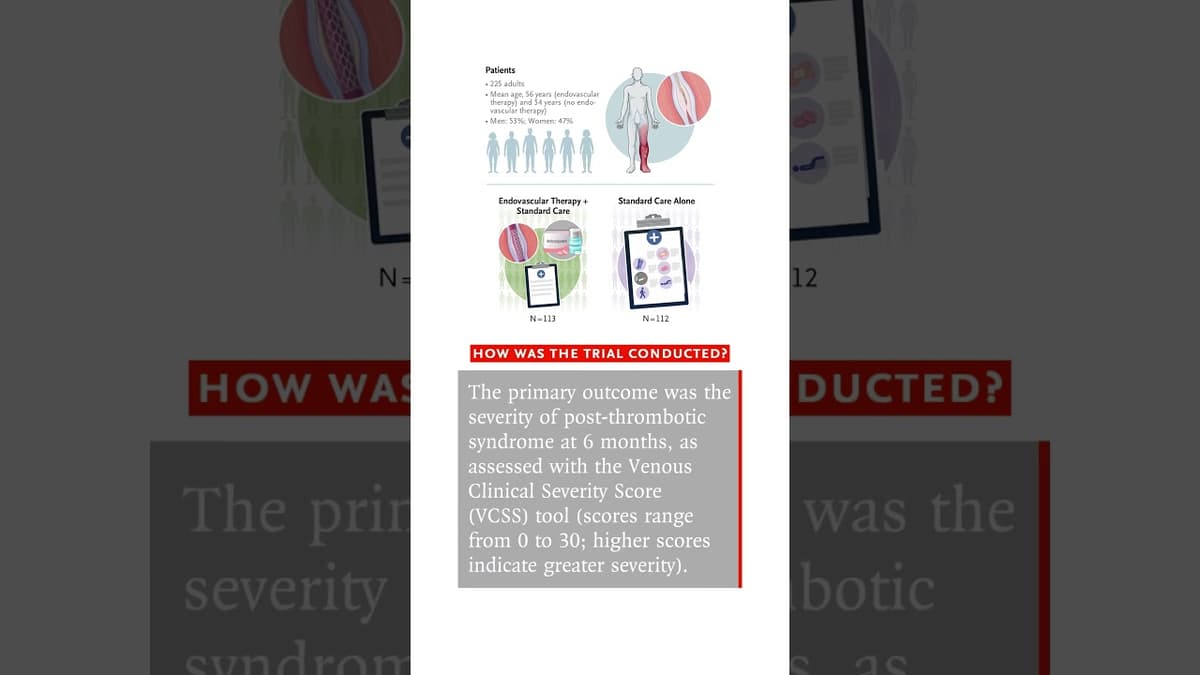
Endovascular Therapy for Post-Thrombotic Syndrome (C-TRACT)
The phase 3 C‑TRACT trial compared endovascular therapy plus standard care with standard care alone in patients with moderate or severe post‑thrombotic syndrome (PTS). At six months, the combination reduced PTS severity and improved quality‑of‑life scores. However, the intervention group...
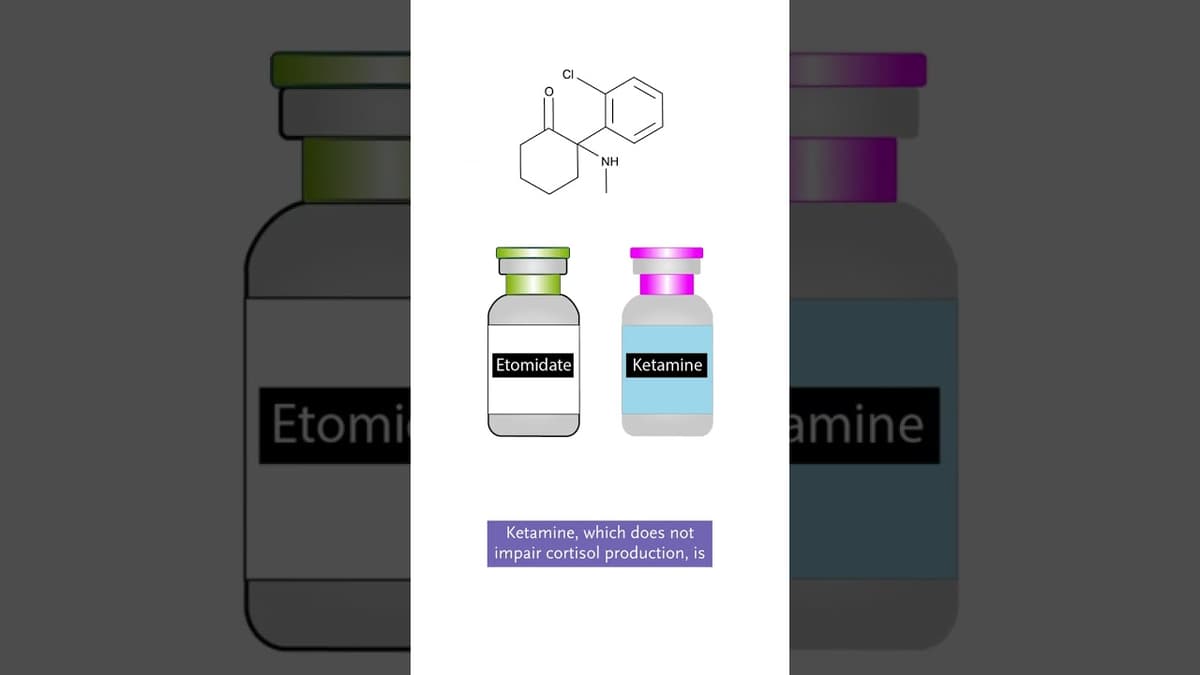
60-Second Journal Club: Randomized Trial of Sedative Choice for Intubation
The video reviews a multicenter, unblinded randomized trial that compared ketamine with etomidate as induction agents for emergency tracheal intubation in critically ill adults. Conducted across 14 emergency departments and intensive care units in the United States, the study enrolled...

NEJM Clinician: Catheter-Directed PE Treatment: Does It Deliver?
The New England Journal of Medicine reports a multinational randomized trial evaluating catheter‑directed fibrinolysis (CDT) versus standard anticoagulation in patients with intermediate‑risk (sub‑massive) pulmonary embolism. Over 500 participants were assigned to low‑dose, catheter‑delivered clot‑busting therapy or anticoagulation alone, with the...

When No One's Watching
The podcast “When No One’s Watching” asks whether primary care is a problem to solve or a treasure to nurture, using Olympic figure‑skater Alyssa Lou’s self‑directed comeback as a metaphor for clinicians seeking agency and joy. Host Lisa Rosenbomb argues that...

Medical Mystery Solved — The Devil Is in the Details | NEJM
The video walks through a diagnostic odyssey of a 75‑year‑old woman who presented with night sweats, an eight‑kilogram weight loss and new‑onset renal dysfunction. Initial work‑up focused on common causes in seniors—malignancy, vasculitis, infection—while HIV was not on the radar. Laboratory...

Dr. Glaucomflecken Explains: Tecovirimat for the Treatment of Mpox (STOMP/A5418)
The video features Dr. Glaucomflecken reviewing a New England Journal of Medicine study that evaluated oral tecovirimat, an antiviral approved for smallpox, as a treatment for mpox. The randomized, placebo‑controlled trial enrolled adults with presumptive or laboratory‑confirmed clade 2 mpox within...
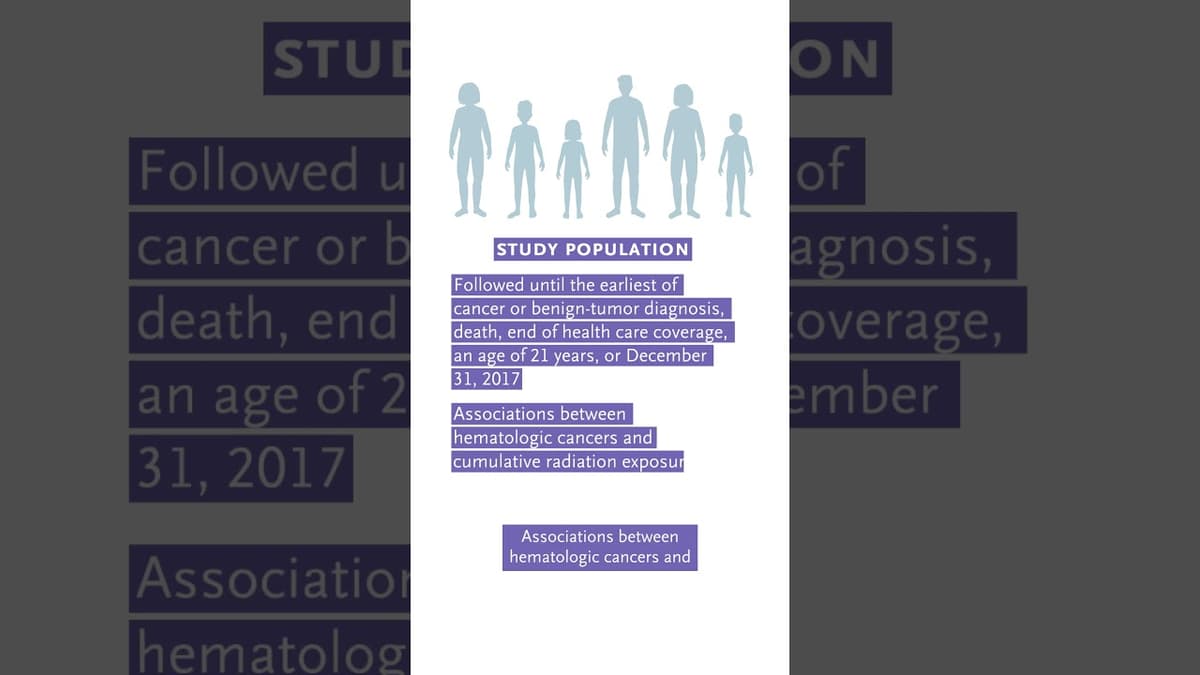
60-Second Journal Club: Risk of Pediatric & Adolescent Cancer Associated W/ Medical Imaging (RIC)
The video reviews a large retrospective cohort study examining how medical imaging radiation influences pediatric and adolescent hematologic cancer risk. Researchers followed three million children across six U.S. health systems and Ontario, Canada, tracking cancer outcomes through age 21 or...
NEJM Interview: Danielle Jones on the Development of Tools to Help Family Physicians Address Soci...
The interview with Danielle Jones, vice president of accountability at AWHONN, discusses the American Academy of Family Physicians' "Everyone Project"—a decade‑old toolkit designed to help primary‑care doctors screen for and address social determinants of health. The project began with an AAFP‑wide...

The Whole Patient — Toward Holistic, High-Value Care | NEJM
The NEJM video “The Whole Patient — Toward Holistic, High‑Value Care” showcases a primary‑care model that brings physicians into patients’ homes to capture a complete picture of health, including mobility, cognition, daily activities, and social support. By stepping outside the...

Clinical Decisions: Liver Transplantation in Alcohol-Related Liver Disease
The New England Journal of Medicine released a Clinical Decisions feature asking physicians to choose between liver transplantation and continued intensive care for patients with acute liver failure superimposed on alcohol‑associated cirrhosis. The piece highlights the ongoing debate over transplant...

Original Article: Left Atrial Appendage Closure in Afib (CLOSURE-AF)
The CLOSURE‑AF trial evaluated left atrial appendage (LAA) closure versus guideline‑directed medical therapy in over 2,000 high‑risk atrial fibrillation patients. After three years, the device strategy failed to meet the predefined non‑inferiority margin for a composite of stroke, systemic embolism,...

NEJM Clinician: Should We Hold GLP-1–Based Medications Before Upper Endoscopy?
Clinicians are debating whether to hold GLP‑1 receptor agonists before elective upper endoscopy, given these drugs’ known effect on gastric motility. A recent randomized trial published in JAMA Internal Medicine enrolled 60 patients on semaglutide or tirzepatide scheduled for routine...

LogMAR and PRIMA Highlights in 90 Seconds
The video explains LogMAR, the logarithmic metric for visual acuity, and introduces PRIMA, a photovoltaic retinal prosthesis designed to restore central vision. LogMAR is the base‑10 logarithm of the minimum angle of resolution; a 0.1 increase corresponds to losing one...

NEJM Interview: Lawrence Casalino on Qualities of Corporate Organizations that Could Affect Physi...
The New England Journal of Medicine interview with Professor Lawrence Casalino examines how corporate structures influence physician professionalism and the delivery of high‑quality care that eludes conventional metrics. Casalino argues that essential aspects such as timely, accurate diagnosis are rarely...

Dr. Glaucomflecken Explains: Oral PCSK9 Inhibitor Enlicitide (CORALreef Lipids)
The video features Dr. Glaucomflecken discussing a new oral PCSK9 inhibitor, Enlisticide, and its recent New England Journal of Medicine publication. The drug targets patients with familial hypercholesterolemia or elevated LDL—specifically those with prior cardiovascular events (LDL > 55 mg/dL) or at high...

NEJM Clinician: The Troubling Rise of Medical Credit Cards
The New England Journal of Medicine’s recent perspective spotlights a growing, little‑known financing tool—medical credit cards—offered to patients at the point of care. Unlike traditional hospital payment plans, these cards are third‑party credit products that allow consumers to defer or...

Original Article: Atezolizumab Plus FOLFOX for Stage III Colon Cancer (ATOMIC)
The phase 3 ATOMIC trial evaluated resected stage III mismatch‑repair‑deficient (dMMR) colon cancer patients receiving modified FOLFOX6 with or without atezolizumab. Adding atezolizumab improved three‑year disease‑free survival compared with chemotherapy alone. However, grade 3‑4 adverse events increased, driven primarily by fatigue. The findings...

Primary Prevention with Statins: How Much Risk Reduction Do People Expect?
The video discusses a JAMA Internal Medicine study examining how individuals perceive the benefit of statins for primary prevention of cardiovascular disease, using hypothetical 10-year risk scenarios. Researchers surveyed roughly 500 statin-naïve participants, presenting three risk levels—2.5 % (low), 10 % (moderate), and...

How Physician Coaches Can Be Beneficial
The video features Tom Lee interviewing Dr. Scott Friedenberg, vice‑chair of neurology at Geisinger Health, about his experience with a professional physician‑coach aimed at improving patient interactions. Friedberg recounts how sub‑optimal online patient evaluations and a near‑legal incident prompted the health...

Clinical Practice: Polymyalgia Rheumatica
A new Clinical Practice article in the New England Journal of Medicine outlines the diagnosis and management of polymyalgia rheumatica (PMR) in adults over 50. It emphasizes that diagnosis is primarily clinical, with glucocorticoids serving as the first‑line therapy. The...

AI’s Next Frontier with Dr. Kyunghyun Cho
The episode of AI Grand Rounds features Dr. Kyunghyun Cho, a leading figure in machine translation and protein engineering, discussing how artificial intelligence is expanding into molecular biology. He explains that extracting meaning from text in natural language processing is...

Atrial Fibrillation Therapy in Patients with Stents (ADAPT AF-DES)
The New England Journal of Medicine’s ADAPT AF‑DES trial examined whether a non‑vitamin K antagonist oral anticoagulant (NOAC) alone could safely replace the conventional dual antithrombotic regimen of NOAC plus clopidogrel in patients with atrial fibrillation who had received a...

NEJM Clinician: Apixaban Vs. Rivaroxaban for Acute VTE
The New England Journal of Medicine published a head‑to‑head trial evaluating apixaban (Eliquis) against rivaroxaban (Xarelto) in 2,800 patients with acute pulmonary embolism or deep‑vein thrombosis. The study provides the first direct comparative safety and efficacy data for these two...

Dream Team
The video examines the evolving composition of primary‑care teams, highlighting a shift from an industrial, physician‑centric model toward one that heavily incorporates advanced practice practitioners (APPs) such as nurse practitioners and physician assistants. While policymakers tout team‑based care as the...

Clinical Decisions: Blood-Pressure Targets in Hypertension Management
Recent discussions in cardiology focus on optimal systolic blood‑pressure targets for hypertension management. The debate pits an intensive goal of less than 120 mm Hg against the more conventional threshold of 140 mm Hg, reflecting evidence from the SPRINT trial and current ACC/AHA guidelines....

NEJM This Week — March 5, 2026
NEJM This Week highlighted several pivotal developments. A phase‑3 trial showed finerenone slows kidney disease in type‑1 diabetes patients, while new guidelines recommend early PCI of non‑culprit lesions after STEMI. The episode also introduced an investigational gene‑therapy for Dravet syndrome...

Of Trust, AI, and Green Beans
In a recent NOS interview, Lisa Rosenbaum and her panel explored whether online influencers and artificial intelligence could ever replace the trusted, compassionate role of family physicians. They highlighted the allure of digital health advice but stressed the gaps in...

Of Trust, AI, and Green Beans
The episode probes a growing tension in primary care between longstanding patient-doctor relationships and emerging tech-driven and influencer-led alternatives. Lisa Rosenbaum and guests argue that while primary care’s human trust and continuity offer distinct benefits, accessibility gaps for roughly 100...

Epic’s Approach to AI with Seth Hain
In this NEJM AI Grand Rounds episode, Epic’s senior vice president of research and development, Seth Hain, outlines the company’s strategic approach to artificial intelligence. Central to the discussion is Cosmos, Epic’s de‑identified data repository that now contains over 300 million...
NEJM This Week — February 12, 2026
NEJM This Week (Feb 12 2026) highlights several pivotal studies, including promising phase‑III results for novel IgA nephropathy therapies and updated antithrombotic regimens after coronary stenting. Researchers identified the specific antigen driving rare vaccine‑associated clotting syndromes, while a case report underscored the...