

Observability in the Age of AI
Day 2 DevOps featured a deep dive into AI observability, with host Kyler Middleton and guest Anushiagi discussing how monitoring AI stacks differs from traditional applications and why tracking token consumption has become a critical operational concern. The conversation highlighted that observability now must capture latency, model drift, hallucinations, GPU utilization, and token usage alongside classic metrics such as CPU and memory. Tools like agent gateways, MCP servers, and vector databases introduce new routing and workflow checkpoints that need to be instrumented. Anushiagi cited real‑world incidents—a LinkedIn post about “free LLM access,” a company chatbot that generated code on demand, and an internal “Vera” bot that mistakenly blocked legitimate MFA‑bypass workflows—to illustrate the need for guardrails and telemetry that can surface misuse or unexpected loops. Integrating these signals into an OpenTelemetry‑compatible stack enables teams to set token budgets, detect runaway loops, and enforce policy at the gateway level, turning AI from a cost‑driven black box into a manageable production service.

Patch Gaps, Pretexting, and AI Use for Crimes and Crimefighting: 2026 Verizon DBIR Highlights
The 2026 Verizon Data Breach Investigations Report (DBIR) analyzes 31,000 incidents—including over 22,000 confirmed breaches—across 145 countries from November 2024 to October 2025. As the industry’s most comprehensive annual cyber‑threat barometer, it offers a data‑driven temperature check on evolving attack vectors, remediation...
AI and Trust in Modern Network Automation
The podcast episode explores how AI, low‑code platforms, and trusted automation are reshaping network operations. Host Eric Cho interviews principal solution architect Seth Bach, who traces his journey from early scripting on ATM switches to today’s AI‑enhanced orchestration. Bach emphasizes Python’s...
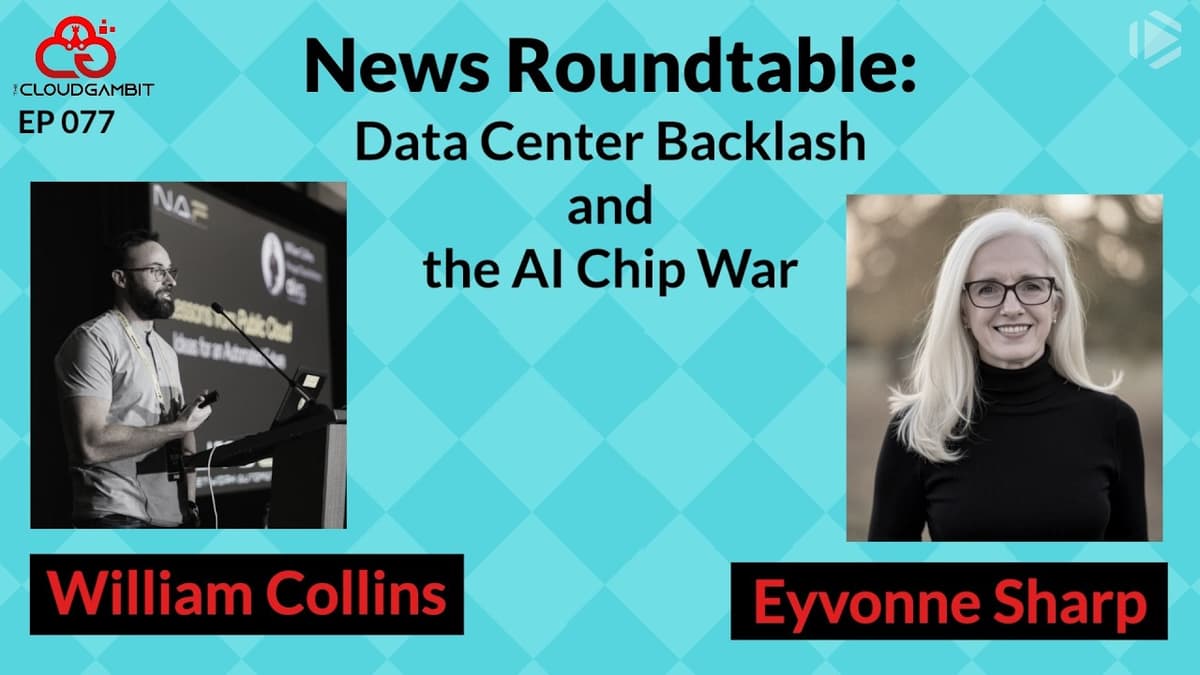
News Roundtable: Data Center Backlash and the AI Chip War
The roundtable discusses growing community backlash against AI data centers and the broader AI chip war, highlighting how local opposition is emerging as a new obstacle to the massive compute infrastructure being built to train frontier models. Hosts note that beyond...

When You Look But Don't Find: The Art of Knowing When to Stop
The Packet Protector podcast episode explores the often‑overlooked question of when to stop a threat hunt. Host Jennifer "JJ" Jabush and co‑host Drew Conry‑Murray interview detection engineer Sydney, who argues that hunting is valuable even when it yields no malicious...
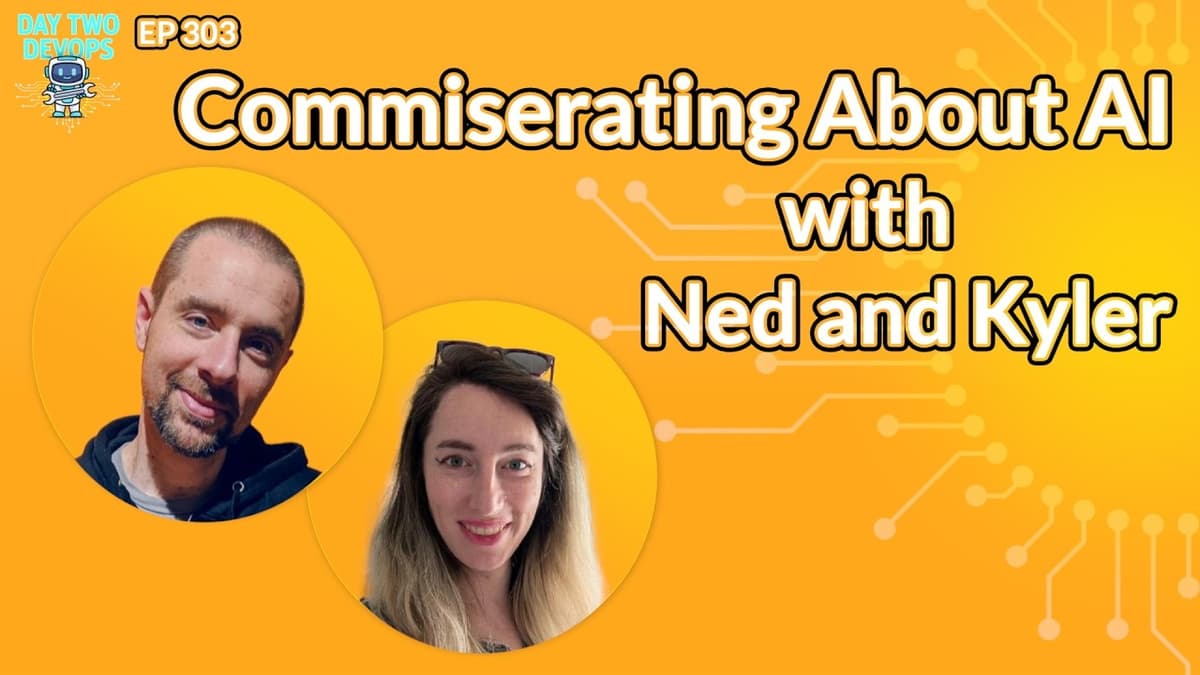
Commiserating About AI with Ned and Kyler
The episode centers on Kyler Middleton and Ned Bellavance’s hands‑on experiments with generative AI in a corporate DevOps setting. They describe building a secure, internal ChatGPT‑style assistant called Vera, which has already fielded roughly 32,000 employee queries and integrates with...
Automating Human-Centric NetOps Is Finally Achievable
The episode of Total Network Operations introduces Kent CEO Avi Freriedman discussing how network observability has evolved and why automating the human aspects of NetOps is finally feasible. Freriedman explains Statseeker’s 60‑second full‑fidelity polling eliminates sampling gaps, giving operators real‑time, historical...
Driving AI Efficacy in Wi-Fi (Sponsored)
The Heavy Wireless episode explores how emerging agentic AI reshapes Wi‑Fi engineering, moving beyond traditional scripting toward autonomous network management. Agentic AI combines a reasoning node that talks to large language models, MCP tools that abstract APIs, and domain‑specific skills, allowing...
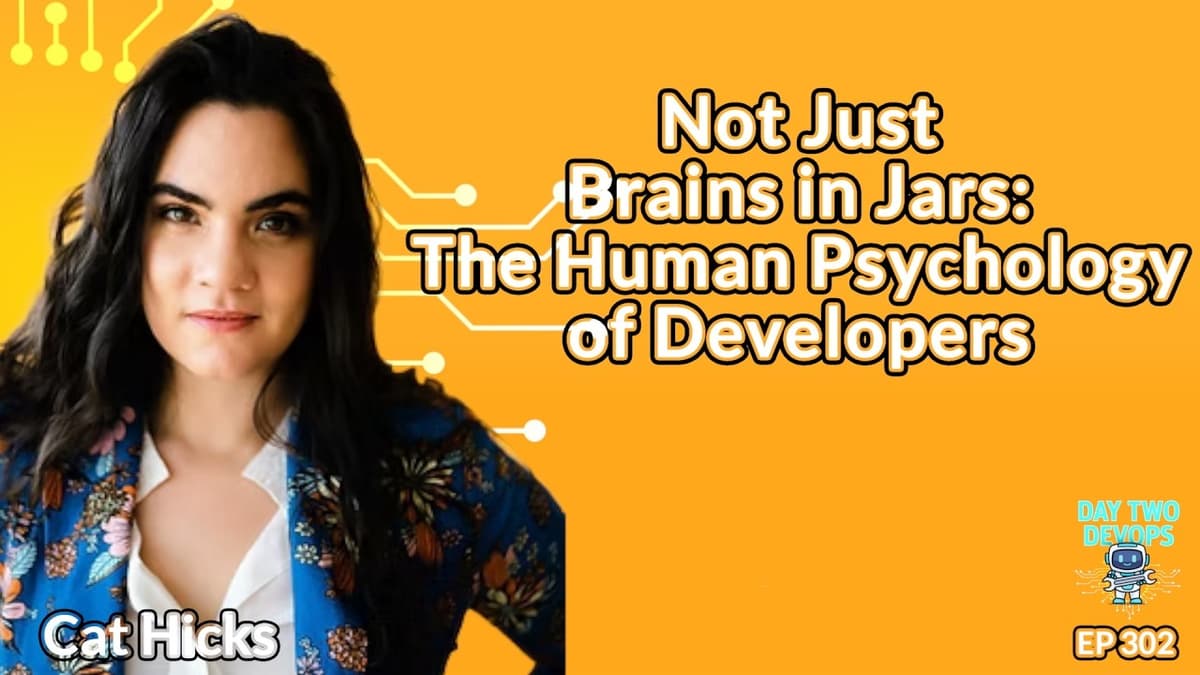
Not Just Brains in Jars: The Human Psychology of Developers
The Day2 DevOps episode spotlights Dr. Cat Hicks’s upcoming book, *The Psychology of Software Teams*, which argues that developers are human beings with emotional needs, not merely interchangeable brains in jars. Hicks explains that many tech cultures cling to stereotypes—cold,...
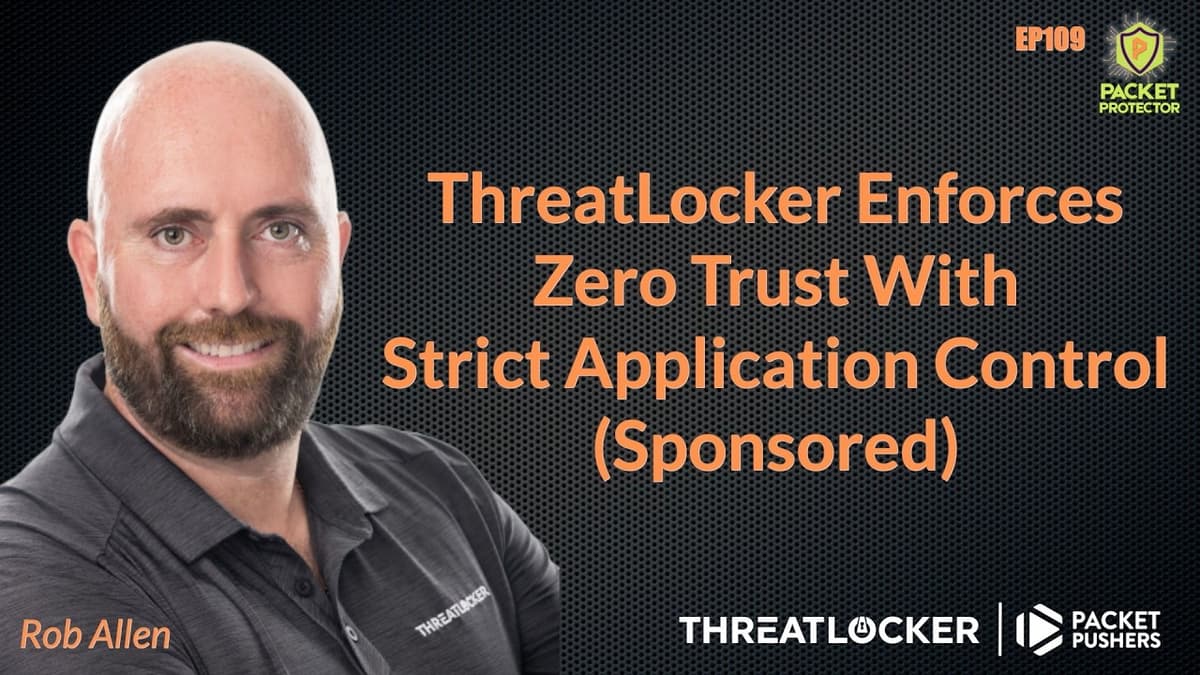
ThreatLocker Enforces Zero Trust With Strict Application Control (Sponsored)
The Packet Protector podcast, sponsored by ThreatLocker, spotlights the company’s zero‑trust platform that moves security from a “trust‑but‑verify” model to a “deny‑by‑default, permit‑by‑exception” approach. Rob Allen explains that ThreatLocker combines traditional allow‑listing with “ring‑fencing,” which not only decides which binaries may...

That's a Wrap - Extreme Connect 2026
Extreme Connect 2026 wrapped with a focus on Platform One, the company’s unified management console for wired and wireless networks. The presenters highlighted that while only about 10% of customers currently use Platform One, Extreme believes up to 70% could...
The Lean Network Team: Real-World Lessons in Automating a Wireless Network (Sponsored)
In this sponsored episode of Heavy Wireless, Cisco’s Dan Davis and Room & Board senior network engineer Mark Rodrik discuss how the retailer automated its enterprise‑wide wireless infrastructure. Room & Board operates 34 locations—including retail stores, delivery centers, and warehouses—with...

How to Build and Sustain a Successful Zero Trust Project
In a recent episode of the Packet Protector podcast, hosts Jennifer Jabbush and Drew Conry‑Murray interview John Spiegel and Jay Tilson, co‑authors of “Zero Trust Done Right.” The conversation centers on how to build and sustain a Zero Trust program,...
Physical Data Transmission - Part 4: QAM and OFDM
The video explains how advanced modulation schemes—Quadrature Amplitude Modulation (QAM) and Orthogonal Frequency Division Multiplexing (OFDM)—push data rates beyond the limits of single‑carrier modulation. QAM merges amplitude and phase variations to create constellations (e.g., 16‑QAM) that encode three to four...
Network Access Control (NAC) Basics
The episode is a beginner‑focused introduction to Network Access Control (NAC), hosted by Ethan Banks and Holly Melitzky Popilac under the Packet Pushers umbrella. They explain that NAC—sometimes still called network admission control in older documentation—governs whether a device...