

Developing IPv6-Friendly Code
The episode of IPv6 Buzz brings guest Chris Cummings to discuss how writing software for an IPv6‑first environment differs from traditional IPv4 development and why the shift matters for modern networks. Cummings argues that eliminating NAT restores true end‑to‑end addressing, which simplifies troubleshooting, reduces the need for complex NAT‑traversal hacks, and makes logging far more precise. She notes that IPv6’s larger address space eliminates the “multiple‑subnet” blocks required for IPv4, cutting storage requirements for flow and translation logs by up to three‑fold. She cites concrete examples: cloud providers charge a premium for IPv4 addresses, and law‑enforcement requests often target IPv4 logs that are hard to trace back to a subscriber. She also mentions operational tools like NPTv6 and NAT64 as optional work‑arounds when providers do not allocate portable IPv6 prefixes. For developers and enterprises, adopting IPv6 can lower operational expenses, improve security visibility, and avoid costly emergency migrations. The conversation underscores that while IPv6 is not a universal panacea, its benefits outweigh the perceived drawbacks when planned thoughtfully.

Linux for the WLAN Professional
The Heavy Wireless podcast episode spotlights why every WLAN professional should be fluent in Linux. Host Keith Parsons and guest Brian Ward argue that Linux powers everything from home access points to cloud‑based web servers, making a solid grasp of...
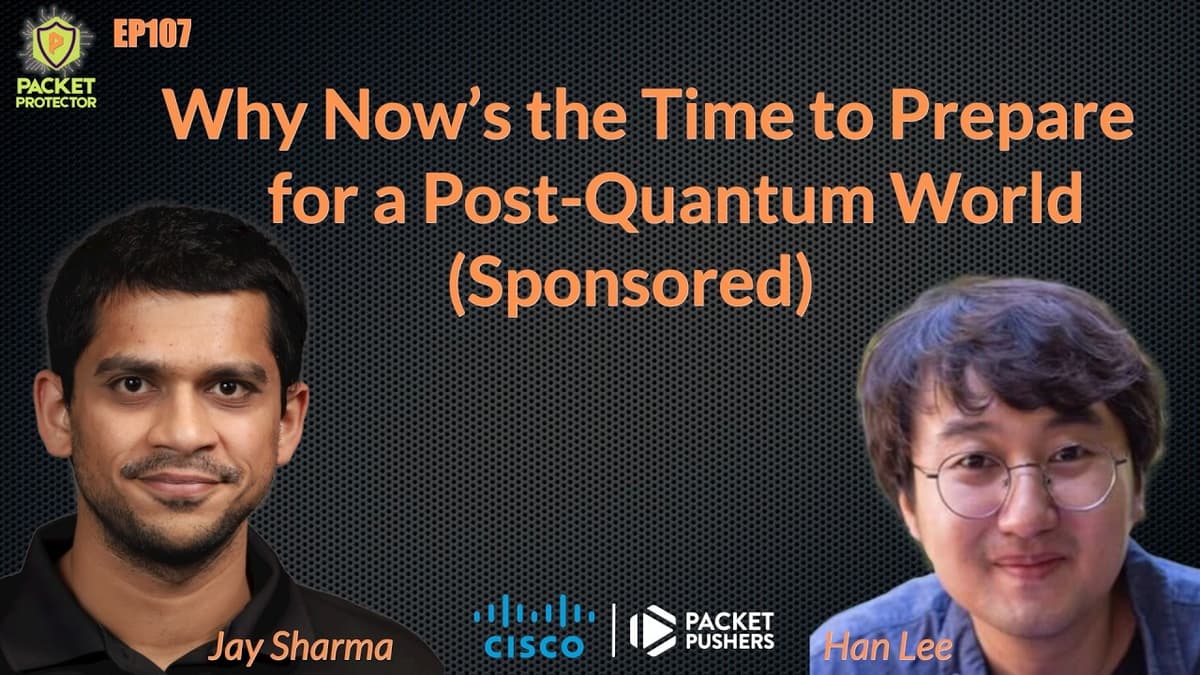
Why Now’s the Time to Prepare for a Post-Quantum World (Sponsored)
Pocket Protector podcast, sponsored by Cisco, warns that quantum computers will soon break today’s encryption and urges immediate post‑quantum cryptography (PQC) planning. Experts Han Lee and Jay Chararma explain that recent algorithmic advances—such as NYU’s optimization of Shor’s algorithm—have slashed...
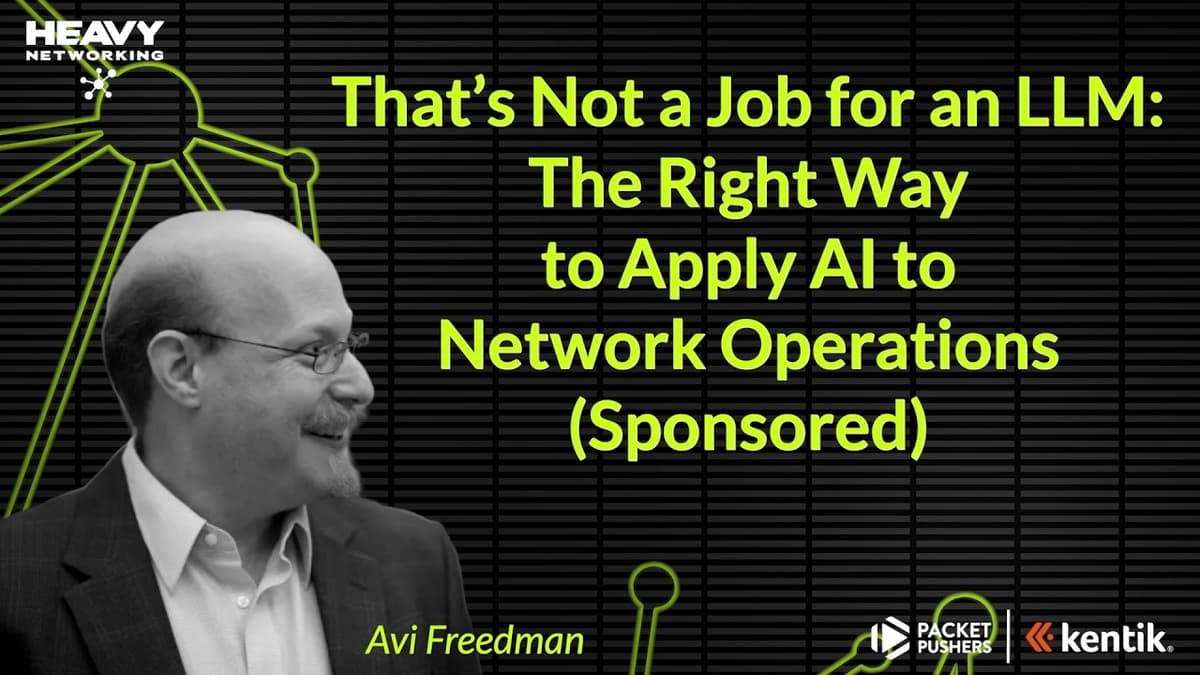
That’s Not a Job for an LLM: The Right Way to Apply AI to Network Operations (Sponsored)
The Heavy Networking episode cuts through AI hype to explain how different artificial‑intelligence techniques actually affect network operations. Host Ethan Banks and guest Avi Freriedman, founder of Kent, argue that large language models (LLMs) are only one part of a...

IPv6 Privacy and Temporary Addresses
The episode tackles IPv6 privacy extensions and the distinction between permanent and temporary interface identifiers. Hosts can derive the lower 64‑bit identifier manually, via EUI‑64 (MAC‑based), or through privacy‑enhancing mechanisms that randomize the bits to hide hardware details. The speakers...

That's a Wrap - TORNOG1
The Toronto Network Operators Group (TORNOG 1) debuted on April 13, 2026, marking Canada’s first NOG and underscoring a call for a coast‑to‑coast community of network operators. Organizers highlighted the strategic value of a national forum for sharing tools, standards, and best practices. Key...

From Vibes to Governed: What Building a Real Network Agent Reveals About Spec-Driven Development
The episode of Cloud Gambit examines why “vibe coding”—prompting an LLM to write code without formal specifications—falls short when AI agents manage production‑grade network infrastructure. Guest John Capo Biano, a Google Developer Expert and head of AI Endeavor, shares his...
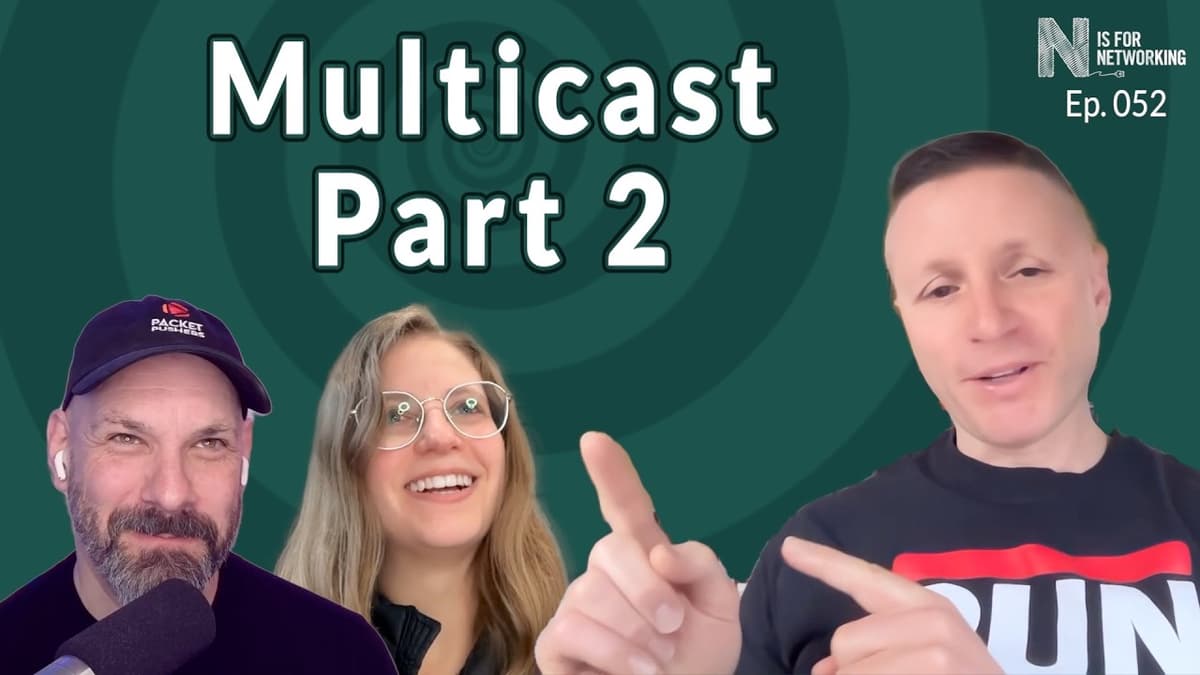
Multicast Part 2
The Packet Pushers "Multicast Part 2" episode dives deep into multicast fundamentals, revisiting protocol‑independent multicast (PIM), IGMP snooping, and the quirks of MAC address allocation. Hosted by Ethan Banks and Paulie Metlitzky with guest Lenny Giuliano, a senior distinguished systems...

The Importance of the Data Behind AI in Networks (Sponsored)
The podcast episode spotlights Selector AI’s view that the real power behind network‑focused artificial intelligence lies not in the algorithms themselves but in the quality and richness of the underlying data. Hosts Eric Cho and Scott Robot interview chief data...

Build Your Own Access Point with Bradley Wegner
The episode of Heavy Wireless features Brad Wegner describing how he turned a classroom idea into a hands‑on “Build‑Your‑Own‑Access‑Point” deep‑dive for the WLPC conference. Wegner explains that the project grew from a conversation at a Prague networking summit and a...

FireMon Brings Clarity to Firewall Rule Chaos (Sponsored)
The sponsored episode of Packet Protector spotlights FireMon, a policy‑control platform that aims to tame the growing chaos of firewall rules across on‑prem, cloud and micro‑segmentation environments. Jody Brazil explains that while firewalls have evolved—from ACLs to application‑aware and native cloud...

Build Your Automation Foundation on Infrahub’s Data Management Platform (Sponsored)
The Tech Bites podcast episode spotlights OpsMill’s Infrahub, a data‑management platform designed to underpin network automation initiatives. Host and guest Damian Garos explain that automation can only be as reliable as the underlying inventory, IP schemes, VLANs, and other topology...
Design for Operations: Getting Vendor Support in the Ops Ecosystem
The podcast “Design for Operations” explores how network designers can embed operational realities into the product lifecycle. Host Scott Rob interviews Russ White, a veteran of Cisco TAC, LinkedIn, Verisign and Juniper, to illustrate the gap between protocol engineering and...

Cyber Week 2026 Wrap Up with Palo Alto Networks: Agents, Prisma AIRS and NGTS (Sponsored)
The podcast recaps Palo Alto Networks’ RSA 2026 announcements, spotlighting AI‑security guidance and the launch of Next‑Gen Trust Security (NGTS). Executives Ian Swanson and Rich Kana explain why enterprises must secure AI models, agents, and skills throughout the supply chain and...

Spacelift Intelligence: Infrastructure Keeping Pace with AI-Enhanced Development (Sponsored)
The video introduces Spacelift’s newest offerings—Spacelift Intent and Spacelift Intelligence—as a response to the widening gap between AI‑accelerated developer productivity and the slower, ceremony‑heavy world of infrastructure provisioning. Marine Wizinski explains that while developers can now generate code and ship...

Planning for an AI Bubble Burst
John Burke and Johna Johnson examine the warning signs that the AI economy may be inflating into a bubble and could burst in the near term. They point to soaring valuations, speculative venture funding, and hype‑driven spending as key risk...
Physical Data Transmission - Part 3: Phase Shift Keying (PSK)
The video introduces phase shift keying (PSK) as the third fundamental method of modulating digital data onto a carrier, joining amplitude shift keying (ASK) and frequency shift keying (FSK). It explains that PSK encodes bits by shifting the carrier’s phase...
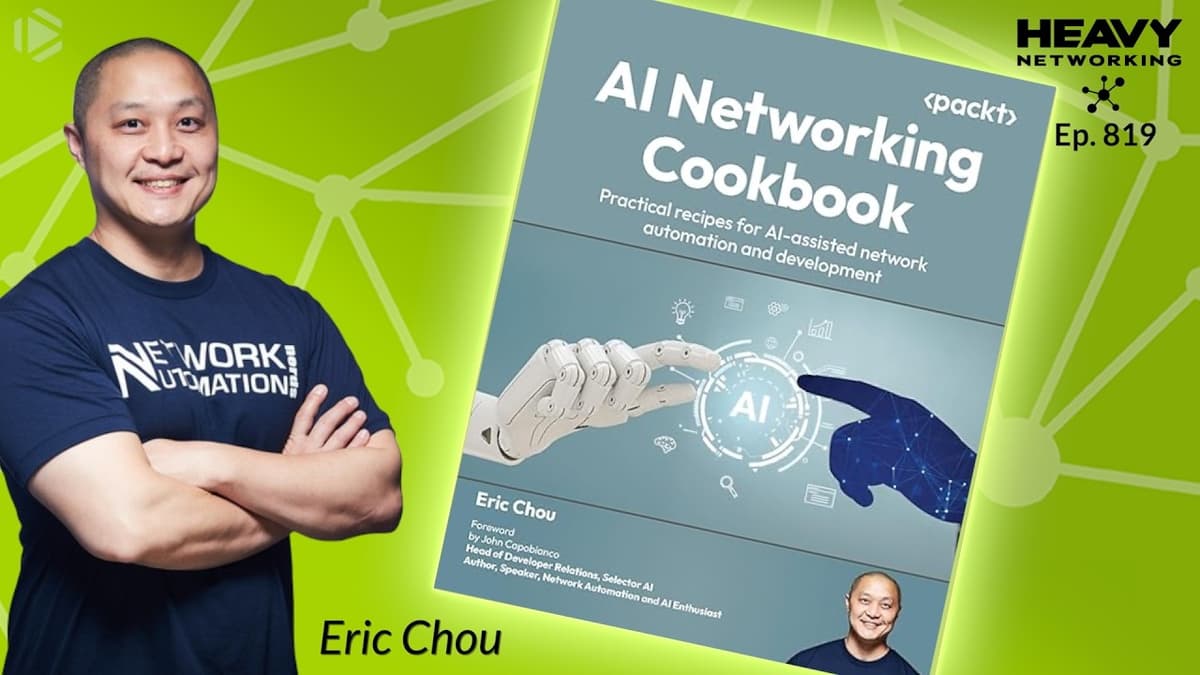
Recipes for Automation - A Look Inside Eric Chou's AI Networking Cookbook
The episode spotlights Eric Chou’s newly released “AI Networking Cookbook,” a guide that blends artificial‑intelligence concepts with practical network‑automation scripts. Hosted on the Heavy Networking show, Chou walks listeners through the book’s purpose: documenting his own AI learning journey and...
Detect. Prove. Predict. Turning Network Monitoring Into Operational Intelligence (Sponsored)
The Total Network Operations podcast featured a sponsored deep‑dive into Statseeker, a network‑intelligence platform that promises to turn traditional monitoring into operational intelligence through its “detect, prove, predict” framework. Statseeker continuously polls every device via SNMP every 60 seconds and ICMP every...

Is End-to-End Connectivity the Right Goal?
The episode tackles a foundational design question: should the internet’s architecture prioritize end‑to‑end connectivity, especially as IPv6 promises to revive the principle that IPv4 lost to network address translation (NAT)? Hosts Ed Horley, Nick Baralio, and Tom Coffin trace the...

The Future of Open-Source Contributions in the AI Age
The Day2 DevOps episode explores how large language models are reshaping open‑source development, featuring Honeycomb technical fellow Liz Fong Jones. She explains why the traditional pull‑request model is under strain as AI makes code cheap to produce. Jones argues the difficulty curve has...

Simplifying Network Automation with Wingpy
On the Network Automation Nerds podcast, Andreas Lundqvist introduced WinPy, his new open-source project designed to simplify network automation for engineers who aren’t Python experts. He positioned WinPy as a pragmatic tool to streamline routine deployment, maintenance and operational tasks,...

The Effort Illusion: Why AI Tools Reward Expertise, Not Shortcuts
The episode of Cloud Gambit tackles the “effort illusion” surrounding AI tools, contrasting the hype‑driven narrative that AI can replace human work with a more measured view that expertise still matters. Host William and guest Hank, head of product at...

Make Multi-Cloud and Hybrid Cloud Portability a Reality With FluidCloud (Sponsored)
The sponsored Day2 DevOps episode introduces Fluid Cloud, a startup built to solve the painful, months‑long process of moving workloads between cloud accounts and providers. Co‑founders Sherad Kumar and Harshed Omar recount how a nine‑month AWS‑to‑AWS migration after an acquisition...

How Statseeker Delivers Critical Network Intelligence (Sponsored)
The Tech Bites podcast introduces Statseeker, a self‑hosted network monitoring platform that captures high‑fidelity telemetry across physical, virtual, and cloud environments. Unlike SaaS alternatives, Statseeker runs on‑premises or in any cloud tenant, giving customers full control over data storage and...

Multicast Fundamentals
The Endless for Networking podcast episode introduces multicast fundamentals, featuring HPE Juniper senior engineer Lenny Giuliano. He explains that multicast sends a single data stream only to nodes that have expressed interest, combining the bandwidth efficiency of broadcast with the...

Inside the Case: A Hardware Deep Dive with Meter (Sponsored)
The video is a sponsored deep‑dive into Meter’s hardware philosophy, hosted by Heavy Networking’s Ethan Banks and featuring Joshua Markle, Meter’s head of hardware. Rather than outsourcing generic chassis, Meter builds every component—from sheet‑metal enclosures to PCB layouts—in‑house to deliver...

Navel Gazing at NAT in IPv6
The IPv6 Buzz episode tackles the contentious topic of Network Address Translation in IPv6, focusing on NAT66 and the experimental MPTV6 prefix‑translation draft. Hosts Ed Orly, Nick Baraglio, and Tom Coffeen explore why translating from IPv6 to IPv6 is considered...
Automating Your Network with Cisco Crosswork Workflow Manager (Sponsored)
The Heavy Networking podcast episode introduces Cisco Crosswork Workflow Manager (CWM), a sponsored discussion that positions the product as an execution engine for designing, running, and automating network workflows—from VLAN provisioning to large‑scale device upgrades. Hosts Ethan Banks and Drew Conrey...

Physical Data Transmission - Part 2: Amplitude Modulation & Frequency Shift Keying
The video introduces basic physical‑layer modulation, contrasting simple line codes with two more capable schemes—amplitude modulation (AM) and frequency shift keying (FSK). It explains why line codes waste bandwidth, carry few bits per symbol, and struggle on shared or non‑dedicated...
What Works, and What Doesn’t, in Network Automation Projects
The Network Automation Nerds podcast episode features host Eric Cho and senior engagement manager Matt Rimkkey of Network to Code, discussing real‑world network automation projects and the bridge between technical execution and business objectives. Rimkkey explains his role as a “project...