
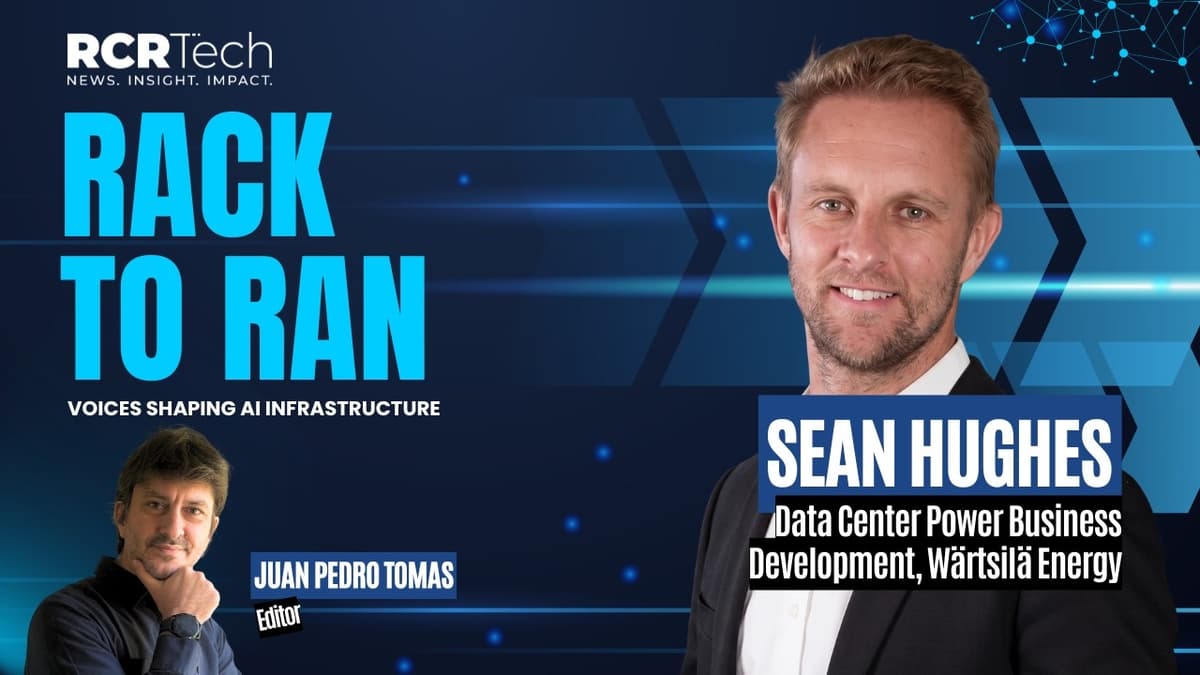
Power Availability Is the New AI Bottleneck | Sean Hughes, Wärtsilä
The video spotlights power availability as the chief bottleneck for AI‑driven data center rollouts, featuring Sean Hughes, Business Development Manager at Wärtsilä. Hughes explains that while labor remains a close second, securing reliable electricity—whether from the grid or on‑site—has eclipsed traditional concerns like fiber latency or proximity to pipelines. Key insights include two primary deployment strategies: on‑site bridging with temporary power stations that later become backups, and emissions‑focused design to accelerate permitting. Wärtsilä’s portfolio of 80,000 MW across 80 U.S. plants underpins its claim to deliver speed, certainty, and lower emissions, positioning its medium‑speed engines as primary power sources rather than mere backups. Hughes contrasts high‑speed, container‑sized engines (2‑4 MW) used for backup with Wärtsilä’s larger medium‑speed units (10‑23 MW) that achieve roughly 50% fuel efficiency—outperforming turbines at 40%—and maintain output up to 110 °F and 5,000 ft altitude. He cites 2025 sales of over a gigawatt to data centers as proof of market traction, and emphasizes the role of batteries and micro‑grids in managing AI‑induced transient loads. The implications are clear: data center developers are moving toward on‑site, primary‑power solutions and hybrid micro‑grids to meet erratic AI workloads, while utilities struggle to match the required deployment speed. Collaborative models—joint ventures, off‑grid hybrids, and utility‑hyperscaler partnerships—will shape the next decade of AI infrastructure, with Wärtsilä engines positioned as the optimal technology.

PQC Urgency Grows as AI Accelerates Pressure on Network Security
The episode spotlights the accelerating urgency for post‑quantum cryptography as large‑scale quantum computers edge closer to breaking RSA and Diffie‑Hellman. Laura Wilbur explains that the timeline for migration, once thought to be years away, is now compressing due to rapid...
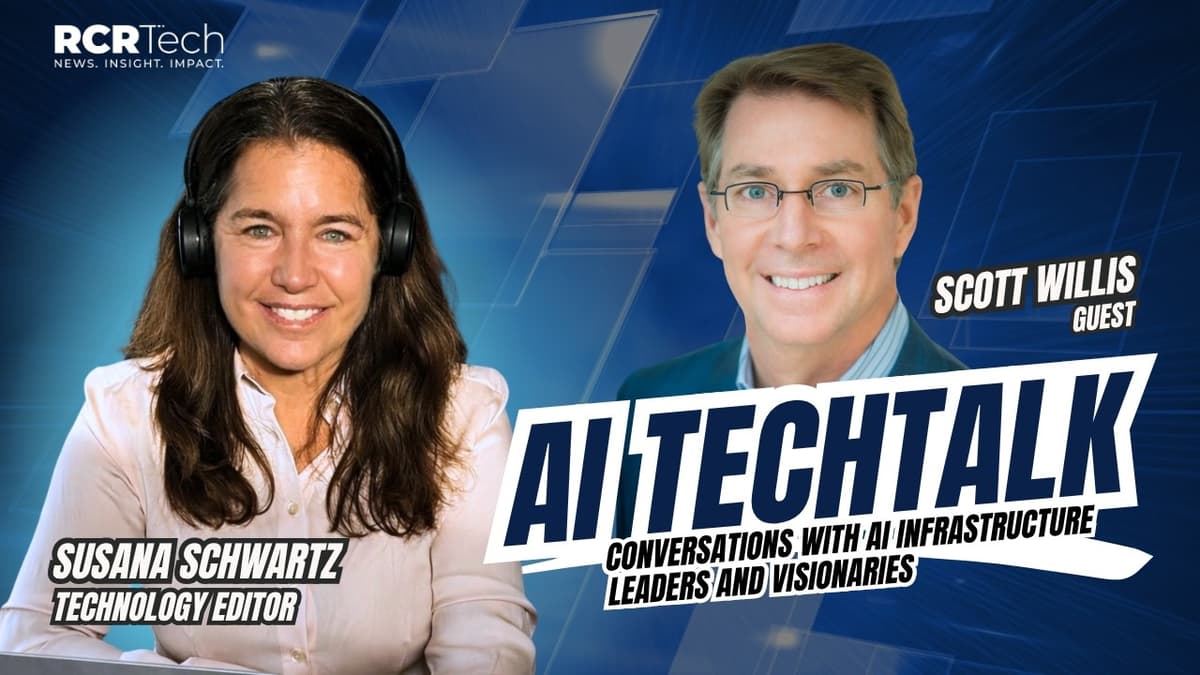
AI Inference at the Edge | Scott Willis on the Future of AI Infrastructure
In a RCR AI Tech Talk episode, Dart Points CEO Scott Willis outlines the company’s strategy to serve the growing AI inference market from the edge, emphasizing its enterprise‑focused, non‑tier‑one data‑center model. Willis explains that Dart Points operates 12 facilities across...
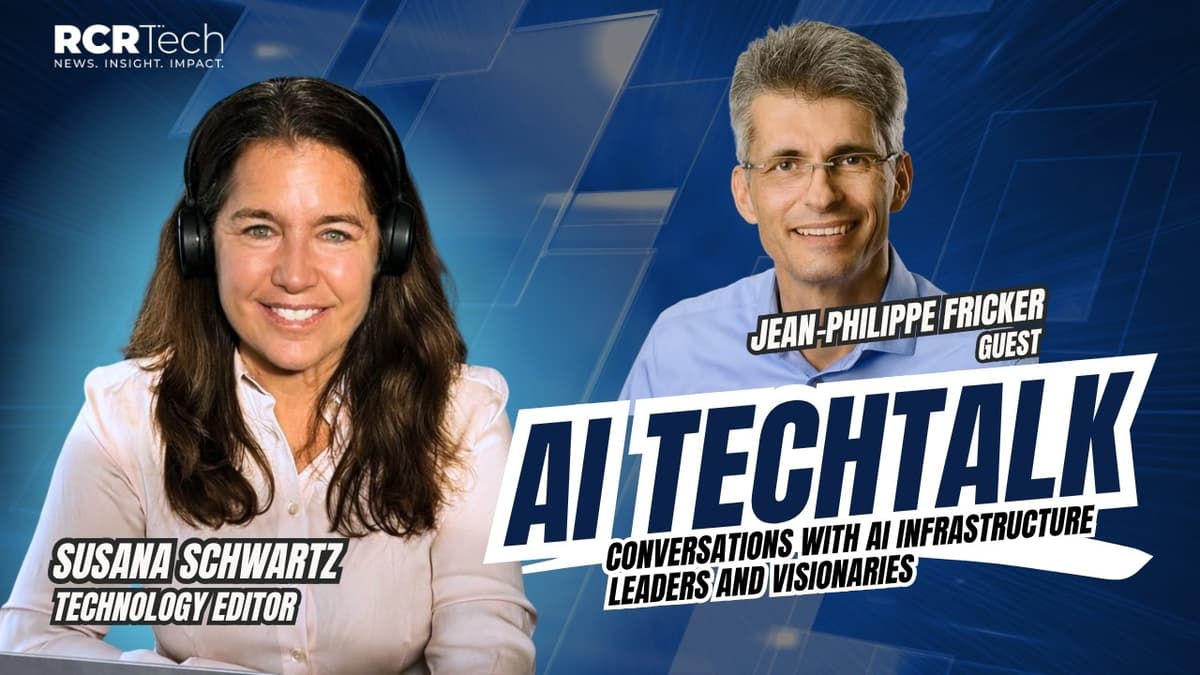
How Cerebras Built the Wafer-Scale AI Chip | Part 1
Cerebras Systems’ co‑founder JP Fricker explains the Wafer‑Scale Engine, a single 300 mm silicon wafer that functions as one massive AI processor—a concept that overturns the industry’s long‑standing practice of dicing wafers into many small chips. Fricker stresses that the project began...
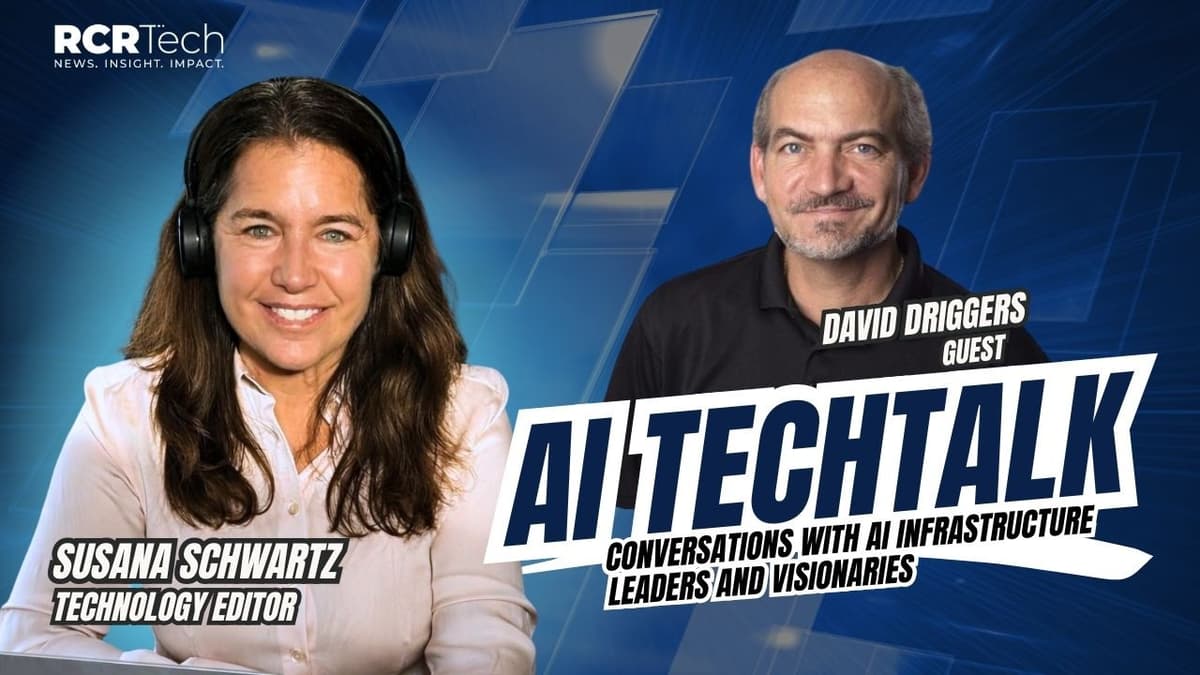
Inferenceverse: And Enterprise AI
The RCRA AI Tech Talk featured Sircale CEO David Triggers explaining the company’s niche as a "neocloud" – a boutique cloud provider rooted in deep hardware expertise. Sircale differentiates itself by offering three core products: dedicated training platforms, dedicated inference...

AI Fabric Validation at Scale - VIAVI at MWC Barcelona 2026
The video showcases VIAVI Solutions’ AI data‑fabric validation platform unveiled at MWC Barcelona 2026. Using the B3 test‑center appliance, the system emulates GPU workloads and generates realistic RoCE v2 and CCL traffic, routed through a Nokia switch and connected via Amphenol...

Managing AI Agents Is the Core Skill in Autonomous Networks
The Pulse interview with Marcus Nesper, Extreme Networks’ head of the CTO office, frames autonomous networks as an end‑to‑end lifecycle—from planning and onboarding through operation, optimization, and eventual decommissioning—driven by AI‑enabled agents. Nesper notes that while full L4 autonomy remains limited,...
AI’s Next Phase: Physical + Edge
In the RCR TV AI Tech Talk, strategist Chattton Chararma explains that the AI industry is moving beyond cloud‑centric models toward “physical AI,” where real‑world sensor data is captured and acted upon at the edge. He cites a pilot in Bellevue,...
Ensuring Network Resilience: Testing, Validation, and AI-Driven Optimization
The Defense Communications Forum’s final session highlighted how modern military networks must evolve from traditional coverage‑centric designs to resilient, mission‑critical systems capable of surviving contested, electromagnetic‑dense battlefields. Owen O’Donnell of Vavi explained that rigorous lab testing, AI‑driven RAN intelligence, and...
From Ground to Space: Seamless Integration of 5G-NTN
The panel, hosted by Tom Stout of the Satellite Industry Association, examined how 5G and non‑terrestrial networks (NTN) are converging into a single, multi‑domain communications fabric that spans ground, air and space. Panelists highlighted that 3GPP releases 17 through 20 have...

Tim Farrar on Orbital Data Centers and the Future of Satellite-Based Connectivity
The interview with Dr. Tim Farrar, president of TMF Associates, examines the promise and practical hurdles of orbital data centers and satellite‑based broadband. He frames the discussion around the need for real‑time processing in space, citing projects like the Golden...
Power Is the New Data Center Strategy
The discussion centers on how power has become the primary strategic asset for AI data‑center development, reversing the traditional model where sites were chosen first and power added later. Developers now engage utility providers at the earliest planning stages to...

AI Data Centers Go Global: Brazil’s Advantage
The interview spotlights Brazil’s emerging role as a global AI data‑center hub, driven by Allayia Data Centers’ ambitious Rio AI City project and the country’s abundant renewable energy. Elena Winters, former hyperscaler buyer now VP of international business at Allayia,...

Sensing the Future: How ISAC and AI Will Redefine 6G Networks | Tao Luo at MWC 2026
At MWC 2026, Qualcomm’s Tao Luo outlined how integrated sensing and communications (ISAC) will reshape 6G networks, turning traditional base stations into dual‑purpose nodes that both transmit data and perceive their surroundings. By fusing radar‑like sensing with existing cellular waveforms and...

Qualcomm's 6G Vision: AI, Sensing & the Road to 2029 | John Smee at MWC 2026
At Mobile World Congress 2026, Qualcomm outlined its 6G roadmap, emphasizing four pillars: ubiquitous connectivity, on‑device compute, artificial intelligence, and integrated sensing. The company argues that each new generation reflects broader societal needs, and 6G will move beyond faster data...