

MatSing Brings High-Capacity Lens Antenna Innovation to WiFi
At Mobile World Congress, MatSing unveiled its latest lens‑antenna technology, now extended from cellular to Wi‑Fi, promising to reshape high‑density wireless deployments. The company’s patented lens antenna works like an eye, focusing RF signals to generate dozens of simultaneous beams across multiple carriers and frequency bands. By replacing traditional dish or array modules, a single lens can serve the capacity of many conventional antennas, a claim demonstrated at Coachella, large stadiums and ordinary macro cell sites. “Less infrastructure, more impact,” the CEO emphasized, noting that one lens handled the massive streaming demand at Coachella and that the new Wi‑Fi version can replace thousands of small APs with just two or three units, simplifying planning and mitigating RF reflections in metal‑rich venues. For carriers and venue operators, the technology translates into lower capex, faster roll‑outs, reduced site footprints and a greener footprint, while delivering the bandwidth needed for 5G and high‑density Wi‑Fi experiences.

AI‑native Networks, NTN Progress and the Road to 6G
The Mobile World Congress panel highlighted a shifting narrative: AI is no longer a side topic but a core driver for both network optimization and new service monetization. Participants debated “AI for networks” versus “networks for AI,” underscoring how telecom...

Senza Fili Interview: Analyst's Views Unwrapped
The interview wraps up Mobile World Congress with analyst Monica reflecting on the evolving role of artificial intelligence in telecom. She notes that while AI remains a hot topic, the buzz has given way to pragmatic experiments—energy‑saving loops, quality‑of‑experience trade‑offs,...

Physical AI and Private Networks
At MWC speakers argued that private 5G paired with edge AI will accelerate robotics and industrial automation as workloads shift from training to fine-tuning and inference, driving higher uplink and low-latency requirements. That demand is fragmenting the private-network market: large...

Interview: The Open Centralized Unit Distributed Unit (OCUDU) Initiative
The Linux Foundation-backed OCUDU (Open Centralized Unit Distributed Unit) initiative aims to create a fully software-defined, open RAN stack that moves beyond current Open RAN efforts by consolidating core RAN functions into a shared, portable software platform. Led by R&D...
The IQ Era - Sovereignty, Security and Autonomous Networks in Practice
Speakers at Mobile World Congress framed 2026 as the start of an "IQ era," where AI has moved from playground demos to concrete, operational use cases across telecoms. Telenor executives described deploying agentic AI for customer chatbots, dialogue monitoring and...
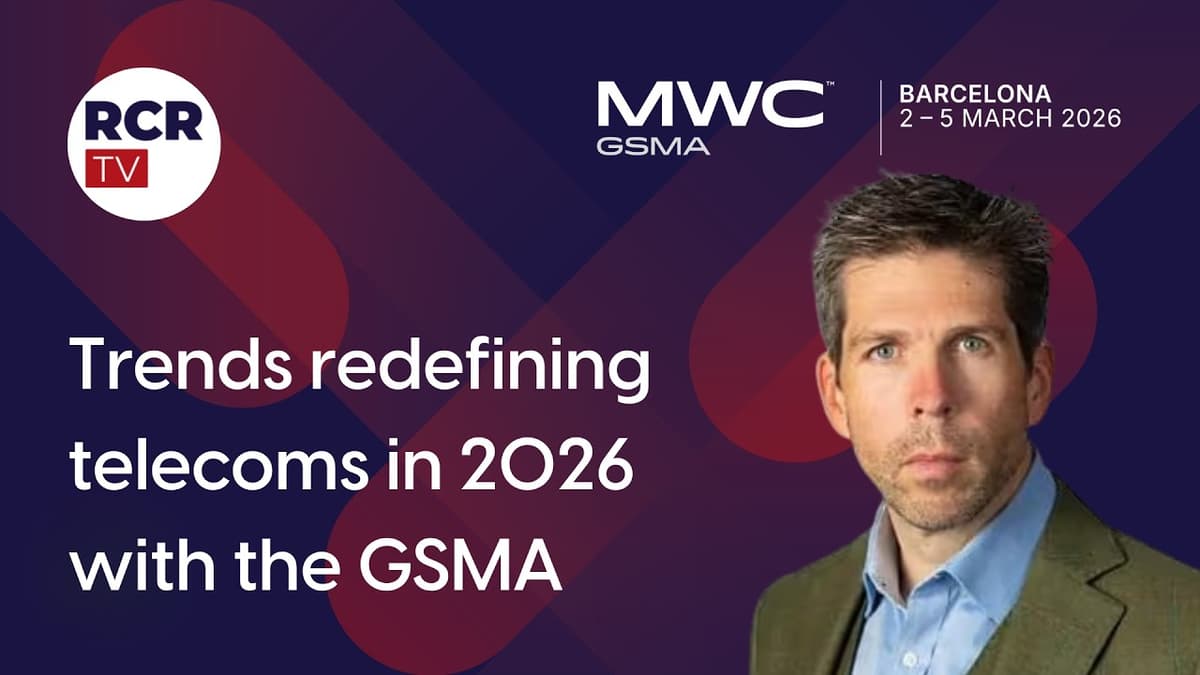
Trends Redefining Telecoms in 2026 with the GSMA
At Mobile World Congress 2026 industry leaders highlighted sovereign AI and sovereign compute as a defining trend, with governments and telcos racing to host and control AI and cloud services locally rather than rely solely on hyperscalers. Telcos are positioning...

Deutsche Telekom on AI Integration
Deutsche Telekom is rolling out AI features across its products and network, showcasing voice-first consumer services and deeper network automation at MWC. It unveiled Magenta AI for voice — a network-integrated, device-agnostic assistant that can answer unknown calls, provide real-time...

Reimagining Consumer Services in an AI-First World
Rakuten Mobile chief AI and data officer Sachin Varma described how the company has built a foundational data and AI platform to turn group-wide consumer data into actionable insights and business outcomes, from marketing and sales to efficiency gains. Leveraging...

AI Data Centers: Demand Explodes, Vacancy Hits Record Lows
The AI Tech Talk episode spotlights a seismic shift in North American data‑center dynamics, where exploding AI workloads have driven vacancy to an unprecedented sub‑2% level and pushed turnkey colocation pricing into the mid‑teens percent range. CBRE’s Pat Lynch...

AI Data Centers in APAC: Power, Scale & Liquid Cooling
The interview with Jeremy Deutsch, president of Advantage Data Centers APAC, focuses on how exploding AI training and inference workloads are reshaping data‑center design across the region. He notes that AI drives unprecedented rack density and power draw, making power availability...

Cyient Showcases the Human + AI Blueprint for Autonomous Networks
Cyient used the webcast to unveil its "human + AI" blueprint for autonomous networks, positioning the company at the forefront of Level 3 and Level 4 automation. By partnering with leading original equipment manufacturers, Cyient aims to deliver a consistent autonomy layer that can...

ZTE Honored with Multiple GLOMO Awards, Pioneering an Intelligent Future
At Mobile World Congress in Barcelona, ZTE was celebrated with two GLOMO Awards for breakthrough 5G solutions, highlighted by deputy general manager Sun J. The accolades recognize an AI‑driven 5G robot platform and a millimeter‑wave broadcasting system that together showcase...
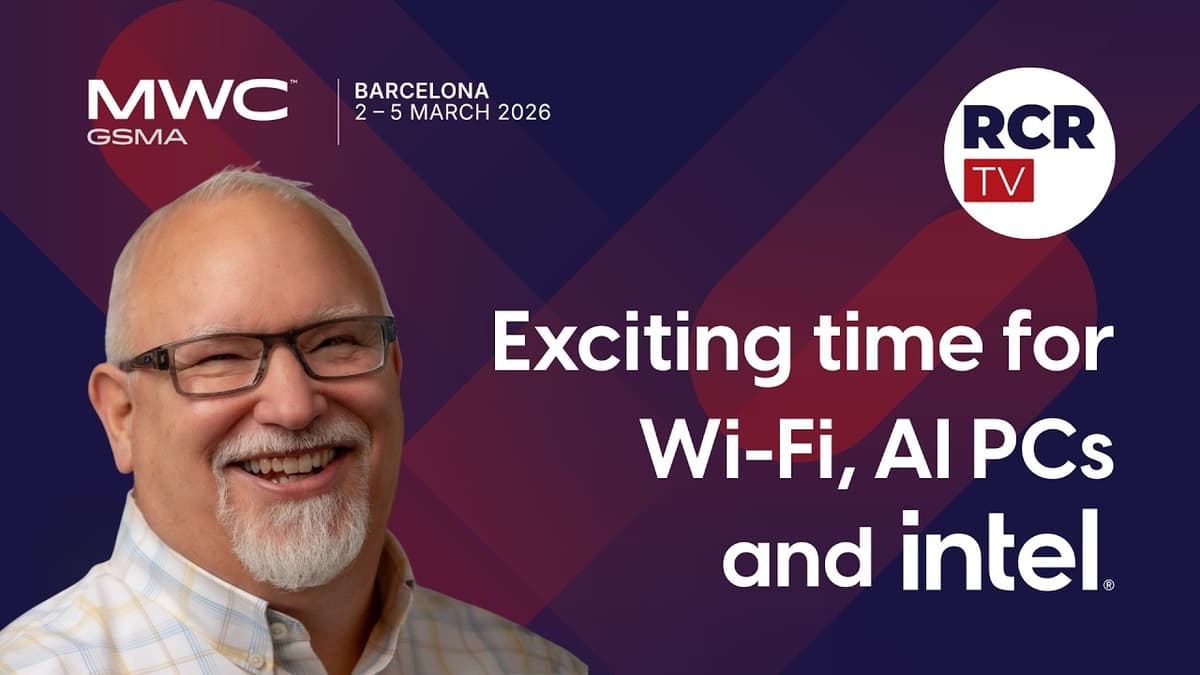
Exciting Time for Wi-Fi, AI PCs and Intel
Intel highlighted its pivotal role in expanding Wi‑Fi into the 6 GHz band, tracing the journey from an FCC demonstration in 2020 to the commercial launch of first‑generation products four months later. The conversation also covered the rollout of Wi‑Fi 7, the...

Arrcus: AI Inference Calls for Smart, Policy-Aware Network Fabrics
Arrcus used its Mobile World Congress slot to spotlight a new AI inference‑focused network fabric, positioning the company as a bridge between exploding data‑center capacity, 5G rollouts, and the emerging inference workload wave. The executive highlighted three macro trends fueling...

Senko on How Hollow Core Fiber Could Solve AI Data Centers’ Land and Power Crunch
The interview at Mobile World Congress spotlights hollow‑core (holo) fiber as a potential game‑changer for AI‑driven data centers. While the technology has existed for three decades under the name photonic crystal fiber, its ultra‑low latency—about 30% faster signal propagation—makes...

ZTE’s 6G Vision
At MWC Barcelona, Grace Tang, vice‑president of ZTE’s SETI division, outlined the company’s 6G roadmap, emphasizing two strategic convergences: integration with non‑terrestrial networks (NTN) and deep coupling with artificial intelligence (AI) under the evolving 3GPP framework. Tang detailed a heterogeneous XPU...

The AI Unlock: Totogi Says Telcos Need Context to Scale
At Mobile World Congress, Totogi’s Dr. Sean highlighted a fundamental barrier preventing telcos from scaling Agentic AI: the absence of a unified contextual layer. While operators possess abundant data and compute power, disparate definitions across hundreds of legacy systems create...
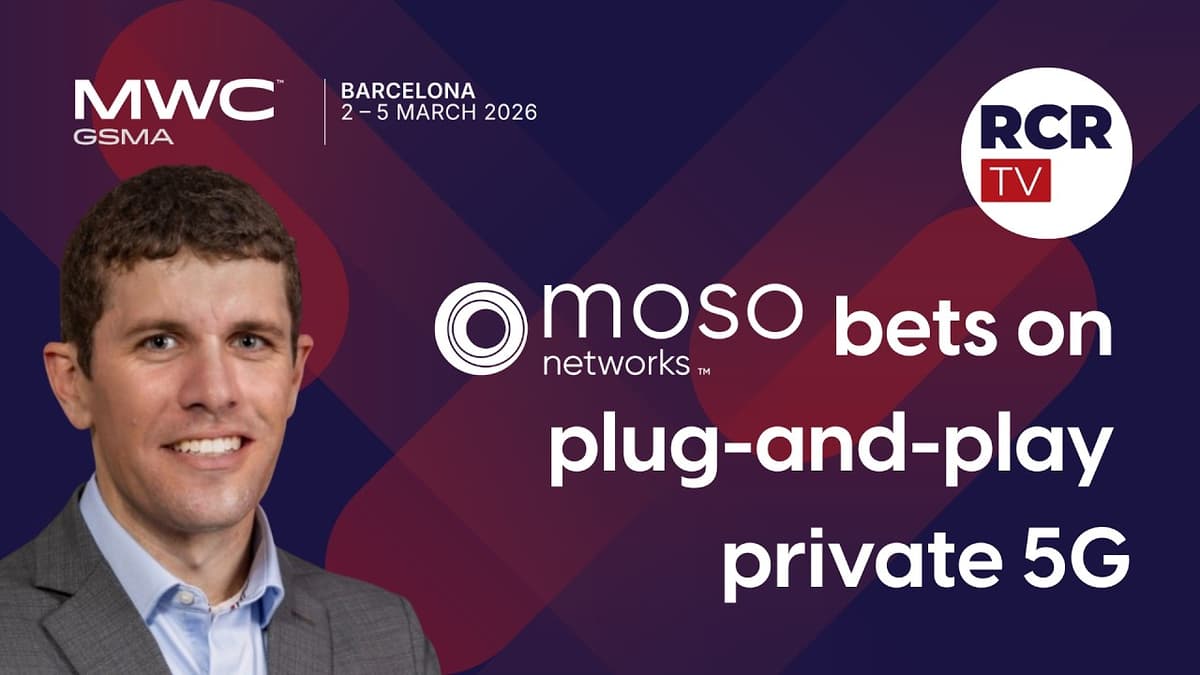
Moso Networks Bets on Plug-and-Play Private 5G
At Mobile World Congress, Moso Networks unveiled its plug‑and‑play private 5G solution, positioning the company as a bridge between complex carrier‑grade technology and enterprises that lack deep telecom expertise. The startup emphasizes an all‑in‑one radio that plugs into Ethernet like...

Mimosa’s FWA Carrier Fix for the Broadband Boom
James Blackman interviews Jim Neville, CEO of Mimosa Networks, about the company’s fixed wireless access (FWA) platform that underpins Reliance Jio’s rapidly expanding air‑fiber service and its global rollout across carriers on every continent. The discussion highlights how Mimosa’s equipment...
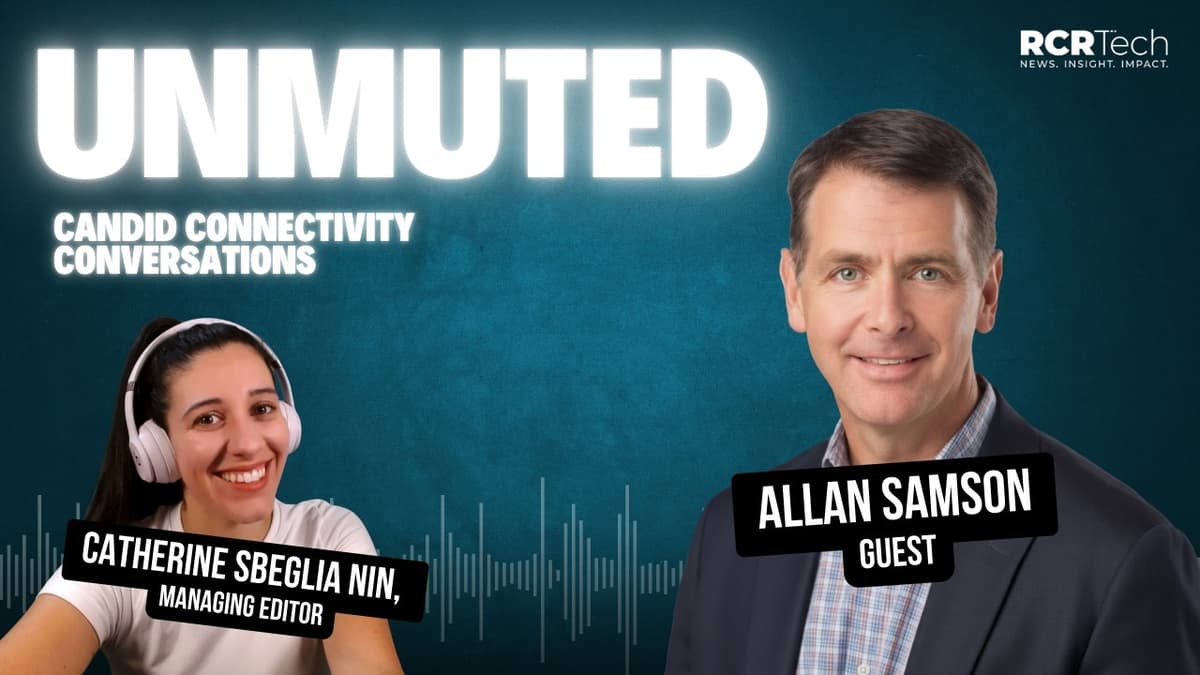
Fixed Wireless vs Fiber: The Real Trade-Offs
The Unmuted episode pits T‑Mobile’s executive vice president Alan Samson against the growing debate over fixed wireless versus fiber, outlining how the carrier is tackling the nation’s broadband expansion challenge. Samson explains T‑Mobile’s dual‑technology strategy: a flexible fixed‑wireless network that now...