
rebuiltpt
Running coach/PT posting practical plans (10–12 week chunks), easy vs. hard days, and endurance-building systems.

Changing Running Form Usually Reduces Economy—Stick to What Works
Almost every time running form/running economy is studied, we see changes in form result in decreases in running economy, not increases. The main exceptions are vertical oscillation, and some limited work on cadence retraining with real-time feedback showing an improvement in running economy. Otherwise, just run how you run. Only make changes if we can clearly demonstrate improvement w/ detailed testing in that individual.

Free Tools to Analyze Individual Runs and Trends
For anyone who wants to track this themselves, I built 2 free tools that you can use. The first looks at an individual run, the 2nd looks at trends over multiple runs. You have to download the .fit files from...
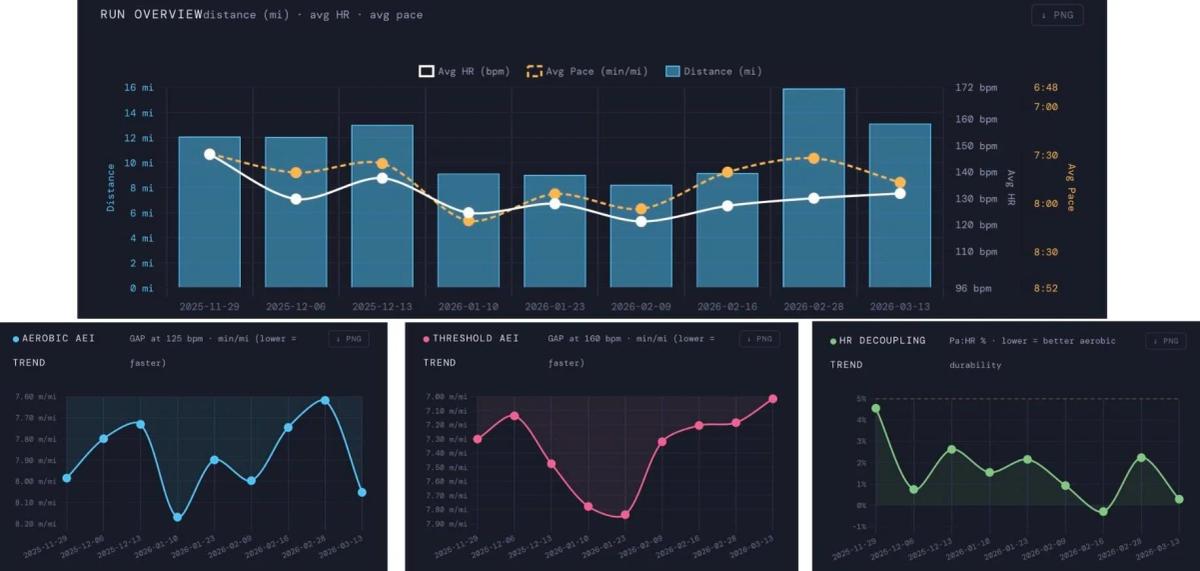
Track HR Decoupling and Pace, Not Just Watch Metrics
There are better ways to measure progress than relying on your watch’s fitness algorithm. I track long runs and race pace workouts throughout the season. Then I check these metrics to see how things are changing: - Heart rate decoupling - Pace...

Injured Runners Usually Keep Running, Just Scale Back
When rehabbing an injured runner, is very rare that they need to completely stop running. There are a few injuries that require complete rest, but for the most part we use a reduction in intensity/volume before rest. For the most...

Avoid Overtraining: Set Limits to Prevent Marathon Injuries
There can be a point where the training benefit goes negative from a big effort, especially if the runner isn’t prepared for it. This happens more often on tight marathon training timelines. If the training goes beyond the runner’s capabilies,...

Half Marathon Success: Slow Start, Goal Pace, Fast Finish
For better or worse I personally view a half marathon as an 8 mile tempo + an 8k/~5mile race This usually look like: - Miles 1-2 ~5-10”/mi slower than goal pace - Miles 2-8 right at or below goal pace - Miles...

Stable Mileage Periods Prevent Tight, Problematic Marathon Training
A good marathon program allows enough time for periods of stable total mileage, and long run distance. Increasing both mileage and volume in a nonstop linear pattern usually means the timeline is tight, which leads to issues.

Weekly Mileage Can Misrepresent Training; Avoid Overcompensation
Viewing mileage through a weekly lens doesn’t always tell the whole story. A simple example: You do a Saturday race midway through the training block. You take it easy for 3 days before, and 3 days after the race. This...
Injury ≠ Overtraining: Separate Mechanical and Metabolic Stress
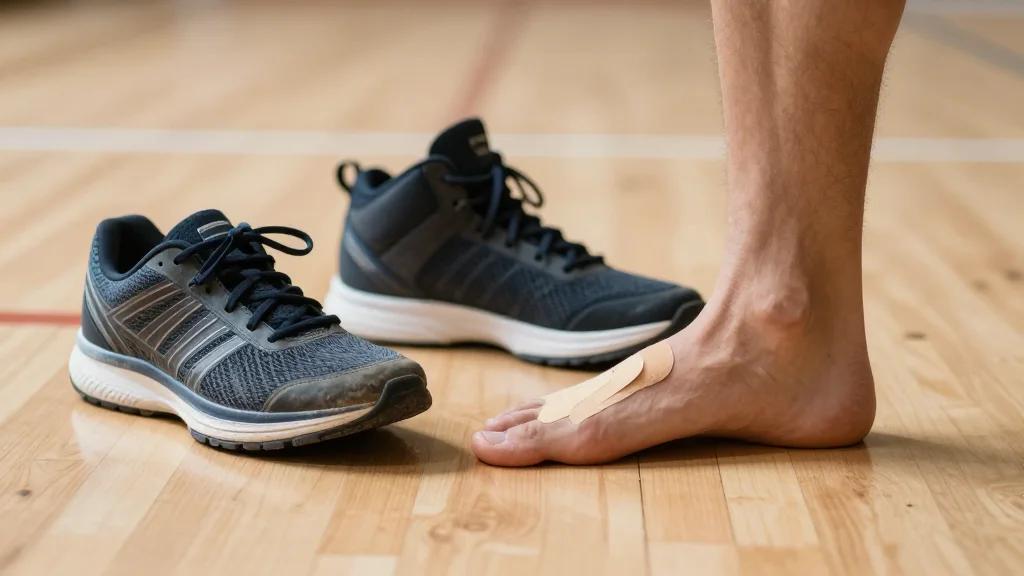
A running injury doesn’t automatically mean the runner is “overtrained”. We need to separate mechanical and metabolic stress. A truly overtrained runner will see fatigue and a decline in performance b/c their entire body is overloaded physiologically. You can end...

Adapt Your Workout When It Feels Too Hard
Some workouts don’t go as expected. It could be due stress, travel, poor sleep, increased non-running physical activity etc. If I start a workout like 5x2k at half marathon pace and it’s feeling way harder than usual, I’ll make adjustments....
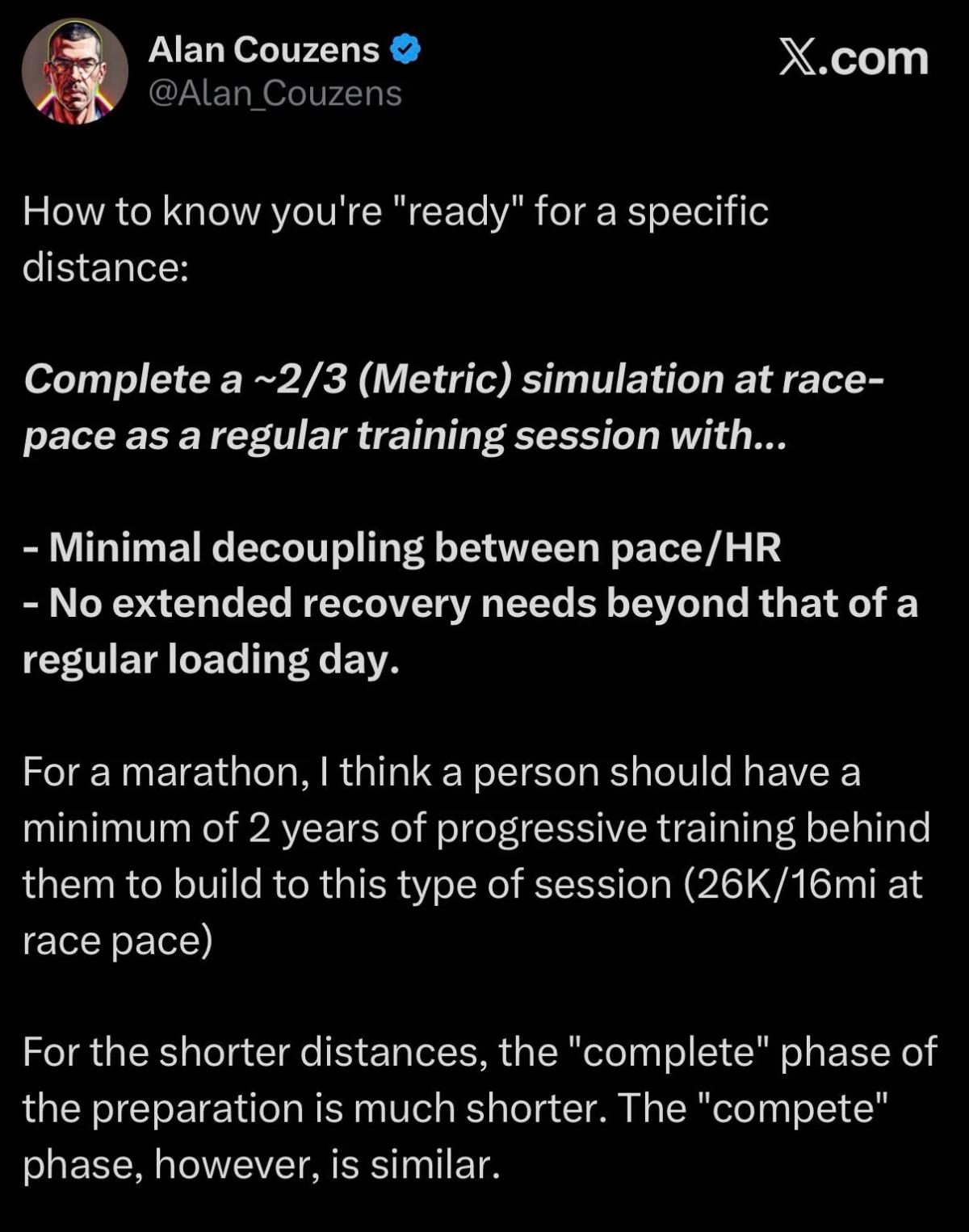
Run Two‑Thirds at Goal Pace to Avoid Late‑Race Fade
I’ve seen a lot of benefit with this approach. Those who can do ~2/3 of race distance roughly at race pace with minimal decoupling generally don’t fade in the last 25% of their race. This method also keep athletes a...

Check Heart Rate After Running, Not During
I think accurate heart rate measurements are helpful for training, but NOT during the run. I use HR/pace analysis combined with RPE for myself and my clients, but I rarely ever tell someone to check their HR while running. Monitoring...

Big Workout Calls for Days of Easy Recovery
I’m 6 weeks out from a half marathon, so we’re firmly in the “big workouts with big recovery” time of the cycle. Today was ~ 12 miles with 12km at ~95% of goal pace. This automatically means recovery to easy...

Train Your Fuel Strategy to Prevent Marathon Cramping
Why I think it’s important to practice fueling well before your marathon. It’s common to get cramping, nausea, or just have a hard time taking down a gel at race pace. Some might taste fine at room temp in the...

Heart Rate Data Boosts Race-Day Performance Insights
I’ve had a few ask why this matters. It depends. If you’re a new runner just trying to get in shape, this doesn’t really matter. For those who are training for a race and trying not to blow up on...

Balance Intensity and Volume to Break Running Plateaus
If you feel like your running progress is stagnant, it can be helpful to look at your training breakdown. If you’re doing intervals 4x/week, it’s a good idea to decrease some of that intensity so you can increase training volume....

Zone 3: Valuable Aerobic Work, Not Junk Miles
Zone 3 is not a “grey zone” or “junk miles” Every pace has a purpose in training. Zone 3 is importent for marathoners, and can be used for aerobic development for other race distances as well. But like any other...

Track Activity Vs. Elapsed Time for Key Runs
I think activity time vs. elapsed time can be an important metric to watch, but not on every run. For most easy runs, I don’t really think it matters. But for long runs, key workouts, or steady weekday runs, I think...

Modern Running Shoes Offer Double Mileage for Higher Cost
Running shoes are definitely way more expensive than they were 15-20 years ago, but I feel like I get more bang for my buck with the current tech. I used to only get ~300 miles out of my shoes back...

Tendons Adapt 2× Slower Than Muscles, Pace Training
One of the biggest issues that runners face is the slow timeline of tendon adaptation. We start to feel fitter before our tendons can adapt. Muscles start to show hypertrophy after ~6 week of progressive overload. Tendons are more in...