
Lead Indicators Are More Important than Lag Indicators
The video argues that while most traditional metrics are lagging—showing what has already happened—organizations should shift focus to lead indicators that can predict future performance. By leveraging business intelligence tools, companies can move from reactive reporting to proactive forecasting. The speaker highlights predictive analytics as the engine behind lead indicators, using the sales pipeline as a primary example. Early‑month forecasts can reveal whether a team is on track to meet quota, allowing managers to adjust tactics before shortfalls become evident in lag metrics. Similar approaches can be applied to customer satisfaction, inventory levels, and other critical functions. A memorable line underscores the concept: “Predicting early in the month if we’re on track… you can trust your sales leader and hopefully they will come through, or what the data tells us.” This illustrates how data‑driven insights complement, rather than replace, human judgment. Embracing lead indicators equips executives with real‑time dashboards that flag risks and opportunities, enabling corrective actions while problems are still manageable. The shift promises higher forecast accuracy, improved operational agility, and a competitive edge in fast‑moving markets.

Values + Vision: The Alignment Formula
The video centers on what the speaker calls the "Alignment Formula," arguing that a company’s cultural health and strategic direction hinge on two pillars: shared values and a refreshed vision. Values shape culture, and without consensus on them, organizations quickly...

#Leadership Isn’t Control. It’s Clarity.
The video outlines a three‑pillar leadership model—clarity, empowerment and accountability—arguing that clarity is the linchpin for any behavioral change. It stresses that clarity must be embedded in operational rhythms, meeting cadences and even compensation plans, ensuring every employee hears the same...

Right Person, Right Seat, Minus the Churn
The video argues that the "right person, right seat" principle underpins the growing appeal of fractional Chief Marketing Officer (CMO) arrangements. It highlights that senior marketing leadership is among the most volatile executive roles, typically lasting only 18 to 24...
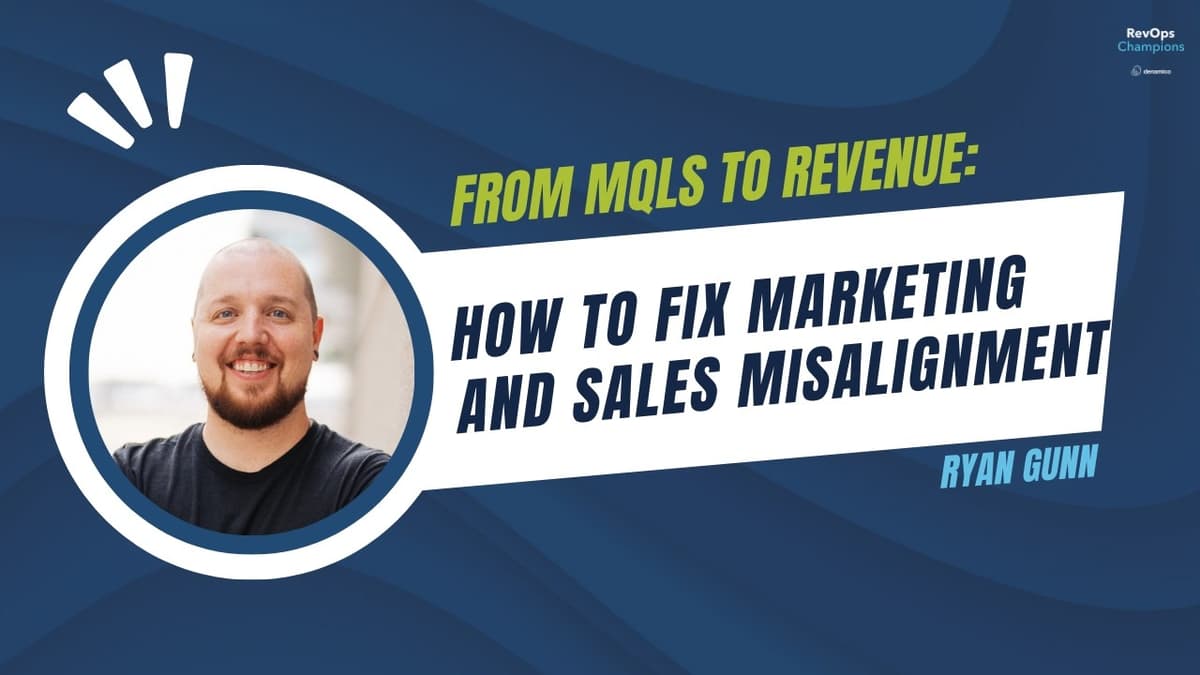
109 | From MQLs to Revenue: How to Fix Marketing and Sales Misalignment | Ryan Gunn
The episode centers on Ryan Gunn’s argument that marketing‑sales misalignment stems from outdated metrics and siloed processes, and that true alignment requires treating attribution as a decision‑making tool rather than a credit‑allocation exercise. Gunn stresses three practical levers: launching a small...

Founder Shares His RevOps #AI Stack
Founder Peter Fuller of The Workflow Academy disclosed the AI stack powering his RevOps practice, promising a 20‑30% efficiency lift. The toolkit combines Cerebro Analytics for dashboards, Lovable for app development, Moon Knox as a ChatGPT wrapper, and Anthropic’s Claude...
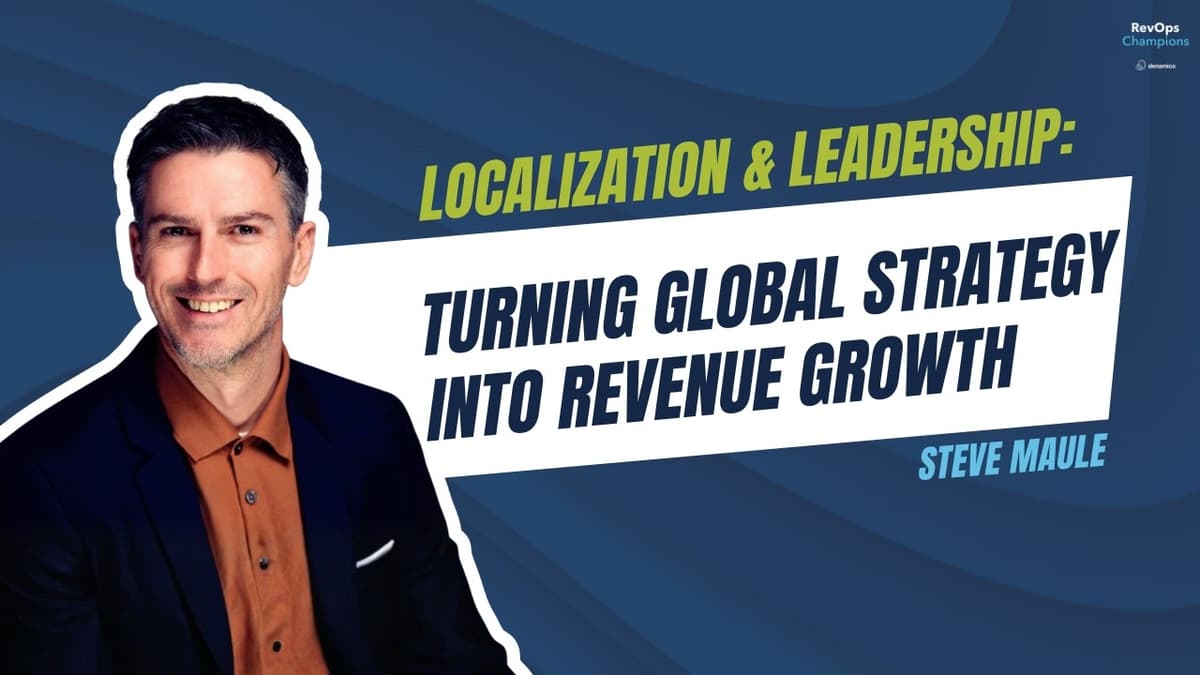
108 | Localization & Leadership: Turning Global Strategy Into Revenue Growth | Steve Maule
Steve Maule, VP of Global Sales at Acclaro, discusses how revenue teams can sustain rapid growth by prioritizing clarity and communication. He outlines two levers leaders need to keep go‑to‑market teams aligned and introduces a structured go/no‑go qualification framework. The...

RevOps Is the Glue of Scalable #marketing
The speaker argues that Revenue Operations (RevOps) is the central function that enables scalable, strategic marketing by ensuring data integrity, compliance, segmentation, and automated orchestration without sacrificing brand authenticity. At their company, a marketing manager doubles as the RevOps specialist,...

Strategy Doesn’t Drive Revenue. Systems Do.
The video argues that a well‑engineered revenue system, not merely a high‑level strategy, is the engine of growth. It distinguishes between revenue strategy – the intent and goals set by leadership – and the revenue system – the operational plumbing...