
The Direct Booking Strategy Didn't Work Like Hotels Expected
The video examines why hotel chains’ push for direct bookings has fallen short of expectations. Hilton’s 2016 "stop clicking around" campaign unified its marketing voice and generated record‑high ad response, yet it did not dent the proportion of rooms sold through online travel agencies (OTAs). Data show OTA‑derived bookings in the United States actually edged up—from roughly 20% of total room nights in 2019 to 21% last year—despite hundreds of millions spent by Marriott, Hilton and peers to steer travelers away from third‑party platforms. Executives now argue the proper metric is margin, not sheer room‑share, emphasizing higher net revenue and lower customer‑acquisition costs. A key insight is that hotels have succeeded in extracting more value from the bookings they do secure directly. Loyalty program enrollment, repeat stays, and co‑branded credit‑card usage generate ancillary fees and higher spend per guest. Hilton’s ad, while memorable, serves as a case study that brand messaging alone cannot displace OTAs without a profitable distribution model. The implication for the industry is a strategic pivot: accept OTAs as a distribution channel but focus on turning those interactions into higher‑margin, repeat business. Investors should watch how effectively hotel groups monetize loyalty and ancillary revenue streams rather than expecting a dramatic shift in room‑share percentages.

GMH Hotels: Hotel AI Is Cutting Costs. It Should Be Making Money.
The GMH Hotels episode opens with hosts Sarah Dandeshi and Steve Turk discussing a paradox in hospitality technology: AI tools are delivering cost savings but not generating the expected revenue uplift. They note Apple’s recent Siri rebuild, demonstrated on Vision...

Evolve Deflected 60% of Guest Inquiries With AI
At the recent Skift Data and AI conference, Evolve highlighted a striking achievement: its artificial‑intelligence system now deflects roughly 60% of guest inquiries, dramatically reducing the volume of routine support tickets. The company rolled out AI incrementally, first automating listing details,...

United’s CEO Just Shut Down the JetBlue Rumors
United Airlines chief Scott Kirby used the Bernstein conference to address swirling speculation about a possible merger with JetBlue, stating categorically that United has no intention to acquire the carrier. Kirby emphasized that United would never purchase a loss‑making route network...

AI Can Plan the Trip, But Can It Book It? Travelport’s “Booking Layer” Play
Travelport unveiled its revamped Trip Services platform, a cloud‑native API suite designed to bridge the gap between AI‑driven travel inspiration and the actual booking transaction. The company says the new APIs shift search from deterministic A‑to‑B queries to attribute‑based requests—e.g., “warm...
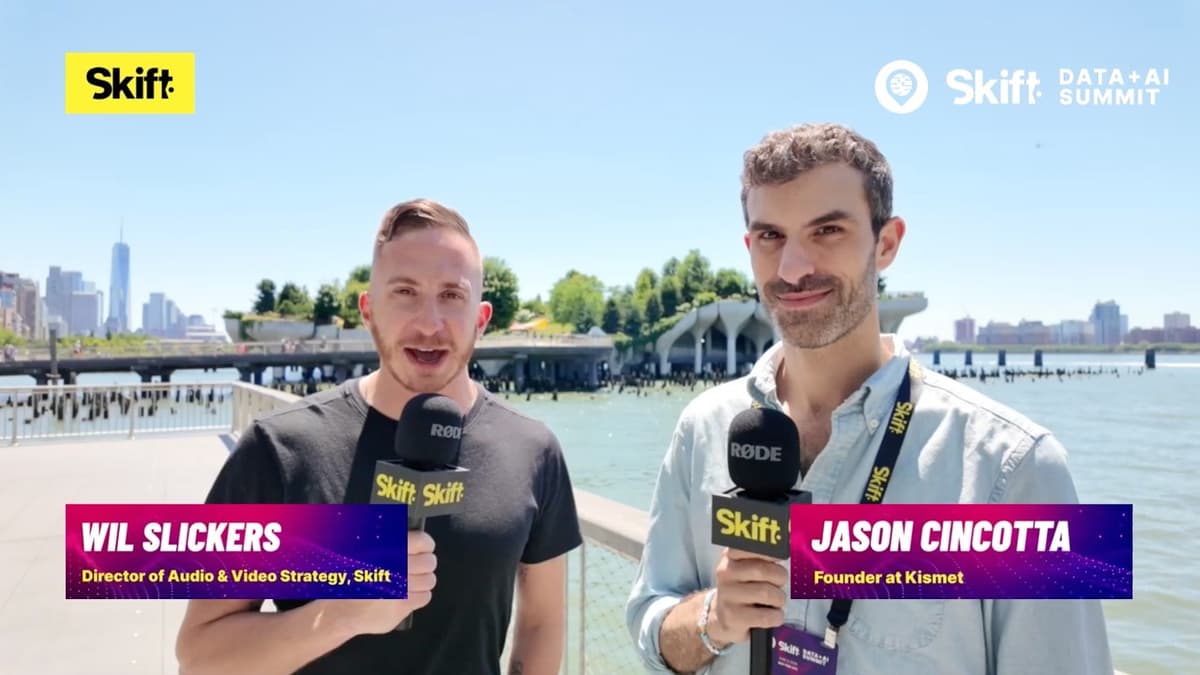
Is AI Creating a New Middleman in Hospitality or Killing the Old One?
At the Skift Data and AI Summit, Jason Cincotta of Kismet argued that AI‑driven data orchestration is reshaping hospitality tech. New vendors act as a middleman, aggregating data from fragmented legacy systems and the flattened booking funnel. While these platforms...
Sonder's Founder Just Came Back...With an AI Travel Startup
The Skift Daily Briefing highlighted three converging trends: a sharp contraction in Middle‑East tourism due to the Iran war, the resurgence of a once‑failed hospitality founder with an AI‑first travel startup, and Priceline’s major AI assistant overhaul. UN figures reveal a...

Scammers Now Know Your Guests' Exact Booking Details.
The episode spotlights a growing threat: fraudsters are harvesting exact reservation details from hotel and short‑term‑rental management systems to launch highly personalized spear‑phishing attacks. By mimicking official communications and inserting real payment information, they can divert guests’ funds with alarming...

Only 2% of Travelers Trust AI Booking
Skift research reveals that only 2% of young leisure travelers are willing to let artificial intelligence handle their bookings, and fewer than a quarter of travel companies have deployed generative AI at scale. The data underscores a stark gap between...
Why AI Still Isn’t Ready to Book Your Vacation
The podcast examines why artificial intelligence remains unsuitable for fully automating vacation bookings. While 78% of travel firms claim to use AI, only 22% of hotel chains possess the centralized, clean data structures needed for reliable AI-driven decisions, highlighting a...
EasyJet's Tricky Quarter and Atlanta's Crown
The podcast examined EasyJet’s latest first‑quarter earnings, highlighting a –27% operating margin and the airline’s broader strategic challenges as it navigates the seasonal winter downturn. Analysts noted that while winter losses are normal for European low‑cost carriers, EasyJet’s margin swing from...
Hotels Spent 10 Years Fighting OTAs — Then AI Showed Up and Changed Everything
The Skift Daily Briefing highlights that after a decade of battling online travel agencies, hotels now face a new disruptor—generative AI—while recent strategic moves show the industry adapting. OTA‑derived room nights edged up from 20% in 2019 to 21% last year,...

What “AI-Bookable” Actually Means for Hotels & STRs
The episode breaks down Google’s new Universal Commercial Protocol (UCP) and its promise to make hotels and short‑term rentals directly bookable through AI assistants. By embedding a catalog of inventory into Google’s surface, guests can complete a reservation from an...

Airbnb’s Big Summer Push: Hotels, AI & the Ultimate Travel App
Airbnb’s 2026 summer release in San Francisco unveiled a sweeping expansion beyond traditional home rentals, adding grocery delivery via Instacart, airport pickups, luggage‑storage partner Bounce, and a rental‑car service. The rollout also introduced a pilot hotel program that rewards guests with...
The Airline Europe Wrote Off — and Shouldn't Have
The episode opens with a deep dive into Singapore Airlines’ latest earnings, highlighting a surge to a 15% operating margin—up sharply from 6% a year earlier—driven by strong long‑haul and premium demand and a temporary advantage from Middle‑East hub disruptions....