

David Rubenstein, Co-Founder and Chairman of the Carlyle Group: Pursue Something Meaningful
David Rubenstein, co‑founder of Carlyle, sat down with Stanford to discuss how his blue‑collar Baltimore roots, elite education, and a brief stint in politics shaped his view of purpose‑driven business. He emphasizes that a degree from institutions like Stanford or Harvard is a durable asset that opens doors and creates a credibility buffer, even if one later makes mistakes. Rubenstein argues that education remains the primary engine of economic mobility, noting that modest families provide a unique credibility advantage—achievements are seen as self‑made. He cautions against glorifying the “dropout” myth, citing Bill Gates and Mark Zuckerberg as outliers, and stresses that most professionals benefit from completing a degree, even if the timeline is non‑traditional. Memorable lines include, “If you grow up modestly, people will say you did it on your own,” and, “Education is something you can’t lose.” He recounts his early political work for Jimmy Carter, describing how youthful ambition and willingness to relocate landed him a senior White House advisory role at 27, a formative experience that later informed his risk‑taking in private equity. For today’s graduates and investors, Rubenstein’s narrative underscores that credentials open networks, but lasting impact comes from aligning work with genuine passion. The lesson for business leaders is to value education as a strategic asset while fostering resilience and purpose‑driven decision‑making.
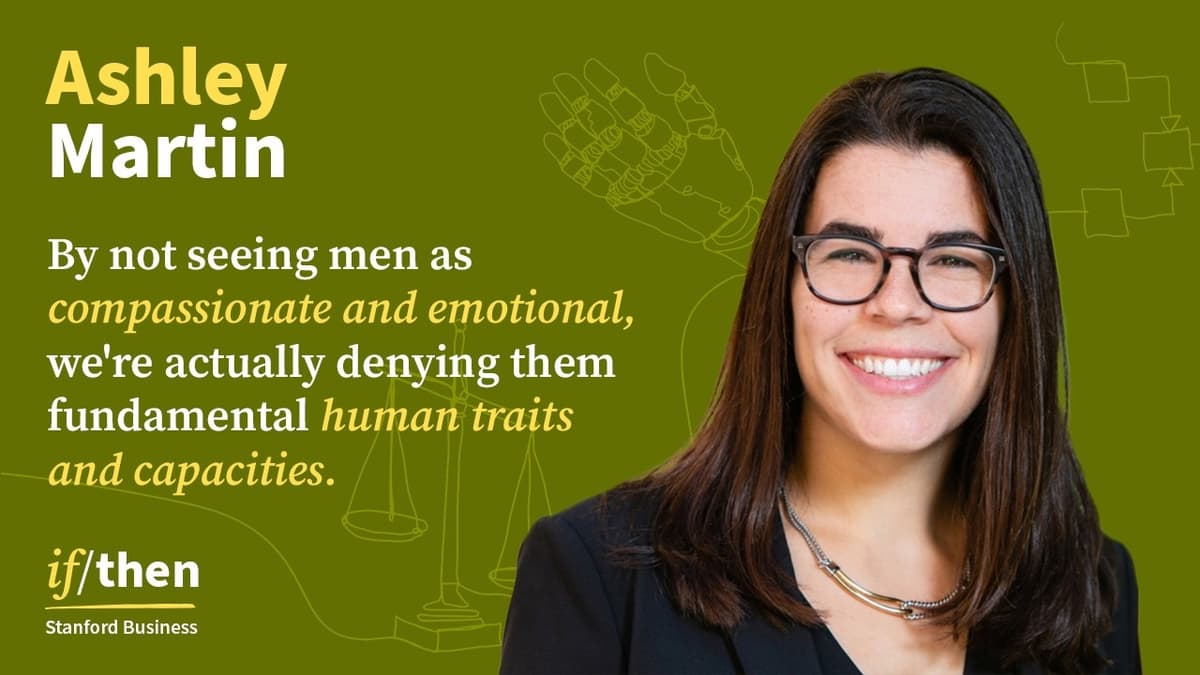
The Paradox of Masculinity
The video titled “The Paradox of Masculinity” examines how cinematic portrayals of hyper‑masculine heroes shape men’s self‑concepts and, in turn, influence family dynamics and workplace behavior. Interviews with moviegoers like Natasha and Riley illustrate how classic action films informed their...
Announcing the Stanford Leadership Institute
Stanford Graduate School of Business announced the creation of the Stanford Leadership Institute, a new interdisciplinary hub designed to prepare current and future leaders for an era of rapid technological, geopolitical, economic, and environmental change. The institute will bring together research,...

The Courage to Look Dumb | Abhinav Kejriwal, MBA ’26
In a recent campus talk titled “The Courage to Look Dumb,” MBA candidate Abhinav Kejriwal argues that true progress stems not from appearing intelligent but from daring to expose one’s ignorance in public. He frames the discussion around the modern...

Ep75 The Misleading Truth Behind IRR
In this episode of the All Else Equal podcast, Wharton’s Jules Van Binsburgen and Stanford’s Jonathan Burke dissect the internal rate of return (IRR) and argue that it is a fundamentally flawed metric for investment decisions. They contrast IRR with...

The Secret of Microfinance | Rahim Haliminski, MBA ’26
In a Stanford talk, Rahim Haliminski recounts his journey from Ugandan crop trader to micro‑finance advocate, arguing that the sector’s original model—small cash loans dispersed by costly field officers—has fundamentally missed the mark. He explains that three technological shifts—mobile money platforms...

Quick Lesson #8 with Prof. Annamaria Lusardi: Retirement Planning 🏌️
In a brief video, Stanford economist Annamaria Lusardi outlines a two‑step framework for retirement planning, emphasizing early savings and strategic use of available financial tools. She stresses that beginning contributions early harnesses compound growth, making a modest annual deposit far more...

Quick Lesson #7 with Prof. Annamaria Lusardi: Tax-Advantaged Savings and Employer Matches 💵
In a brief lesson, Stanford professor Annamaria Lusardi explains how tax‑advantaged accounts and employer matching contributions can accelerate personal savings. She outlines the three primary vehicles—401(k) retirement plans, Health Savings Accounts, and 529 education accounts—highlighting that contributions are either tax‑deferred or...

AI@GSB: A Conversation with Derek Thompson, Journalist, The Atlantic
The discussion with Atlantic journalist Derek Thompson centered on the emergence of a dual‑track economy: an AI‑driven surge in equity markets contrasted with a weakening broader labor market. Thompson highlighted that roughly 70‑80% of equity gains over the past three...

Depolarization Through Courageous Citizenship with Braver Angels CEO Maury Giles
In a Stanford Graduate School of Business dialogue, Braver Angels CEO Maury Giles outlines how his nonprofit tackles America’s growing partisan divide by promoting what he calls “courageous citizenship.” The organization, now operating 128 local alliances across 43 states and...

Class Takeaways — Turning Data Into a Superpower
Professor Mosen Bay, a Stanford GSB faculty member, outlines five core principles from his Business Intelligence from Big Data course, framing data mastery as a strategic superpower in today’s information‑rich environment. He stresses grounding decisions in diverse data rather than gut...

Power and Accountability: The Costs and Benefits of Speaking Up
The Stanford GSB event, sponsored by the Corporation Society Initiative, brought together two high‑profile whistleblowers—Eric Bernardi, a former risk officer at Goldman Sachs and Deutsche Bank, and Ellen Pao, a former partner at Kleiner Perkins—to discuss the costs and benefits...
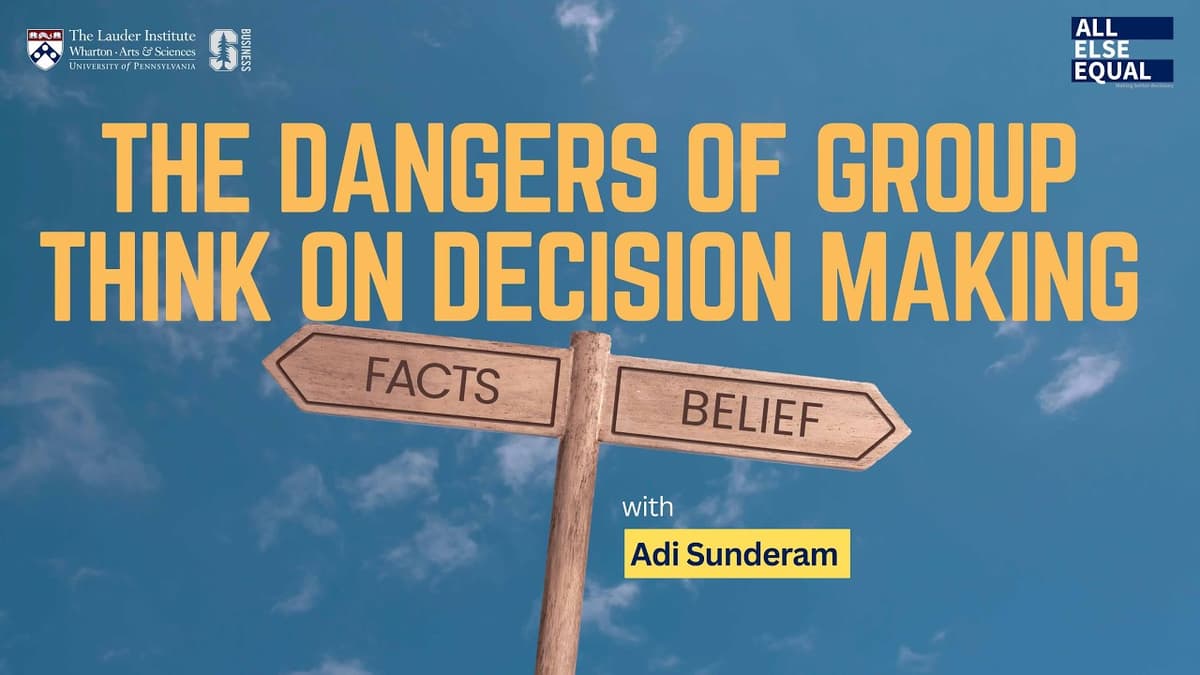
Ep73 “The Dangers of Group Think on Decision Making” With Adi Sunderam
The podcast episode “The Dangers of Group Think on Decision Making” features Jules Van Binsburgen, Jonathan Burke, and Harvard professor Adi Sunderam discussing how people update beliefs and the pitfalls when they restrict the set of models they consider. They explain...