Two Minute Papers
Creator
0 followers
A channel delivering quick summaries of the latest research papers in science and tech. While it often covers AI and graphics, it also features significant nanotechnology research (like new nano-materials or microscopic science breakthroughs) explained succinctly, complete with paper visuals.
Recent Posts
Video•Feb 15, 2026
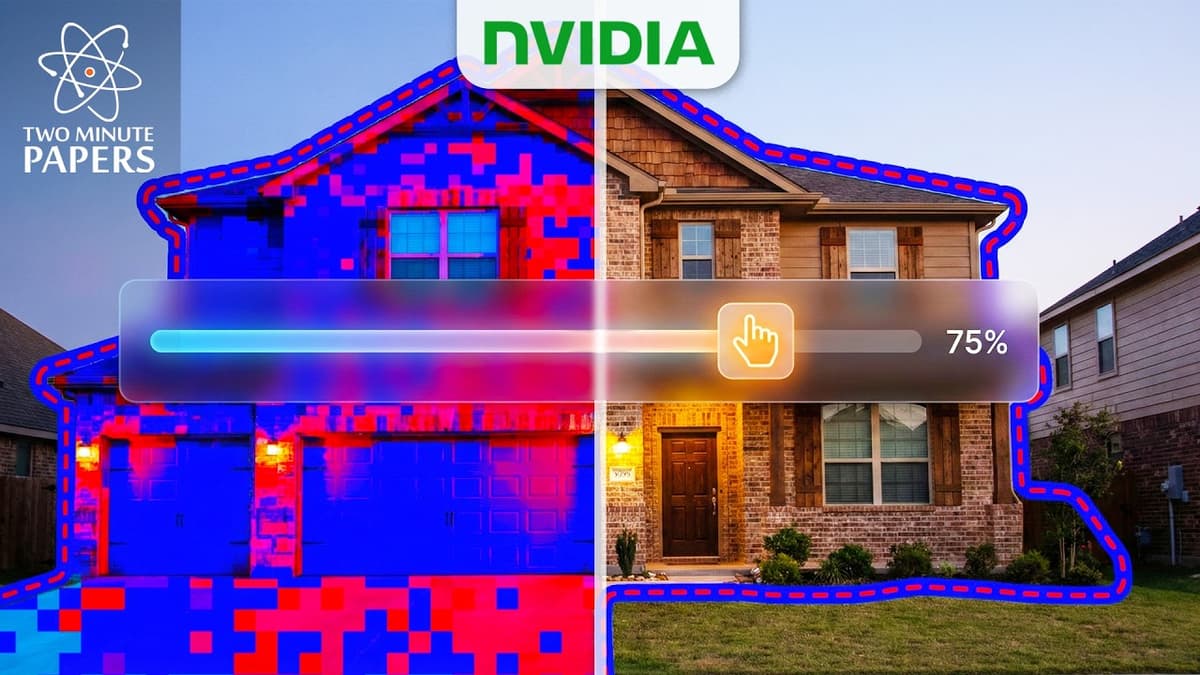
NVIDIA’s New AI Turns Photos Into Reality
NVIDIA unveiled PPISP, an AI‑driven pipeline that converts a set of ordinary photographs into a smooth, photorealistic video. By learning the underlying scene geometry and correcting camera‑induced distortions, the system can synthesize frames that were never captured. Traditional neural radiance fields (NeRF) suffered from “floaters” and color flicker because each input photo carries different exposure, white‑balance and lens vignetting. PPISP tackles these four factors individually—exposure offset, white‑balance matrix, vignette fall‑off, and sensor response curve—using a learned 3×3 color‑correction matrix, effectively stripping the camera’s bias before reconstruction. The presenter likens the algorithm to a detective examining a buyer’s sunglasses, peeling away tint and darkness to reveal the true wall color. Demonstrations show the AI reversing tint, correcting edge darkening, and flattening non‑linear sensor curves, though it still falters when modern smartphones apply local tone‑mapping to specific regions. By delivering artifact‑free 3D reconstructions, PPISP could lower the cost of generating synthetic training data for autonomous‑vehicle perception, as well as streamline content pipelines for film and gaming. Its open‑source release invites rapid adoption, but developers must account for its current limitation on spatially adaptive lighting effects.
By Two Minute Papers
Video•Feb 12, 2026
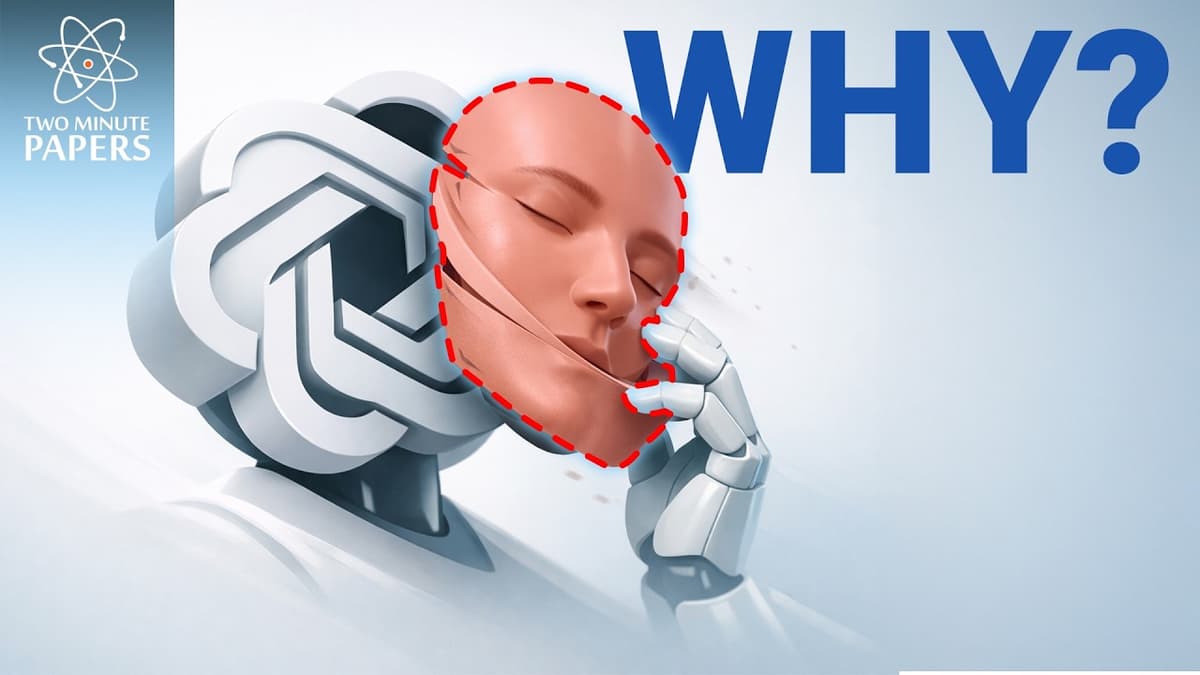
Anthropic Found Why AIs Go Insane
Anthropic researchers have pinpointed the root cause of erratic behavior in today’s AI assistants – a gradual drift away from their core “helpful assistant” persona. The phenomenon, which can be triggered by user prompts or emotional cues, leads the model...
By Two Minute Papers

Video•Feb 6, 2026
NVIDIA’s New AI: Erasing Reality
NVIDIA's research team unveiled Omnimatte Zero, a new AI system that can delete objects, shadows and other secondary effects from video footage in real time. The method, a collaboration between NVIDIA and external labs, builds on off‑the‑shelf diffusion models and requires...
By Two Minute Papers
Video•Jan 18, 2026
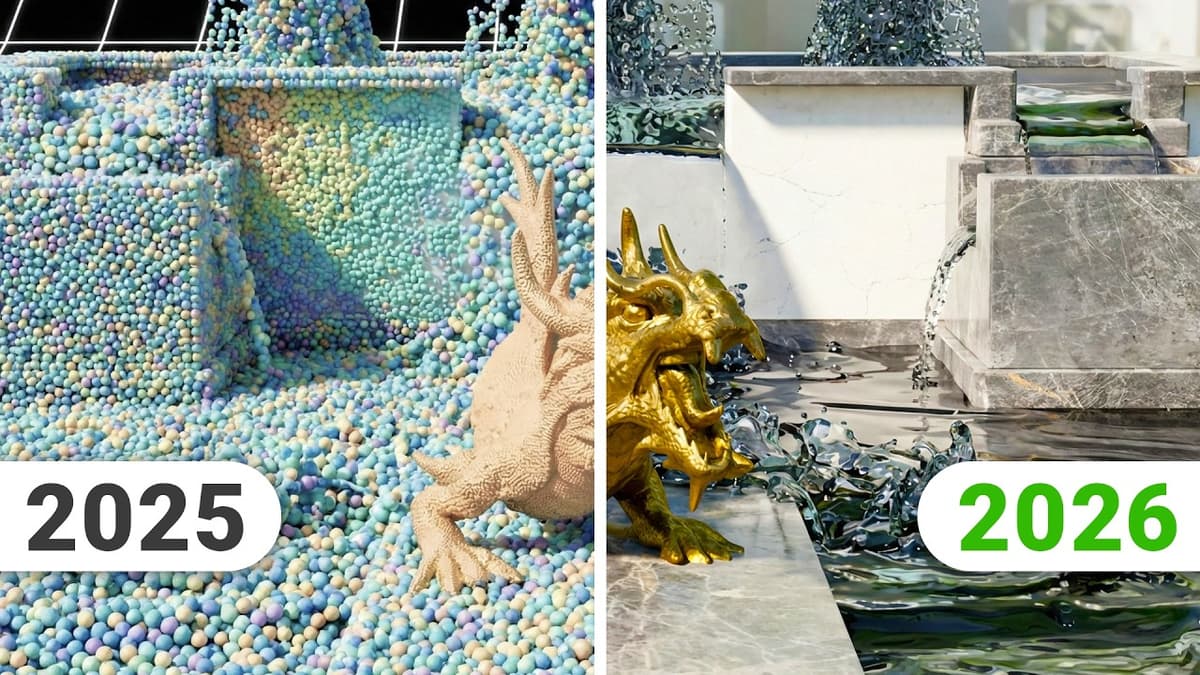
This Fluid Simulation Should Not Be Possible
The video spotlights a breakthrough fluid‑simulation framework that combines an adaptive octree (referred to as an "arct tree") with a branch‑less traversal algorithm, allowing researchers to animate tens of millions of particles in real time. Traditional uniform‑grid approaches struggle as...
By Two Minute Papers
Video•Jan 12, 2026
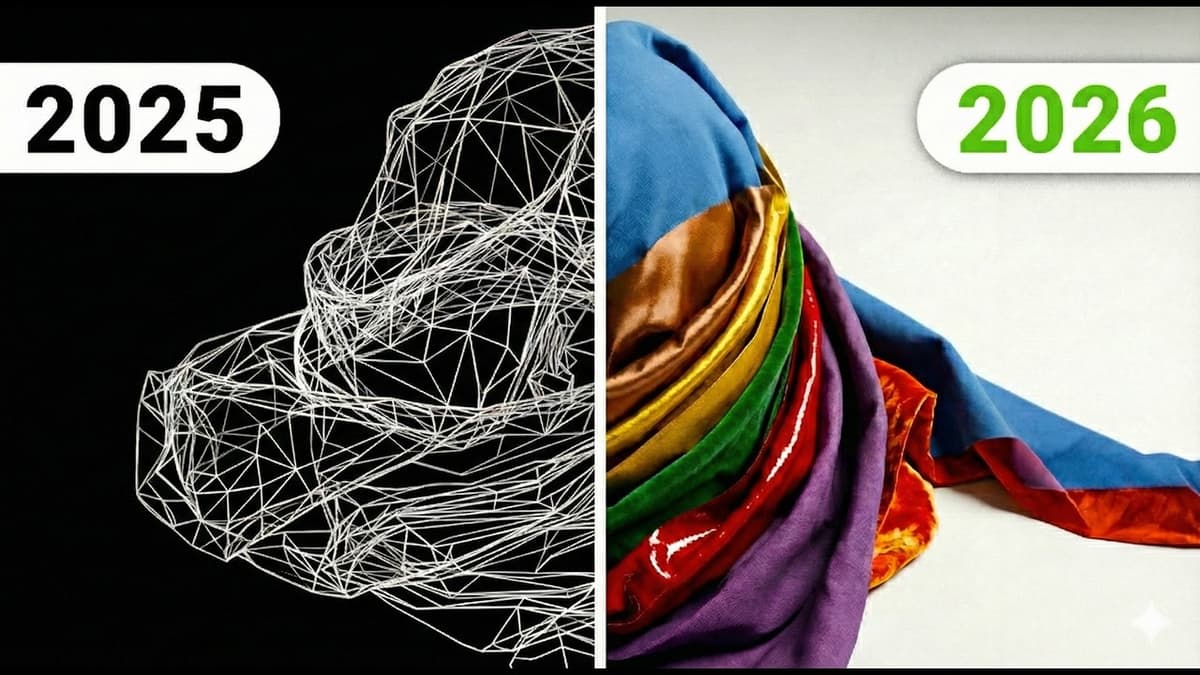
The Secret Equation Behind Hyper-Realistic Clothing
The video introduces a novel adaptive‑mesh algorithm that dramatically improves cloth simulation for movies and games, bridging the long‑standing trade‑off between visual fidelity and computational cost. The core insight is an analytical equation that ties a material’s stiffness to the wavelength...
By Two Minute Papers
Video•Dec 31, 2025
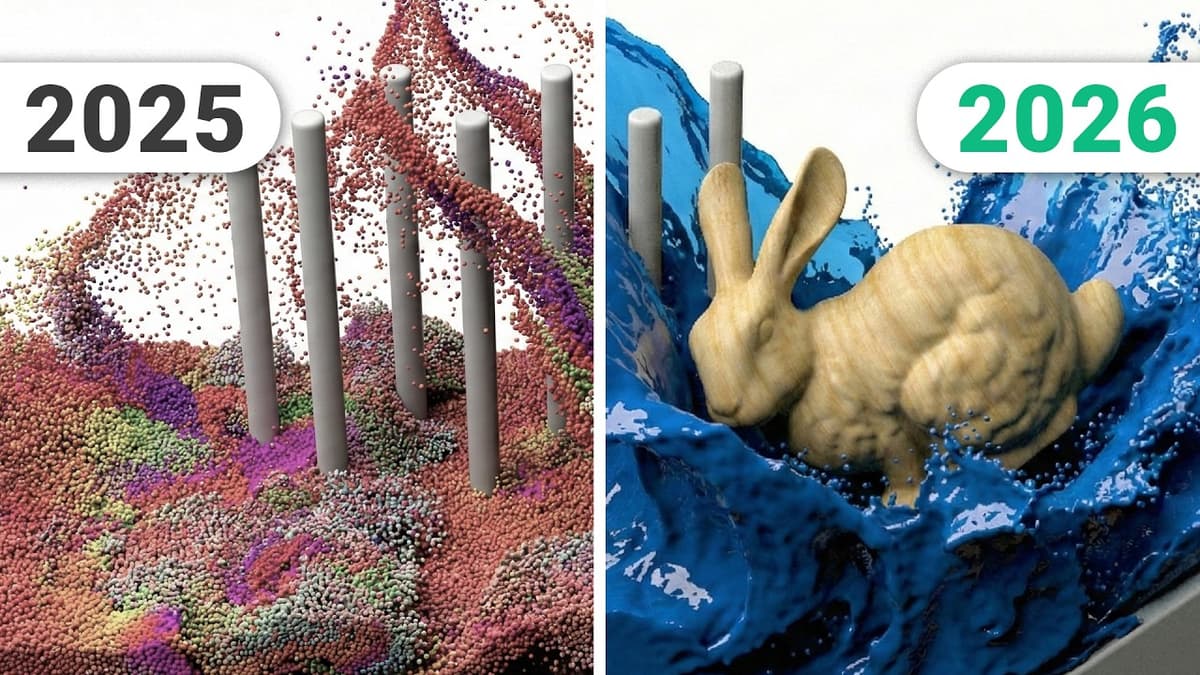
The Bug That Ruined Game Physics For Decades
The video spotlights a breakthrough fluid‑simulation algorithm that finally eliminates the long‑standing volume‑loss bug that has plagued game physics for decades. By formulating the problem in terms of a vector potential whose curl yields the velocity field, the method guarantees...
By Two Minute Papers
Video•Dec 21, 2025
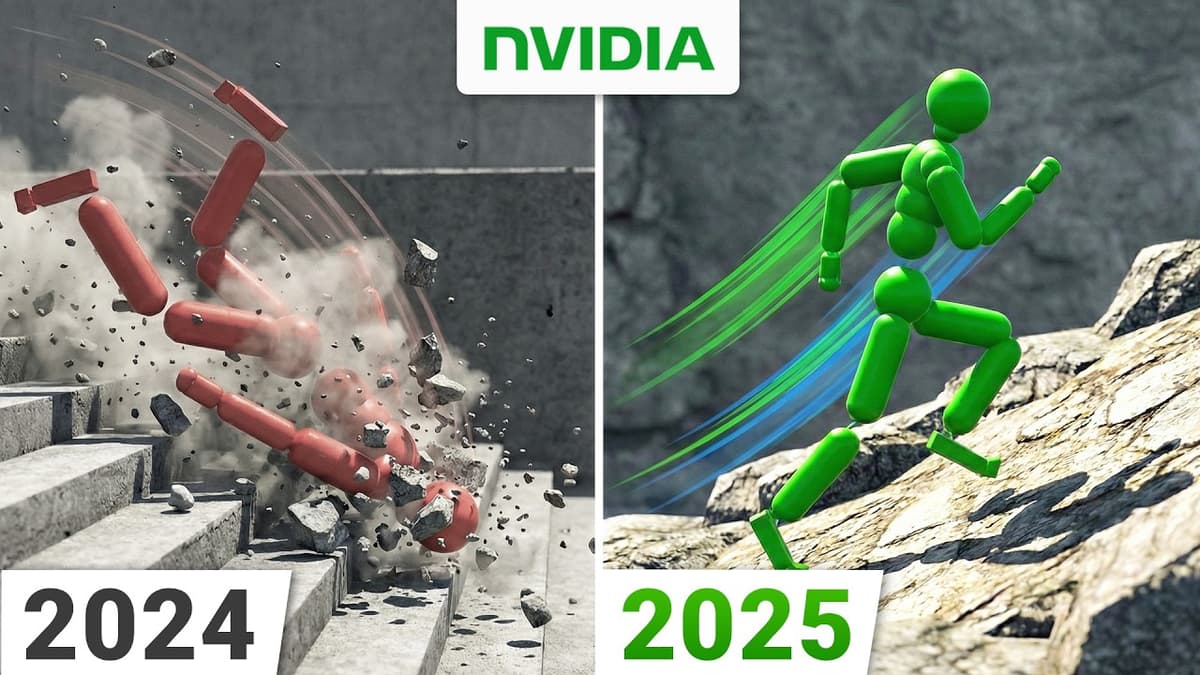
NVIDIA’s AI Finally Solved Walking In Games
The video spotlights a breakthrough from NVIDIA that replaces traditional capsule‑based NPC movement with fully physically simulated humanoids. By coupling a diffusion‑based path planner called Trace with a joint‑control system dubbed Pacer, the researchers enable agents to generate and follow...
By Two Minute Papers

Video•Dec 14, 2025
Researchers Built a Tiny Economy. AIs Broke It Immediately
The research team behind SimWorld unveiled a procedurally generated video‑game city populated by autonomous agents—vehicles, robots and humans—each powered by leading large language models such as ChatGPT, Gemini, DeepSeek, Claude and a legacy GPT‑4‑mini. The experiment tasked these agents...
By Two Minute Papers
Video•Dec 11, 2025
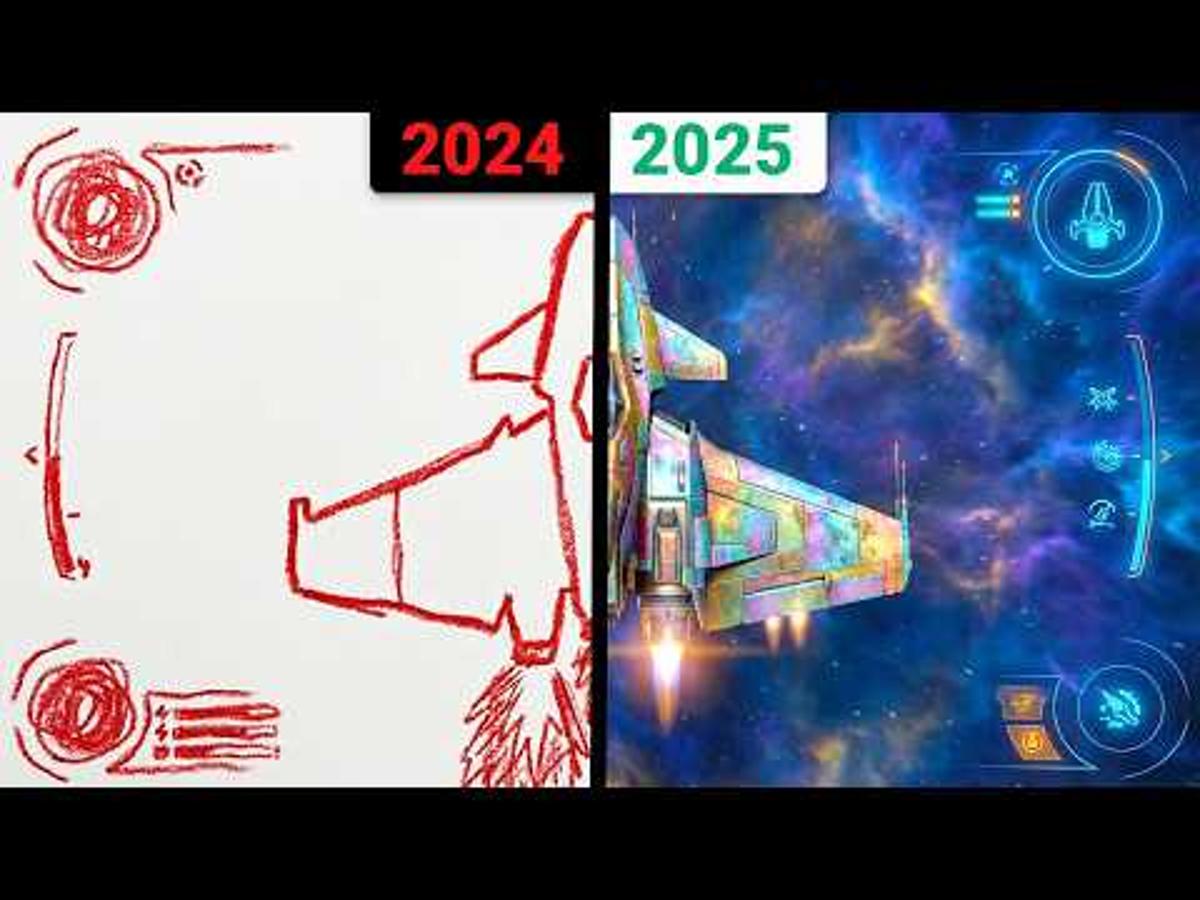
DeepMind’s New Game AI Just Made History
DeepMind unveiled CIMA 2, a multimodal game‑playing AI that learns to navigate a suite of modern 3D environments using only raw pixel data and standard keyboard‑mouse inputs, extending the field beyond the Atari‑centric agents of a decade ago. The system ingests voice...
By Two Minute Papers
Video•Dec 7, 2025
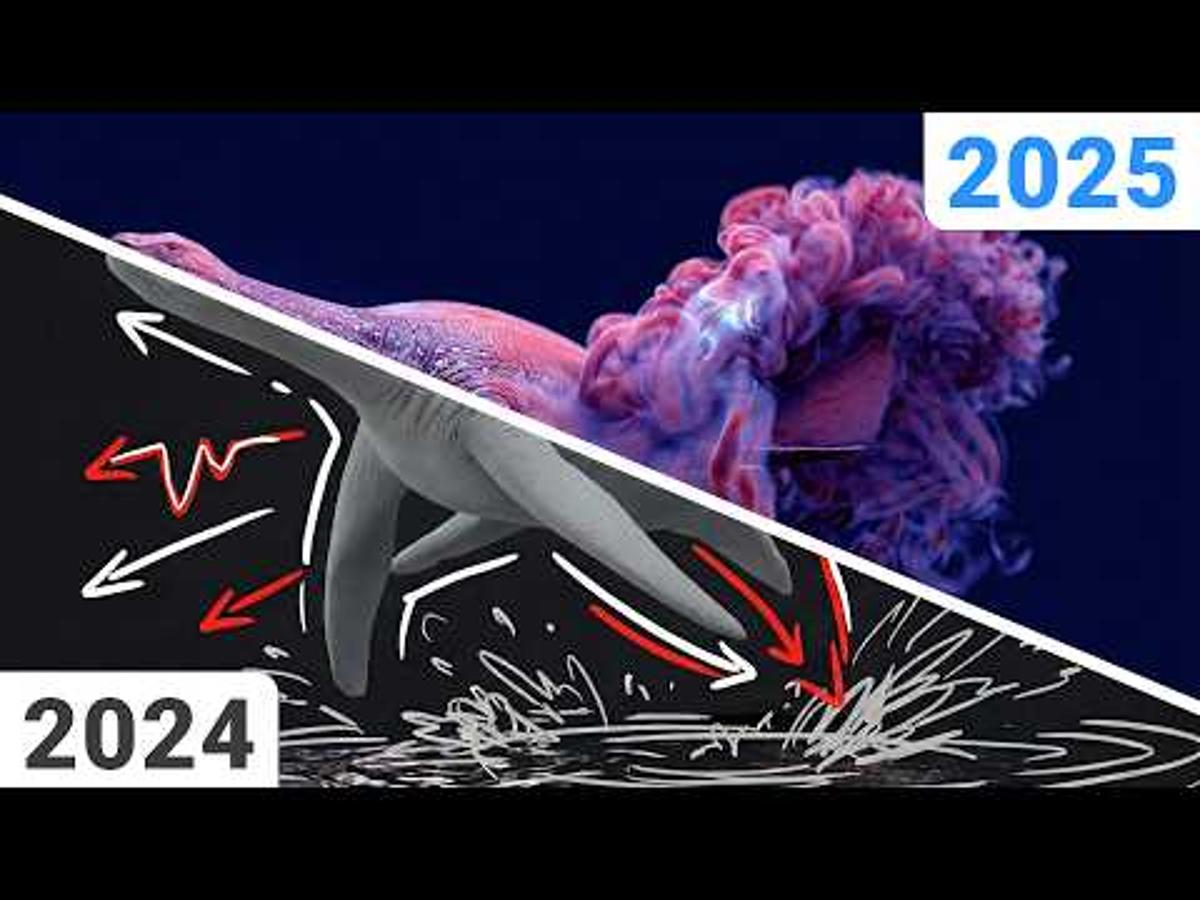
The Biggest Physics Breakthrough Nobody Noticed
The video spotlights a newly published fluid‑dynamics technique that dramatically improves the visualization and longevity of vortices—tiny whirlpools that dictate how fluids rotate. Presented by Dr. Carroll on the Two Minute Papers channel, the method repurposes ordinary bubbles as...
By Two Minute Papers