Two Minute Papers
A channel delivering quick summaries of the latest research papers in science and tech. While it often covers AI and graphics, it also features significant nanotechnology research (like new nano-materials or microscopic science breakthroughs) explained succinctly, complete with paper visuals.
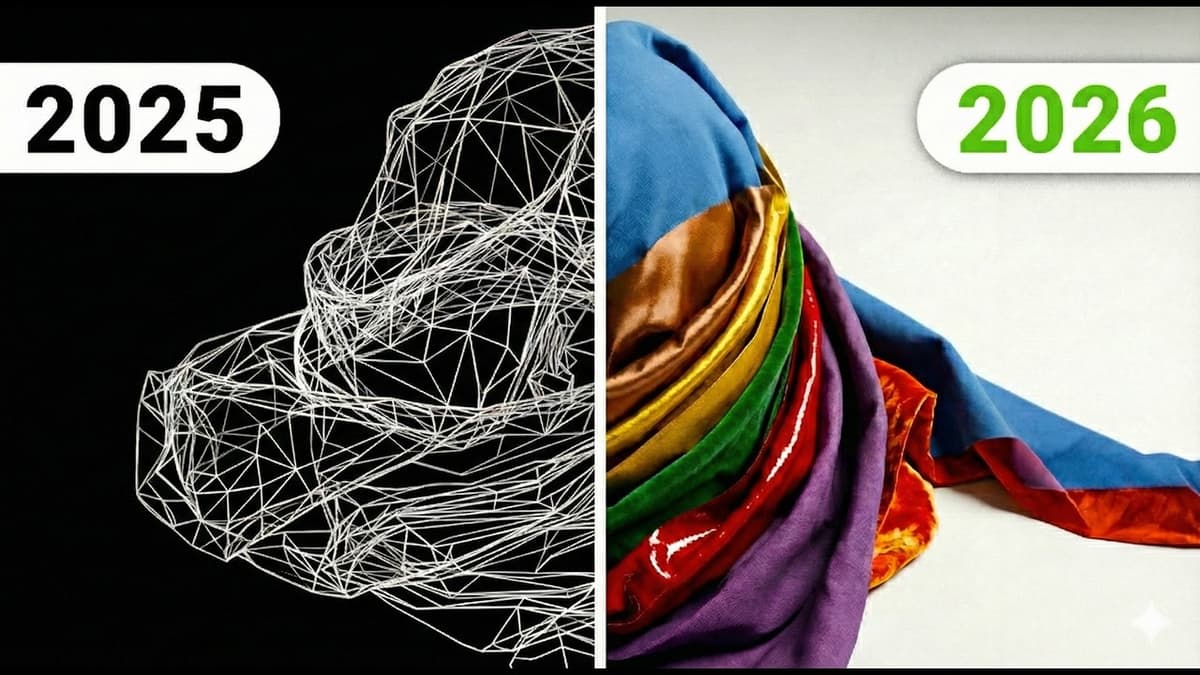
The Secret Equation Behind Hyper-Realistic Clothing
The video introduces a novel adaptive‑mesh algorithm that dramatically improves cloth simulation for movies and games, bridging the long‑standing trade‑off between visual fidelity and computational cost. The core insight is an analytical equation that ties a material’s stiffness to the wavelength of its wrinkles. By predicting where wrinkles will appear, the method stretches mesh triangles along wrinkle directions, allocating polygons only where they are needed and leaving flat regions coarse. Demonstrations include a hyper‑realistic puffy jacket whose geometry adapts in real time, and a road‑paving analogy that shows finer tiles only around sharp turns. Unlike reactive solvers that wait for a wrinkle to form, this approach updates the mesh proactively during simulation and works with existing cloth solvers without pipeline changes. For studios, the technique promises near‑high‑resolution results at a fraction of the time and hardware cost, opening the door to real‑time, high‑quality garments in interactive media. Its main limitation is handling unpredictable, tangled knots, where the static prediction may miss sudden deformations.
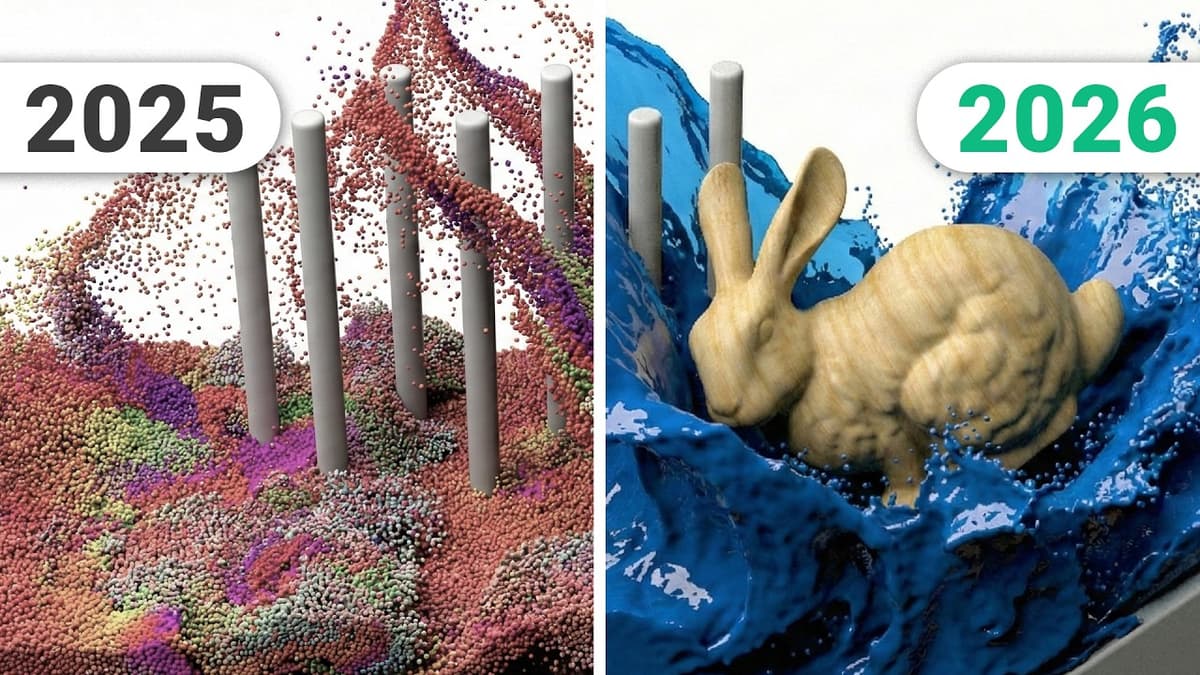
The Bug That Ruined Game Physics For Decades
The video spotlights a breakthrough fluid‑simulation algorithm that finally eliminates the long‑standing volume‑loss bug that has plagued game physics for decades. By formulating the problem in terms of a vector potential whose curl yields the velocity field, the method guarantees...
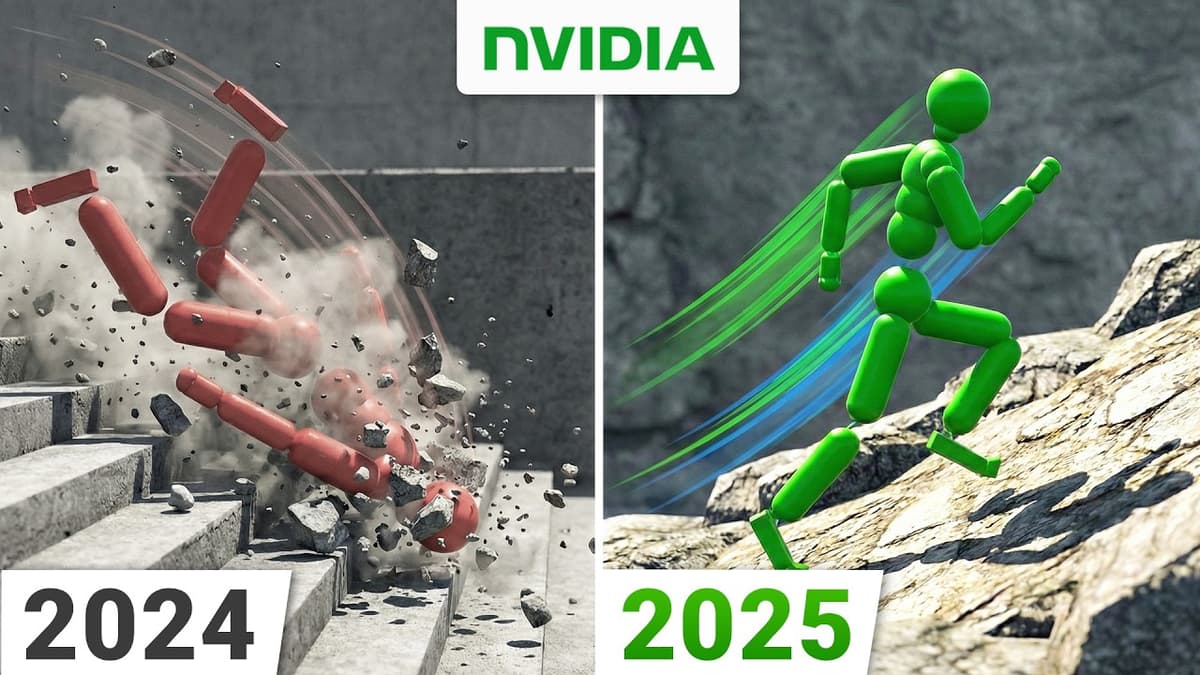
NVIDIA’s AI Finally Solved Walking In Games
The video spotlights a breakthrough from NVIDIA that replaces traditional capsule‑based NPC movement with fully physically simulated humanoids. By coupling a diffusion‑based path planner called Trace with a joint‑control system dubbed Pacer, the researchers enable agents to generate and follow...

Researchers Built a Tiny Economy. AIs Broke It Immediately
The research team behind SimWorld unveiled a procedurally generated video‑game city populated by autonomous agents—vehicles, robots and humans—each powered by leading large language models such as ChatGPT, Gemini, DeepSeek, Claude and a legacy GPT‑4‑mini. The experiment tasked these agents...
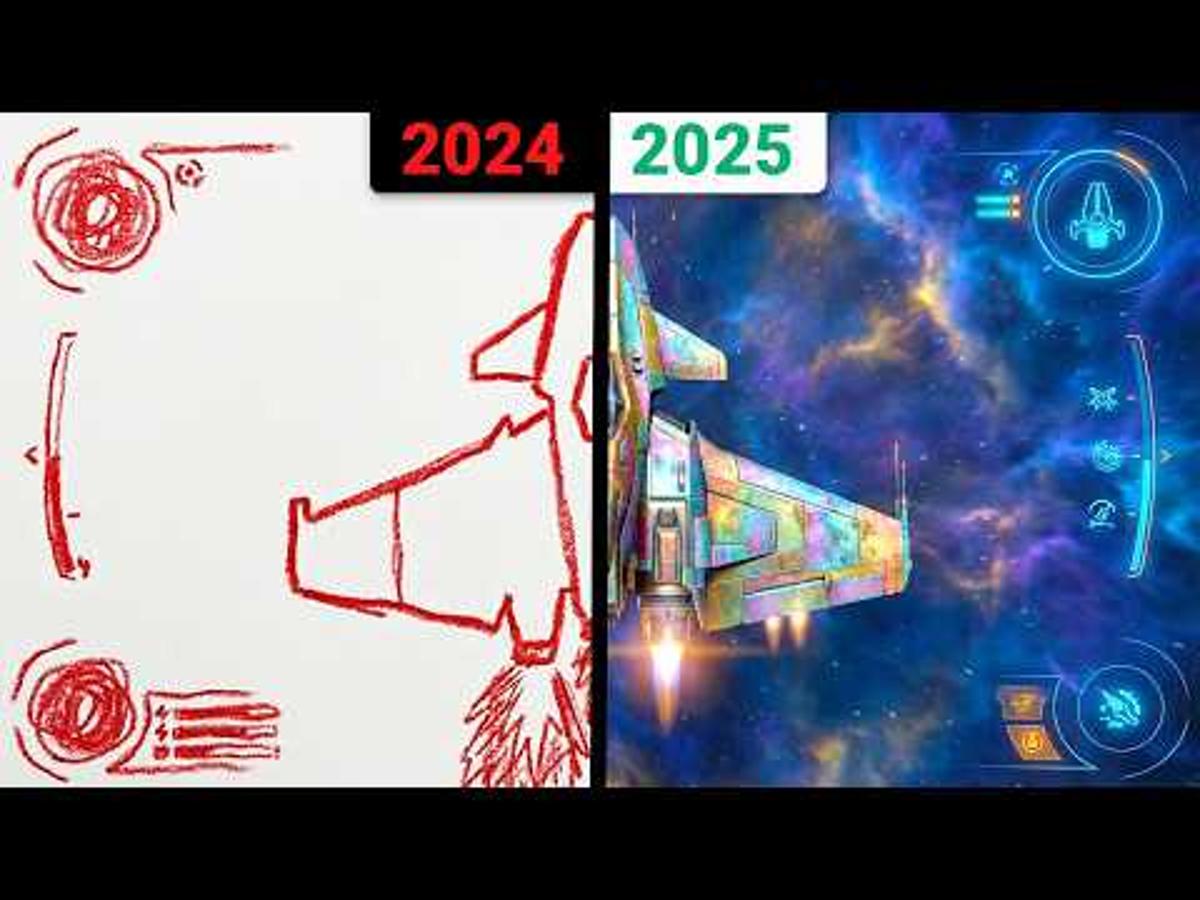
DeepMind’s New Game AI Just Made History
DeepMind unveiled CIMA 2, a multimodal game‑playing AI that learns to navigate a suite of modern 3D environments using only raw pixel data and standard keyboard‑mouse inputs, extending the field beyond the Atari‑centric agents of a decade ago. The system ingests voice...
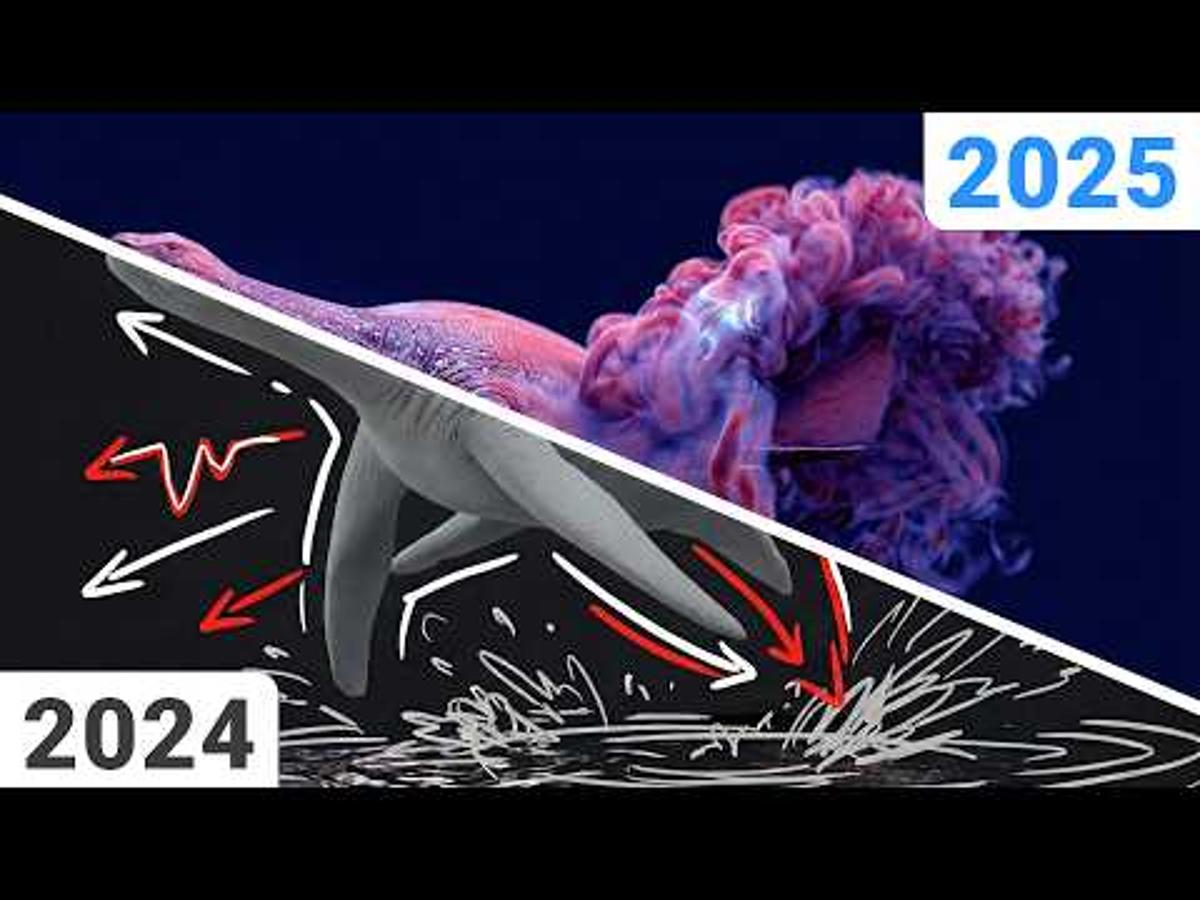
The Biggest Physics Breakthrough Nobody Noticed
The video spotlights a newly published fluid‑dynamics technique that dramatically improves the visualization and longevity of vortices—tiny whirlpools that dictate how fluids rotate. Presented by Dr. Carroll on the Two Minute Papers channel, the method repurposes ordinary bubbles as...

AlphaFold - The Most Important AI Breakthrough Ever Made
The video spotlights AlphaFold, DeepMind’s deep‑learning system that predicts the three‑dimensional structure of proteins from their amino‑acid sequences. By turning a year‑long, costly experimental process into a matter of minutes, AlphaFold has reshaped a central bottleneck in molecular biology,...

Unreal Engine 5.7: Billions Of Triangles, In Real Time
Unreal Engine 5.7 arrived this week as the latest free‑to‑use upgrade to Epic’s real‑time rendering platform, promising to push the envelope of what developers can achieve on‑screen. The rollout highlights three flagship technologies – Substrate’s multi‑layer material simulation, an...

Blender 5.0 Is Here - A Revolution…For Free!
Blender 5.0 arrived as a free, open‑source upgrade that promises to level the playing field for creators of virtual worlds, films, and avatars. The video frames the release as a “revolution…for free,” contrasting it with the $255‑per‑month subscription model of...
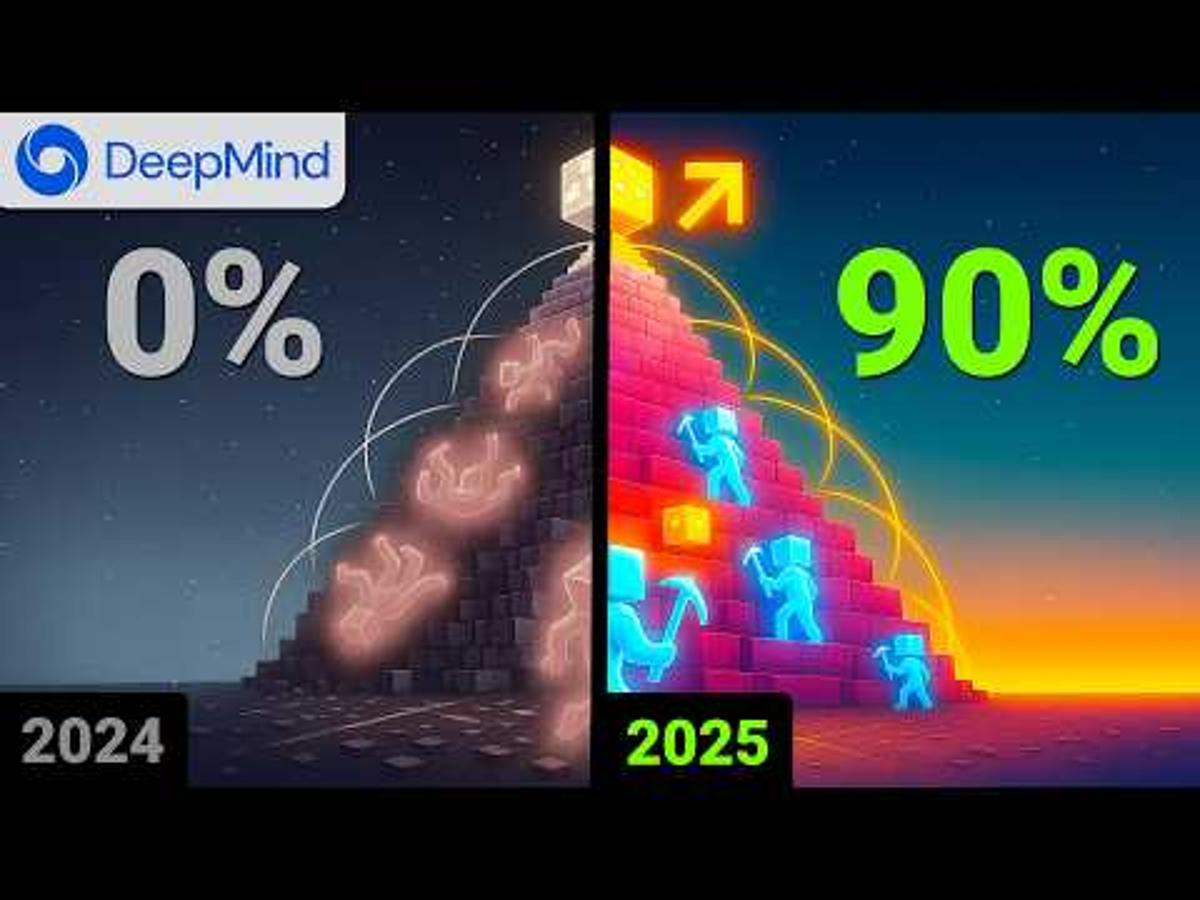
DeepMind’s New AI Beats OpenAI With 100x Less Data
DeepMind unveiled a new AI system that learns to play Minecraft with a fraction of the data previously required, outperforming OpenAI’s Video Pre‑Training (VPT) approach despite using roughly 1 % of the video footage. The breakthrough hinges on a three‑phase “imagination”...
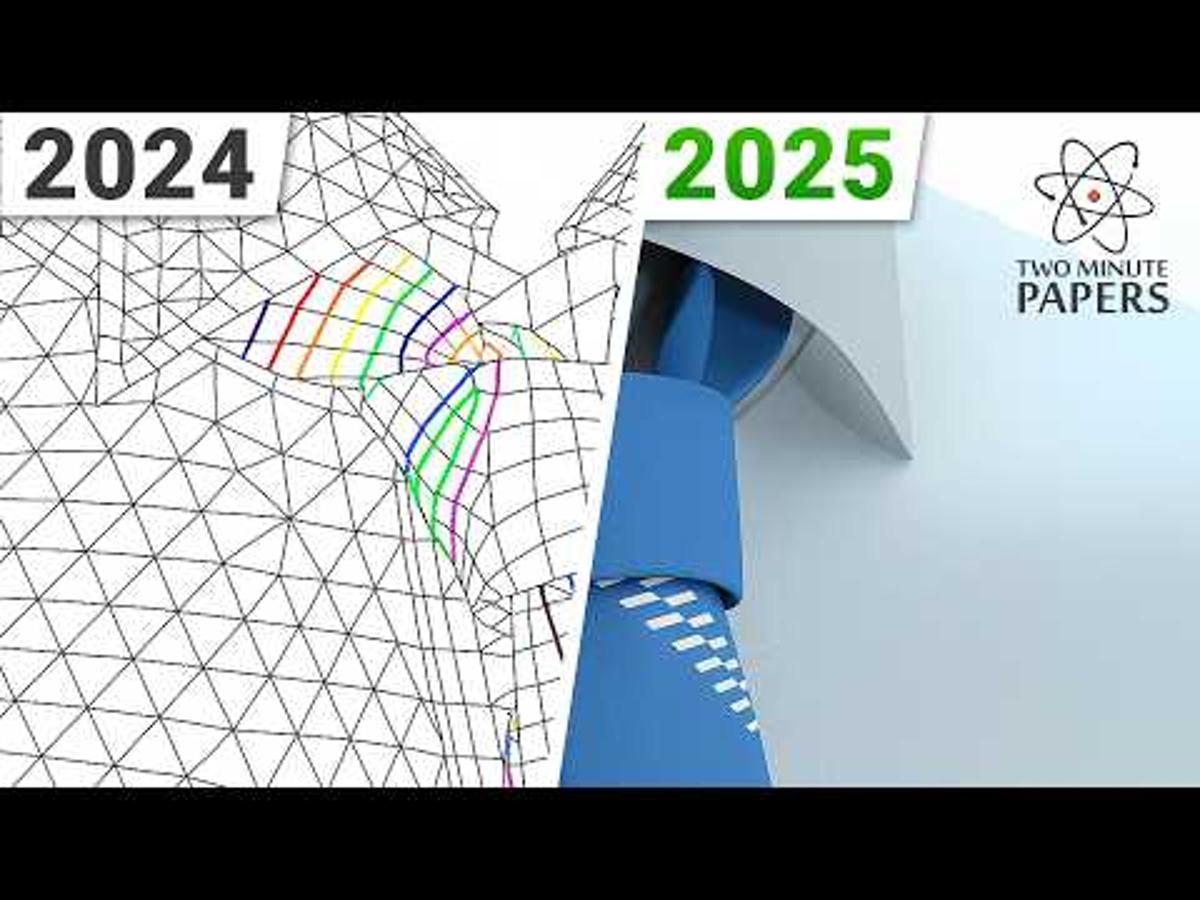
Games Have Never Simulated Clothing Like This Before
The video spotlights a recent research breakthrough that finally gives video‑game developers a reliable way to simulate clothing, especially complex knots and ties, that has long plagued the industry. Traditional pipelines often produce garments that intersect, disappear, or look unrealistic,...
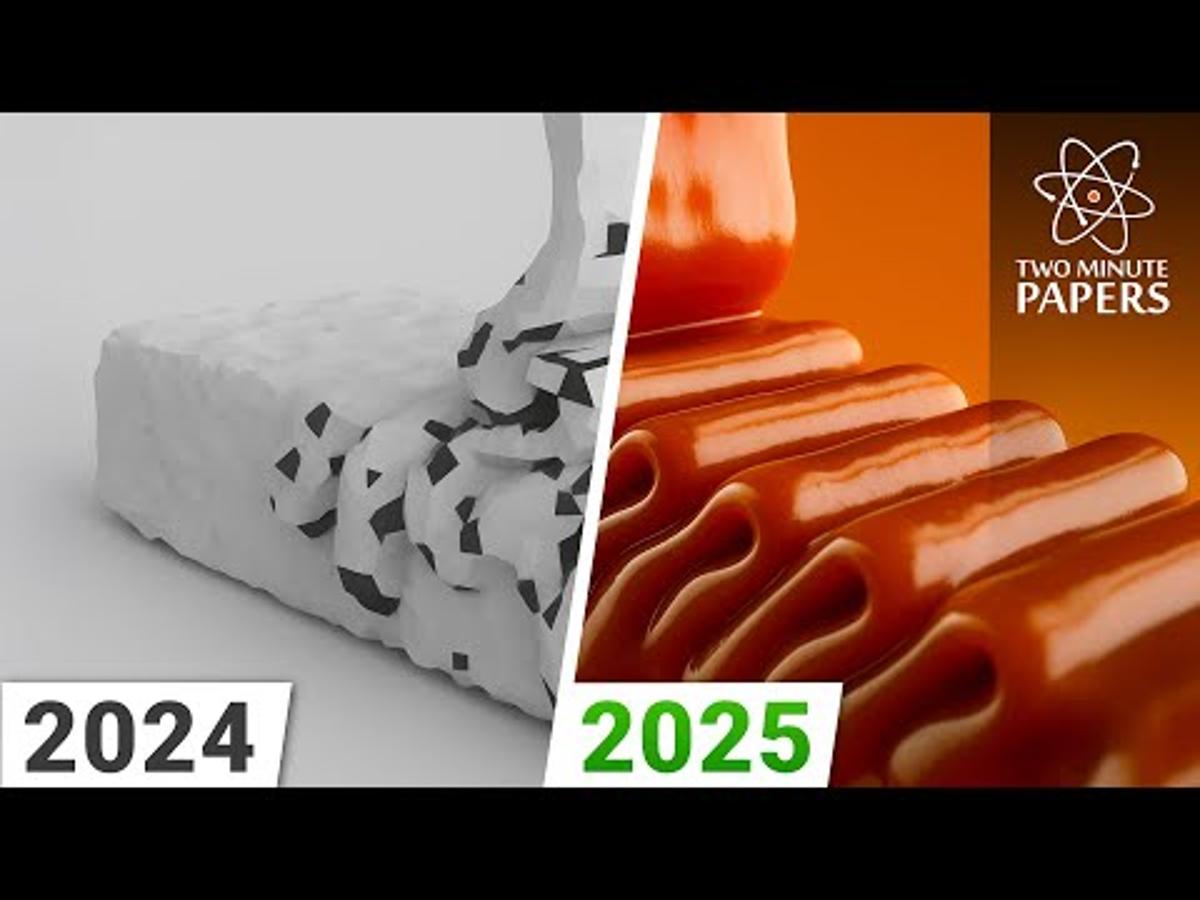
You’ll Never Look At Chocolate TV Ads The Same Way Again
The video explains a breakthrough in computer‑generated fluid dynamics that could finally make the impossible‑looking chocolate‑and‑caramel splashes in TV ads look authentic. It centers on a five‑year‑old research paper by Ryoichi Ando, advised by Chris Batty, which introduces a...
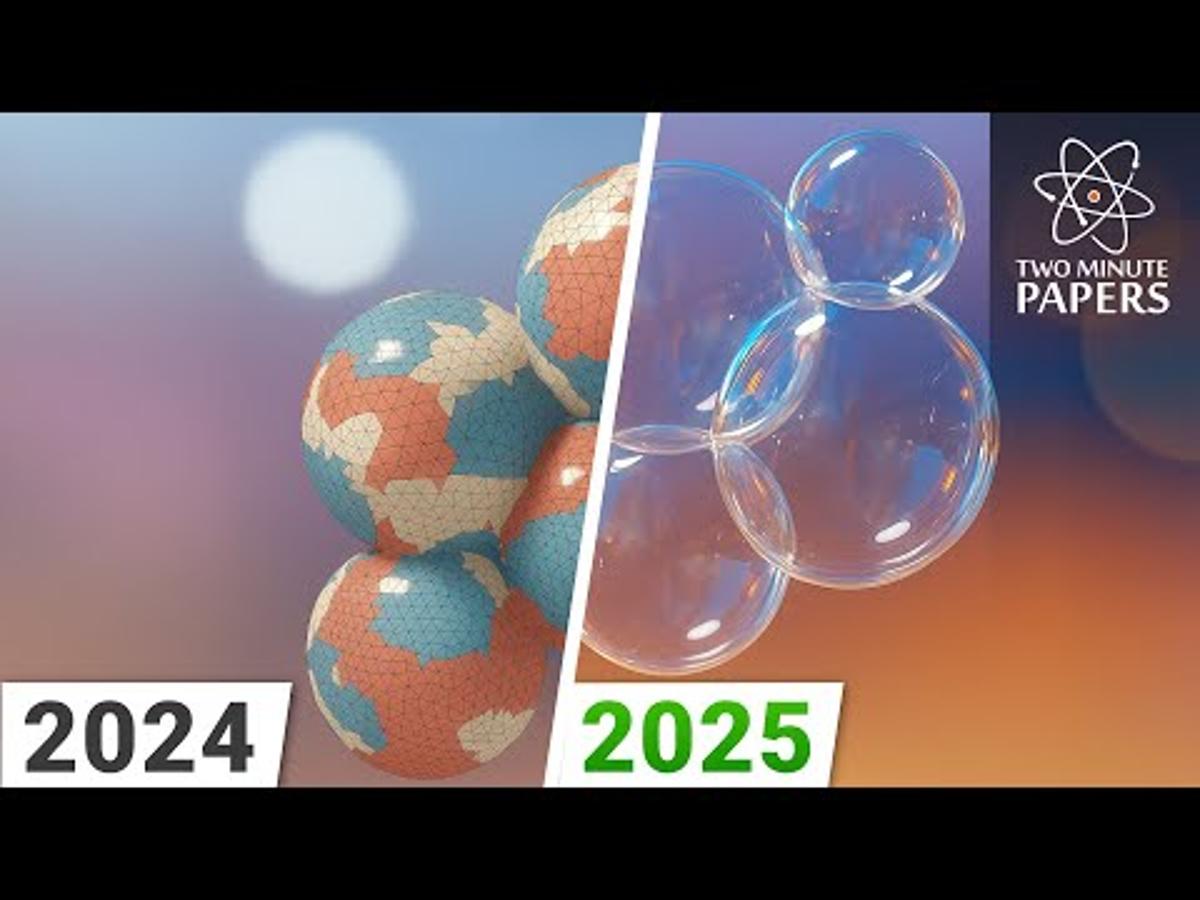
The Physics Glitch Everyone Gave Up On… Finally Fixed
The video spotlights a breakthrough in computer graphics simulation that finally overcomes a long‑standing bottleneck in realistic fluid and multi‑material dynamics. For over a decade, researchers have struggled with mesh‑based collision handling that required explicit “cut‑and‑glue” operations, causing simulations of...
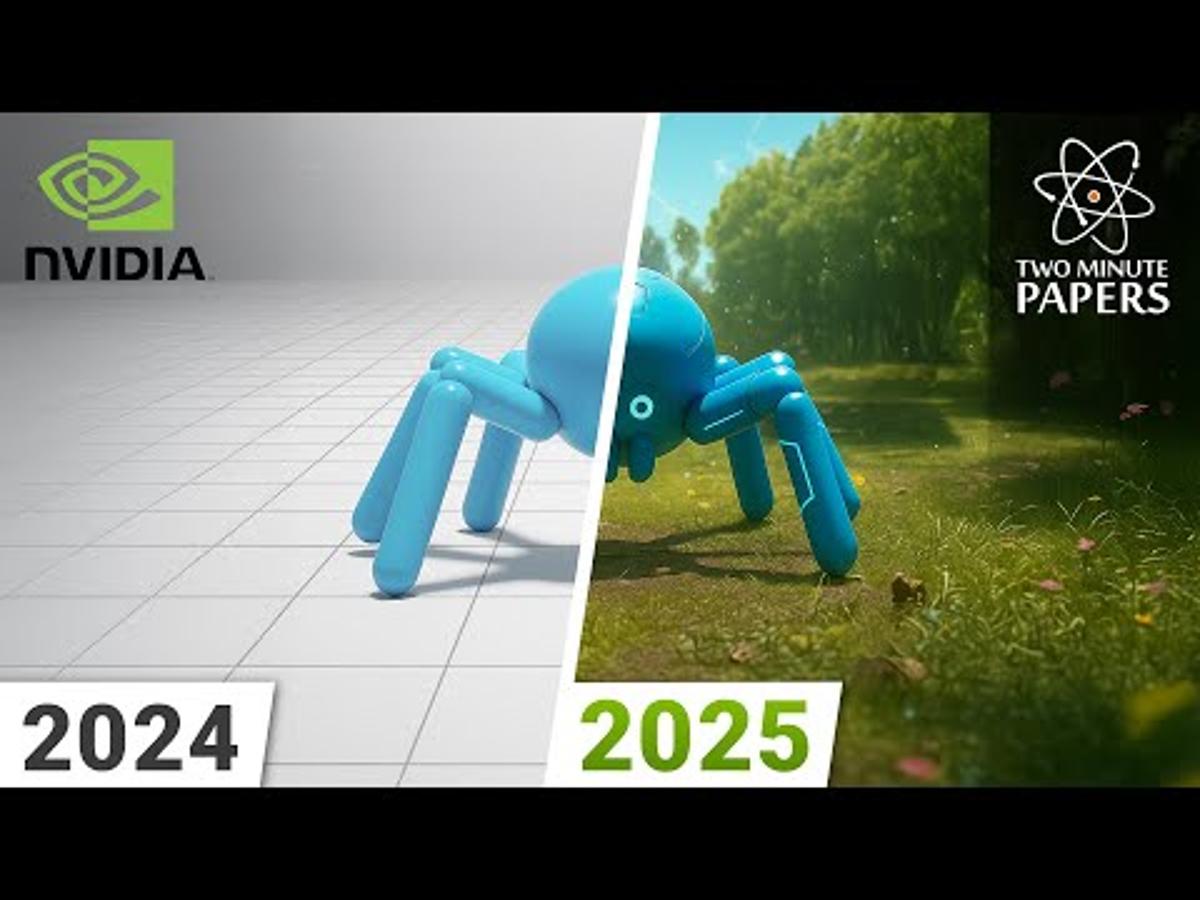
NVIDIA’s New AI Just Made Real Physics Look Slow
The video spotlights NVIDIA’s newly unveiled neural physics engine, NeRD (Neural Robot Dynamics), which replaces hand‑crafted equations with a deep‑learning model that predicts robot motion. By ingesting massive amounts of simulated footage, NeRD learns the underlying physics and can...
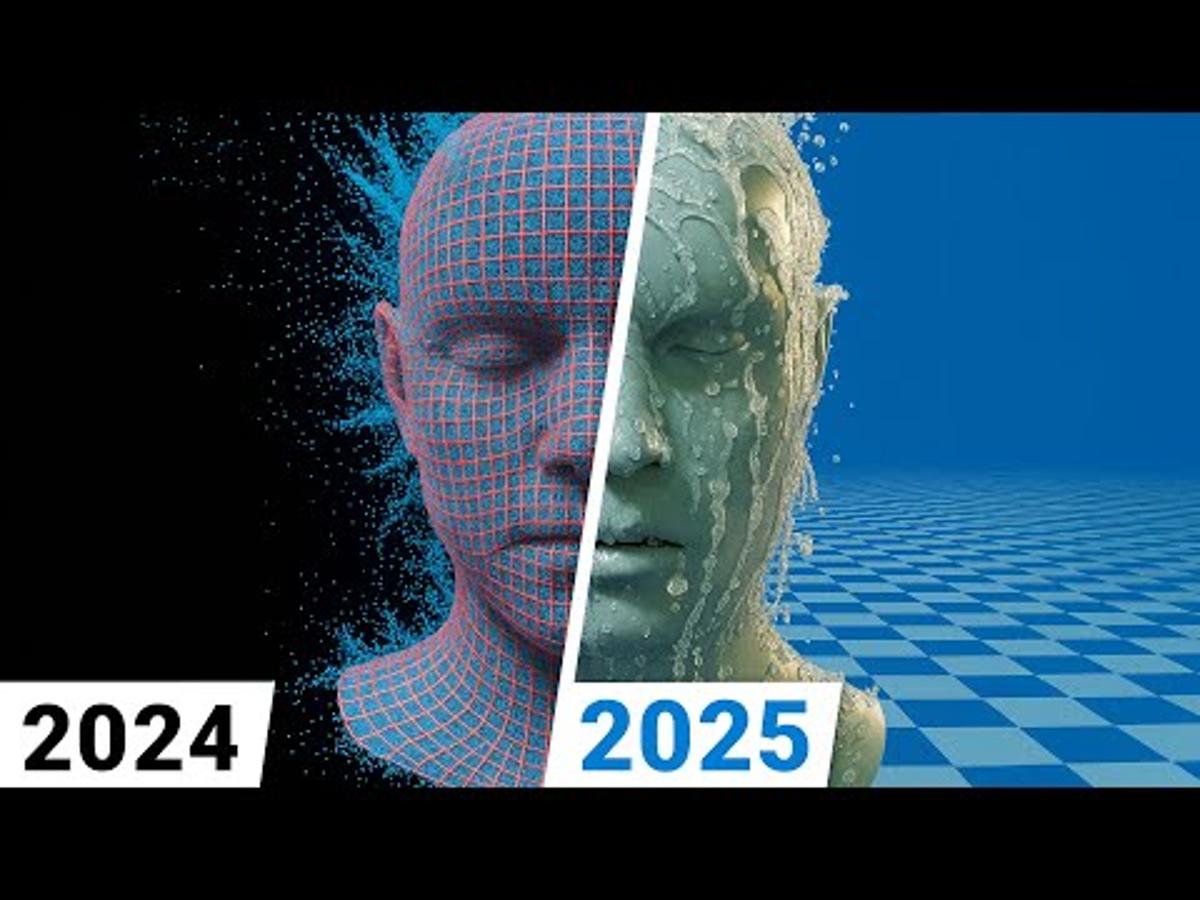
They Said It Was Impossible… Weta FX Just Solved It
The video spotlights a breakthrough in fluid dynamics simulation developed by Weta FX and detailed in a recent Eurographics paper. The researchers introduced a unified particle‑to‑grid framework that can faithfully render bubbles ranging from microscopic foam to large, coalescing...
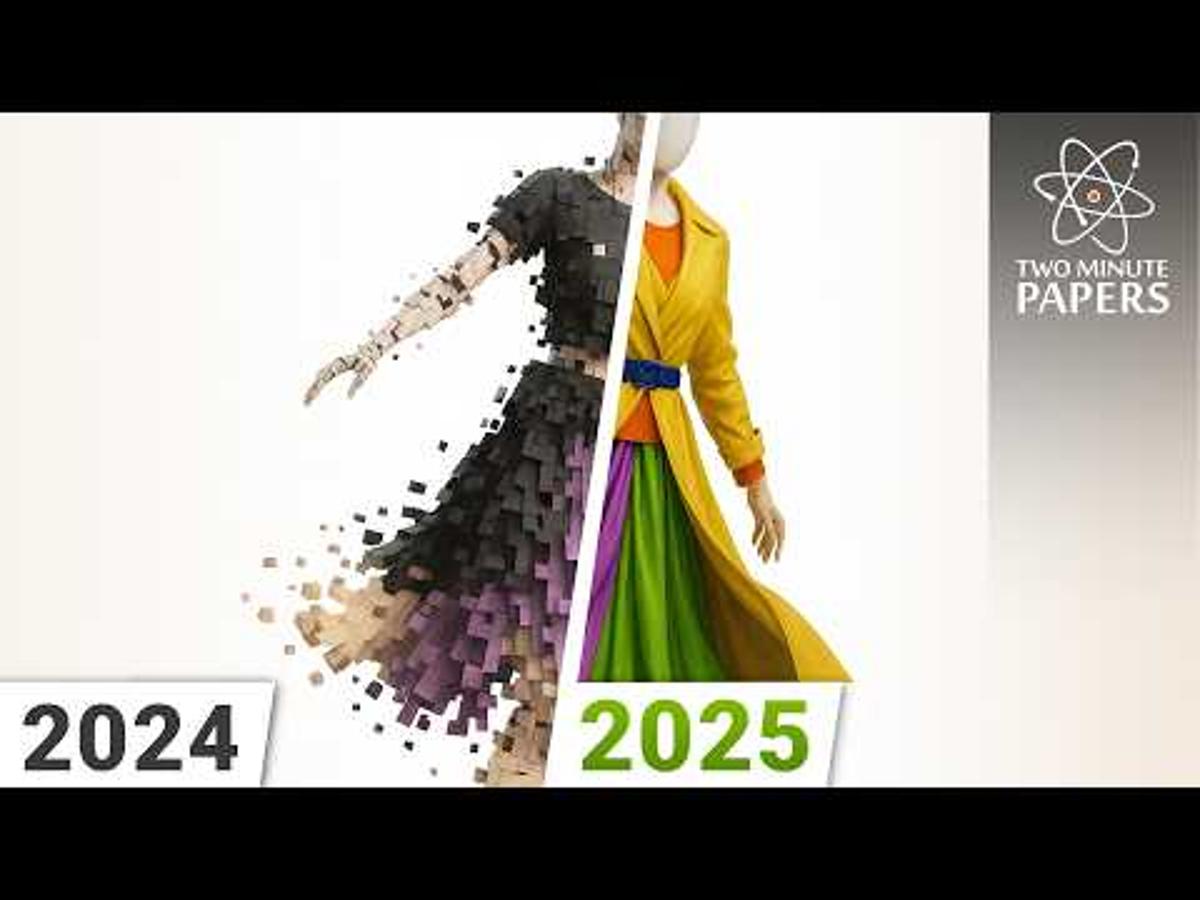
New AI Just Made Fashion In Games Real
The video spotlights a breakthrough research paper from UCLA and the University of Utah that promises to change how digital clothing is created for games and virtual worlds. By feeding a single photograph into an "image‑to‑3D" pipeline, the system can...
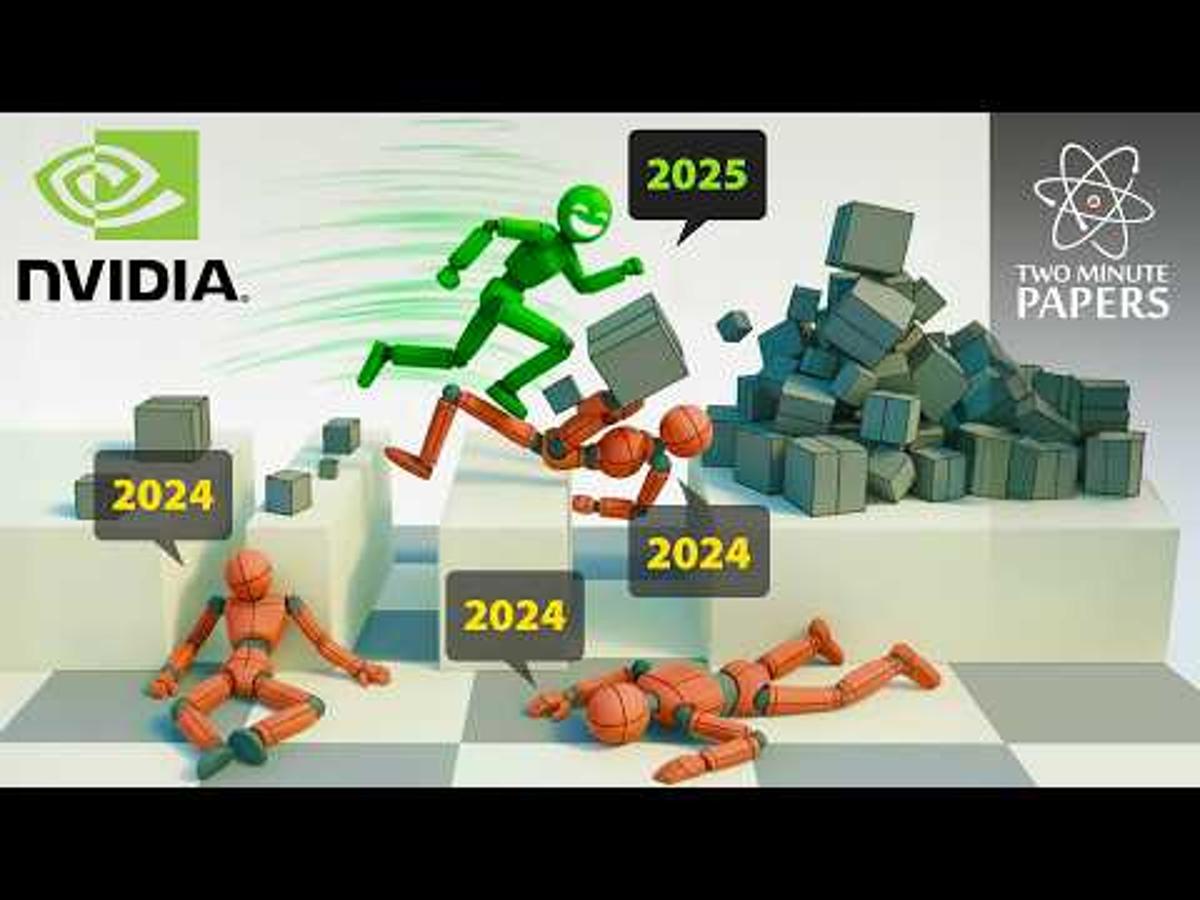
NVIDIA’s New AI’s Movements Are So Real It’s Uncanny
The video spotlights a recent breakthrough in physics‑based character animation: the Adversarial Differential Discriminator (ADD). Building on the 2018 DeepMimic framework, which turned motion imitation into a video‑game‑style reward‑maximization problem, ADD replaces dozens of hand‑crafted score counters with a single...
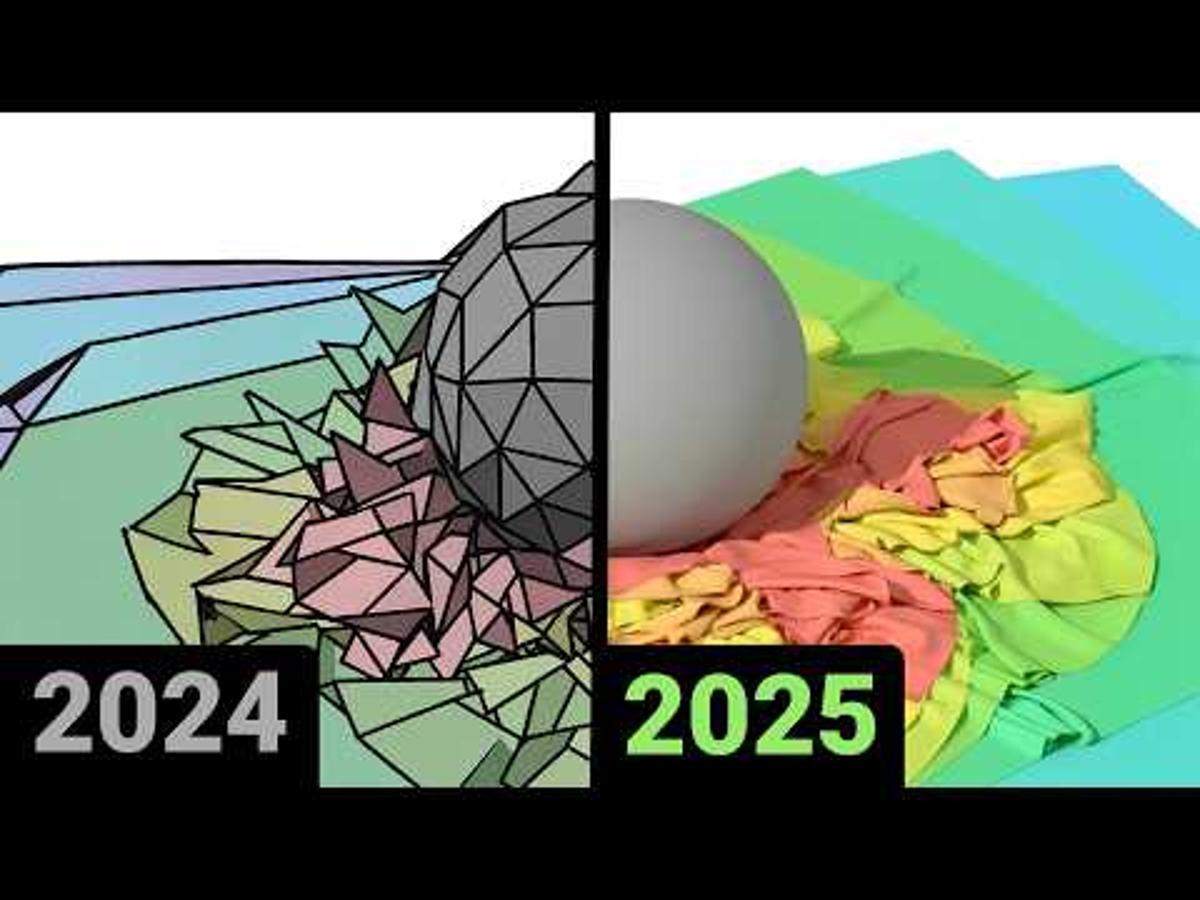
The Worst Bug In Games Is Now Gone Forever
The video spotlights a breakthrough research paper that finally eliminates the age‑old clipping problem plaguing real‑time graphics. By replacing the traditional “logarithmic barrier” collision handling with a novel “cubic barrier” approach, the method guarantees that even millions of thin...
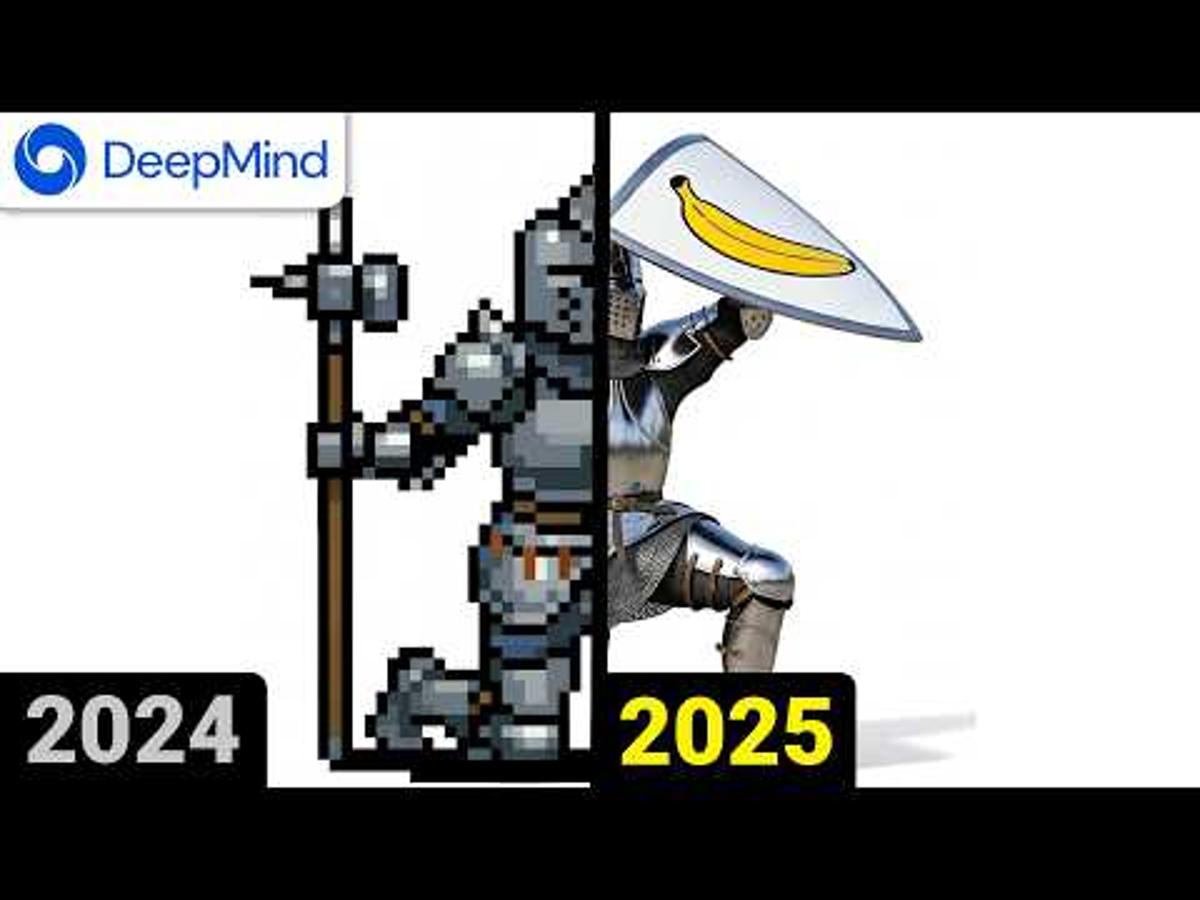
DeepMind’s AI Just Solved Video Generation In A Way Nobody Expected
The video spotlights DeepMind’s latest generative video model, Veo 3, which can turn a simple text prompt into high‑fidelity video. The presenter, Dr. Károly Zsolnai‑Fehér of Two Minute Papers, frames the announcement as a “game‑changing” moment for AI, noting that the...

Why Gamers Will Never See Hair The Same Way Again
The video spotlights a breakthrough research paper on hair rendering that promises to change how developers store and display hair in real‑time graphics. Rather than relying on traditional mesh‑based representations, the authors introduce a "hair mesh" that acts as...
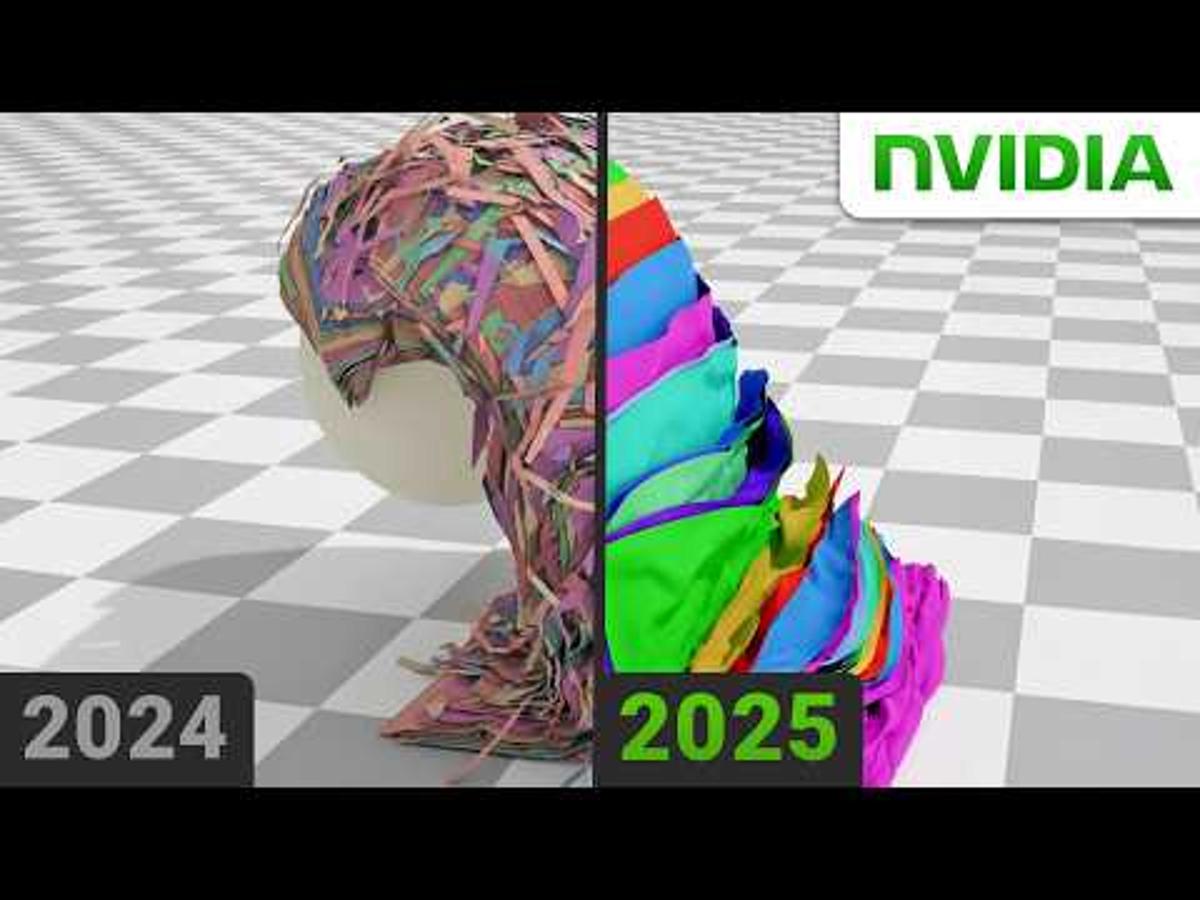
NVIDIA Just Solved The Hardest Problem in Physics Simulation!
The video spotlights a breakthrough in computer‑generated physics called Offset Geometric Contact (OGC), a technique that finally delivers truly penetration‑free simulations at speeds previously thought impossible. Developed by a star‑studded team of graphics researchers and highlighted by NVIDIA’s hardware, OGC...
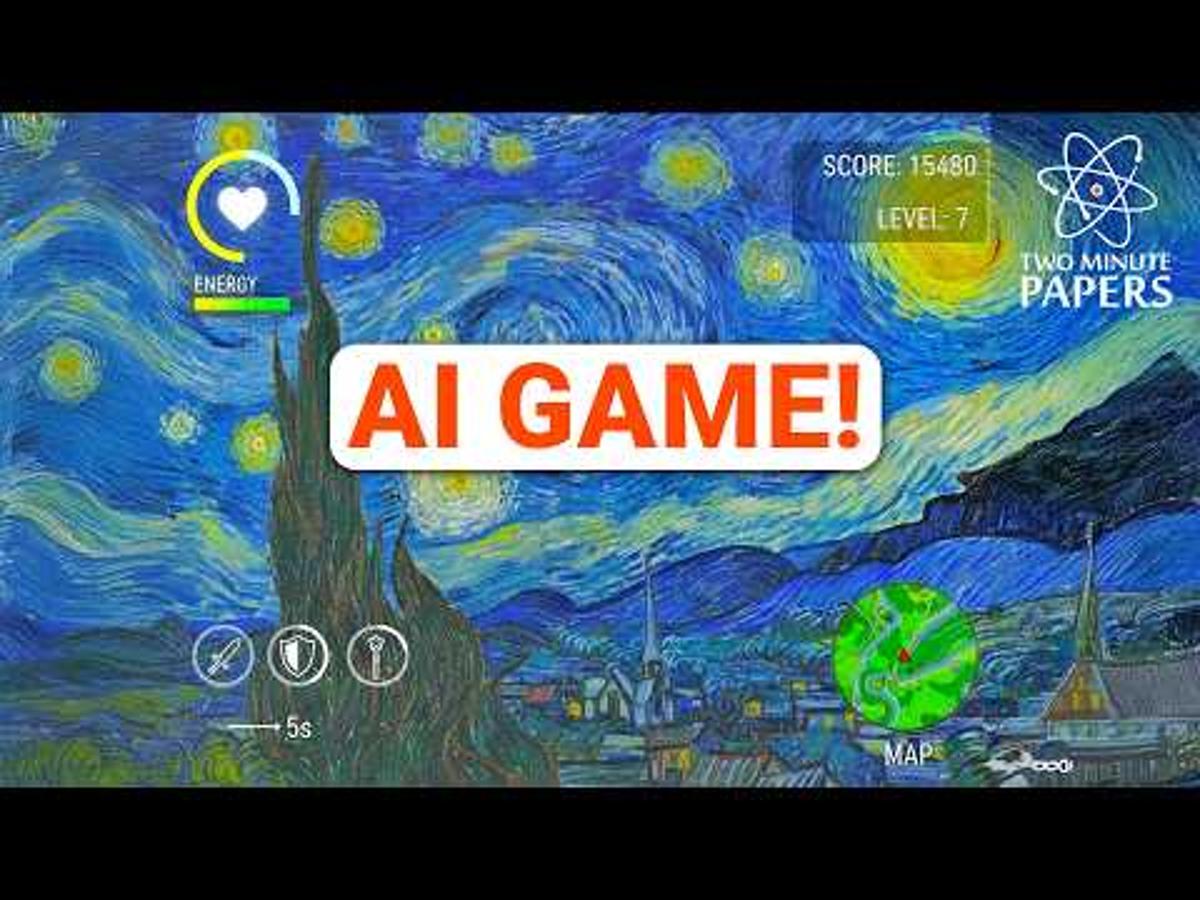
The Next Level of AI Video Games Is Here!
The video spotlights a new AI system dubbed Magica 2 that can ingest a static image—whether a photograph, a painting like Van Gogh’s *Starry Night* or a hand‑drawn sketch—and output a fully playable video‑game environment. The presenter emphasizes that the demo is...