Two Minute Papers
A channel delivering quick summaries of the latest research papers in science and tech. While it often covers AI and graphics, it also features significant nanotechnology research (like new nano-materials or microscopic science breakthroughs) explained succinctly, complete with paper visuals.
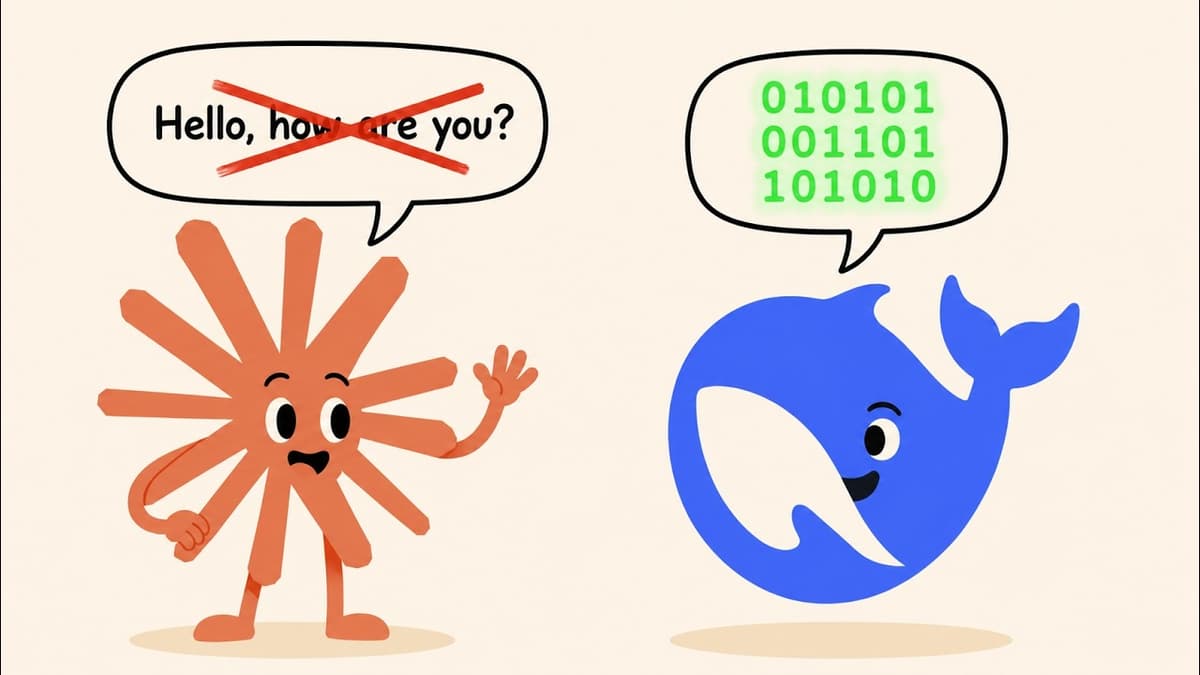
Scientists Found A Better Language For AI Agents
The video discusses a recent research paper that introduces a novel communication protocol for AI agents: cross‑agent latent‑state transfer. Instead of exchanging natural‑language tokens, agents pass raw internal representations directly, effectively linking their "brains" and bypassing the costly decode‑encode cycle. The authors demonstrate that this architecture dramatically improves performance on competition‑level math problems. Small sub‑10‑billion‑parameter models jump from 73% to 86% accuracy, while token consumption falls by roughly 75%, slashing compute requirements. A controlled study confirms the gains stem from the latent‑state linking rather than merely a superior teacher model. Key examples include a $4‑training‑cost experiment that outperforms traditional text‑based pipelines, and a clear scaling signal: more reasoning rounds yield better answers up to an optimal latent‑thought length of about 80 steps. The code and models are released publicly, inviting replication and extension. If the approach scales, it could democratize high‑performance AI by letting modest models rival larger, expensive systems, reshaping cost structures and prompting new toolchains for LLM development. However, current evidence is limited to smaller models, and practical deployment will require further engineering and validation.
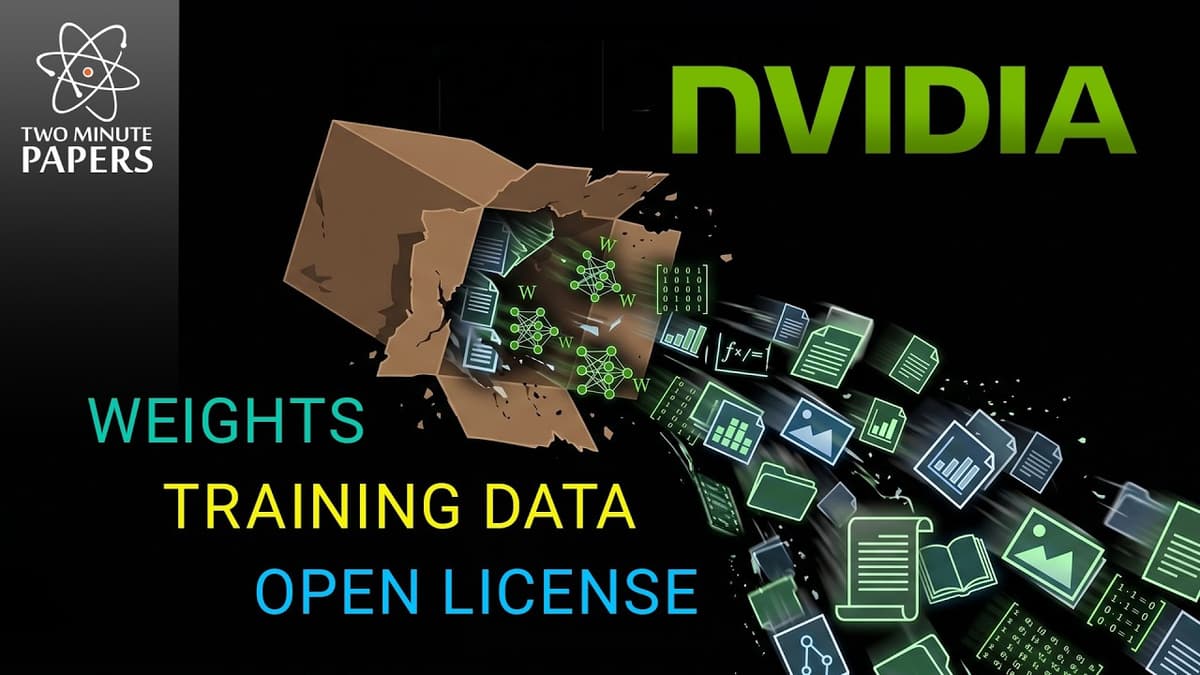
NVIDIA's New Free Al - A Gift To All Of Us
Nvidia unveiled Neotron 3 Ultra, a 550‑billion‑parameter language model released under an open‑MDW license and offered free forever. The model achieves “blazing” inference speed by activating only ~10 % of its parameters per token, using a mixture‑of‑experts architecture, Mamba‑style layers, and low‑precision...
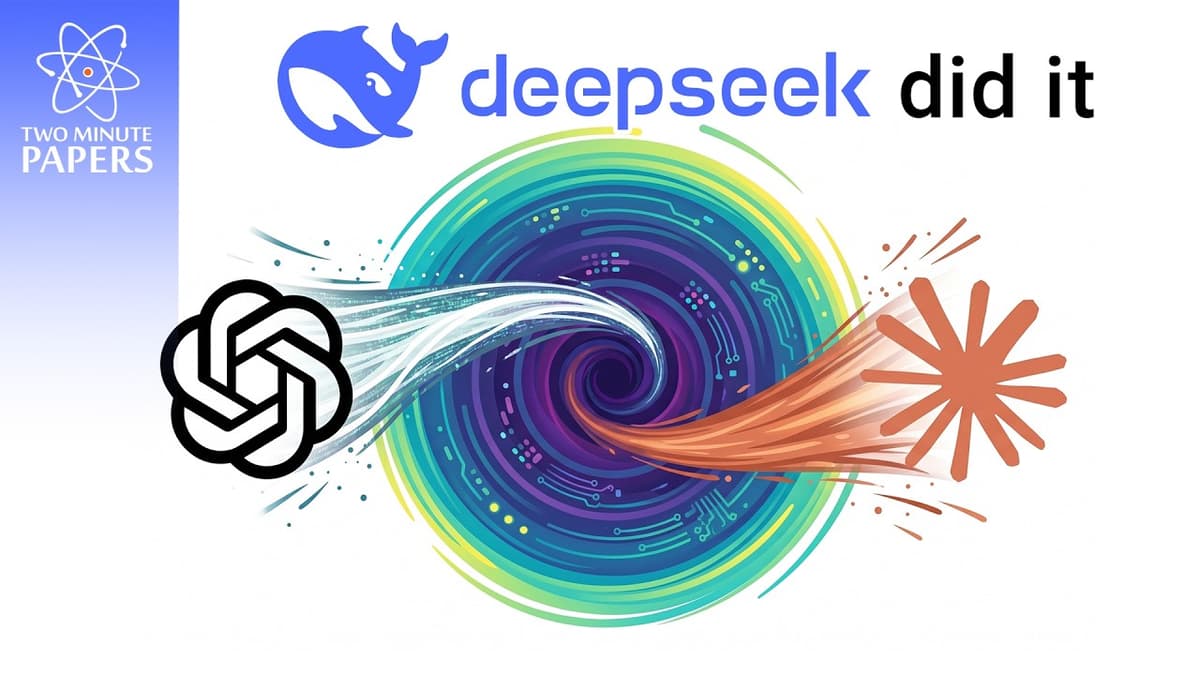
DeepSeek’s New AI Is A Game Changer
The video spotlights DeepSeek’s new AI architecture that replaces traditional dense visual processing with a "pointing" paradigm, allowing the system to reference specific image regions while reasoning. By treating visual primitives as tokens, the model slashes visual token consumption by...
NVIDIA New AI Is An Efficiency Monster
Nvidia (via DeepSeek) released a new open 30-billion-parameter multimodal model that processes images, video and audio with dramatically higher throughput and lower cost than prior open systems—claiming nearly 10 hours of video processed per hour and substantial speedups over rivals....
DeepSeek V4 AI Beats Billion Dollar Systems…For Free
DeepSeek V4, the latest open‑weight large language model from the Chinese startup DeepSeek, was unveiled with a 58‑page research paper and immediate public access. The model boasts a 1‑million‑token context window—far larger than most commercial offerings—and is released for free,...
NVIDIA's New AI Broke My Brain
NVIDIA unveiled a new teleoperated robot controller, dubbed “Sonic,” that can watch a human perform a task and instantly translate those motions into precise joint commands for a robot. The system is not limited to visual cues; it accepts video,...

NVIDIA’s New AI Shouldn’t Work…But It Does
The video dissects a breakthrough AI framework that teaches robots by watching billions of video frames rather than relying on costly real‑world trials. By ingesting a 44,000‑hour, 4‑billion‑frame dataset of human activity, the system learns to infer actions without explicit...

Google’s New AI Just Broke My Brain
Google unveiled TurboQuant, a new compression technique for the key‑value (KV) cache of large language models, promising dramatic reductions in memory usage and faster attention processing. The announcement arrived amid soaring hardware costs, positioning the method as a potential game‑changer...

DeepSeek Just Fixed One Of The Biggest Problems With AI
The video dissects DeepSeek AI’s recent paper introducing Engram, a memory‑augmented module that gives transformer‑based models a cheap, fast lookup pantry for factual information. By embedding n‑gram representations and using multi‑head hashing, Engram sidesteps the costly, from‑scratch reasoning that current...
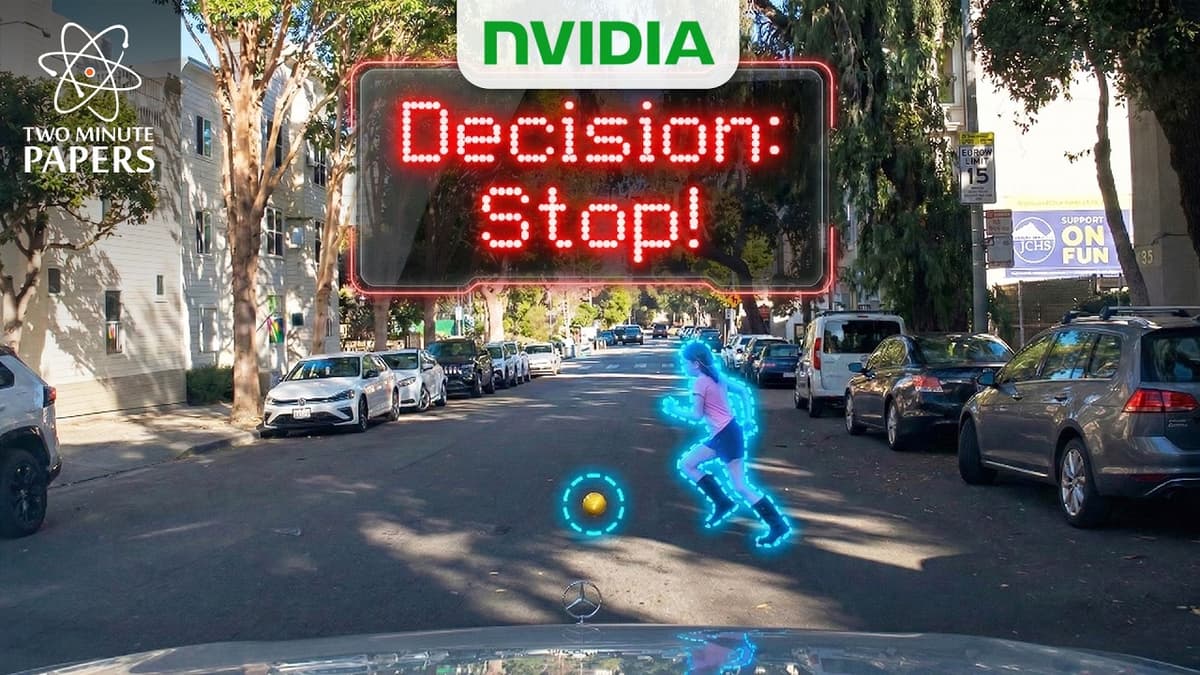
NVIDIA’s New AI Just Cracked The Hardest Part Of Self Driving
The video spotlights NVIDIA’s latest breakthrough: an open‑source reasoning engine for autonomous vehicles that ships with model weights, inference code, and a slice of training data. By making the system publicly downloadable, researchers and hobbyists can now experiment with a...
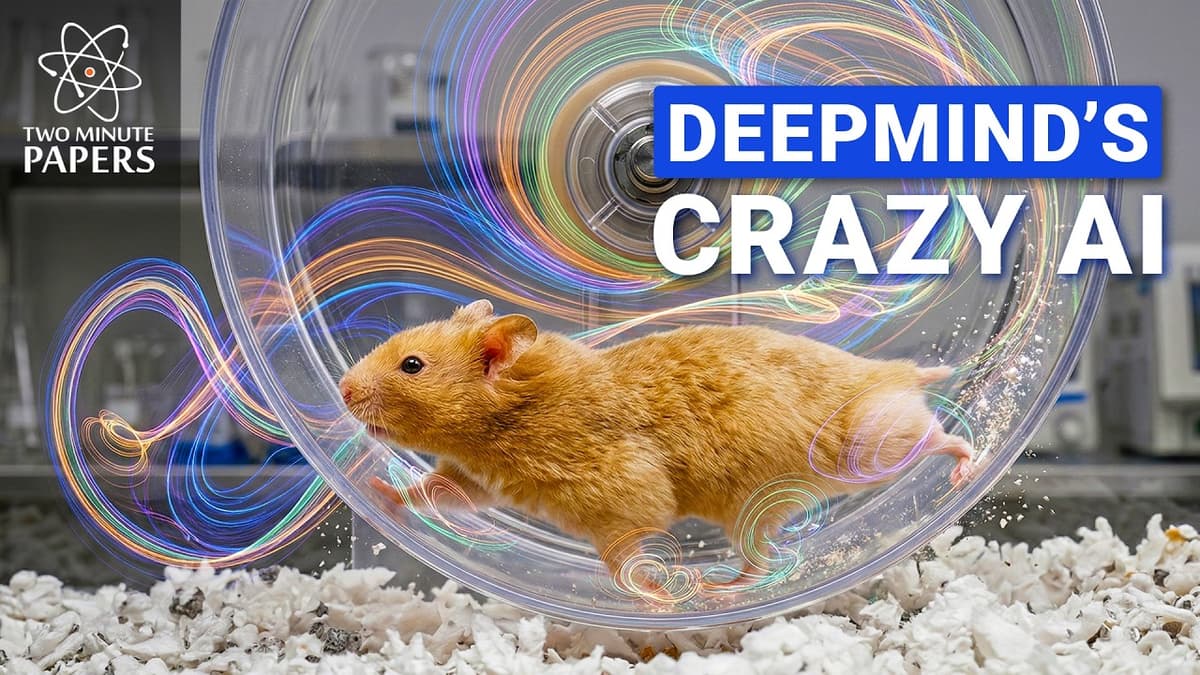
How DeepMind’s New AI Predicts What It Cannot See
DeepMind’s new D4RT system pushes 4‑dimensional scene reconstruction from ordinary video into the mainstream, turning a 2‑D clip into a dynamic point‑cloud that captures depth, motion and time. Unlike earlier pipelines that stitched together separate depth, optical‑flow and pose networks and...
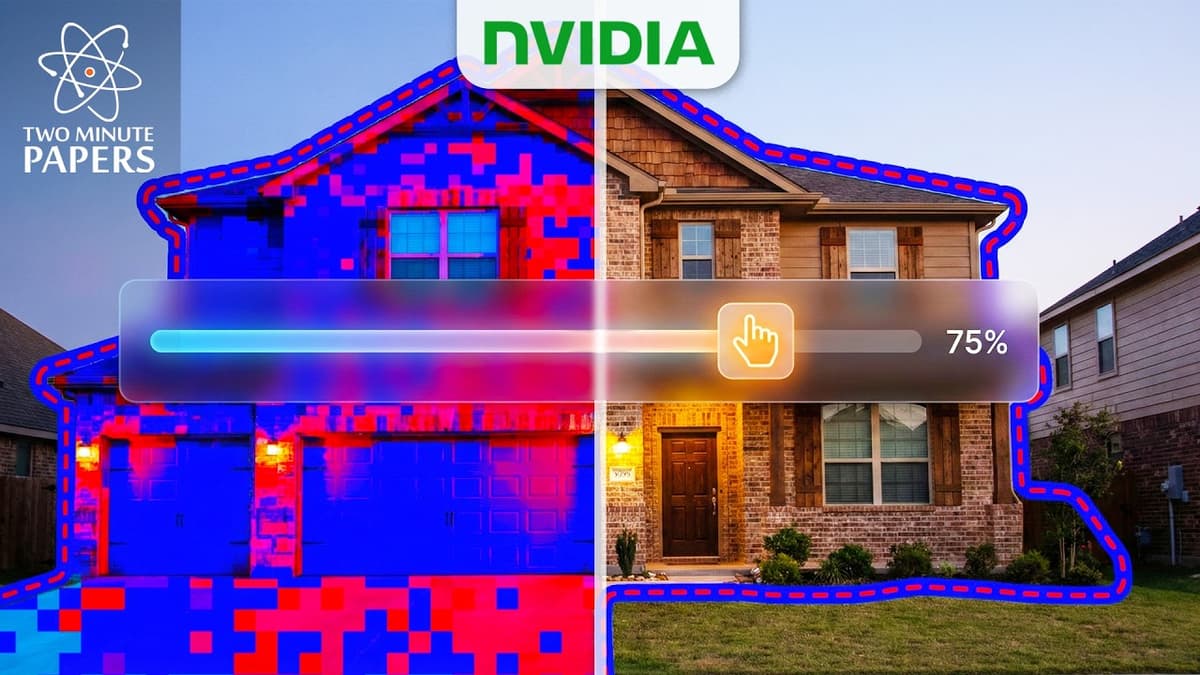
NVIDIA’s New AI Turns Photos Into Reality
NVIDIA unveiled PPISP, an AI‑driven pipeline that converts a set of ordinary photographs into a smooth, photorealistic video. By learning the underlying scene geometry and correcting camera‑induced distortions, the system can synthesize frames that were never captured. Traditional neural radiance fields...

Anthropic Found Why AIs Go Insane
Anthropic researchers have pinpointed the root cause of erratic behavior in today’s AI assistants – a gradual drift away from their core “helpful assistant” persona. The phenomenon, which can be triggered by user prompts or emotional cues, leads the model...

NVIDIA’s New AI: Erasing Reality
NVIDIA's research team unveiled Omnimatte Zero, a new AI system that can delete objects, shadows and other secondary effects from video footage in real time. The method, a collaboration between NVIDIA and external labs, builds on off‑the‑shelf diffusion models and requires...
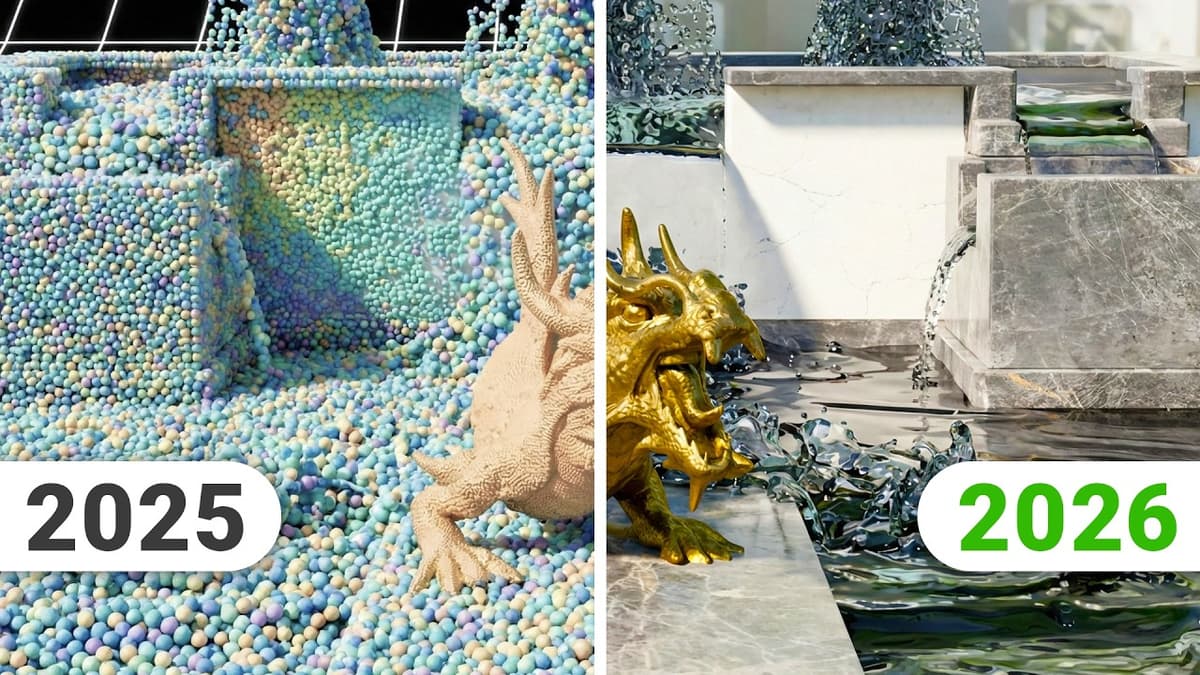
This Fluid Simulation Should Not Be Possible
The video spotlights a breakthrough fluid‑simulation framework that combines an adaptive octree (referred to as an "arct tree") with a branch‑less traversal algorithm, allowing researchers to animate tens of millions of particles in real time. Traditional uniform‑grid approaches struggle as...