
I Never Wanted to Homeschool. Why I'm Grateful I Did | Everyone Gets a Juice Box
The video follows Debbie Reber’s turbulent educational journey, culminating in a forced pivot to homeschooling after her husband’s job transfer to the Netherlands. After cycling through three Seattle schools—including a gifted private academy, a small supportive private school, and a public magnet program with an IEP—Debbie found each setting unable to accommodate her child’s intense dysregulation and rejection‑sensitive dysphoria. Key moments illustrate systemic gaps: a handwriting assignment that sparked a chair‑kicking outburst, a teacher‑led “offenses” meeting that labeled the child a problem, and Dr. Ross Greene’s insight that “unlucky kids” are often misread as behavioral issues. These incidents underscored the lack of empathy and flexible problem‑solving in traditional classrooms, prompting Debbie to consider alternatives despite initial resistance. The decisive turning point arrived over sushi in Seattle, where Debbie finally acknowledged that homeschooling was the most viable solution for her child’s needs and her own sanity. She framed the transition as a new project, leveraging a friend’s homeschooling guide to create schedules, curricula, and coping strategies, while wrestling with personal feelings of selfishness, career sacrifice, and the logistical nightmare of moving abroad. Debbie’s story highlights homeschooling as both a lifeline for neurodivergent learners and a source of significant parental stress. It calls attention to the urgent need for schools to adopt empathetic, individualized approaches and for policymakers to streamline homeschooling approvals, especially in expatriate contexts.

The Biggest Special Education Myths – Debunked by a Special Ed Teacher | Experts Answer
The video features Stephanie DeLessi, a dual‑certified special‑education teacher, who systematically dismantles common misconceptions about special education, from the idea that accommodations are cheating to the belief that IEPs limit college prospects. She explains that accommodations are essential access tools, likening...
PMDD: Why Women with ADHD Are 4x More Likely to Struggle | Hyperfocus
The Hyperfocus episode spotlights the hidden crisis facing women with ADHD, who face dramatically higher rates of premenstrual dysphoric disorder (PMDD) and perinatal mood disorders. Host Ray Jacobson interviews Jenna Plonsky, a 34‑year‑old mother diagnosed with ADHD, anxiety, PMDD, and...
ADHD and Taxes: How to Stop the Annual Panic
The video tackles the annual tax‑season crisis that many people with ADHD face, hosted by Dr. Jay, a licensed psychologist who explains why filing taxes feels like a surprise attack for neurodivergent brains. He breaks down the specific ADHD symptoms—poor working...
Your ADHD Brain Can Actually “Sleep” When You’re Awake
Researchers measured EEG activity in adults with ADHD and neurotypical controls while they performed monotonous, repetitive tasks. The study found that even when participants were fully awake, those with ADHD showed intermittent bursts of slow‑wave, sleep‑like activity. These episodes were...

Parenting with ADHD: Balancing Chaos and Consistency | Everyone Gets a Juice Box
The episode of Everyone Gets a Juicebox focuses on Danielle Elliot, a documentary journalist who chose single motherhood while navigating her recent ADHD diagnosis. Elliot discusses how her neurodivergent brain reshapes traditional parenting advice, emphasizing the need for routines that...
AuDHD Explained: Can You Have ADHD and Autism at the Same Time? | Experts Answer
Dr. Mark Burton, a developmental pediatrician, explains that ADHD and autism can coexist and clarifies how each condition uniquely impacts cognition and behavior. He outlines the core distinctions—ADHD stems from executive‑function deficits affecting life‑management skills, while autism involves deficits in...

A Jury Found Meta and YouTube “Addictive” — 3 Ways to Help Kids Limit Scrolling
A recent jury verdict labeling Meta and YouTube as “addictive” platforms for children has intensified scrutiny of social‑media design, prompting pediatric experts to offer concrete guidance for families. The pediatrician‑host explains that while social media is not inherently harmful, its...
ADHD and How Guilt Hijacks Your Brain
The video, hosted by licensed psychologist Dr. Jay, explores why people with ADHD experience guilt that feels disproportionate and persistent, distinguishing it from shame and explaining how executive‑function deficits fuel this emotional overload. Key insights include the way impaired planning, working...

How to Set Achievable Goals with ADHD | ADHD And
The video tackles how people with ADHD can set realistic, achievable goals by shifting away from vague resolutions like “get healthier” toward concrete, progress‑oriented targets. It explains that the ADHD brain’s executive function struggles with long‑term reward systems, making broad...

How We Discovered My Daughter Has Dyscalculia | Everyone Gets a Juice Box
Laura Jackson, a mother on an island near Seattle, recounts her decade-long struggle to get her daughter Emma help for persistent math difficulties that began in elementary school and culminated in heartbreaking moments like asking “Am I stupid?” After spotting...
Psychotherapist Explains Why Rejection Hurts so Much with ADHD (RSD) | Experts Answer
Sarah Greenberg, a Harvard‑trained psychotherapist, explains rejection‑sensitive dysphoria (RSD) – an extreme emotional reaction to real or imagined social rejection, especially common among people with ADHD. She frames RSD as a “hyper‑sensitive smoke alarm” that often sounds without actual danger,...

How to Repair with Your Child After Making a Mistake | The Opportunity Gap
The video addresses how parents can repair a moment when they act hastily or snap at their child, emphasizing that missteps are inevitable but can become teachable moments. It encourages parents to circle back after an incident, acknowledge the error,...

What Hormone Shifts Do to ADHD (New Research Explained)
The video discusses a new study that surveyed 600 women and people assigned female at birth to examine how hormonal shifts influence ADHD symptoms. Researchers found that menopause produced the most dramatic symptom surge, with 97% reporting worsening and 85%...
The Myth of Work-Life Balance with a Neurodivergent Child | Everyone Gets A Juice Box
Laura Mayer discusses the strain of juggling a demanding career while caring for her newly diagnosed neurodivergent daughter. She describes the emotional toll of long hours and endless to‑dos, ultimately deciding to trust her instincts and make bold professional choices....
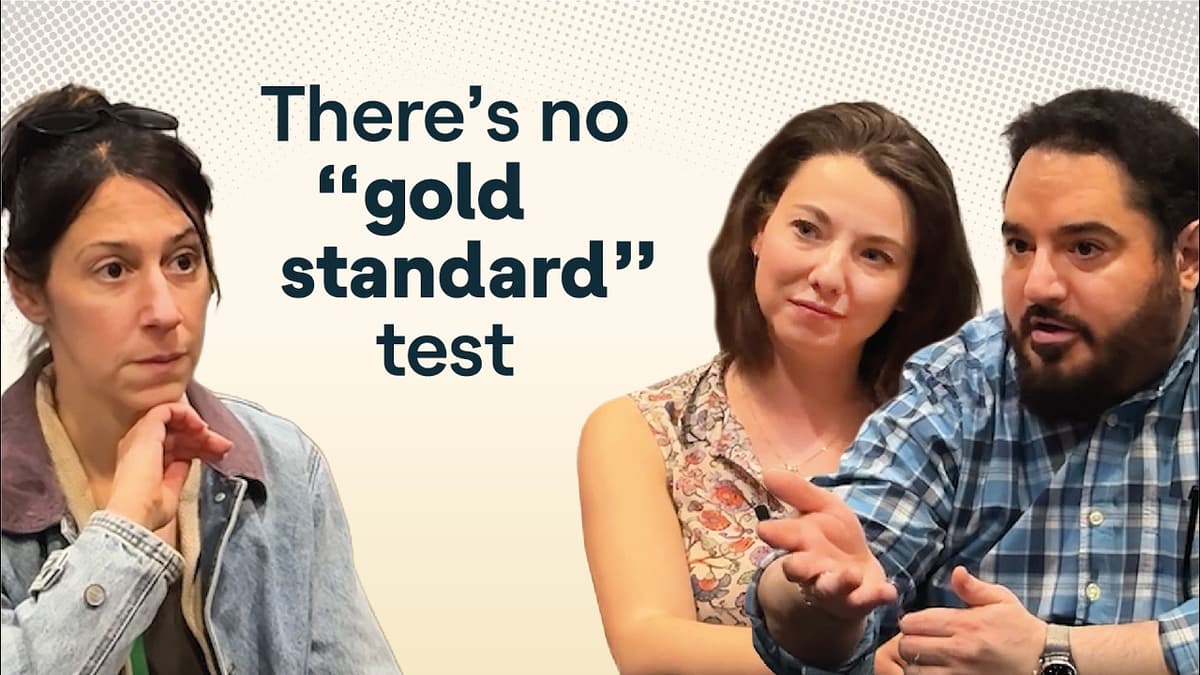
Why Adult ADHD Is so Hard to Diagnose | Hyperfocus
The video examines why diagnosing ADHD in adults remains a contentious and unresolved challenge, emphasizing that unlike pediatric assessments, there is no universally accepted gold‑standard test for adults. Experts Dr. Jessica Rosenfeld and Dr. Renee Kerian explain that current criteria stem...