
Recent Posts
Video•Feb 27, 2026
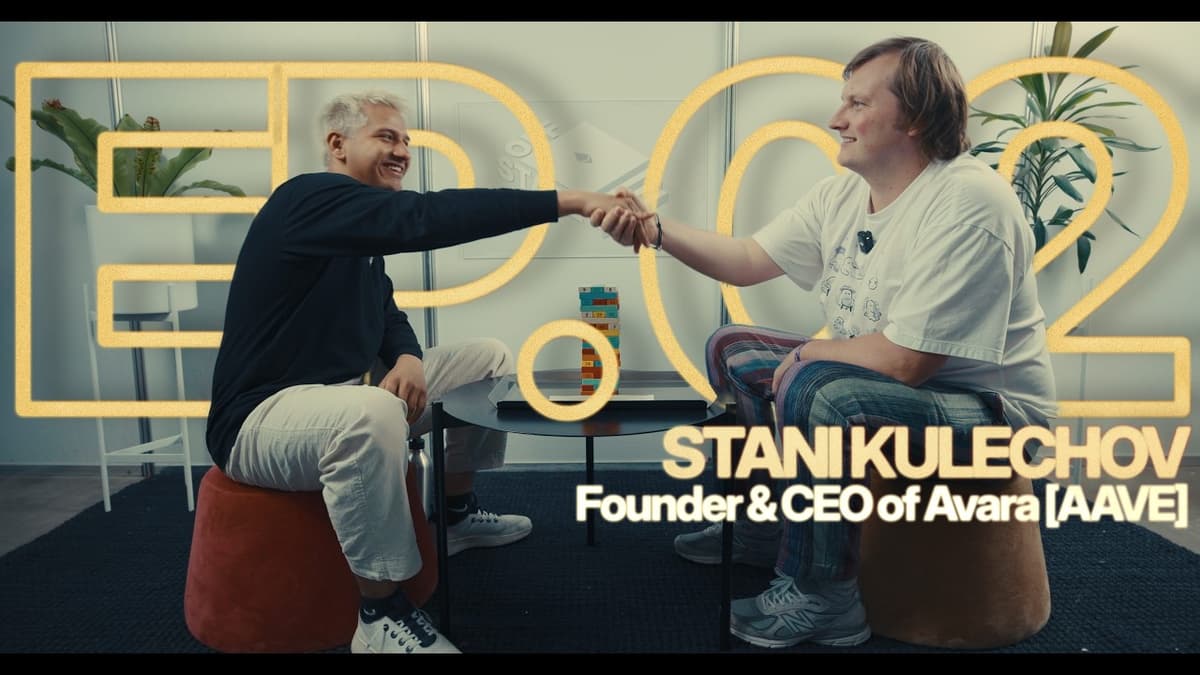
Stani Kulechov On: Saving Six Months for a Computer, Dropping Out of High School, and Building AAVE
The interview with Stani Kulechov, founder of Aave, traces his journey from a modest Finnish upbringing to leading one of the world’s most successful decentralized finance protocols. Kulechov recounts how his father saved half a year’s wages to purchase a computer in 1997, prompting an early fascination with the internet. He dropped out of high school at thirteen to program full‑time, later building fintech marketplaces before discovering Ethereum. His first Aave prototype, posted on Reddit, was initially met with confusion, yet it introduced collateralized borrowing—a concept that now underpins the entire Ethereum ecosystem. He explains the naming of Aave, drawn from the Finnish word for ‘ghost,’ reflecting the protocol’s invisible, trustless operation. Kulechov emphasizes community, noting that early Ethereum events grew from a few hundred attendees to thousands, and that cultural initiatives like RAV reinforce shared values. He also highlights the recent launch of the Aave app, designed to lower friction for mainstream users, even his own parents. The discussion underscores Aave’s shift toward user‑friendly interfaces as a catalyst for broader DeFi adoption, while Kulechov’s long‑term focus on infrastructure and community suggests the protocol will continue to bridge traditional finance and decentralized networks.
By Vitalik Buterin

Video•Feb 26, 2026
Stani Kulechov On: Saving Six Months for a Computer, Dropping Out of High School, and Building AAVE
Stani Kulechov grew up in a blue‑collar family where his father saved six months to buy their first computer, sparking a lifelong passion for code. He began programming at 13, left high school after one year to code full‑time, and...
By Vitalik Buterin

Social•Feb 19, 2026
Ethereum L1 Research Accelerates: Scaling, UX, Security
Ethereum L1 protocol research is taking leaps forward in 2026. A good post from @ralexstokes: https://t.co/XPa4bmYnJF * Scale * Improve UX * Harden
By Vitalik Buterin

Social•Feb 19, 2026
FOCIL + EIP‑8141 Ensure Near‑Instant, Censorship‑Resistant Inclusion
There is also an important synergy between FOCIL and AA (EIP-8141, which is based on 7701): 8141 makes not just smart accounts (including multisig, quantum-resistant signatures, key changes, gas sponsorship) first-class citizens, it also can do the same for privacy protocols...
By Vitalik Buterin

Social•Feb 16, 2026
Ethereum’s Permissionless Nature Transcends Personal Disagreements
You do not have to agree with me on which applications are and are not corposlop to use Ethereum. You do not have to agree with me on what trust assumptions are acceptable in which situations to use Ethereum. You do not...
By Vitalik Buterin

Social•Feb 13, 2026
Tomasz Revitalizes Ethereum Foundation with Fresh Vision
Tomasz has always impressed me with his work ethic, his unique personality, and the kind of organization that he built at Nethermind. He brought a perspective on Ethereum, what blockchains fundamentally are, and how they fit into the future of...
By Vitalik Buterin

Social•Feb 12, 2026
Crypto Incentives Work When Backed by Real Value
My first reaction to this was: "And that's why I just got my $2,725 check of fileverse tokens now that fileverse has grown to the point where my dad regularly writes docs in fileverse that he sends to me" My second reaction...
By Vitalik Buterin
Video•Feb 11, 2026
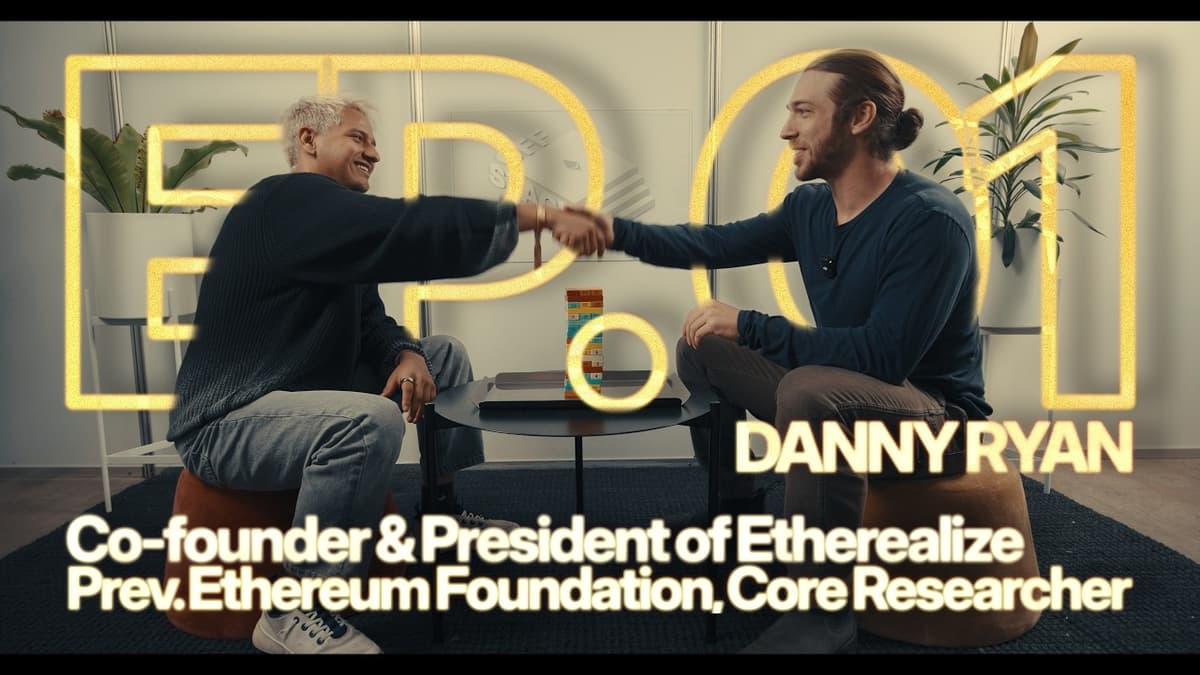
Danny Ryan On: Leading Crypto’s Biggest Upgrade, Paving His Own Path, and Bringing $120T to Ethereum
Danny Ryan’s interview traces a winding path from childhood computer fixes to heading Ethereum’s most consequential upgrade. After a modest upbringing in Louisiana, he dabbled in screen‑printing, freelance automation, and a brief stint building a duty‑free theme‑park app before...
By Vitalik Buterin

Social•Jan 8, 2026
Bandwidth Growth Beats Latency Reduction for Secure Scaling
Increasing bandwidth is safer than reducing latency With PeerDAS and ZKPs, we know how to scale, and potentially we can scale thousands of times compared to the status quo. The numbers become far more favorable than before (eg. see analysis here,...
By Vitalik Buterin

Social•Jan 5, 2026
Ethereum's True Goal: Freedom Through Resilience, Not Efficiency
“Ethereum was not created to make finance efficient or apps convenient. It was created to set people free” This was an important - and controversial - line from the Trustless Manifesto ( https://t.co/QAvZfiNxpe ), and it is worth revisiting it and...
By Vitalik Buterin

Social•Jan 1, 2026
Ethereum's 2025 Strides Demand Renewed Focus on Core Mission
Welcome to 2026! Milady is back. Ethereum did a lot in 2025: gas limits increased, blob count increased, node software quality improved, zkEVMs blasted through their performance milestones, and with zkEVMs and PeerDAS ethereum made its largest step toward being a...
By Vitalik Buterin