

FOCIL Introduces Multi‑participant Block Building to Curb Centralization
Finally, the block building pipeline. In Glamsterdam, Ethereum is getting ePBS, which lets proposers outsource to a free permissionless market of block builders. This ensures that block builder centralization does not creep into staking centralization, but it leaves the question: what do we do about block builder centralization? And what are the _other_ problems in the block building pipeline that need to be addressed, and how? This has both in-protocol and extra-protocol components. ## FOCIL FOCIL is the first step into in-protocol multi-participant block building. FOCIL lets 16 randomly-selected attesters each choose a few transactions, which *must* be included somewhere in the block (the block gets rejected otherwise). This means that even if 100% of block building is taken over by one hostile actor, they cannot prevent transactions from being included, because the FOCILers will push them in. ## "Big FOCIL" This is more speculative, but has been discussed as a possible next step. The idea is to make the FOCILs bigger, so they can include all of the transactions in the block. We avoid duplication by having the i'th FOCIL'er by default only include (i) txs whose sender address's first hex char is i, and (ii) txs that were around but not included in the previous slot. So at the cost of one slot delay, only censored txs risk duplication. Taking this to its logical conclusion, the builder's role could become reduced to ONLY including "MEV-relevant" transactions (eg. DEX arbitrage), and computing the state transition. ## Encrypted mempools Encrypted mempools are one solution being explored to solve "toxic MEV": attacks such as sandwiching and frontrunning, which are exploitative against users. If a transaction is encrypted until it's included, no one gets the opportunity to "wrap" it in a hostile way. The technical challenge is: how to guarantee validity in a mempool-friendly and inclusion-friendly way that is efficient, and what technique to use to guarantee that the transaction will actually get decrypted once the block is made (and not before). ## The transaction ingress layer One thing often ignored in discussions of MEV, privacy, and other issues is the network layer: what happens in between a user sending out a transaction, and that transaction making it into a block? There are many risks if a hostile actor sees a tx "in the clear" inflight: * If it's a defi trade or otherwise MEV-relevant, they can sandwich it * In many applications, they can prepend some other action which invalidates it, not stealing money, but "griefing" you, causing you to waste time and gas fees * If you are sending a sensitive tx through a privacy protocol, even if it's all private onchain, if you send it through an RPC, the RPC can see what you did, if you send it through the public mempool, any analytics agency that runs many nodes will see what you did There has recently been increasing work on network-layer anonymization for transactions: exploring using Tor for routing transactions, ideas around building a custom ethereum-focused mixnet, non-mixnet designs that are more latency-minimized (but bandwidth-heavier, which is ok for transactions as they are tiny) like Flashnet, etc. This is an open design space, I expect the kohaku initiative @ncsgy will be interested in integrating pluggable support for such protocols, like it is for onchain privacy protocols. There is also room for doing (benign, pro-user) things to transactions before including them onchain; this is very relevant for defi. Basically, we want ideal order-matching, as a passive feature of the network layer without dependence on servers. Of course enabling good uses of this without enabling sandwiching involves cryptography or other security, some important challenges there. ## Long-term distributed block building There is a dream, that we can make Ethereum truly like BitTorrent: able to process far more transactions than any single server needs to ever coalesce locally. The challenge with this vision is that Ethereum has (and indeed a core value proposition is) synchronous shared state, so any tx could in principle depend on any other tx. This centralizes block building. "Big FOCIL" handles this partially, and it could be done extra-protocol too, but you still need one central actor to put everything in order and execute it. We could come up with designs that address this. One idea is to do the same thing that we want to do for state: acknowledge that >95% of Ethereum's activity doesn't really _need_ full globalness, though the 5% that does is often high-value, and create new categories of txs that are less global, and so friendly to fully distributed building, and make them much cheaper, while leaving the current tx types in place but (relatively) more expensive. This is also an open and exciting long-term future design space. https://t.co/CdpE9ugFxE
Stani Kulechov On: Saving Six Months for a Computer, Dropping Out of High School, and Building AAVE
The interview with Stani Kulechov, founder of Aave, traces his journey from a modest Finnish upbringing to leading one of the world’s most successful decentralized finance protocols. Kulechov recounts how his father saved half a year’s wages to purchase a computer...

New Gas and Access List Upgrades Boost Ethereum Scaling
Now, scaling. There are two buckets here: short-term and long-term. Short term scaling I've written about elsewhere. Basically: * Block level access lists (coming in Glamsterdam) allow blocks to be verified in parallel. * ePBS (coming in Glamsterdam) has many features, of which one...

Stani Kulechov On: Saving Six Months for a Computer, Dropping Out of High School, and Building AAVE
Stani Kulechov grew up in a blue‑collar family where his father saved six months to buy their first computer, sparking a lifelong passion for code. He began programming at 13, left high school after one year to code full‑time, and...

Ethereum's Quantum Roadmap: Replace BLS with Hash Signatures
Now, the quantum resistance roadmap. Today, four things in Ethereum are quantum-vulnerable: * consensus-layer BLS signatures * data availability (KZG commitments+proofs) * EOA signatures (ECDSA) * Application-layer ZK proofs (KZG or groth16) We can tackle these step by step: ## Consensus-layer signatures Lean consensus includes fully replacing BLS...

Strengthen Ethereum's Open Ecosystem to Outshine Closed Systems
I agree with this. Though with the proviso that because Ethereum is permissionless, various centralized and closed things will inevitably exist on top of it. Our job should be to make the open-source, permissionless, trustless, secure censorship resistant ecosystem strong, so...

Chaos Makes Private Property a Protective Schelling Point
I actually like private property more than I did a few years ago. One variable that changed for me is "stable era mindset vs chaotic era mindset". When you're in a "stable era", you see how private property is suboptimal, how...

EF Calls for Deeper, Purpose‑Driven Innovation in DeFi
Defi is a central part of the value that Ethereum provides. Financial empowerment is a central part of what it means to have agency and freedom in our current world. Finance is far from the only thing that Ethereum is...

Ethereum L1 Research Accelerates: Scaling, UX, Security
Ethereum L1 protocol research is taking leaps forward in 2026. A good post from @ralexstokes: https://t.co/XPa4bmYnJF * Scale * Improve UX * Harden

FOCIL + EIP‑8141 Ensure Near‑Instant, Censorship‑Resistant Inclusion
There is also an important synergy between FOCIL and AA (EIP-8141, which is based on 7701): 8141 makes not just smart accounts (including multisig, quantum-resistant signatures, key changes, gas sponsorship) first-class citizens, it also can do the same for privacy protocols...

Ethereum’s Permissionless Nature Transcends Personal Disagreements
You do not have to agree with me on which applications are and are not corposlop to use Ethereum. You do not have to agree with me on what trust assumptions are acceptable in which situations to use Ethereum. You do not...

Tomasz Revitalizes Ethereum Foundation with Fresh Vision
Tomasz has always impressed me with his work ethic, his unique personality, and the kind of organization that he built at Nethermind. He brought a perspective on Ethereum, what blockchains fundamentally are, and how they fit into the future of...

Crypto Incentives Work When Backed by Real Value
My first reaction to this was: "And that's why I just got my $2,725 check of fileverse tokens now that fileverse has grown to the point where my dad regularly writes docs in fileverse that he sends to me" My second reaction...

Danny Ryan On: Leading Crypto’s Biggest Upgrade, Paving His Own Path, and Bringing $120T to Ethereum
Danny Ryan’s interview traces a winding path from childhood computer fixes to heading Ethereum’s most consequential upgrade. After a modest upbringing in Louisiana, he dabbled in screen‑printing, freelance automation, and a brief stint building a duty‑free theme‑park app before...

Bandwidth Growth Beats Latency Reduction for Secure Scaling
Increasing bandwidth is safer than reducing latency With PeerDAS and ZKPs, we know how to scale, and potentially we can scale thousands of times compared to the status quo. The numbers become far more favorable than before (eg. see analysis here,...

Ethereum's True Goal: Freedom Through Resilience, Not Efficiency
“Ethereum was not created to make finance efficient or apps convenient. It was created to set people free” This was an important - and controversial - line from the Trustless Manifesto ( https://t.co/QAvZfiNxpe ), and it is worth revisiting it and...

Ethereum's 2025 Strides Demand Renewed Focus on Core Mission
Welcome to 2026! Milady is back. Ethereum did a lot in 2025: gas limits increased, blob count increased, node software quality improved, zkEVMs blasted through their performance milestones, and with zkEVMs and PeerDAS ethereum made its largest step toward being a...

Crypto Continues the Pirate Party’s Empowerment Legacy
> Crypto is building toward human empowerment, as it has been since the beginning "Empowerment" was the code of the philosophy of the Pirate Party, before crypto even existed. https://t.co/3keGzBxVYJ

Wonderland Boosts Ethereum Ecosystem with Key Interop Support
Wonderland is a great team and has been very helpful in the Ethereum ecosystem, including to the EF on interop and Kohaku, and to many Ethereum projects.

Exploring Future Paths of Popups, Networks, and Zones
My latest views on popups, network states, coordi-nations, zones, and where all of these things could lead us. (Long poast) https://t.co/g0kIWwiV59

Simplify Ethereum to Broaden Protocol Understanding and Trustlessness
An important and underrated form of trustlessness is increasing the number of people who can actually understand the whole protocol from top to bottom. Ethereum needs to get better at this (by making the protocol simpler).

Fileverse Now Stable for Secure Collaborative Document Sharing
I've been impressed by @fileverse (decentralized open-source encrypted docs https://t.co/WXjBwytG5V ). Every month more bugs get fixed, and recently it's finally at the point where I can comfortably send docs off for comment or collaboration, and things reliably don't break.

EF's PeerDAS Boosts P2P Speed, Resilience, Privacy
For years, I've complained internally at the EF that we do not have enough expertise at p2p: we think a lot about cryptoeconomics, BFT consensus and blocks, but we take the p2p networking layer for granted. I think that's no longer...

On‑chain Gas Futures Market Provides Clear Fee Forecasts
We need a good trustless onchain gas futures market. (Like, a prediction market on the BASEFEE) I've heard people ask: "today fees are low, but what about in 2 years? You say they'll stay low because of increasing gaslimit from BAL +...
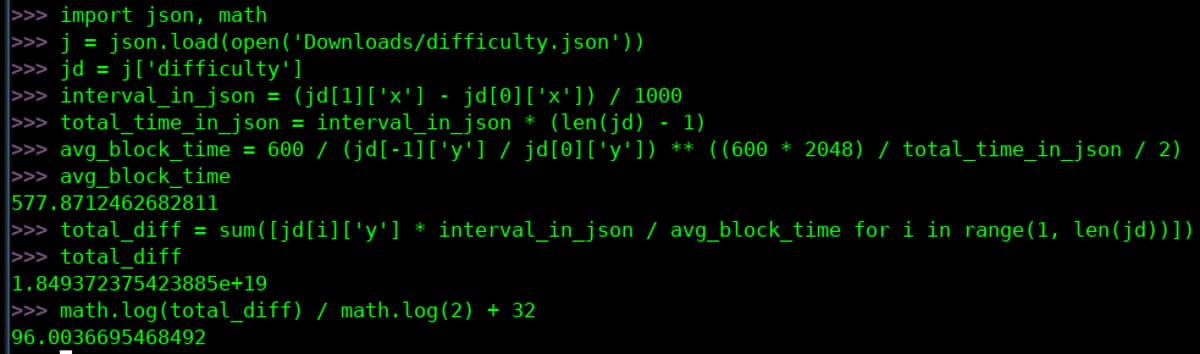
Bitcoin Mining Surpasses 2^96 Hashes, Urging 128-Bit Security
My rough math based on average difficulty stats suggests that Bitcoin mining crossed the total 2**96 hashes milestone very recently? Seems like a good reason to insist on (close to) 128 bit security (ie. @drakefjustin was right) https://t.co/zrwtbdnan3

Devconnect Argentina 2025 Recap — The First Ethereum World’s Fair
The video recaps Devconnect Argentina 2025, billed as the first “Ethereum World’s Fair,” a flagship gathering organized by the Ethereum Foundation to bring together developers, creators, and users from around the globe. The event’s design emphasizes community hubs and...

Hard Invariants Strengthen Protocol Security and Efficiency
Always glad to see when people appreciate the protocol changes that add hard invariants, improving protocol security and future adaptability 2021: EIP-2929 + 3529 (SLOAD gas cost increase, refunds nerfed) 2024: SELFDESTRUCT nerf (Dencun) 2025: 16,777,216 gas per tx limit All of these put...

Fusaka Delivers True Ethereum Sharding, Yet Gaps Remain
PeerDAS in Fusaka is significant because it literally is sharding. Ethereum is coming to consensus on blocks without requiring any single node to see more than a tiny fraction of the data. And this is robust to 51% attacks - it's...
From Whiteboard to Mainnet Podcast | Episode 4: DAO Governance
The podcast episode delves into the challenges of DAO governance, focusing on how token distribution and voting mechanisms affect resilience against adversarial actors. The speakers discuss simulation‑based testing of governance protocols, measuring the cost and difficulty of attacks such as...

Vitalik Flips Stance: L2s Now Discouraged
@VitalikButerin unbelievable you told people to go to L2s before and now you're telli.g them to go back

Questioning Whether L2s Signal Crypto’s Decline
@VitalikButerin Is it cause of much of L2s or crypto is dying?

Hope Network Stays Stable During High‑Volume NFT Mint
@VitalikButerin Hope it remains same during high volume nft mint

Building Directly on Layer 1 Is Sufficient
You can just build on L1.

Privacy‑First Governance: Zk‑Votes and Reputation Delegations
@VitalikButerin privacy first governance, zk votes and reputation delegations, fam

Zcash Must Reject Token Voting to Preserve Privacy
I hope Zcash resists the dark hand of token voting. Token voting is bad in all kinds of ways (see https://t.co/Cvl7CFVgtc ); I think it's worse than Zcash's status quo. Privacy is exactly the sort of thing that will erode over time...

Funding Permissionless, Metadata‑Private Messaging Apps for Digital Privacy
Encrypted messaging, like @signalapp, is critical for preserving our digital privacy. Two important next steps for the space are (i) permissionless account creation and (ii) metadata privacy. @session_app and @SimpleXChat are two messaging apps pushing these directions forward. For this reason I've...

Targeted Gas Increases to Penalize Inefficient Ethereum Operations
Expect continued growth but more targeted / less uniform growth for next year. eg. one possible future is: 5x gas limit increase together with 5x gas cost increase for operations that are relatively inefficient to process Potential targets for such increases (my...

Step-by-Step Guide to Building a Plinko PIR
Plinko PIR tutorial: https://t.co/i7W9a5MCHi

Higher Finality Threshold Boosts Ethereum Security Despite Lower Slashing
It's looking really interesting! My fear going in was that switching to a protocol like this *really* reduces security by almost half, the last thing ethereum should do when it's one of the very few chains aiming for bitcoin-like resilience and...

Guerrilla Interoperability: Chaotic Counterpart to Har
@epochzer0 @miroyato @fileverse Guerrilla interoperability is the "chaotic" version of the thing that Harberger taxes are the "lawful" version of. (CC @glenweyl )

Devconnect ARG Closing Happy Hour & Big Announcement
The closing happy hour of DevConnect culminated in a headline announcement: the next DEF CON‑style DevConnect event will be staged in Mumbai, India, in the fourth quarter of next year. Organizers framed the decision as a natural progression from the current...
Devconnect ARG Day 5 - M2 Yellow Pavilion
The fifth day of Devconnect’s ARG series focused on the concept of native rollups and the technical infrastructure needed to make them a reality on Ethereum. Speakers outlined a proposal to expose the L1 state‑transition function to rollups via...

Ethereum Ecosystem Overview by Jason Chaskin - Devconnect
Jason Chaskin opened his Devconnect talk by framing Ethereum as the logical evolution of the cypher‑punk movement that began in the early 1990s. He traced the lineage from early cryptographers fighting governmental bans on encryption, through Bitcoin’s 2008 launch as...

Next 10 Years of Ethereum by Fede - Devconnect
In the Devconnect talk, Fede frames Ethereum not as a generic "world computer" but as the first verifiable computer, emphasizing that its economic incentives and cryptographic guarantees make every computation auditable, unlike centralized clouds such as AWS or Google. He...

Ethereum Protocol Update Scale Blobs - Devconnect
The Devconnect presentation outlined the Ethereum Foundation’s twelve‑month protocol roadmap, concentrating on three pillars: scaling the L1, scaling blobs, and improving user experience. The speakers traced the evolution from early‑year discussions—highlighted in an April blog by the new executive directors—to...

Ethereum Foundation & Ethereum Update by Hsiao Wei Wang
The video captures an address by Hsiao Wei Wang, a senior figure at the Ethereum Foundation (EF), delivered at DevConnect in Argentina. Wang frames Ethereum as a never‑ending ladder—an open, community‑driven system that lets anyone climb at their own pace. He celebrates...

Devconnect Opening by Nathan Sexer
All right, welcome to DevConnect. Nathan Sexer, the lead of this year’s DevConnect team, opened the event in Buenos Aires, framing the gathering as the first “Ethereum World’s Fair.” He highlighted the choice of Argentina not as a political or...
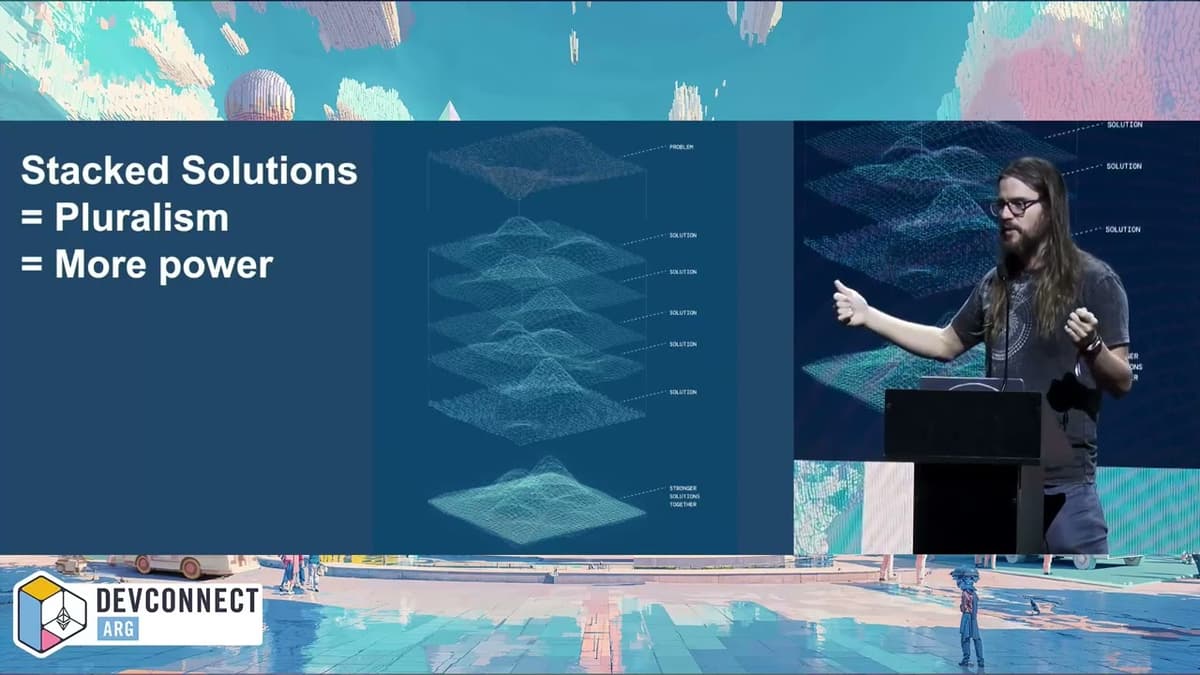
Solving Alignment with Ethereum by Kevin Owocki
Kevin Owocki, co‑founder of Gitcoin, used the DevConnect stage to argue that Ethereum’s programmable, trust‑less smart contracts can resolve the chronic “multipolar trap” – a situation where individually rational actions produce collectively disastrous outcomes. He framed alignment as the challenge...
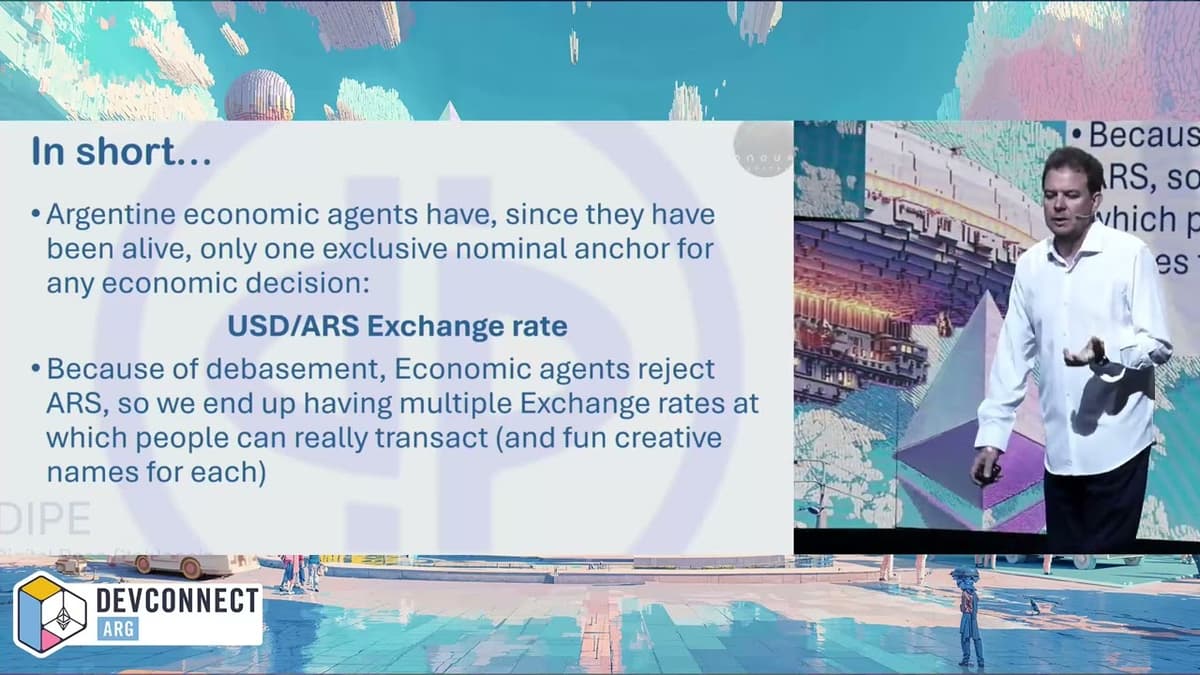
Why Argentina by Alfredo Roisenzvit
Alfredo Roisenzvit opens his talk by framing Argentina’s paradoxical economic trajectory: once a top‑five GDP‑per‑capita nation in the early 1900s, it now ranks among the world’s most underdeveloped economies. He cites Simon Kuznets’s famous quip that there are four kinds...
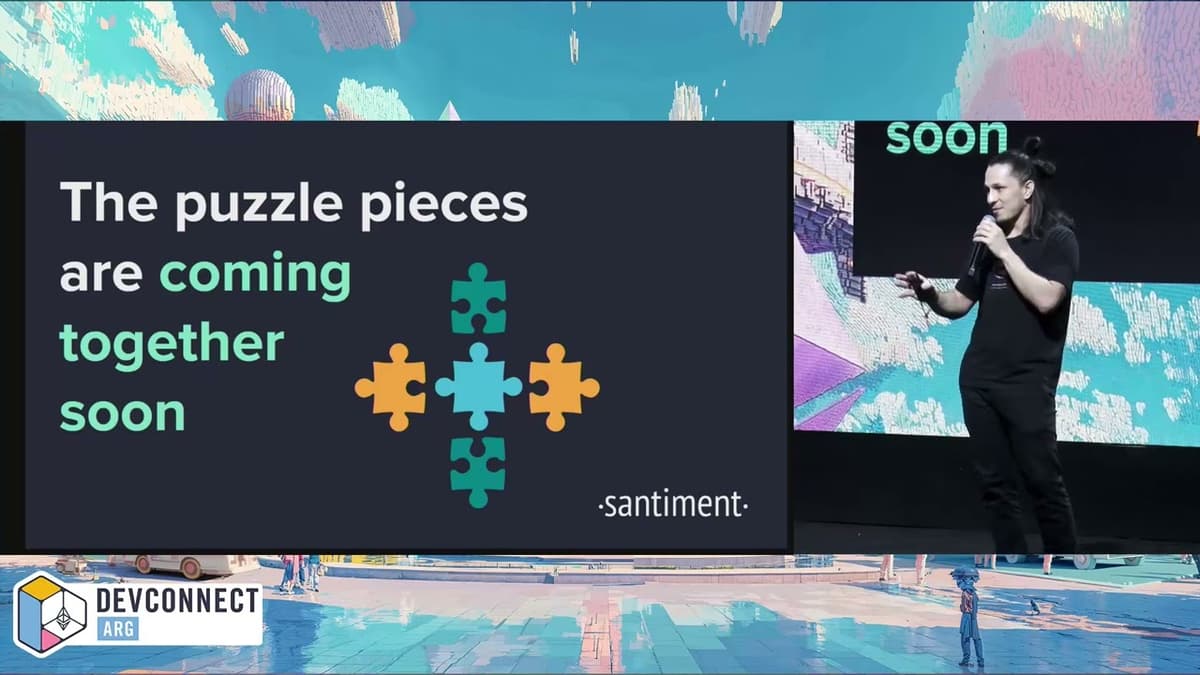
Generating Alpha Together by David Utro
David Utro, a senior leader at Santiment, opened his EF DevCon talk by positioning the firm as an early‑stage crypto data pioneer that has evolved into a comprehensive behavioral‑analytics provider. He emphasized Santiment’s mission to empower retail investors—often the most...