
Recent Posts

Blog•Feb 28, 2026
A Proxy Without a Purpose: Hizballah and the Iran Crisis
The United States and Israel’s escalating attacks on Iran have revived questions about Hezbollah’s strategic value as Tehran’s premier proxy. After a costly 2024 war with Israel, Hezbollah’s long‑range strike capability and leadership have been severely degraded, while the Lebanese army, backed by U.S. assistance, is intensifying disarmament pressure. Iran is unlikely to order a large‑scale Hezbollah escalation because doing so would expose the militia to further Israeli retaliation and offer little leverage in a potential U.S. campaign against Tehran. Consequently, Hezbollah faces limited options, ranging from cautious irritation of Israel to possible redeployment to Iraq or a gradual drift toward a criminalized, locally‑focused organization.
By War on the Rocks

Blog•Feb 27, 2026
The Arsenal Beneath the Arsenal
Assistant Secretary of Defense Michael Cadenazzi joined a live event with Ryan Evans to assess the current state of the U.S. defense industrial base. The dialogue covered a surge of venture‑capital‑backed startups, the dominance of legacy primes, and the urgent...
By War on the Rocks

Blog•Feb 27, 2026
All Too Quiet on the Western Neuroenhancement Front
The article argues that the United States must accelerate research on non‑invasive transcranial brain stimulation to keep pace with China’s rapidly advancing neuro‑technology programs. It reviews existing U.S. military trials—such as Halo Sport and DARPA’s Targeted Neuroplasticity Training—that show modest...
By War on the Rocks

Blog•Feb 27, 2026
Why Trump’s Criticism of Maliki Strengthens Him in Iraq
President Trump publicly rejected Nouri al‑Maliki’s nomination as Iraq’s prime minister, a move that back‑fired by rallying Shiite factions around the banner of national sovereignty. The episode exposes Iraq’s elite‑driven, communal power‑sharing system, where prime‑minister selection occurs outside parliament and...
By War on the Rocks

Blog•Feb 26, 2026
AI Is Being Misunderstood as a Breakthrough in Planning. It’s Not.
The article argues that artificial intelligence is not a breakthrough that simplifies military campaign planning, but a tool that compresses routine cognitive work while masking the need for human judgment. AI excels at synthesizing guidance and producing coherent drafts, creating...
By War on the Rocks

Blog•Feb 25, 2026
The U.S. Military Must Save Itself Before Saving Others
Jennifer Kavanaugh revisits her 2023 argument that U.S. military aid creates a trade‑off between Israel and Taiwan, noting the calculus has shifted. She now warns that the United States’ own depleted air‑defense munitions and other materiel are the primary constraint,...
By War on the Rocks
Blog•Feb 25, 2026
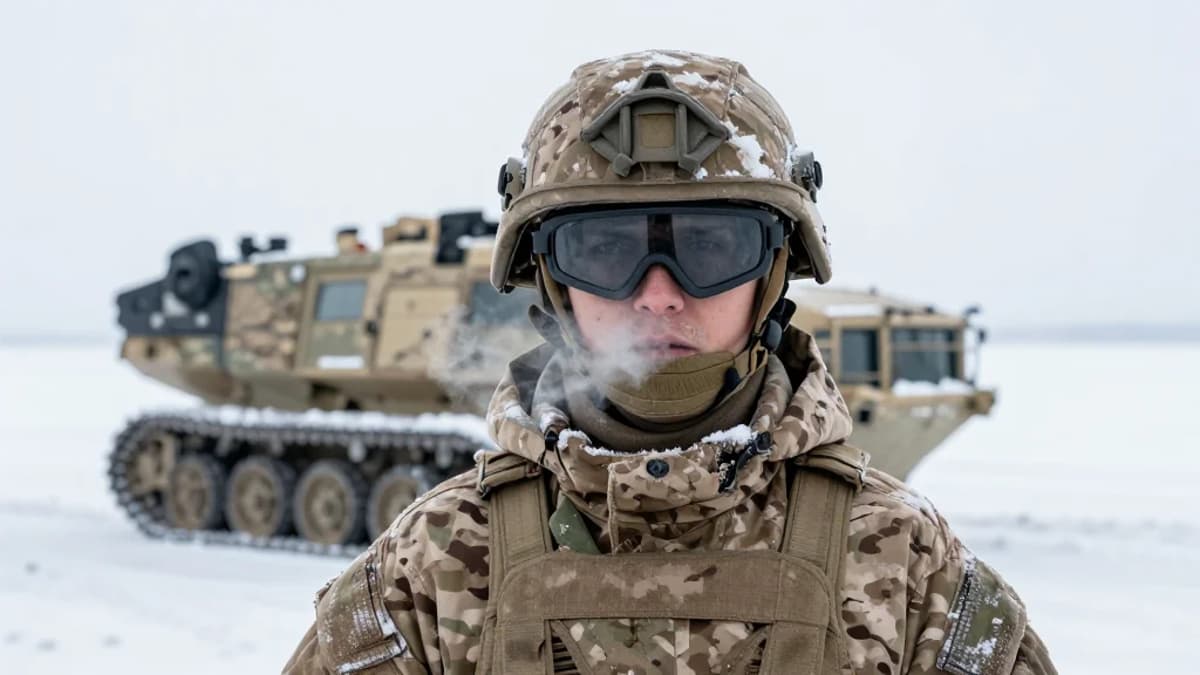
Arctic Hot Takes Need a Cold Reality Check
The author argues that extreme cold in the Arctic is a decisive constraint, not a manageable condition, and that U.S. military strategies overstate persistent presence while underestimating equipment degradation and human limits. Recent Defense Department Arctic strategies acknowledge harshness but...
By War on the Rocks

Blog•Feb 24, 2026
Ukraine as a European Nation
Military analyst Dmytro Snegiryov backs Defense Minister Mykhailo Fedorov’s proposal for a comprehensive audit of Ukraine’s armed forces, urging genuine reforms rather than symbolic gestures. The Ukrainian military currently fields roughly 880,000 personnel, with only about 300,000 assigned to combat...
By War on the Rocks

Blog•Feb 24, 2026
Agentic AI and the Pentagon’s Integration Challenge
Agentic AI is transitioning from proof‑of‑concept demos to active deployments within the Department of Defense. Executives from Legion Intelligence, Latent AI, and Lumbra AI explain that the real hurdle is embedding autonomous agents into hardened military networks, not just building...
By War on the Rocks

Blog•Feb 23, 2026
Economic Statecraft and the Federal Institutional Architecture
The United States’ economic statecraft is dispersed across more than 1,400 offices in 13 departments, organized around a "four P" framework—Promote, Protect, Prevent, and Punish. Treasury, Defense, Commerce, and State serve as the primary agencies wielding sanctions, export controls, and...
By War on the Rocks

Blog•Feb 20, 2026
Talks, Plans, and Prison Breaks
The episode examines the latest round of U.S.-Iran nuclear negotiations in Geneva, noting modest progress on nuclear issues but stark disagreement over missiles and regional proxies, while the U.S. escalates its Middle East military presence with an additional aircraft carrier....
By War on the Rocks

Blog•Feb 20, 2026
Iran and the Gulf: Why Hedging Is No Longer Enough
The episode examines how Gulf states are moving beyond a hedging strategy toward Iran, recognizing that Iran’s internal turmoil now directly threatens their security and economic interests. It argues that reliance on crisis avoidance and U.S. guarantees is insufficient, and...
By War on the Rocks

Blog•Feb 19, 2026
Power, Paranoia, and the People’s Liberation Army
The episode examines the recent high‑level purges within China’s People’s Liberation Army, focusing on the removal of veteran commander Zhang Youxia and what it reveals about Xi Jinping’s consolidation of power. Analysts discuss how these moves reflect deepening paranoia, potential...
By War on the Rocks

Blog•Feb 19, 2026
BONUS In Brief: Vibes Out of Munich
The episode dissects the 62nd Munich Security Conference, highlighting Europe’s push for strategic autonomy, lingering reliance on the U.S., and a shared sense that the post‑World War II liberal order is eroding. Guests note France’s view that autonomy is a strategic...
By War on the Rocks