
Glioblastoma, ecDNA & Targeted Therapy - The Verhaak Lab at Yale School of Medicine
The Verhaak Lab at Yale School of Medicine presented research on extrachromosomal circular DNA (ecDNA) in glioblastoma, explaining how these small DNA loops differ from the linear chromosomes that normally house genetic material. The team showed that ecDNA enables tumor cells to rapidly adapt to hostile microenvironments, conferring resistance to radiation and chemotherapy. By profiling individual patient tumors with billions of data points, they pinpointed oncogenic drivers carried on ecDNA and translated those findings into functional experiments to validate drug targets. Lead researcher emphasized glioblastoma’s grim prognosis—grade‑four, median survival measured in months—and the toxicity of conventional chemotherapies that often force treatment discontinuation. He argued that targeted small‑molecule therapies could strike cancer cells while sparing healthy tissue, reducing side effects. If successful, these precision agents could move quickly through early‑phase trials, offering a rare therapeutic avenue for a disease that has seen little progress in four decades. The lab’s collaborative model, integrating neuro‑oncology, surgery, pathology and open‑science data sharing, underscores the broader need for interdisciplinary effort to tackle refractory brain tumors.

Genomic Mutations, Treatment--Resistance & Prostate Cancer - The Deng Lab at Yale School of Medicine
Therapy resistance remains a major hurdle in prostate cancer, especially after initial success with hormone‑based treatments. The Deng Lab at Yale School of Medicine is dedicated to uncovering the molecular mechanisms that enable cancer cells to evade therapy. The team combines...

Pulmonary Fibrosis, Immune Responses & Guidance Proteins - The Herzog Lab at Yale School of Medicine
The Herzog Lab at Yale School of Medicine is investigating pulmonary fibrosis, a lethal lung disease characterized by progressive scarring that stiffens the organ and shortens life expectancy. Researchers argue that fibrosis results from an ongoing, maladaptive healing response after an...

Micro-Ultrasound for Prostate Cancer Detection - Yale Medicine Explains
The video explains how micro‑ultrasound, a high‑frequency trans‑rectal imaging technology, is being positioned as a new frontline tool for detecting prostate cancer. Traditionally, elevated PSA or abnormal exams lead to a biopsy guided only by standard ultrasound, which samples a...

Cell Membranes - A Basic Explanation
The video provides a concise overview of the cell membrane’s primary purpose—creating a controlled molecular barrier that prevents uncontrolled diffusion of substances in and out of the cell. It explains that specific membrane proteins form gated entry points, dictating what enters,...

Cellular Damage, Repair & Apoptosis - The Rogers Lab at Yale School of Medicine
The Rogers Lab at Yale explores how cells decide between DNA repair and programmed death when genomic integrity is compromised. Central to their work is the formation of triplex DNA—three‑stranded structures that the cell perceives as damage—and the use of...

Nanoparticles, Genome Therapy & Antibodies - The Zhou Research Lab at Yale School of Medicine
The Zhou Research Lab at Yale School of Medicine is a biomedical‑engineering group that builds platform technologies for delivering therapeutics to the brain. Its work spans three distinct avenues: engineered nanoparticles for crossing the blood‑brain barrier, a novel “step‑engineering”...
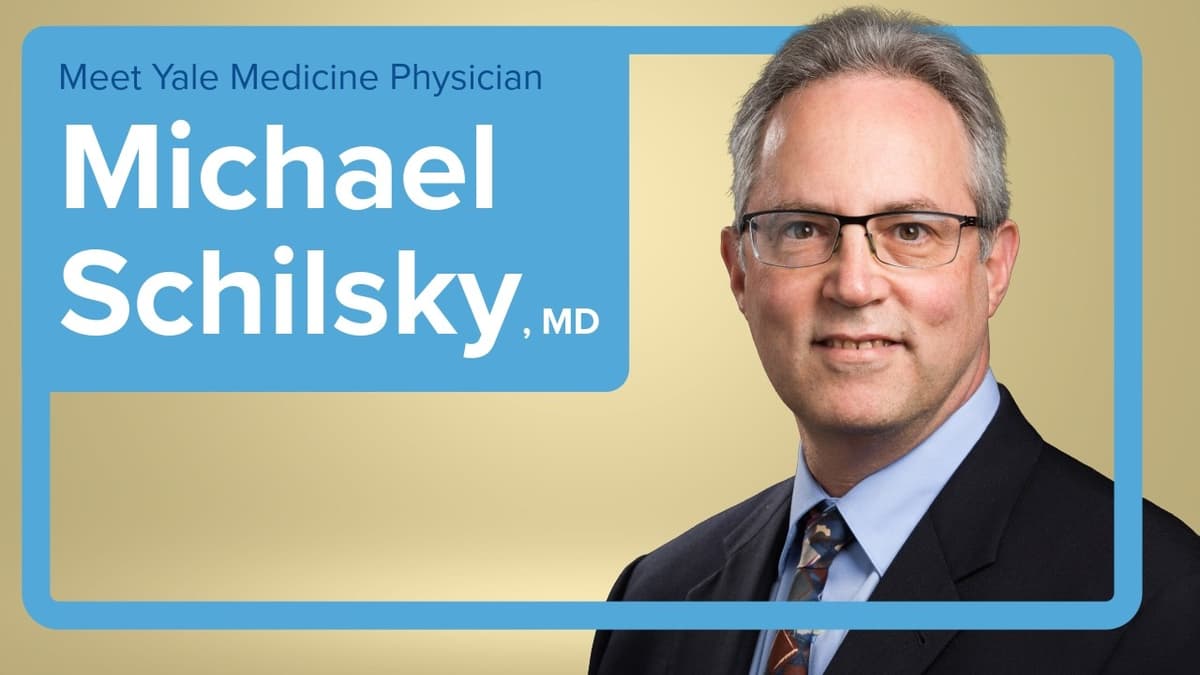
Meet Hepatologist Michael Schilsky, MD
The video features hepatologist Michael Schilsky, MD, outlining how liver transplantation has progressed from a pioneering procedure in the 1970s to a routine component of modern hepatology. He explains that transplants now address both severe acute liver failure and, more...

Meet Transplant Surgeon Hiroshi Sogawa, MD, MBA, CPE, FACS
In a recent interview, transplant surgeon Hiroshi Sogawa, MD, MBA, CPE, FACS, outlines his center’s approach to liver transplantation, emphasizing a robust living‑donor program and a shift toward minimally invasive techniques. Sogawa explains that the living‑donor pathway is designed to streamline...

High-Throughput Screening, CRISPR & Immunotherapy - The Sidi Chen Lab at Yale School of Medicine
The Sidi Chen laboratory at Yale School of Medicine is leveraging high‑throughput CRISPR screening to map every gene that influences immune‑cell behavior in cancer settings. By perturbing the full complement of ~20,000 human genes in vivo, the team seeks to pinpoint...