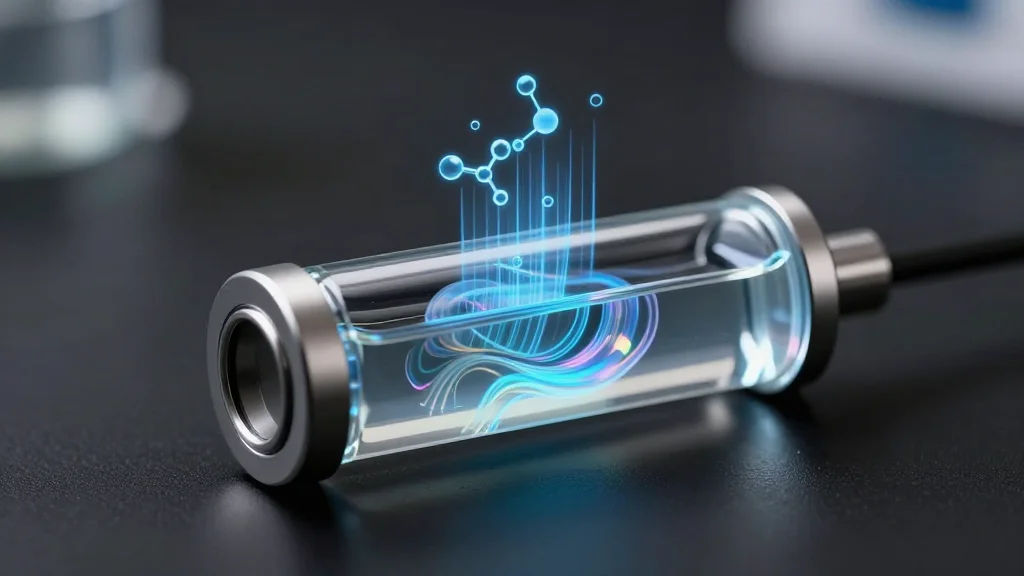
Apoha Raises $36M to Deploy ‘Liquid Intelligence’ for Accelerated Material Discovery

Companies Mentioned
Why It Matters
Apoha’s liquid‑intelligence platform could redefine material discovery by turning a traditionally slow, costly process into a rapid, data‑driven workflow. For CTOs overseeing R&D pipelines, the promise of cutting months of testing into minutes translates into faster product cycles and reduced capital exposure, especially in high‑stakes sectors like pharmaceuticals where each failed candidate can cost hundreds of millions. Beyond speed, the technology introduces a new data modality—wave‑form signatures—that expands the AI toolbox for material science. If validated at scale, this could spur a wave of similar approaches, prompting CTOs to reconsider legacy simulation and testing infrastructures in favor of hybrid hardware‑AI solutions.
Key Takeaways
- •Apoha closed a $36 million funding round to commercialize its liquid‑intelligence platform.
- •VIBE hardware captures over 1,000 numerical descriptors from a pin‑head sample in minutes.
- •Early pilots claim >90% precision in identifying high‑risk antibody candidates using 8 µg of material.
- •First commercial customer, a plant‑based protein firm, replaced a key ingredient within two weeks.
- •Partnerships include Boehringer Ingelheim (pharma) and a German biotech firm, Ethris.
Pulse Analysis
Apoha’s entry into the market arrives at a moment when AI‑augmented R&D is moving beyond purely digital datasets. Historically, material discovery has relied on high‑throughput screening and computational chemistry, both of which demand significant time and compute resources. By introducing a physical measurement layer—liquid‑waveform capture—Apoha sidesteps some of the computational bottlenecks and offers a tangible, repeatable signal that AI can ingest directly. This hybrid approach mirrors trends in other domains, such as computer vision models that now incorporate depth sensors to improve perception.
From a competitive standpoint, Apoha faces both opportunities and challenges. Its hardware‑centric model differentiates it from pure‑software players, but it also introduces supply‑chain and scaling complexities. CTOs will need to assess whether the upfront investment in VIBE devices yields sufficient downstream savings. The company’s early success with Boehringer Ingelheim suggests a strong product‑market fit in pharma, where the cost of a failed trial dwarfs the expense of new instrumentation. However, broader adoption in consumer‑goods sectors will depend on the ease of integrating the API into existing product development pipelines and on the robustness of the data across diverse material classes.
Looking ahead, the real test will be Apoha’s ability to publish peer‑reviewed benchmarks that demonstrate superiority—or at least parity—to established assays. If it can substantiate its claims, the platform could become a standard component of the R&D stack, prompting a wave of ancillary services such as data‑labeling, model‑fine‑tuning, and domain‑specific analytics. For CTOs, the strategic implication is clear: staying ahead will require evaluating not just software AI tools but also the underlying data acquisition hardware that fuels them.
Apoha Raises $36M to Deploy ‘Liquid Intelligence’ for Accelerated Material Discovery
Comments
Want to join the conversation?
Loading comments...