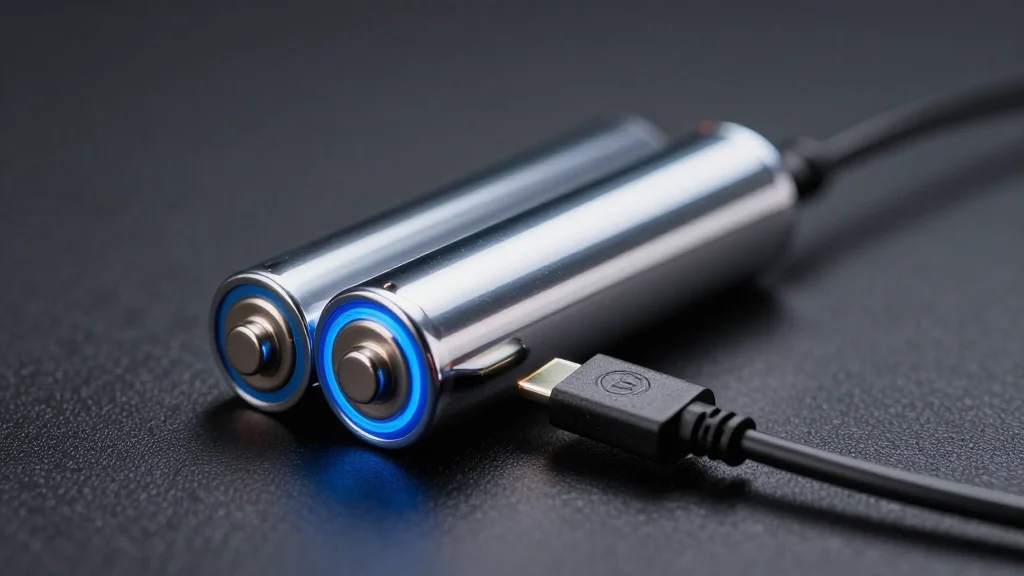
CATL Unveils 6‑Minute Charge Battery, Cutting BYD Lead

Companies Mentioned
Why It Matters
The ability to charge an EV to near‑full capacity in six minutes reshapes the value proposition of electric mobility for both consumers and fleet managers. Faster turnaround times diminish range‑anxiety and align EV convenience with internal‑combustion vehicles, potentially accelerating market penetration. For CTOs, the technology forces a reassessment of thermal‑management architecture, charger sizing, and warranty strategies, influencing R&D budgets and supply‑chain decisions. Beyond automotive, the breakthrough could ripple into portable‑device markets where ultra‑fast charging is a differentiator. LFP's safety profile combined with rapid charge capability may inspire new form factors for drones, robotics, and edge‑computing hardware, expanding the addressable market for CATL's battery platforms.
Key Takeaways
- •CATL's Shenxing Superfast battery reaches 98% SOC in 6 min 27 sec.
- •Charge rate sustained at 10C, peaks at 15C; 90% capacity retained after 1,000 cycles.
- •Performance at -30°C: 20% to 98% SOC in ~9 minutes.
- •Range claims: 1,000 km for NCM cell, 1,500 km for condensed‑matter cell.
- •CTOs must redesign thermal‑management and charger architecture to leverage fast‑charge.
Pulse Analysis
CATL's announcement marks a decisive shift in the fast‑charging arms race that has been dominated by BYD's flash‑charging narrative. By delivering a sub‑seven‑minute full‑charge window, CATL not only narrows the performance gap but also sets a new engineering baseline for LFP chemistry. Historically, LFP has been prized for safety and cost, but its energy density lagged behind nickel‑based chemistries. The focus on thermal control—reducing heat generation, enhancing propagation, and tightening control loops—addresses the long‑standing trade‑off between speed and longevity. If the 90% capacity retention after 1,000 cycles is validated, the total‑cost‑of‑ownership calculus for fleet operators could tilt dramatically in favor of LFP, especially in regions where charging infrastructure is still maturing.
From a market dynamics perspective, CATL's move pressures BYD to accelerate its own fast‑charging roadmap or risk losing OEM contracts that prioritize turnaround time. Western OEMs, which have traditionally relied on European and Japanese battery suppliers, may now face a strategic dilemma: adopt Chinese fast‑charging tech and navigate geopolitical supply‑chain risks, or invest in alternative chemistries that could lag in speed. The announcement also raises the stakes for charger manufacturers, who must now deliver higher power densities while managing heat dissipation, potentially spurring a new wave of hardware innovation.
Looking ahead, the real test will be large‑scale deployment. Field data on degradation under real‑world fast‑charge cycles, especially in extreme climates, will determine whether the technology can sustain its promises beyond the lab. CTOs will need to monitor these metrics closely, as the balance between rapid charging and battery health will dictate the next generation of EV platform designs and the broader adoption timeline for electric mobility.
CATL Unveils 6‑Minute Charge Battery, Cutting BYD Lead
Comments
Want to join the conversation?
Loading comments...