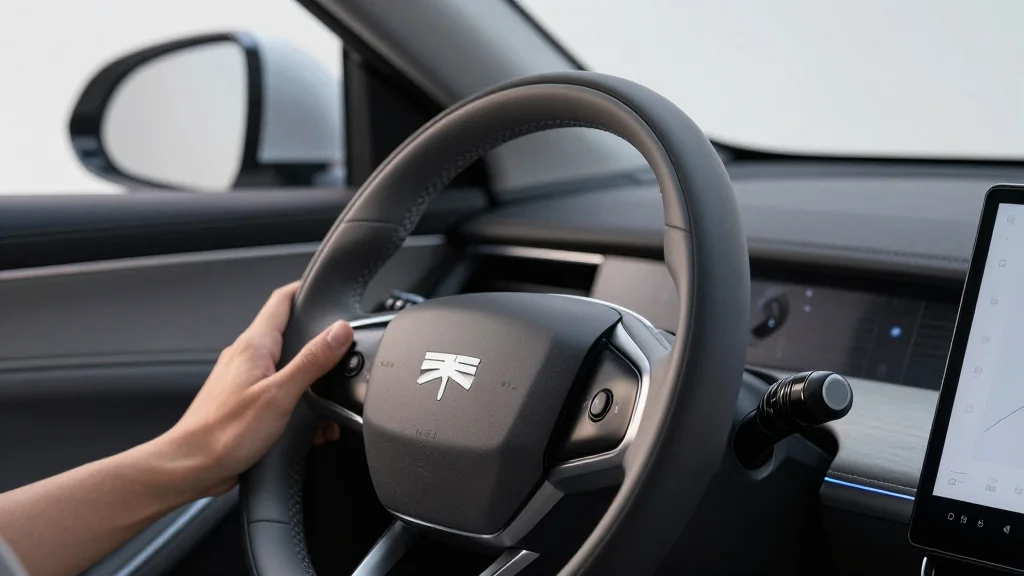
XPENG Puts Engineers First in EV Roadmap, Emphasizing Human‑Centric Culture

Companies Mentioned
Why It Matters
The shift toward a human‑centric engineering culture signals a maturation of Chinese EV firms from pure volume players to technology leaders. For CTOs, the story underscores that attracting and retaining top engineers may be as critical as battery chemistry or software architecture. As Chinese brands expand into Europe and Australia, a strong internal culture could become a decisive factor in winning market share against entrenched legacy automakers. Moreover, the emphasis on open collaboration and purpose‑driven work aligns with broader industry trends where engineers increasingly demand autonomy and impact. Companies that fail to adapt may face higher turnover, slower innovation cycles, and difficulty meeting aggressive rollout timelines for new models.
Key Takeaways
- •XPENG’s VP Zheng Yeqing highlighted a human‑centric engineering culture as the core of its EV roadmap.
- •The company cites flat hierarchies and open dialogue as key to attracting top talent.
- •XPENG’s cultural push coincides with Chinese EV makers seeking European plant capacity, per Ellis Cheng of Xpeng.
- •XPENG aims to roll out the new approach across its G6 and X9 models by June.
- •Industry analysts note talent retention may become a competitive edge as legacy automakers struggle with EV profitability.
Pulse Analysis
XPENG’s public commitment to a human‑centric engineering model reflects a strategic pivot that could reshape CTO priorities across the EV sector. Historically, Chinese automakers have leveraged cost advantages and rapid scale to dominate market share. By now foregrounding culture, XPENG acknowledges that sustainable innovation requires more than cheap labor; it needs engineers who feel ownership and purpose. This mirrors a broader shift seen in Silicon Valley, where CTOs are judged on their ability to build ecosystems that keep top talent engaged.
The timing is critical. As European regulators tighten emissions standards and consumers demand higher‑tech features, the speed at which new models can be developed and brought to market will hinge on engineering productivity. XPENG’s approach may accelerate prototype cycles, especially if its flat hierarchy reduces bureaucratic delays. However, the strategy also carries risk: cultural promises must translate into tangible outcomes, or the company could face credibility gaps when competing against rivals like BYD, which is betting on massive production capacity to win price wars.
In the longer view, XPENG’s emphasis on engineers could influence how multinational partnerships are structured. If Chinese firms demonstrate that a strong internal culture yields superior technology, Western OEMs may seek deeper joint‑development agreements rather than simple asset purchases. This could reshape supply‑chain dynamics, with software and AI talent becoming the new bargaining chips in cross‑border automotive deals.
XPENG Puts Engineers First in EV Roadmap, Emphasizing Human‑Centric Culture
Comments
Want to join the conversation?
Loading comments...