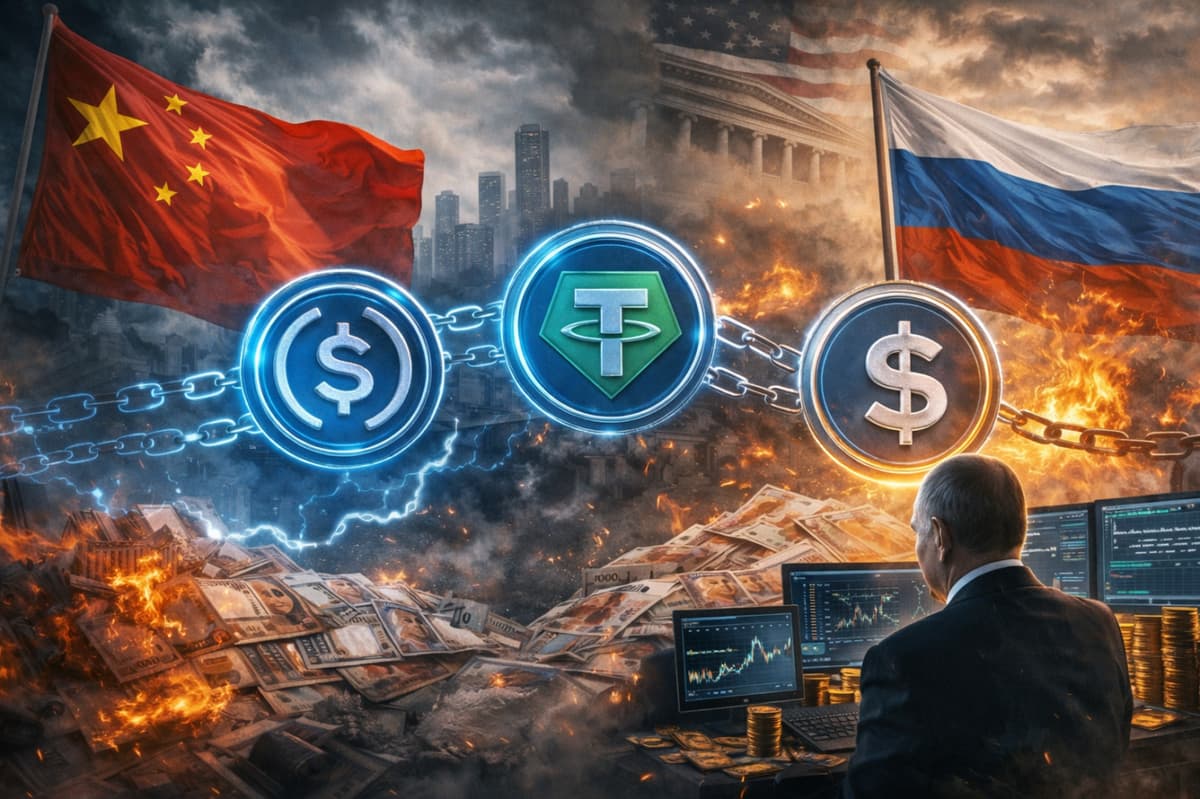
How China’s Fear of Secondary Sanctions Pushed Moscow Into Leveraging Stablecoins to Reshape Financial Warfare
Key Takeaways
- •A7A5 stablecoin processed over $72 billion in transactions since Jan 2025.
- •Stablecoins bridge rubles to USDT, enabling easier off‑ramping to dollars.
- •China avoids secondary sanctions by keeping Russian payments off its state systems.
- •Digital ruble launch may challenge Mir cards and private stablecoin use.
- •TRON blockchain hosts half of illicit crypto volume, attracting sanctioned actors.
Pulse Analysis
The rise of private stablecoins like A7A5 illustrates how modern sanctions are being circumvented through decentralized finance. While central bank digital currencies (CBDCs) such as the upcoming digital ruble promise state‑controlled efficiency, they remain vulnerable to surveillance and regulatory pushback. Stablecoins, by contrast, operate on public blockchains, offering price stability and rapid cross‑border settlement without the need for traditional correspondent banks. This makes them attractive for regimes under financial pressure, allowing them to move billions of dollars while staying under the radar of conventional monitoring tools.
A7A5’s design—pegged to the Russian ruble and issued on both Ethereum and TRON—creates a seamless bridge to the U.S. dollar‑denominated Tether (USDT). Users can purchase A7A5 with Russian bank cards, convert it to USDT, and then cash out into global fiat, effectively sidestepping sanctions that target Russian financial institutions. The involvement of Moldovan oligarch Ilan Shor and the sanctioned Promsvyazbank underscores how state‑linked actors are leveraging private crypto infrastructure to sustain defense procurement and dual‑use imports. Meanwhile, China’s reluctance to expose its own payment rails to secondary U.S. sanctions forces it to tacitly accept this gray‑zone ecosystem, preserving its trade with Moscow while maintaining plausible deniability.
Looking ahead, the digital ruble could reshape Russia’s domestic payments landscape, potentially competing with the Mir card network and reducing reliance on private stablecoins for internal transactions. However, for international trade and illicit financing, stablecoins are likely to remain indispensable due to their speed, low fees, and resistance to traditional enforcement. Policymakers will need to develop new analytics and regulatory frameworks that target the underlying blockchain activity rather than individual tokens, acknowledging that decentralized financial tools are now a core component of modern geopolitical strategy.
How China’s Fear of Secondary Sanctions Pushed Moscow into Leveraging Stablecoins to Reshape Financial Warfare
Comments
Want to join the conversation?