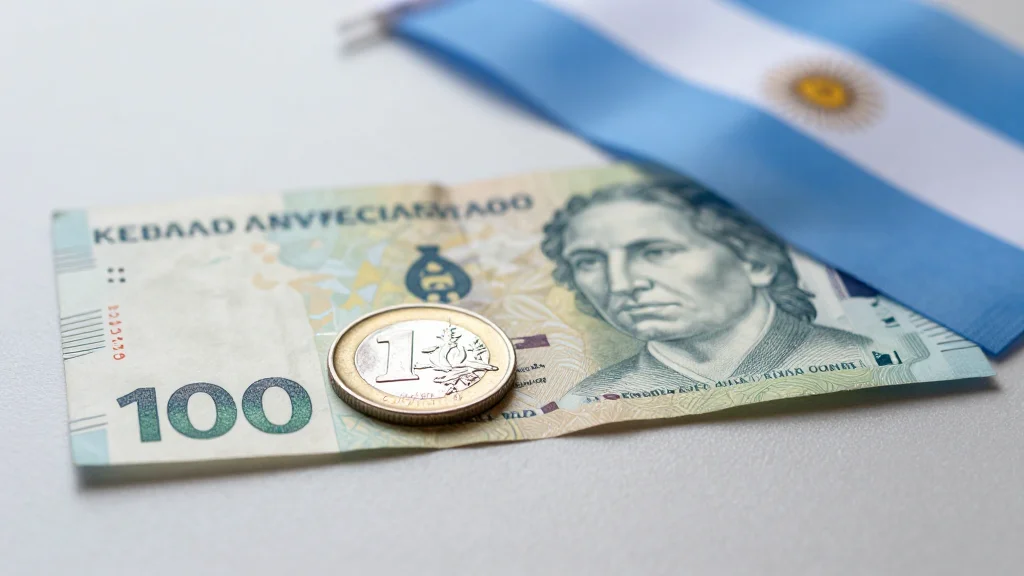
Argentina’s Blue-Dollar Premium Vanishes as Official and Street Rates Align

Why It Matters
The collapse of the blue‑dollar premium reshapes Argentina’s attractiveness to digital nomads and foreign talent, sectors that have driven recent inflows of dollars. By aligning the two rates, the government reduces currency arbitrage, improves fiscal predictability, and potentially stabilizes the broader macroeconomic environment. However, the persistence of 33 % inflation means that real purchasing power remains under pressure, and the convergence alone will not solve deeper structural challenges. For investors, the convergence offers a clearer exchange‑rate outlook, reducing the risk premium associated with hidden market distortions. It also provides a more reliable basis for pricing assets, contracts, and salaries, which could encourage longer‑term capital commitments if inflationary trends continue to ease.
Key Takeaways
- •Official and blue peso rates have converged at 1,430‑1,460 per dollar.
- •Inflation has eased to roughly 33 % as of early 2026.
- •Monthly budget for a comfortable expatriate lifestyle now ranges US$1,500‑2,200.
- •The blue‑dollar arbitrage that attracted remote workers has effectively ended.
- •Rate convergence simplifies pricing and may improve foreign investment confidence.
Pulse Analysis
The alignment of Argentina’s official and parallel exchange rates marks a decisive step away from the informal currency markets that have long plagued the country’s financial system. Historically, the blue‑dollar spread acted as a safety valve, allowing citizens and foreigners to sidestep official controls and preserve purchasing power. Its disappearance suggests that the government’s recent stabilization policies—tightened monetary conditions, targeted foreign‑exchange interventions, and a credible commitment to reducing fiscal deficits—are beginning to take hold.
From a market perspective, the removal of the arbitrage window reduces the volatility that has traditionally inflated risk premiums on Argentine bonds and equities. Investors can now price assets without accounting for a hidden discount, which should narrow spreads and potentially lower borrowing costs. Yet the 33 % inflation rate remains a significant drag on real returns, indicating that monetary tightening alone will not resolve the underlying price pressures. Structural reforms, such as improving tax collection and fostering productive investment, will be essential to sustain the gains from exchange‑rate convergence.
For the remote‑work cohort that once flocked to Buenos Ayres for its “blue‑dollar bargain,” the new reality is more akin to other emerging markets: attractive culture and lifestyle offset by a higher cost of living. Companies that sponsor expatriate assignments will need to recalibrate compensation packages, perhaps by offering inflation‑adjusted allowances or local‑market salary benchmarks. In the longer term, the convergence could make Argentina a more predictable destination for foreign talent, provided that policymakers keep inflation on a downward trajectory and maintain the credibility of the official rate.
Argentina’s Blue-Dollar Premium Vanishes as Official and Street Rates Align
Comments
Want to join the conversation?
Loading comments...