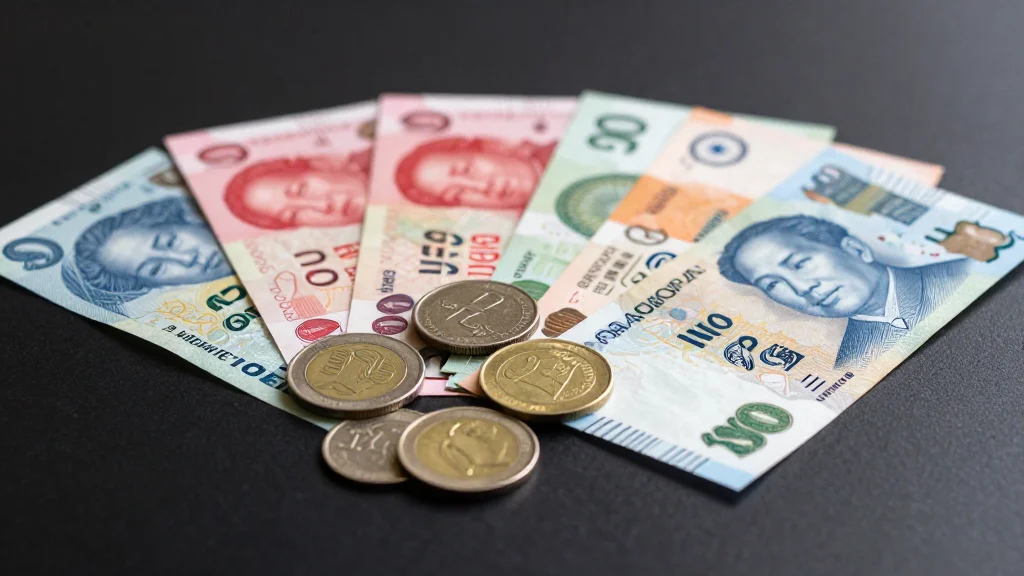
Asian Currencies Split as US‑Iran Tensions Heighten, Ringgit Up 12% While Rupee Slides 5%

Why It Matters
The split in Asian currencies highlights how geopolitical shocks can amplify existing economic divergences. Countries with robust trade surpluses and proactive monetary policies are better insulated from external risk, while those reliant on capital inflows and commodity exports face heightened volatility. For investors, the divergence creates both opportunities for relative‑value trades and heightened risk management challenges. Moreover, the US‑Iran conflict underscores the interconnectedness of global supply chains, energy markets and financial flows. A prolonged US engagement could sustain higher oil prices, benefitting exporters but straining import‑dependent economies. The outcome of the War Powers vote will therefore shape not only regional FX but also broader capital allocation across emerging markets.
Key Takeaways
- •Ringgit up 12% YTD, rupee down 5% as US‑Iran tensions rise
- •US Congress must approve continued military action by May 1 under the War Powers Resolution
- •Malaysia, China, Singapore benefit from trade surpluses and policy support
- •India sees $18 billion outflow of foreign‑portfolio investment, pressuring the rupee
- •Oil‑price driven gains lift Kazakhstan and Israel, while weaker exporters lag
Pulse Analysis
The current FX divergence is less a surprise than a crystallisation of trends that were already in motion. Nations that have built fiscal buffers and managed exchange rates are now reaping the benefits of a risk‑off environment, while those with weaker external positions are exposed to the full brunt of higher energy costs and capital flight. Historically, geopolitical spikes in oil prices have produced a similar bifurcation, but the added layer of US domestic political uncertainty amplifies the effect.
In the medium term, central banks in the region will likely tighten policy to counter imported inflation, especially in countries where the currency has appreciated sharply. Malaysia’s central bank may pause rate cuts, while Singapore could maintain its policy band to avoid overheating. Conversely, the RBI may be forced to intervene more aggressively if the rupee breaches critical support levels, potentially reigniting capital controls.
Investors should monitor two variables: the outcome of the May 1 congressional vote and the trajectory of global oil prices. A vote against further US action could deflate oil markets, narrowing the spread between strong and weak Asian currencies. A vote in favour would sustain the current divergence, rewarding surplus‑run economies and penalising those dependent on foreign capital. Positioning strategies that hedge against both scenarios—such as currency‑linked ETFs with built‑in volatility filters—will likely outperform in this volatile environment.
Asian Currencies Split as US‑Iran Tensions Heighten, Ringgit Up 12% While Rupee Slides 5%
Comments
Want to join the conversation?
Loading comments...