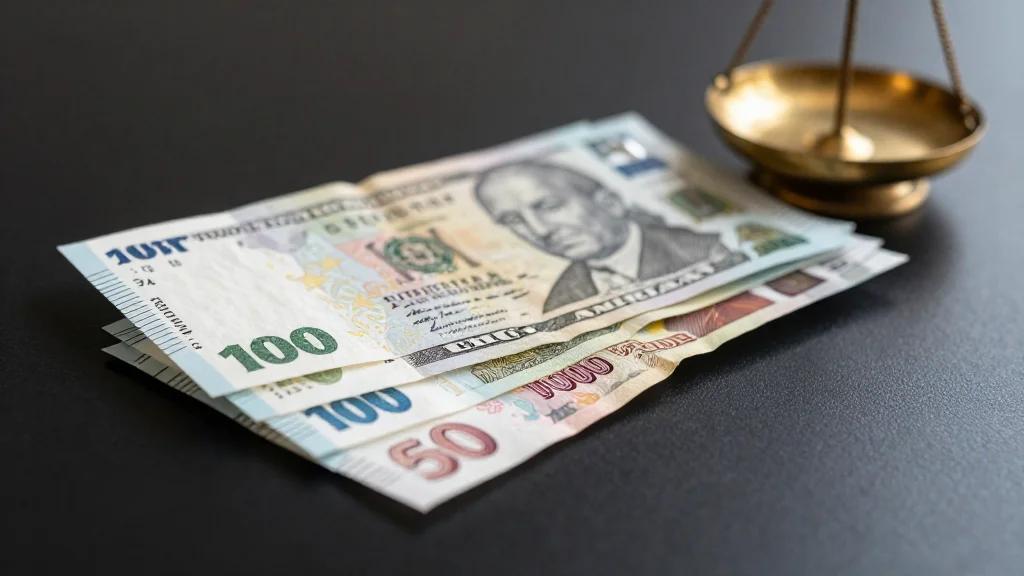
Azerbaijan Central Bank Holds USD/Manat at 1.7 Manat per Dollar

Why It Matters
The manat’s stability is a barometer for Azerbaijan’s broader economic health, especially given the country’s reliance on oil exports and its exposure to regional currency shocks. A steady USD/Manat rate helps anchor inflation expectations, supports corporate budgeting, and reduces foreign‑exchange risk for investors with exposure to the South Caucasus market. Moreover, the rate hold sends a signal to neighboring economies that Azerbaijan is pursuing a cautious monetary stance, potentially influencing regional currency dynamics. For global investors, the predictable exchange rate simplifies valuation models for Azerbaijani assets, from energy projects to emerging‑market equities.
Key Takeaways
- •CBA kept the official USD/Manat rate unchanged at 1.7 on April 15.
- •Euro priced at 2.0042 manat, Turkish lira at 0.038 manat, 100 Russian rubles at 2.2428 manat.
- •Manat has remained near 1.7 per dollar for several weeks amid regional volatility.
- •Stability supports importers, exporters, and investors by limiting foreign‑exchange risk.
- •Next CBA rate bulletin scheduled for April 16; quarterly policy review due end of Q2.
Pulse Analysis
Azerbaijan’s decision to hold the USD/Manat rate at 1.7 reflects a broader trend among commodity‑exporting economies that are leveraging oil revenue buffers to avoid aggressive currency devaluation. Historically, the manat has been more volatile when oil prices dip sharply, as seen in 2020‑21. This time, stable oil receipts and modest inflation have given the CBA room to prioritize price stability over short‑term competitive devaluation.
The regional context adds another layer of complexity. Russia’s ruble has been under pressure from sanctions, while the Turkish lira continues its long‑term depreciation. By anchoring the manat to the dollar, the CBA insulates the domestic economy from spill‑over effects, but it also risks creating a misalignment if the dollar strengthens globally. Investors should therefore monitor the dollar index and oil price trajectories as leading indicators of potential future adjustments.
Looking forward, the CBA’s policy toolkit includes limited foreign‑exchange interventions and modest interest‑rate tweaks. If inflation accelerates beyond the current 6% trajectory or if oil revenues fall, the bank may consider a controlled depreciation to preserve export competitiveness. Conversely, a sustained period of price stability could pave the way for gradual appreciation, which would lower import costs and further anchor inflation. Stakeholders should prepare for both scenarios by maintaining flexible hedging strategies and staying attuned to the CBA’s quarterly policy communications.
Azerbaijan Central Bank Holds USD/Manat at 1.7 Manat per Dollar
Comments
Want to join the conversation?
Loading comments...