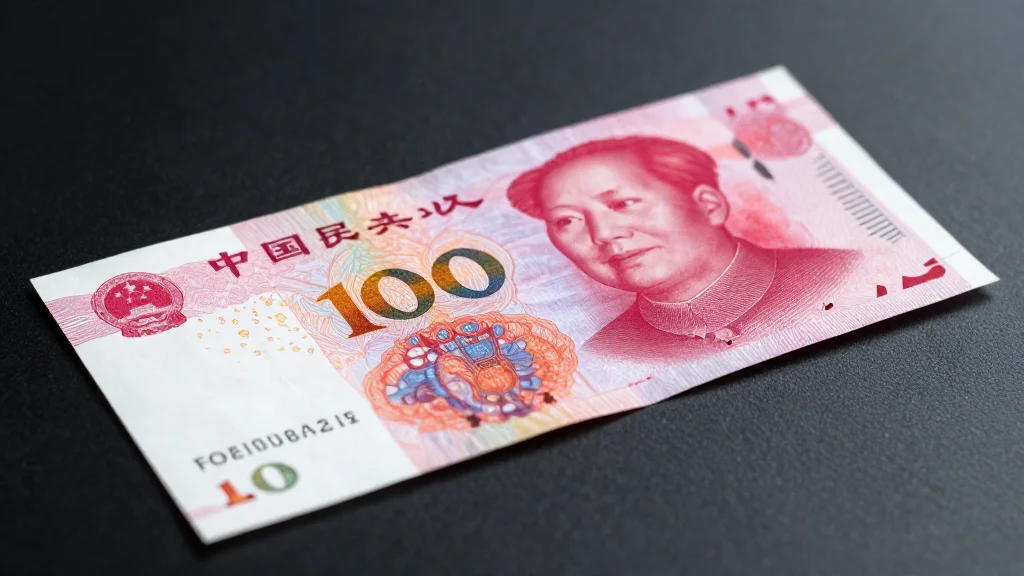
Chinese Yuan Falls to 6.865 per Dollar, Highlighting Currency Pressure

Why It Matters
The yuan's slide to 6.865 per dollar sharpens the focus on China's exchange‑rate management in a world of divergent monetary policies. A weaker currency can provide a modest export boost, but it also inflates the cost of imported commodities, feeding into domestic inflation and potentially prompting tighter monetary measures. For multinational corporations and investors, the move signals heightened currency risk in the world's second‑largest economy, influencing hedging strategies and capital allocation. Beyond immediate market effects, the depreciation tests the credibility of the PBOC's commitment to a stable FX regime. Persistent pressure could force the central bank to adjust its daily fluctuation band or intervene more aggressively, actions that would have ripple effects across regional currencies and global capital flows.
Key Takeaways
- •Central parity rate weakened 15 pips to 6.865 per USD on April 23, 2026.
- •China's spot FX market permits a daily 2 % swing from the central parity.
- •U.S. rates remain near 5.25 % while China's benchmark loan rate sits at 3.55 %.
- •A weaker yuan may aid exporters but raises import‑price inflation risks.
- •Future PBOC actions will be gauged by the next daily parity announcement.
Pulse Analysis
The yuan's recent dip is less a surprise than a symptom of structural forces reshaping global FX dynamics. Since the Fed's rate hikes in 2022‑2024, the interest‑rate differential between the United States and China has widened to over 1.5 percentage points, making dollar‑denominated assets more attractive. In that environment, the yuan's 2 % daily band acts as a safety valve, but it also limits the PBOC's ability to absorb large outflows without overt market intervention.
Historically, China has used a mix of reserve accumulation and direct market operations to keep the renminbi within a narrow corridor. However, the current external risk premium—driven by geopolitical tensions, slower Chinese growth, and lingering COVID‑era supply chain disruptions—means that even modest market moves can trigger sizable parity adjustments. If the central parity continues to drift toward the lower bound, the PBOC may be forced to either widen the band, risking a perception of policy laxity, or step up dollar purchases, which could erode its already strained foreign‑exchange reserves.
Looking forward, the yuan's trajectory will likely hinge on three variables: the pace of U.S. monetary tightening, domestic economic data (especially property sector health and PMI readings), and the PBOC's willingness to tolerate a weaker currency as a growth stimulus. Investors should monitor the daily parity releases, as each adjustment offers a real‑time gauge of market sentiment and the central bank's tolerance for volatility. In the meantime, firms with exposure to China should reassess hedging strategies, factoring in the possibility of further depreciation in the coming weeks.
Chinese Yuan Falls to 6.865 per Dollar, Highlighting Currency Pressure
Comments
Want to join the conversation?
Loading comments...