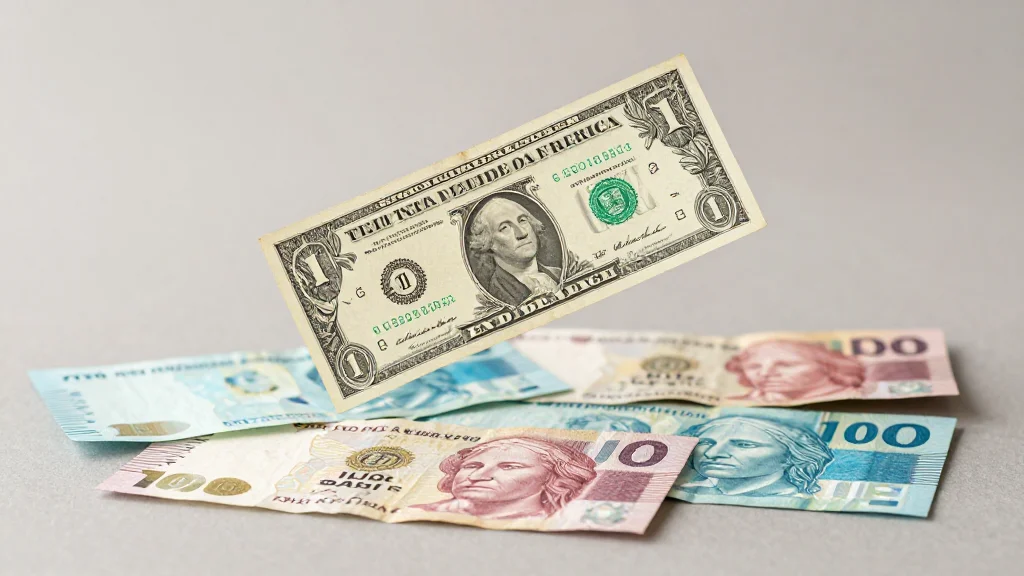
Emerging‑Market Currencies Slide as Middle‑East Conflict Spurs Dollar Surge

Companies Mentioned
Why It Matters
The sharp depreciation of emerging‑market currencies signals a broader reallocation of capital toward safe‑haven assets, raising financing costs for countries that rely on external debt. Higher U.S. yields and a stronger dollar increase the debt service burden for many emerging economies, potentially slowing growth and prompting policy shifts. Moreover, the episode highlights how geopolitical flashpoints can quickly translate into macro‑financial stress, reinforcing the need for investors to monitor political risk alongside traditional economic indicators. For policymakers, the episode underscores the delicate balance between managing inflationary pressures from commodity price spikes and avoiding a tightening cycle that could destabilize fragile economies. Central banks in the emerging world may be forced to raise rates or intervene in FX markets, actions that could further strain sovereign budgets and affect global trade dynamics.
Key Takeaways
- •MSCI EM Currency index fell 0.4% as the dollar rallied for a fifth straight day.
- •Brazilian real, Chilean peso and South African rand each lost at least 1.2%.
- •U.S. 10‑year Treasury yields approached 4.6%, the highest in almost a year.
- •Traders price a ~66% chance of a Fed rate hike in December.
- •Brent crude rose above $109 per barrel, adding to global inflation worries.
Pulse Analysis
The recent currency sell‑off illustrates a classic risk‑off scenario where geopolitical shockwaves amplify existing macro‑economic headwinds. The Middle‑East conflict has reignited concerns about supply‑side inflation, especially in energy markets, which in turn forces central banks to contemplate tighter policy. For emerging markets, the double whammy of a stronger dollar and higher global yields translates into more expensive dollar‑denominated debt, eroding fiscal space and potentially prompting defensive monetary moves.
Historically, similar episodes—such as the 2013 taper tantrum—showed that a rapid dollar appreciation can precipitate sharp currency corrections in vulnerable economies. However, the current backdrop differs in that the catalyst is a geopolitical supply shock rather than purely monetary policy signaling. This adds a layer of unpredictability, as oil price spikes can be both short‑lived and prolonged depending on the conflict's trajectory. Investors therefore face a dilemma: stay in emerging‑market assets hoping for a quick resolution, or shift to the safety of the dollar and high‑quality sovereign bonds.
Looking ahead, the trajectory of the conflict and the Fed's policy response will be the primary drivers of currency markets. If inflation remains sticky and the Fed leans into aggressive tightening, emerging‑market currencies could face further depreciation, prompting central banks to intervene or raise rates, which may stifle growth. Conversely, any diplomatic de‑escalation that eases oil price pressures could restore some risk appetite, allowing currencies to recover modestly. Market participants should therefore monitor not only monetary policy cues but also diplomatic developments around the Strait of Hormuz, as they will likely dictate the next wave of capital flows.
Emerging‑Market Currencies Slide as Middle‑East Conflict Spurs Dollar Surge
Comments
Want to join the conversation?
Loading comments...