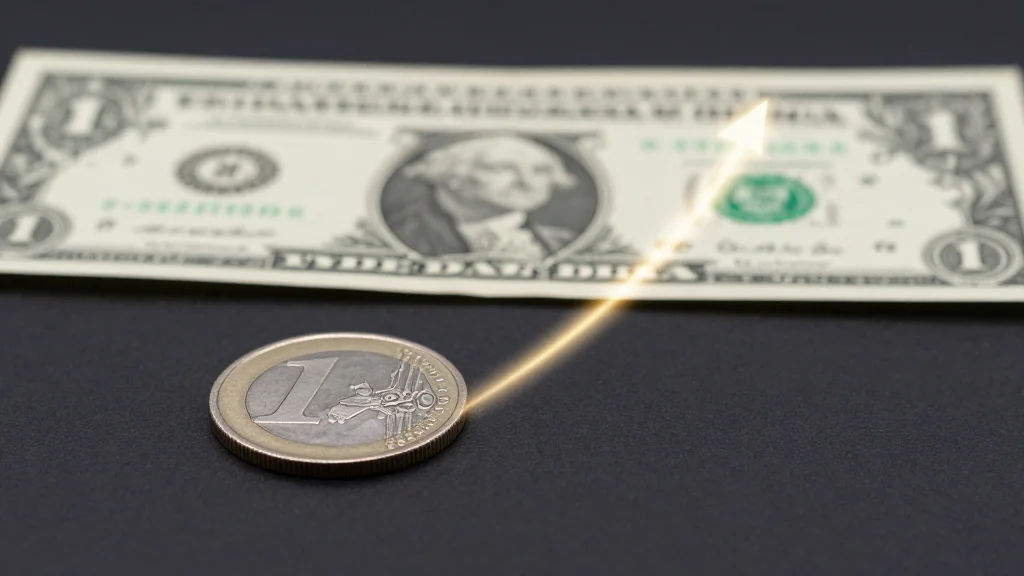
Euro Rises to $1.17 as US‑Iran Talks Revive Risk Appetite

Why It Matters
The euro’s rebound highlights how quickly currency markets can react to geopolitical signals, especially when they affect risk sentiment. A modest 0.27% move translates into billions of dollars in foreign‑exchange exposure for banks, corporates, and hedge funds. Moreover, the episode underscores the intertwined nature of geopolitics and monetary policy: diplomatic developments can shift the balance of safe‑haven demand, while central‑bank outlooks remain a decisive factor for longer‑term trends. If the U.S.–Iran dialogue leads to a de‑escalation, the dollar could face sustained pressure, prompting a broader shift toward higher‑yielding currencies and commodities. Conversely, a breakdown in talks would likely restore the dollar’s safe‑haven appeal, reinforcing its dominance and potentially dampening the euro’s gains. The outcome will influence trade flows, investment decisions, and inflation dynamics across both sides of the Atlantic.
Key Takeaways
- •EUR/USD rose to 1.1715, up 0.27%, ending a three‑day decline.
- •U.S. Dollar Index fell to 98.56, down about 0.27% from a week‑high of 98.94.
- •President Trump dispatched envoys Steve Witkoff and Jared Kushner to Pakistan for talks with Iran.
- •Iranian Foreign Minister Abbas Araghchi scheduled to travel to Pakistan to discuss ending the war.
- •Upcoming Fed and ECB meetings expected to keep rates unchanged amid rising inflation expectations.
Pulse Analysis
The euro’s bounce is a textbook case of risk‑on sentiment overriding fundamental divergences in monetary policy. Historically, currency markets have rewarded the euro whenever geopolitical friction eases, as seen during the 2015 Iran nuclear deal talks. The current move mirrors that pattern, but the backdrop is more complex: a lingering naval blockade and volatile oil prices keep inflation expectations high, limiting the euro’s upside.
From a strategic perspective, hedge funds are likely to position for a short‑term euro rally while hedging against a potential reversal if talks stall. Options traders may favor straddles that capture volatility around the Fed and ECB announcements, given the tight range of policy expectations. Corporates with euro‑denominated exposure will also monitor the situation closely, as a stronger euro can erode profit margins for U.S. exporters but benefit European importers.
Looking ahead, the durability of today’s move hinges on two variables: the substance of any U.S.–Iran agreement and the tone of central‑bank guidance. A credible de‑escalation could trigger a broader reallocation from the dollar to risk assets, reinforcing the euro’s trajectory. Conversely, a diplomatic dead‑end combined with hawkish Fed language could re‑establish the dollar’s safe‑haven status, pulling the pair back toward 1.16 or lower. Market participants should therefore prepare for heightened volatility in the next 48‑72 hours as the two narratives play out.
Euro Rises to $1.17 as US‑Iran Talks Revive Risk Appetite
Comments
Want to join the conversation?
Loading comments...