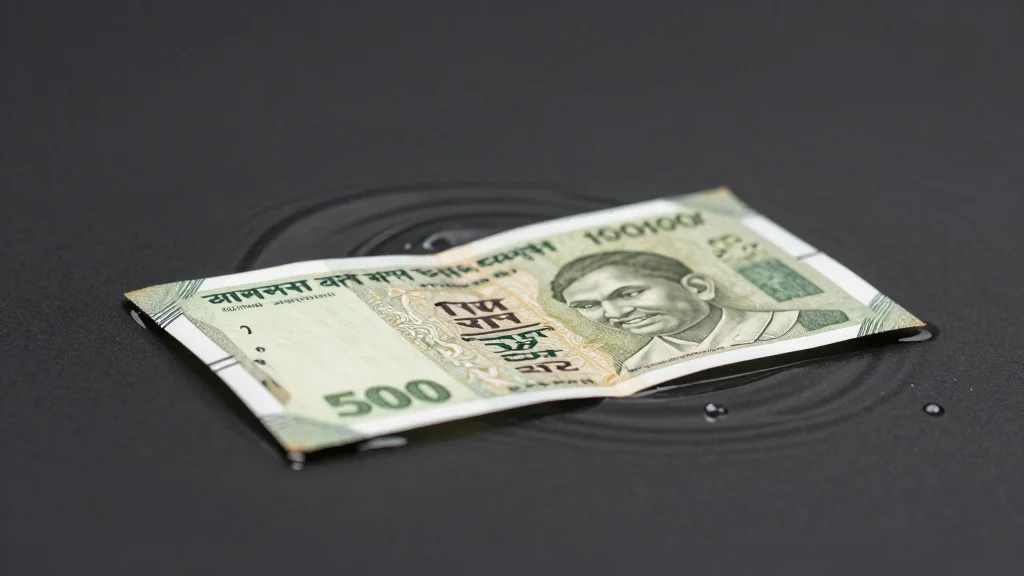
Indian Rupee Hits Record Low of 95.31 per Dollar Amid Market Turmoil

Why It Matters
The rupee’s plunge to 95.31 per dollar underscores the fragility of emerging‑market currencies in a high‑interest‑rate global environment. For India, a weaker rupee raises import costs, especially for oil, feeding inflation and eroding real wages. It also tightens corporate financing, as many Indian firms carry dollar‑denominated debt that becomes more expensive to service. Beyond domestic implications, the episode signals to investors that even large, diversified economies are not immune to external monetary tightening. A sustained depreciation could prompt a reassessment of risk premiums across the region, influencing capital flows, sovereign bond yields and the pricing of emerging‑market assets worldwide.
Key Takeaways
- •Rupee closed at a record low of 95.31 per USD on May 11, 2026
- •Currency fell 0.86% (82 paise) in a single session
- •Fiscal deficit widened, current‑account gap hit 2.3% of GDP
- •RBI’s foreign‑exchange reserves fell by about $2 billion in the week preceding the crash
- •U.S. dollar strength and global risk‑off sentiment amplified the slide
Pulse Analysis
The rupee’s record low is less a surprise than a symptom of a broader shift in global capital allocation. Since the Federal Reserve’s aggressive rate hikes in early 2024, the dollar has appreciated by roughly 12% against a basket of emerging‑market currencies, forcing many to defend their pegs or managed floats. India’s relatively open capital account means that any perception of fiscal laxity quickly translates into outflows, as investors chase higher yields elsewhere.
Historically, India has weathered similar shocks by tightening monetary policy and allowing the rupee to find a market‑determined equilibrium. However, the current fiscal trajectory—characterized by rising subsidy commitments and a lagging tax base—limits the RBI’s room to maneuver. A premature rate hike could stifle growth, while a delayed response risks further depreciation and inflationary pressure. The central bank’s $10 billion standby line is a stop‑gap, but without structural reforms to narrow the current‑account deficit, the rupee may test the 96‑level in the coming weeks.
Investors should monitor three leading indicators: the RBI’s policy rate decisions, the government’s fiscal consolidation roadmap, and the trajectory of U.S. Treasury yields. A coordinated approach—combining modest fiscal tightening, targeted subsidies and clear RBI communication—could restore confidence and stabilize the rupee. Absent such measures, the currency’s volatility is likely to persist, reshaping trade dynamics and corporate financing strategies across the subcontinent.
Indian Rupee Hits Record Low of 95.31 per Dollar Amid Market Turmoil
Comments
Want to join the conversation?
Loading comments...